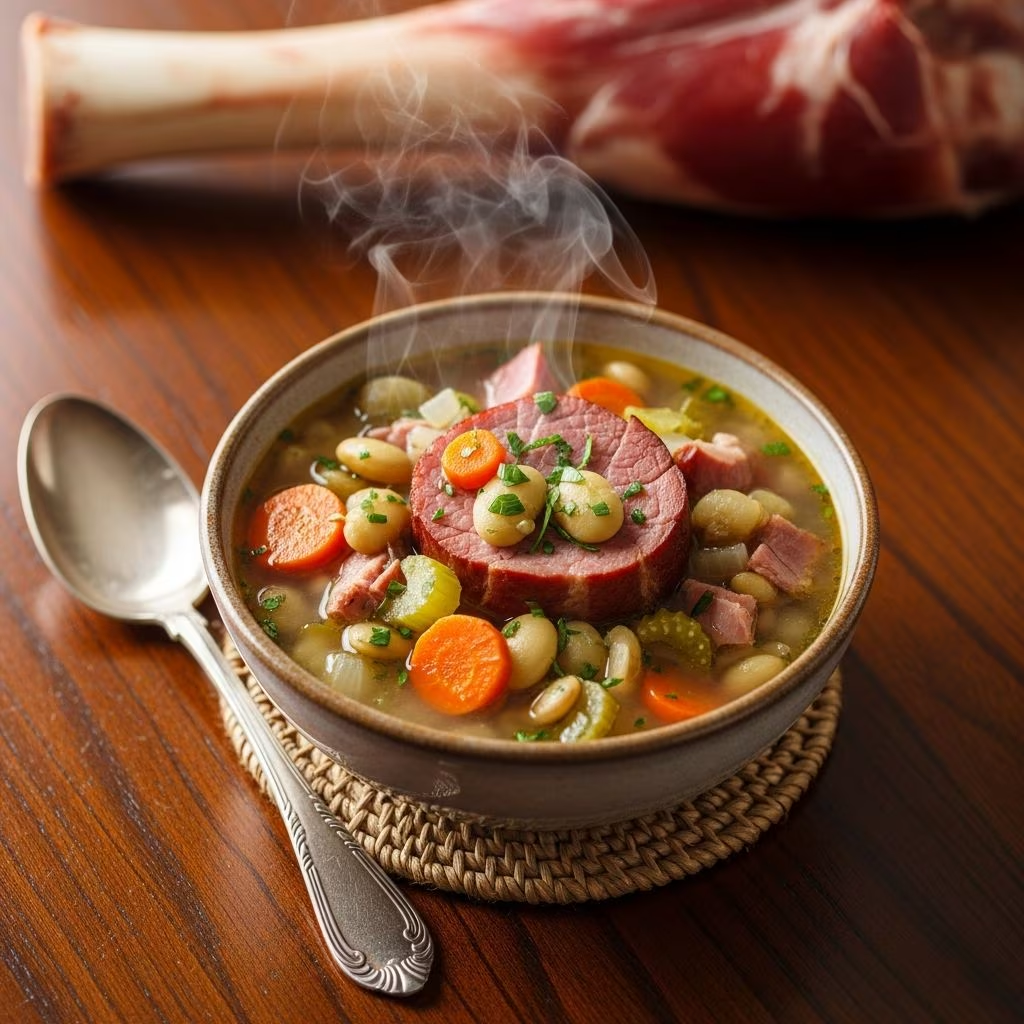
One of the most satisfying dishes in comfort food cuisine is a warm bowl of soup crafted from simple ingredients and time-honored techniques. A particular favorite among home cooks is the combination of a ham bone with dried lima beans, creating a dish that is both economical and delicious. This traditional preparation method allows cooks to maximize every bit of leftover ham while building layers of flavor that simply cannot be achieved through shortcuts or convenience products.
Understanding the Foundation: Why Ham Bone Matters
The ham bone serves as the cornerstone of this soup’s distinctive character. Unlike using pre-cooked ham pieces or ham steaks, the bone itself imparts a rich, gelatinous quality to the broth that develops over hours of gentle simmering. When you cook a ham bone slowly in water, the collagen and connective tissues break down, creating a natural body and depth to the liquid that forms the base of your finished soup.
The meat clinging to the bone also contributes essential flavor compounds. During the initial cooking phase, this meat becomes tender enough to shred and reintegrate into the final dish, providing texture and savory satisfaction without requiring additional preparation. This makes the ham bone an incredibly efficient ingredient, as it serves multiple purposes simultaneously: building flavor, creating body in the broth, and providing protein for the finished soup.
Selecting and Preparing Your Ingredients
Choosing Quality Lima Beans
Dried lima beans are the traditional choice for this soup, though they require proper preparation to achieve optimal texture and digestibility. When selecting dried lima beans at the grocery store, look for beans that are uniform in size and color, as this indicates they will cook at similar rates. Baby lima beans cook more quickly than large lima beans, typically requiring 30 to 45 minutes less cooking time.
Before cooking, spread your dried beans on a clean surface and sort through them carefully. Remove any discolored beans, shriveled specimens, or small stones that may have been packaged with them. Once sorted, rinse the beans thoroughly under cold running water. At this point, you have the option to soak them overnight, which reduces cooking time by approximately 30 to 40 percent, or to use the quick-soak method where beans are brought to a boil, removed from heat, covered, and allowed to sit for one hour before draining and cooking.
Vegetable Preparation
The classic aromatic vegetables used in this soup include onions, carrots, and celery, often referred to in culinary traditions as a mirepoix base. When preparing these vegetables, consistency in cutting size matters less than ensuring they are cut into manageable pieces, as they will soften considerably during the extended cooking process and may partially dissolve into the broth.
- Onions: Peel and dice into quarter-inch to half-inch pieces; one to two medium onions typically suffice
- Carrots: Slice into uniform pieces; three to four medium carrots provide sweetness and color
- Celery: Chop into similar-sized pieces; two to four stalks add aromatic complexity
- Garlic: Smash cloves lightly to release oils; three to four cloves are generally adequate
Seasoning Components
Traditional seasonings for this soup include bay leaves, dried thyme, black peppercorns, and salt. Some regional variations incorporate a touch of oregano or a dash of cumin. Bay leaves should be removed before serving, as they can create a bitter flavor if consumed. Dried herbs are preferable to fresh in this application, as they withstand the extended cooking period without losing their potency.
Multiple Cooking Methods for Different Lifestyles
Traditional Stovetop Method
The conventional approach begins by placing the ham bone in a large stockpot with eight cups of water. Bring this to a gentle simmer over medium-low heat and allow it to cook for two to three hours, depending on the size of your bone and the amount of meat adhering to it. The longer cooking period allows the connective tissues to break down completely, creating a more viscous, flavorful broth.
After this initial phase, remove the ham bone carefully, allowing any broth to drip back into the pot. Once cooled enough to handle, pick the meat from the bone and set it aside. Strain the broth if desired, though this step is optional. Return the ham meat to the pot and add your sorted and soaked lima beans along with the aromatic vegetables, seasonings, and additional water if needed to keep ingredients covered by approximately one inch of liquid.
Bring the mixture back to a boil, then reduce to a gentle simmer. Cover partially and cook for 45 minutes to one hour, until the beans are completely tender and beginning to break down slightly at the edges. This breakdown is desirable, as it creates a naturally thickened soup without requiring flour or cornstarch.
Slow Cooker Adaptation
For those preferring a hands-off approach, the slow cooker method yields excellent results. Combine the ham bone with beans, vegetables, seasonings, and eight cups of water or chicken stock in a large slow cooker. Cook on high for four to five hours, allowing the prolonged gentle heat to develop flavors while cooking the beans to perfect tenderness.
The advantage of this method is that it requires minimal active cooking time and allows you to attend to other tasks. The disadvantage is that the flavor development occurs more slowly than with stovetop simmering, so many cooks prefer to pre-simmer the ham bone for one to two hours on the stovetop before transferring to the slow cooker.
Pressure Cooker Method
Modern pressure cookers, including electric versions and multi-function devices, significantly reduce cooking time while maintaining flavor development. When using a pressure cooker, add the ham bone, beans, vegetables, seasonings, and liquid to the inner pot. Seal the lid, set the valve to seal, and cook at high pressure for 35 to 45 minutes, depending on whether you prefer firmer beans or a creamier texture.
After the timer sounds, allow the pressure to release naturally for five to ten minutes before opening the valve. This natural release prevents the beans from bursting from the sudden pressure change. Remove the ham bone, shred any remaining meat, and return it to the pot.
Achieving the Perfect Texture and Consistency
One of the defining characteristics of this soup is its creamy consistency, which develops naturally as the lima beans cook and partially break down. As the beans soften, their starches leach into the surrounding liquid, thickening it naturally without requiring added thickening agents.
Some cooks prefer a chunkier texture and simply simmer the finished soup as-is. Others use a potato masher to gently press some of the beans and vegetables against the side of the pot, breaking them partially and creating a creamier mouthfeel without producing a puree. A third option is to use an immersion blender to puree a portion of the soup, then recombine it with the remaining chunky elements for a hybrid texture.
Flavor Variations and Enhancement Techniques
Adding Depth with Smoke
To enhance the smoky flavor from the ham, some cooks add a slice or two of bacon to the pot during the initial simmering phase. The rendered fat and smoky flavor compounds elevate the overall profile of the finished dish without overwhelming the subtle nuttiness of the lima beans.
Brightening with Acidity
After the soup reaches its finished state, a splash of vinegar, squeeze of fresh lemon juice, or dash of hot sauce can brighten the flavors and cut through the richness. Add these elements judiciously, tasting between additions, as acidity can dominate quickly.
Incorporating Potatoes
Many traditional recipes include diced potatoes, which absorb the broth flavors and provide additional substance and comfort. Waxy potatoes like red potatoes hold their shape better than starchy varieties, making them ideal for this application.
Storage and Make-Ahead Strategies
This soup stores exceptionally well, making it ideal for meal preparation. Refrigerate cooled soup in airtight containers for up to five days, or freeze in portions for up to three months. The flavors actually intensify after a day or two of storage, as the ingredients continue to meld and marry together.
When reheating, thaw frozen portions in the refrigerator overnight, then warm gently on the stovetop over medium heat, stirring occasionally. If the soup has thickened considerably during storage, thin it with additional broth or water to restore the desired consistency.
Serving Suggestions and Accompaniments
This hearty soup pairs beautifully with crusty bread for dipping or cornbread for a Southern twist. Offer additional garnishes at the table, allowing guests to customize their bowls:
- Freshly chopped parsley or chives for bright color and fresh flavor
- A dollop of sour cream or Greek yogurt for richness
- Crispy bacon bits for additional smokiness
- Shredded sharp cheddar cheese for depth
- Diced green onions for onion flavor without cooking
Frequently Asked Questions
Can I use canned lima beans instead of dried?
Yes, canned lima beans can substitute for dried beans, though the flavor and texture will differ slightly. Use approximately three to four cans of lima beans, drained and rinsed, reducing the initial cooking time significantly. Add canned beans during the final 15 minutes of cooking rather than at the beginning.
What if I don’t have a ham bone?
A ham steak, ham hock, or even two cups of diced cooked ham can substitute for a whole bone, though the resulting broth will lack some of the gelatinous body that a bone provides. Some cooks use chicken stock instead of water and omit the ham bone entirely, creating a lighter version of the dish.
How can I reduce the salt content?
Since ham and ham bones are naturally high in sodium, taste the broth before adding additional salt. Many cooks find that no additional salt is necessary. Use low-sodium chicken stock if using it instead of water, and taste before serving to determine if adjustment is needed.
Can this soup be made vegetarian?
While removing the ham eliminates the primary protein source and the dish loses its defining character, vegetarians can substitute vegetable stock and add extra beans, potatoes, and vegetables to create a hearty bean and vegetable soup.
Conclusion: The Enduring Appeal of Traditional Comfort Soup
Creating ham bone and lima bean soup represents more than simply following a recipe; it embodies a cooking philosophy that values resourcefulness, patience, and the transformation of humble ingredients into something truly nourishing. Whether prepared using traditional stovetop methods, convenient slow cooker techniques, or modern pressure cooker innovations, this soup delivers consistent satisfaction and warmth with every spoonful.
References
- Understanding Gelatin in Cooking — The Culinary Institute of America. 2024. https://www.ciachef.edu
- Dried Bean Selection and Storage Guide — United States Department of Agriculture. 2023. https://www.usda.gov
- Bean Cooking Methods and Techniques — America’s Test Kitchen. 2025. https://www.americastestkitchen.com
- Slow Cooker Soup Preparation Guidelines — National Center for Home Food Preservation. 2023. https://nchfp.uga.edu
- Pressure Cooking Times for Legumes — Instant Pot Official Documentation. 2024. https://www.instantpot.com
- Acidic Ingredients in Cooking — McGill University Faculty of Science. 2024. https://www.mcgill.ca