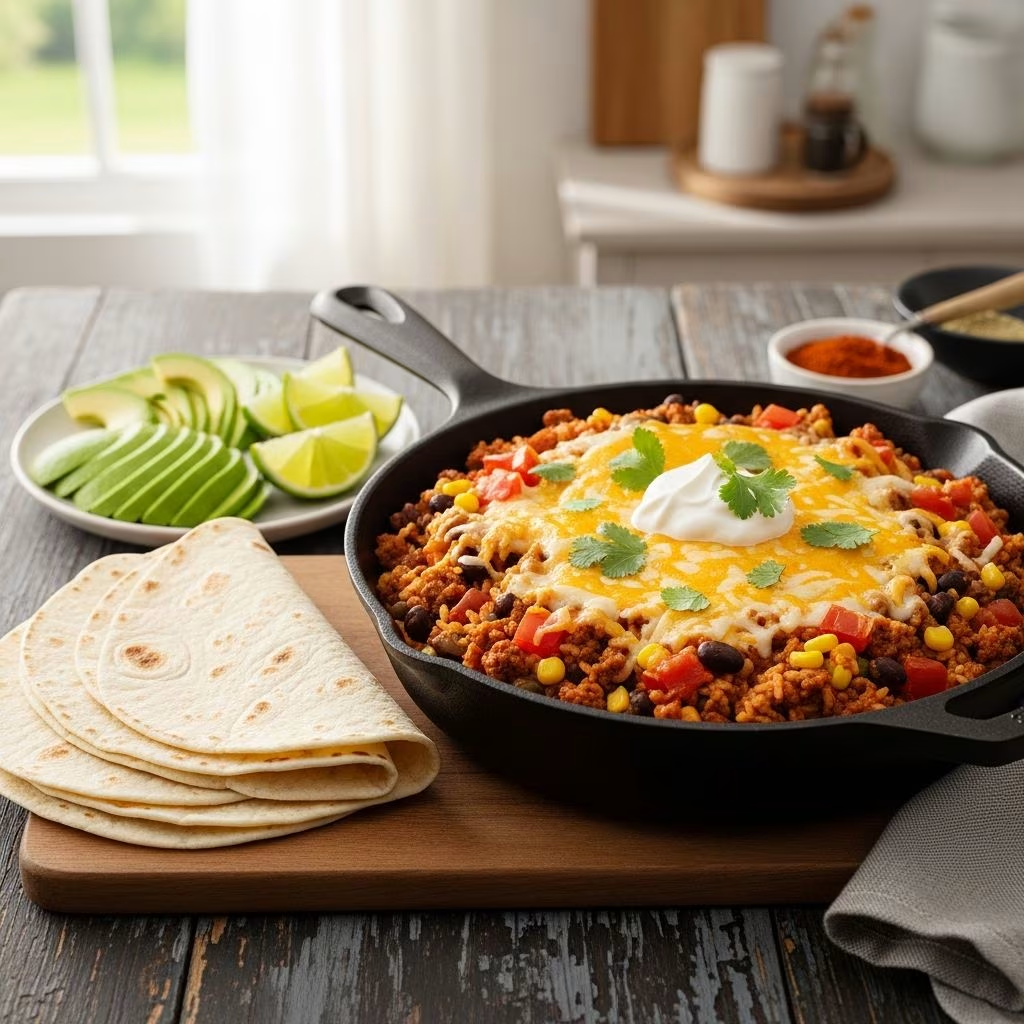
When it comes to weeknight dinner solutions that deliver big flavor without demanding hours in the kitchen, few dishes compare to a well-executed ground beef burrito skillet. This approach to burrito-making strips away the rolling and wrapping that typically intimidates home cooks, instead layering all the traditional components directly in a single pan. The result is a deconstructed meal that captures every element you love about a burrito—seasoned ground beef, creamy beans, tender rice, melted cheese, and soft tortillas—while requiring minimal effort and cleanup.
The beauty of this one-pan approach lies in its simplicity and speed. From start to finish, you can have a satisfying dinner on the table in approximately 30 minutes, making it ideal for busy families, professionals with limited time, or anyone seeking a straightforward cooking experience. Whether you’re looking for inspiration for meal planning or searching for your next go-to weeknight recipe, this guide covers everything you need to know about creating this versatile dish.
Understanding the Core Components of Your Burrito Skillet
A successful one-skillet burrito dinner relies on several foundational ingredients that work together to create authentic Mexican-inspired flavors. Understanding each component and how it contributes to the overall dish will help you make informed decisions when shopping, cooking, and potentially customizing your version.
The Protein Foundation
Ground beef serves as the primary protein in this dish, providing substantial, satisfying sustenance. Most recipes recommend using approximately one pound of lean ground beef (at least 80% lean or preferably 93/7), which offers the best balance between flavor and fat content. Leaner beef reduces excess grease that needs draining, while still delivering the savory taste that makes ground beef burrito skillet so appealing. The cooking process begins with browning the beef over medium to medium-high heat, breaking it into small pieces as it cooks—this typically takes between five to nine minutes depending on heat level and initial beef temperature.
Flavor-Building Aromatics
After the beef reaches a fully browned state, aromatics enter the picture. A half cup of diced onion and two to three minced garlic cloves soften quickly in the residual heat and beef fat, releasing their aromatic compounds that form the flavor foundation for your dish. This stage typically requires just two minutes of cooking with consistent stirring. Some variations incorporate yellow onions for sweetness, while others prefer white onions for a sharper bite—both work equally well depending on your personal preference.
Seasoning and Liquid Elements
Taco seasoning packages provide the characteristic spice profile that defines the dish, typically containing chili powder, cumin, garlic powder, onion powder, and other complementary seasonings. One package (approximately one ounce) of taco seasoning, combined with half a cup of water, creates the initial sauce base. This mixture simmers briefly—usually one to two minutes—allowing the seasonings to fully incorporate before additional ingredients join the skillet.
The Starch and Bean Components
Rice and beans add both substance and nutritional balance to your burrito skillet. Instant white rice or pre-cooked brown rice integrate seamlessly into the dish, absorbing the surrounding flavors while providing textural contrast. One variety of canned beans (black beans or pinto beans) or a combination of both contribute fiber, protein, and the authentic texture expected in traditional burrito fillings. Roughly two cans of beans (drained and rinsed) combined with half a cup of rice creates the right proportion for most skillet versions.
The Sauce Component
Enchilada sauce—typically red sauce found in ten to nineteen ounce cans—provides moisture and additional flavor complexity. Alternatively, some recipes use salsa or Rotel tomatoes with green chilies for a fresher or spicier profile. The sauce volume should be sufficient to cook the rice and beans through while creating enough liquid for the tortillas to soften properly.
Tortillas and Cheese Finishing Elements
Six small flour tortillas (or equivalent burrito-sized tortillas) cut into one-inch strips represent the final texture element. These soften during cooking, taking on a pillow-like consistency that distinguishes this dish from traditional tacos or burritos. Shredded cheddar-jack cheese or Mexican-blend cheese (typically one to two cups) melts over the top, creating the binding element that pulls all components together into a cohesive dish.
Step-by-Step Cooking Method
The cooking process follows a logical progression designed to build flavors while managing cooking times for each component:
Initial Beef Preparation
Start by adding your ground beef to a large skillet (preferably twelve inches to accommodate all ingredients) over medium heat. As the beef cooks, break it into small, uniform pieces using a wooden spoon or spatula. This step typically requires five to nine minutes, depending on your stove’s heat intensity and the beef’s starting temperature. You’ll know the beef has finished cooking when no pink remains visible and the meat has developed light browning on the edges. At this point, carefully drain the accumulated fat by tilting the skillet and using a spoon to push the beef to one side while allowing grease to pool and drain.
Aromatic Development
Add your diced onions and minced garlic to the now-empty skillet space, stirring constantly for approximately two minutes. This action releases the vegetables’ natural oils and distributes their flavors throughout the residual beef fat, creating the aromatic base that flavors your entire dish. The onions should become translucent and slightly softened—avoid browning them excessively, as this can create bitter notes.
Seasoning Integration
Stir in your taco seasoning package along with half a cup of water, mixing thoroughly until all ingredients combine into a cohesive sauce. Let this simmer for one to two minutes, stirring occasionally. This brief simmering time allows the dried seasonings to fully hydrate and distribute evenly throughout the meat-onion mixture.
Building the Complete Mixture
Add your rice, broth or additional water (approximately half a cup total), enchilada sauce or salsa, and rinsed beans. Bring the entire mixture to a simmer, then cover and reduce heat to low. Allow this to cook for approximately five minutes, or until the rice achieves a tender texture. If using pre-cooked rice, reduce cooking time accordingly—the goal is simply to heat everything through and allow flavors to meld.
Tortilla Integration
Carefully stir the one-inch tortilla strips into the simmering mixture, ensuring they distribute evenly throughout. The tortillas will begin softening immediately as they absorb the surrounding sauce and steam. Mix gently for about one minute to ensure even distribution.
Cheese Melting and Finishing
Sprinkle your shredded cheese across the top of the mixture in an even layer. Cover the skillet with a lid (or aluminum foil if a lid isn’t available) and allow the cheese to melt, which typically requires two to four minutes depending on cheese quantity and skillet temperature. Once fully melted and bubbly, the dish is essentially complete, though some recipes suggest removing from heat and letting it rest a few minutes before serving.
Customization and Variation Ideas
While the basic formula remains consistent across recipes, numerous variations allow you to adapt this dish to your preferences and dietary needs:
- Vegetable additions: Frozen corn (thawed), diced bell peppers, diced tomatoes, or sliced jalapeños increase nutritional content and textural variety
- Bean alternatives: Use a single type of bean or experiment with refried beans for creamier texture
- Rice options: White rice, brown rice, or cilantro-lime rice varieties work equally well
- Spice level adjustments: Select mild or hot enchilada sauce based on heat tolerance; fresh cilantro and fresh jalapeños increase spiciness further
- Sauce alternatives: Homemade enchilada sauce, store-bought salsa, or tomato-based sauces create different flavor profiles
- Cheese selections: Pepper jack for extra spice, cotija for crumbled texture, or simply cheddar for classic appeal
- Protein modifications: Ground turkey or shredded chicken provide leaner alternatives to ground beef
Serving Suggestions and Topping Options
While the skillet contains complete components for a satisfying meal, several traditional toppings enhance the finished dish. Serve your burrito skillet with:
- Sour cream for cooling, creamy contrast
- Fresh cilantro leaves for bright herb notes
- Guacamole or sliced avocado for richness and healthy fats
- Lime wedges for acidic brightness
- Fresh jalapeño slices for additional heat
- Diced red onion for sharp, fresh crunch
- Hot sauce for intensified spice
- Additional shredded cheese for extra indulgence
These toppings remain optional—the dish stands completely on its own merit without additions. However, their presence transforms the basic skillet into an interactive dining experience where each person customizes their portion according to preference.
Nutritional Considerations
A typical serving of one-skillet ground beef burrito skillet provides approximately 410 calories, depending on ingredient proportions and specific brands selected. The dish delivers substantial protein from the ground beef and beans, carbohydrates from the rice and tortillas, and healthy fats from the cheese and potential avocado toppings. The beans contribute significant fiber, and the vegetables (if included) add vitamins and minerals. Using leaner ground beef and reducing cheese quantity can lower overall calorie and fat content for health-conscious diners.
Practical Storage and Meal Prep Applications
One-skillet burrito dishes store well in the refrigerator for three to four days when properly covered. Reheat portions in a microwave until warmed through, or warm gently on the stovetop with a splash of water to restore moisture. The dish also freezes successfully for up to three months—freeze in airtight containers, leaving slight headspace for expansion. Thaw overnight in the refrigerator before reheating.
For meal prep purposes, you can prepare components in advance: brown the ground beef and aromatics several days ahead, cook rice separately, and combine everything when ready to serve. This approach works particularly well for busy weeks when you want to minimize cooking time on weeknights.
Equipment and Tool Recommendations
A large skillet (twelve inches in diameter) accommodates all ingredients comfortably without overcrowding. Cast iron, stainless steel, or non-stick options all perform well—choose based on your existing cookware preferences. A well-fitting lid ensures proper steam retention during the rice-cooking phase; if your skillet lacks a lid, aluminum foil provides an adequate alternative. A wooden spoon or silicone spatula prevents scratching non-stick surfaces while allowing thorough mixing throughout the cooking process.
Frequently Asked Questions
Can I prepare this dish using pre-cooked rice?
Yes, absolutely. Pre-cooked or leftover rice integrates seamlessly—simply reduce the initial cooking time from five minutes to one to two minutes, allowing the rice to heat through and absorb surrounding flavors. This modification is particularly useful when preparing burrito skillets on especially busy evenings.
What if I don’t have enchilada sauce available?
Salsa, tomato sauce, or even a mixture of diced tomatoes with green chilies works well as a sauce alternative. Adjust liquid quantities slightly if your chosen alternative contains significantly more or less liquid than traditional enchilada sauce.
How do I prevent the tortilla strips from becoming mushy?
Add tortilla strips toward the end of cooking rather than at the beginning. They soften quickly from the surrounding steam and sauce, typically requiring just one to two minutes of contact time before reaching the ideal pillowy texture.
Can I use flour tortillas of different sizes?
Certainly. Whether you use taco-sized or burrito-sized flour tortillas, cut them into consistent one-inch strips. The size of your starting tortilla matters less than the strip width, which should remain uniform for consistent cooking.
Is this recipe suitable for dietary restrictions?
The basic formula adapts well to numerous dietary needs. Use ground turkey for lower fat content, substitute ground beef with plant-based alternatives for vegetarian needs, and select cheese alternatives for dairy-free requirements. The rice-and-bean foundation remains naturally gluten-free when using corn tortillas instead of flour tortillas.
References
- I Heart Eating – Ground Beef Burrito Skillet — I Heart Eating. Retrieved from https://www.ihearteating.com/ground-beef-burrito-skillet/
- Noble Pig – Beef Burrito Skillet Recipe — Noble Pig. Retrieved from https://noblepig.com/beef-burrito-skillet-recipe/
- The Beach House Kitchen – Beef Burrito Skillet Recipe — The Beach House Kitchen. Retrieved from https://thebeachhousekitchen.com/beef-burrito-skillet/
- Pillsbury.com – 20-Minute Smothered Beef Burrito Skillet Recipe — Pillsbury. Retrieved from https://www.pillsbury.com/recipes/20-minute-smothered-beef-burrito-skillet/24432138-a81a-4295-ac95-e78767a60efe
- Old El Paso – Easy Beef Burrito Skillet — Old El Paso. Retrieved from https://www.oldelpaso.com/recipes/easy-beef-burrito-skillet