Swordfish represents one of the most versatile and rewarding proteins for outdoor cooking, offering a firm, meaty texture that stands up beautifully to high-heat grilling methods. When paired with vibrant tomato preparations, this noble fish transforms into a dish that captures the essence of seasonal entertaining. The combination of properly grilled swordfish and thoughtfully prepared tomato elements creates a memorable meal that appears elegant yet requires straightforward technique to execute successfully.
Understanding Swordfish as a Grilling Protein
The appeal of swordfish for grilling lies in its unique culinary properties. Unlike delicate white fish varieties that fragment easily over direct heat, swordfish maintains structural integrity throughout the cooking process due to its dense, muscular composition. This characteristic allows it to withstand the high temperatures necessary for developing a flavorful crust while preserving moisture within.
When selecting swordfish for grilling, thickness matters considerably. Steaks cut to approximately one inch create the ideal cooking environment—thin enough to cook through without excessive charring on the exterior, yet substantial enough to remain juicy at the center. Most quality preparations utilize steaks weighing between six and eight ounces, which provides an appropriate single serving while allowing for even heat penetration.
Pre-Grilling Preparation and Marinating Techniques
The foundation of exceptional grilled swordfish begins long before the fish reaches the grill grate. Strategic marinating infuses the protein with complementary flavors while contributing to moisture retention during the cooking process.
Building Effective Marinade Bases
A well-constructed marinade for swordfish typically incorporates four essential components: a fat element, an acidic component, aromatics, and seasonings. Extra virgin olive oil serves as the primary fat base, contributing richness and promoting even heat distribution during grilling. The acidic element—whether vinegar, citrus juice, or wine-based—begins the process of gently denaturizing the outer protein structures, allowing marinade flavors to penetrate more effectively.
Citrus selections deserve particular attention. Fresh orange juice combined with lemon provides brightness that complements swordfish’s natural robustness without overwhelming its delicate undertones. Some preparations incorporate sherry vinegar or red wine vinegar for additional complexity and depth of flavor.
Aromatic ingredients such as crushed garlic, minced shallots, and fresh herbs like rosemary and thyme create the flavor profile that distinguishes exceptional preparations from merely adequate ones. These components should be distributed evenly throughout the marinade to ensure consistent flavor development across all portions of the fish.
Timing and Temperature Considerations
Marinating duration significantly impacts the final result. Swordfish, being a relatively sturdy protein, benefits from extended exposure to acidic marinades without risk of the flesh becoming mushy or over-processed. A minimum marinating period of thirty minutes allows flavors to develop adequately, while longer durations—up to two hours—create more pronounced seasoning throughout the steak. The marinating process should occur at room temperature to maximize the molecular activity that incorporates flavors into the fish.
Grilling Methodology and Temperature Management
Successful grilling of swordfish requires understanding fire preparation and heat management. Charcoal grilling produces superior results compared to gas alternatives, as the direct radiant heat and smoke infusion create the caramelized exterior and subtle smoky notes that distinguish restaurant-quality preparations.
Fire Preparation and Heat Zones
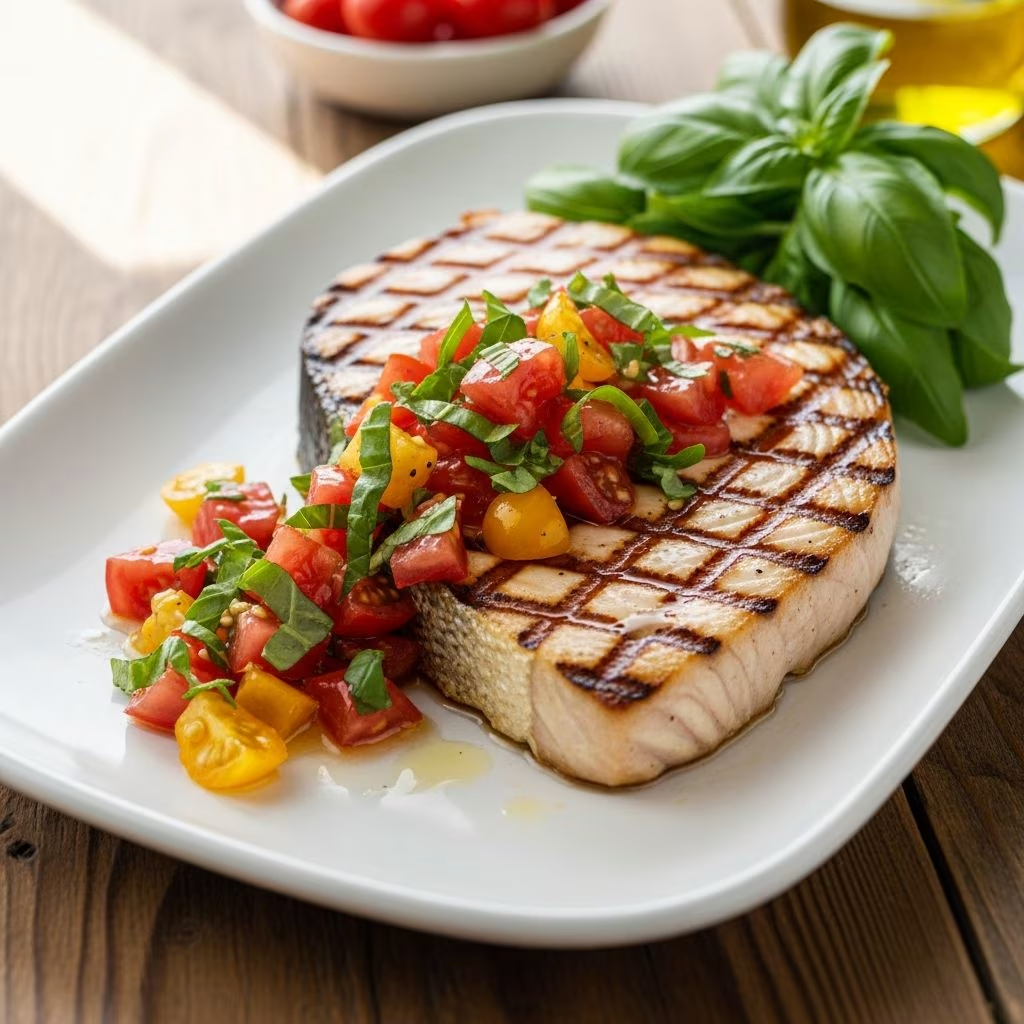
Establishing a medium-high temperature zone—approximately four hundred fifty degrees Fahrenheit—provides the optimal environment for swordfish preparation. This temperature range allows the exterior to develop attractive grill marks and a protective crust while the interior remains moist and tender. Some advanced preparations utilize rosemary sprigs or other aromatic wood additions placed directly onto the coals, which infuse the fish with herbal smoke notes that enhance its natural flavors.
For techniques incorporating tomato elements prepared simultaneously with the fish, establishing both direct and indirect heat zones becomes essential. This arrangement allows delicate tomato preparations to cook gently through radiant heat while the swordfish steaks develop over direct flames.
Cooking Duration and Doneness Assessment
The standard cooking guideline for one-inch-thick swordfish steaks calls for approximately four to five minutes per side over medium-high direct heat. This timeframe produces flesh that is cooked through completely—an important consideration as undercooked swordfish presents food safety concerns—while maintaining interior moisture. Overcooking represents the primary risk, as swordfish’s relatively lean composition makes it susceptible to drying when exposed to excessive heat.
Visual indicators help determine doneness: the flesh should transition from translucent to opaque, and a gentle squeeze of the steak should reveal firm but slightly yielding texture. Professional cooks often employ the touch method, comparing the firmness of the cooked fish to the fleshy area at the base of the thumb.
Tomato-Based Accompaniment Preparations
The versatility of tomatoes as a swordfish complement allows for numerous preparation approaches, each creating distinct flavor profiles and textural experiences.
Cold Relish and Salsa Preparations
A vibrant room-temperature relish composed of diced fresh tomatoes, brined olives, and aromatic herbs represents a classic preparation approach. This accompaniment begins with fresh, high-quality tomatoes—preferably homegrown or sourced from farmers’ markets where peak ripeness ensures maximum flavor concentration. The tomatoes should be diced into approximately half-inch cubes to create pleasing textural contrast with the fish’s dense flesh.
The relish foundation includes a balanced vinaigrette created by emulsifying Sherry vinegar with Dijon mustard and anchovy paste, then slowly incorporating extra virgin olive oil while whisking vigorously. This emulsified base provides both flavor depth and the creamy mouthfeel that elevates the accompaniment beyond simple chopped tomatoes. Additional components might include minced shallots, fresh garlic, bright citrus zest, and fresh herbs such as flat-leaf parsley, rosemary, and thyme. Kalamata or Niçoise olives add briny intensity, while capers contribute piquant notes that enhance the overall complexity.
Seasoning such preparations requires a measured approach. Since olives and capers already contribute salt, initial seasoning should remain conservative, with adjustment occurring after flavors integrate fully. Many preparations benefit from a pinch of cayenne pepper, which adds subtle heat without overwhelming the delicate balance.
Hot Tomato Preparations and Blistering Techniques
An alternative approach involves cooking tomatoes alongside the swordfish, developing concentrated, caramelized flavors through direct heat exposure. Cherry or grape tomato varieties work particularly well for this technique, as their smaller size ensures rapid cooking and their higher sugar content creates appealing caramelization. After marinating the swordfish, the reserved marinade is poured over whole or halved cherry tomatoes in a cast-iron skillet positioned over indirect heat.
As the tomatoes cook, their natural juices concentrate while their skins begin to blister and split, creating visual appeal and intensified flavor. The cooking duration typically extends ten to fifteen minutes, during which time the tomatoes shrivel slightly and begin to burst. This stage represents optimal readiness for serving. Additions such as capers, red pepper flakes, and fresh herbs can be incorporated during the final cooking minutes to preserve their brightness and aromatic qualities.
Sophisticated Flavor Combinations
Advanced preparations explore refined flavor pairings that transform the dish into restaurant-caliber cuisine. Saffron-infused preparations add luxurious earthiness and visual drama through the spice’s distinctive golden coloring. A simple preparation involves sautéing minced garlic briefly in olive oil, then adding halved cherry tomatoes and saffron threads, cooking gently until tomatoes soften and the saffron’s flavors permeate the mixture. Fresh thyme, lemon juice, and careful seasoning complete this elegant accompaniment.
Wine-based preparations incorporating red wine vinegar, capers, and oregano create bright, Mediterranean-inspired side dishes that complement swordfish’s robust nature. Such preparations often benefit from a small quantity of honey, which balances the vinegar’s acidity while adding subtle sweetness that enhances the tomatoes’ natural sugars.
Wine Pairing and Serving Recommendations
The selection of accompanying beverages significantly enhances the dining experience. Chilled rosé wines—particularly those from Provence regions such as Bandol—create elegant pairings that complement grilled swordfish beautifully. The wine’s subtle fruit notes and crisp acidity cleanse the palate between bites while its dry character prevents overwhelming the fish’s delicate flavors.
Alternative white wine selections include Spanish Rueda, Italian Vermentino, and Verdicchio varieties, each offering distinct aromatic profiles that enhance different tomato preparations. The key consideration involves selecting wines with sufficient acidity to cut through the olive oil’s richness while maintaining enough body to stand up to swordfish’s meaty character.
Comprehensive Recipe Framework
| Component | Ingredient Quantities | Preparation Notes |
|---|---|---|
| Swordfish Marinade Base | ¼ cup extra virgin olive oil, 1 tablespoon Sherry vinegar, 1 tablespoon fresh orange juice | Whisk together and coat swordfish thoroughly |
| Aromatics for Marinade | 2 cloves crushed garlic, 2 teaspoons kosher salt, 1 teaspoon fresh black pepper | Add after initial oil combination |
| Fish Steaks | 6 swordfish steaks, 1 inch thick, 6-8 oz. each | Pat dry before marinating for better coating adhesion |
| Tomato Relish Base | ⅛ cup Sherry vinegar, 1 teaspoon Dijon mustard, 1 teaspoon anchovy paste | Create emulsion by slowly incorporating ⅓ cup olive oil while whisking |
| Tomato Relish Vegetables | 2 ripe tomatoes diced, ½ cup Kalamata olives sliced, 2 tablespoons minced shallot | Use peak-season tomatoes for optimal flavor |
| Tomato Relish Herbs and Finishing Elements | 1 clove minced garlic, 1 teaspoon fresh rosemary, ½ teaspoon fresh thyme, 2 tablespoons flat-leaf parsley, 1 tablespoon capers, pinch cayenne pepper | Add herbs and capers near end to preserve brightness |
Frequently Asked Questions About Grilled Swordfish Preparation
Can I use frozen swordfish steaks for this preparation?
While fresh swordfish delivers superior results, properly thawed frozen steaks work adequately. Thaw completely in the refrigerator—never at room temperature—before patting dry and marinating. The thawing process allows excess moisture to drain away, promoting better browning during grilling.
What is the most critical factor in preventing dry swordfish?
Careful heat management and timing represent the primary defense against overcooked fish. Additionally, maintaining marinating liquid’s protective coating during grilling and avoiding excessive cooking duration are essential. Some cooks prefer reserving a portion of marinade to brush onto the fish during grilling for additional moisture reinforcement.
Can these recipes be adapted for other fish varieties?
Halibut steaks provide an excellent substitute, offering similar density and moisture retention. Tuna steaks work well for those preferring stronger fish flavor. More delicate varieties like cod or snapper require shorter cooking times and gentler handling to prevent deterioration.
How far in advance can I prepare the tomato relish?
Room-temperature relish preparations benefit from flavor integration and can be prepared several hours in advance. However, fresh herbs maintain optimal vibrancy when added within two hours of serving. Hot tomato preparations should be completed as the swordfish finishes cooking to ensure optimal temperature and texture.
What equipment is essential for optimal results?
A reliable charcoal grill provides superior heat control and smoke infusion compared to gas alternatives. A cast-iron skillet proves invaluable for simultaneous tomato preparation. Long-handled tongs prevent burns while allowing precise fish manipulation, and a reliable instant-read thermometer ensures accurate doneness assessment.
Seasonal Serving Variations and Presentation Strategies
The timing of this dish’s preparation throughout the year influences ingredient availability and preparation approaches. Summer preparations capitalize on peak tomato season, when locally sourced varieties deliver maximum flavor concentration. Spring service might incorporate lighter, brighter tomato preparations featuring herbs like basil and tarragon. Fall preparations could feature richer accompaniments incorporating balsamic vinegar and more substantial herb selections.
Presentation considerations enhance the dining experience. Serving the swordfish steak as the plating foundation, with tomato preparations spooned generously across the top, creates visual appeal while ensuring each forkful incorporates both components. Garnishes such as fresh herb sprigs, citrus wheels, or toasted pine nuts add professional polish without requiring complicated technique.
Conclusion: Elevating Your Grilling Repertoire
Mastering grilled swordfish with tomato accompaniments expands your cooking capabilities and impresses dinner guests with seemingly sophisticated dishes requiring straightforward technique. The interplay between swordfish’s robust, meaty character and tomato’s bright acidity creates naturally harmonious flavor combinations that feel both refined and approachable. By understanding fundamental grilling principles, respecting ingredient quality, and maintaining careful attention to timing and temperature, you can consistently produce restaurant-caliber results in your own outdoor cooking space.
References
- Demo Kitchen Recipe: Grilled Swordfish with Tomato-Olive Relish — Binny’s Beverage Depot. 2024. https://www.binnys.com/blog/post/demo-kitchen-recipe-grilled-swordfish-with-tomato-olive-relish/
- Marinated Grilled Swordfish with Blistered Tomatoes and Capers — Travels with Mai Tai Tom. 2023. https://travelswithmaitaitom.com/marinated-grilled-swordfish-with-blistered-tomatoes-and-capers/
- Swordfish Saffron Cherry Tomatoes — The Gourmet Bachelor. 2023. https://www.thegourmetbachelor.com/friday-night-in-swordfish-saffron-cherry-tomatoes/