When summer entertaining calls for a dessert that impresses without requiring extensive kitchen time, few options rival the elegance and simplicity of grilled tropical fruit. The transformation that occurs when fresh pineapple meets direct heat creates a culinary experience that feels indulgent yet approachable for any home cook. This guide explores the techniques, variations, and secrets behind creating restaurant-quality caramelized pineapple at home.
Understanding the Foundation: What Makes This Dessert Special
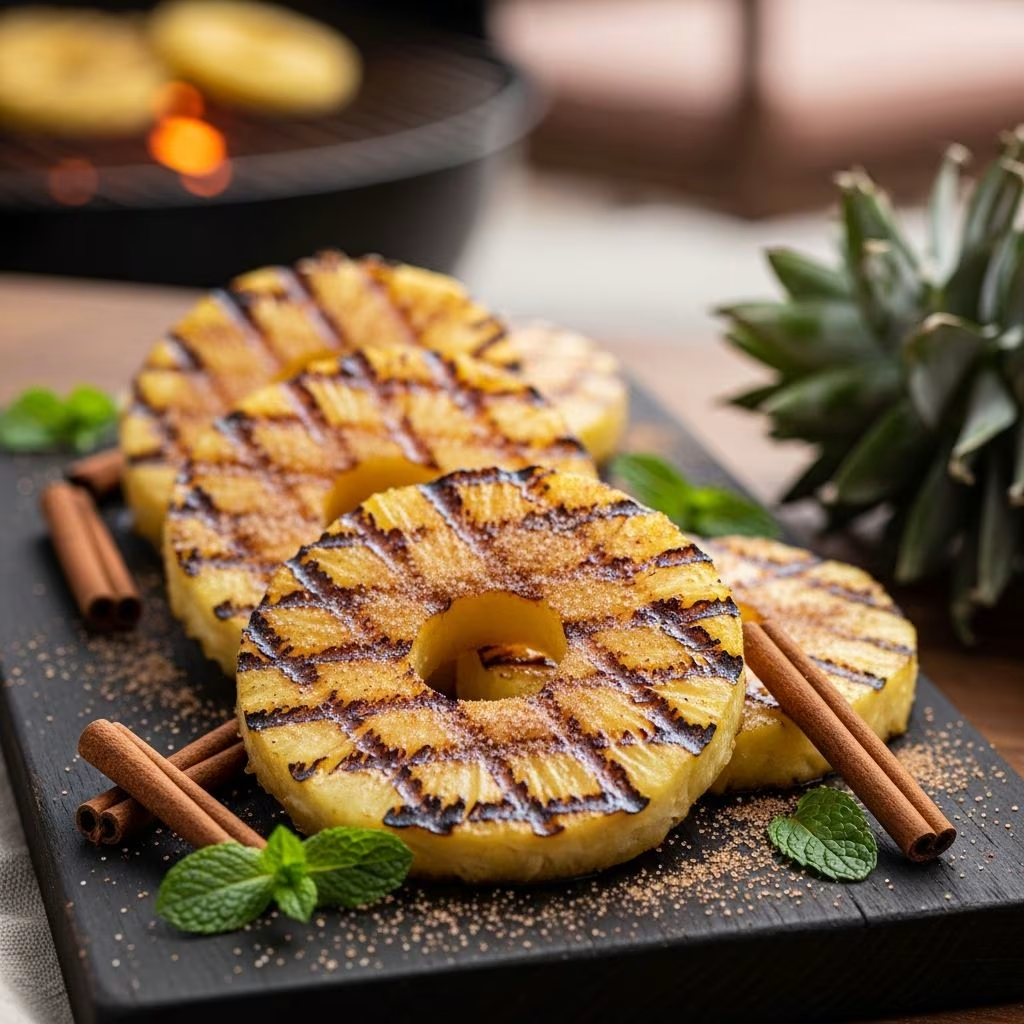
Grilled pineapple represents a departure from conventional dessert preparation. Rather than relying on oven baking or stovetop cooking, this method harnesses the unique properties of direct flame and intense heat to transform the fruit’s natural sugars. The result combines textural contrasts—a caramelized, crispy exterior with a warm, juicy interior—alongside concentrated tropical sweetness enhanced by warm spice notes.
The magic of this preparation lies in the Maillard reaction, the chemical process where proteins and sugars interact under high temperatures to create complex flavors and browning. When cinnamon joins forces with brown sugar on the pineapple’s surface, both compounds undergo caramelization simultaneously, creating a glaze that hardens slightly as it cools, providing a satisfying crunch before giving way to the tender flesh beneath.
Selecting and Preparing Your Pineapple
Success begins at the market. Choose pineapples that feel heavy for their size, indicating proper ripeness and juice content. The fruit should yield slightly to gentle pressure but maintain firmness—overripe pineapples may fall apart during grilling, while underripe specimens lack sufficient natural sugars for optimal caramelization. The outer skin should display a golden hue rather than green coloring.
Preparation methodology significantly impacts final results. You have several cutting approaches to consider:
- Wedge Method: Cut the pineapple in half lengthwise, then quarter it into wedges. Keep the skin intact to provide structural support during grilling. Remove the fibrous core running through the center, creating an approximately one-inch channel that removes the toughest interior portion while preserving the tender flesh surrounding it.
- Spear Technique: Cut the pineapple into eight long, vertical pieces resembling spears. This method maximizes the surface area available for caramelization and allows you to achieve more extensive browning if desired.
- Slice Approach: Remove the outer skin completely and cut the pineapple into horizontal rounds or rings. This presentation works well for guests who prefer boneless, skinless pieces and require less time on the grill.
Regardless of your cutting method, gently wash the pineapple beforehand and place it on a stable cutting surface. Sharp knives prove essential for clean cuts that expose the maximum amount of fruit surface to the flavoring mixture and direct heat.
The Flavor Foundation: Coating and Preparation
The signature flavor profile combines brown sugar and ground cinnamon in proportions that balance sweetness with warm spice without overwhelming the fruit’s delicate tropical notes. A typical formula uses approximately one cup of brown sugar combined with two teaspoons of cinnamon for a full-sized pineapple, though you can adjust according to personal preference.
The coating process requires patience. Combine the dry ingredients in a shallow bowl or on a flat plate, then roll or press the pineapple pieces through the mixture, ensuring even coverage on all exposed surfaces. Some preparations benefit from refrigeration, allowing the sugar to lightly adhere while the pineapple’s outer surface becomes slightly sticky from condensation. A thirty-minute chill period enhances adherence without compromising texture.
For enhanced richness, prepare a basting glaze by melting butter and combining it with additional brown sugar and cinnamon. This liquid mixture, applied during grilling, creates deeper caramelization and adds luxurious mouthfeel. Mix approximately one-half cup of melted butter with one-half cup of brown sugar and one tablespoon of cinnamon, stirring until fully incorporated. Some recipes introduce vanilla extract at this stage, though this remains optional based on desired flavor intensity.
Grilling Techniques and Temperature Control
Successful grilling hinges on understanding heat management and timing. Preheat your grill to medium heat, allowing sufficient time for even temperature distribution across the cooking surface. Brush the grate generously with oil or melted butter to prevent sticking while also contributing subtle flavor notes.
The initial placement proves crucial. Position pineapple wedges skin-side down first, which provides insulation while the cut surface above begins caramelizing. Close the grill lid and maintain this position for approximately fifteen minutes. This duration allows the fruit to heat through while the sugar coating begins its transformation.
After the initial fifteen-minute period, lower your heat to minimum settings and carefully flip the pineapple, now positioning the previously charred flesh side down against the grill surface. This maneuver reverses the cooking dynamic, allowing the skin to continue browning while the cooked flesh side develops additional color. Continue grilling for another ten to fifteen minutes with the lid closed, checking every few minutes to prevent burning.
If using the spear method, grill timing adjusts downward. Spears typically require approximately ten minutes total with frequent rotation and basting every minute or two. The increased surface area and reduced thickness mean faster cooking than wedges or rounds.
Throughout the cooking process, maintain vigilant observation. The transformation happens quickly once caramelization begins in earnest. Desirable results feature deep browning and charring at the edges, while burnt areas indicate excessive heat or extended cooking time.
Variations and Flavor Enhancements
| Variation Type | Key Components | Grilling Time | Best For |
|---|---|---|---|
| Classic Wedge | Brown sugar, cinnamon, butter basting | 25-30 minutes | Traditional presentation, family gatherings |
| Spear Method | Brown sugar coating, frequent basting | 10 minutes | Quick preparation, individual servings |
| Slice Presentation | Vanilla-enhanced glaze | 4-6 minutes | Formal dining, elegant plating |
| Broiler Finish | Initial oven roasting, final broil | 45-60 minutes total | Indoor preparation, weather-independent |
Beyond the standard cinnamon-sugar combination, creative additions elevate this dish. A small quantity of vanilla extract in the basting glaze adds subtle complexity. Lime zest brings brightness, while a pinch of sea salt enhances overall flavor perception. Some preparations include a touch of rum or coconut milk in the glaze for tropical depth, though these remain optional embellishments.
Serving Suggestions and Complementary Pairings
Grilled pineapple stands alone as a stunning dessert, but strategic accompaniments transform it into an unforgettable finale. Vanilla ice cream remains the classic pairing, creating temperature contrast as cold cream meets warm caramelized fruit. The cinnamon-sugar crust provides textural interest against smooth ice cream.
Alternative serving options include whipped cream, coconut cream, or Greek yogurt for those preferring lighter accompaniments. Fresh mint garnish adds visual appeal and refreshing flavor notes. A drizzle of reserved basting glaze across plated portions creates visual sophistication while reinforcing flavor intensity.
The fruit also works beautifully as a component in composed desserts. Crumbled over vanilla pudding, layered in parfaits with granola, or served alongside grilled pound cake, grilled pineapple adapts to various presentations. Its warm spice profile complements chocolate and coffee-based desserts surprisingly well, offering unexpected flavor harmony.
Indoor and Alternative Cooking Methods
Weather or equipment limitations need not prevent preparation of this dessert. Oven-based methods replicate grilling effects through modified techniques. Preheat an oven to four hundred twenty-five degrees Fahrenheit and place the coated pineapple on a vertical spit positioned above a baking dish containing water or pineapple juice. The liquid serves a dual purpose: preventing burning on the bottom while creating gentle steam that maintains moisture during extended cooking.
Bake for forty-five to sixty minutes, monitoring color development. For enhanced browning during the final five minutes, switch to broil setting on the upper oven rack, but maintain close observation to prevent charring. Remove immediately once the desired caramelization is achieved.
Frequently Asked Questions
- Can I use canned pineapple for this recipe?
- While fresh pineapple delivers superior results due to its texture and juice content, canned pineapple slices work in a pinch. Pat pieces dry thoroughly before coating and reduce grilling time significantly, as canned fruit contains less moisture and caramelizes more quickly. Monitor carefully to prevent burning.
- How far in advance can I prepare the pineapple?
- Coat the pineapple with the sugar-cinnamon mixture up to two hours before grilling. Refrigerate the coated fruit to allow the coating to adhere while maintaining freshness. Remove from cold storage thirty minutes before grilling to allow the fruit to return to ambient temperature for more even cooking.
- What if my pineapple catches fire on the grill?
- Lower the heat immediately and move the fruit to a cooler section of the grill. The sugars caramelize at relatively low temperatures; excessive flame indicates too-high heat. Move the pineapple away from direct flames while allowing residual heat to continue the cooking process gently.
- Can I prepare this dessert ahead and reheat it?
- Grilled pineapple is best enjoyed immediately while still warm, as the caramelized crust loses its textural appeal as it cools. If necessary, grilled fruit can be refrigerated and gently reheated in a low oven (three hundred degrees Fahrenheit) for ten to fifteen minutes before serving, though texture may not fully replicate the fresh-from-grill experience.
- What beverage pairs well with grilled pineapple?
- Sweet dessert wines like Moscato or Riesling complement the fruit’s tropical sweetness and cinnamon spice. Coffee or tea provides temperature contrast and flavor interest. For non-alcoholic options, sparkling water with fresh mint offers refreshing accompaniment.
Storage and Make-Ahead Tips
Although grilled pineapple reaches peak quality immediately after cooking, leftover portions store reasonably well. Place cooled fruit in an airtight container and refrigerate for up to three days. The caramelized exterior will gradually soften as moisture reabsorbs, but the fruit remains pleasant when consumed cold or gently warmed.
The basting glaze keeps separately in the refrigerator for up to one week, allowing you to prepare it ahead for multiple grilling sessions. Reheat gently before applying to pineapple to ensure proper consistency and coating ability.
Conclusion: Elevating Your Grilling Repertoire
Grilled pineapple with cinnamon sugar represents approachable sophistication—a dessert that leverages simple ingredients and straightforward techniques to deliver impressive results. Whether you’re concluding a casual family gathering or hosting formal dinner guests, this tropical preparation adapts to any occasion. The minimal ingredient list, forgiving cooking methods, and dramatic presentation create a compelling reason to move dessert preparation to the grill. With the foundational knowledge presented here, you’re equipped to master this technique and customize it according to your preferences, creating a signature finishing course that guests will request repeatedly.
References
- The Maillard Reaction in Food Chemistry — McGee, Harold. On Food and Cooking: The Science and Lore of the Kitchen. Revised Edition. Scribner, 2004. https://www.scribner.com/
- Fruit Caramelization and Heat Application — American Culinary Federation. Professional cooking standards and techniques. 2024. https://www.acfchefs.org/
- Tropical Fruit Grilling Guide — University of Florida Institute of Food and Agricultural Sciences. Produce handling and preparation research. https://edis.ifas.ufl.edu/