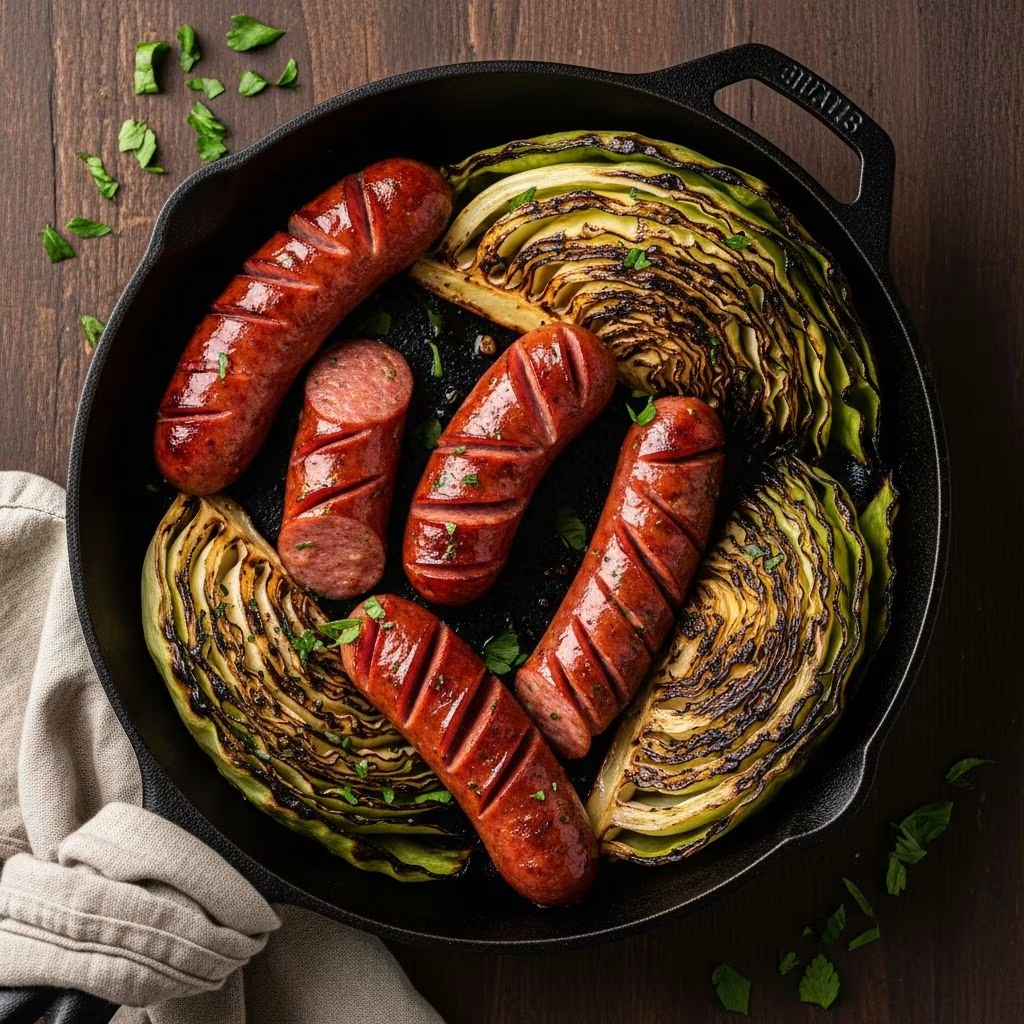
One of the most satisfying and straightforward approaches to weeknight cooking combines humble ingredients into a dish that feels both comforting and sophisticated. When smoky kielbasa meets charred cabbage, enhanced by a bright mustard-based dressing, the result transcends ordinary dinner fare. This cooking method, whether executed on a grill or in a conventional oven, produces layers of flavor that develop through the cooking process, creating tender interiors with caramelized, slightly crispy exteriors.
Understanding the Components: Why This Combination Works
The beauty of this particular dish lies in how each element complements the others through both flavor and texture contrasts. Kielbasa, a Polish-style smoked sausage, provides a richly savory, protein-packed foundation. Its natural smokiness and seasoning mean the meat requires minimal additional flavoring to shine. The sausage’s high fat content ensures it remains juicy during cooking while developing a slightly crispy exterior when properly seared.
Cabbage transforms dramatically when exposed to high heat. Raw cabbage possesses a crisp, slightly bitter quality that can feel vegetal or sharp. When grilled or roasted at high temperatures, the sugars caramelize, developing sweetness while the vegetable softens. The outer leaves crisp slightly, providing textural interest against the tender interior. This transformation makes cabbage an ideal partner for rich, smoky proteins.
The mustard vinaigrette ties these elements together, cutting through richness with acidity while adding brightness and complexity. Whole grain or stone-ground mustard varieties provide texture and a more pronounced flavor profile compared to smooth yellow varieties. Combined with sharp vinegar, aromatic garlic, and quality olive oil, this dressing becomes a finishing touch that elevates the entire plate.
Ingredient Selection and Preparation
Choosing Your Kielbasa
Quality kielbasa begins with selecting the right product. Standard kielbasa found in most grocery stores works well, but seeking out authentic Polish varieties or brands known for natural casings and traditional smoking methods can elevate the dish. Kielbasa typically comes pre-cooked, so your cooking goal focuses on warming the meat through and developing an appealing exterior crust rather than cooking it from raw. A 12-ounce sausage, when cut appropriately, yields four substantial servings alongside vegetables.
Preparing Cabbage for Cooking
Successful cabbage preparation requires thoughtful cutting. Rather than shredding or chopping into small pieces, which can become overly soft and lose structural integrity, cutting the head into thick wedges or substantial chunks maintains shape during cooking. Wedges cut through the core, typically measuring between one and two inches in width, work particularly well. This size allows the exterior to char while the interior remains tender-crisp. Removing any damaged outer leaves ensures a more refined presentation.
The Potato Addition
While the grilled kielbasa and cabbage combination stands alone as a complete dish, incorporating potatoes transforms it into a heartier, more substantial meal. Red potatoes, chosen for their waxy texture and thin skins, hold together during cooking better than starchy varieties. Cutting them into approximately quarter-inch slices or halving small potatoes ensures even cooking alongside the other components.
Crafting the Perfect Mustard Vinaigrette
The dressing warrants special attention as it serves as the final seasoning layer bringing coherence to the plate. A basic vinaigrette formula of three parts oil to one part acid forms the foundation. Using extra-virgin olive oil provides fruity notes that enhance rather than overpower. Red wine vinegar offers depth and subtle berry undertones, though white wine vinegar or apple cider vinegar present equally valid alternatives.
The mustard component deserves consideration regarding type and quantity. Whole grain mustard incorporates visible mustard seeds that add pleasant texture and a slightly grainy mouthfeel. This variety typically possesses a more complex flavor profile compared to smooth mustards. When whisking the vinaigrette, mustard acts partially as an emulsifier, helping oil and vinegar blend more seamlessly while adding its characteristic tangy warmth.
A single minced or crushed garlic clove provides aromatic depth without overwhelming the dressing. Crushing rather than mincing helps extract more flavor while creating a rustic texture. Salt enhances all the other flavors, while freshly ground black pepper adds subtle heat.
Two Methods for Cooking: Grill vs. Oven
The Grilling Approach
Outdoor grilling imparts a distinctive smoky character impossible to replicate indoors. For this method, preparing a medium-high fire ensures adequate heat for charring while avoiding burning. A well-oiled grill grate prevents sticking and facilitates the development of appealing grill marks. Arranging kielbasa and cabbage wedges on the grate requires brief cooking intervals—approximately seven to ten minutes total—with a midway turn ensuring even charring on both sides.
The timing depends on fire intensity and piece thickness. Cabbage should transition from firm to crisp-tender, with the outer leaves showing some charring while the interior remains slightly crunchy. Kielbasa, already fully cooked before grilling, simply requires heating through and developing surface color. Transferring items back to a sheet pan after grilling allows convenient application of the vinaigrette dressing.
The Sheet Pan Oven Method
Oven roasting at 400°F provides a more controlled, consistent cooking environment suitable for year-round preparation. This method eliminates weather considerations while producing comparable results through dry heat caramelization. The process involves two phases: an initial twenty-minute roast, followed by a careful flip and an additional ten to fifteen minutes until edges turn brown and crispy.
Organization matters when roasting multiple components with varying cooking times. Arranging kielbasa and potato slices on the sheet pan with initial oil coating ensures even browning. Adding cabbage wedges nestled between other components prevents crowding while allowing adequate surface exposure to heat. A second light oil brush over the cabbage prevents drying while promoting caramelization.
Cooking Techniques for Optimal Results
Temperature and Timing Fundamentals
Both cooking methods rely on moderately high heat to develop the shallow browning reactions that create complex flavors. Temperatures below 375°F may not produce adequate browning, while excessive heat risks charring before interiors cook properly. The goal involves achieving that sweet spot where exteriors caramelize while interiors cook through without drying.
The Flipping Strategy
Whether grilling or roasting, flipping midway ensures even heat exposure to all surfaces. For cabbage wedges, gentle handling during flipping prevents complete disintegration, though some outer leaves naturally separate and create additional crispy edges—a desirable outcome. Kielbasa pieces, being more structurally sound, flip easily without concern.
Managing Doneness
Visual cues guide doneness assessment more reliably than strict timing. Kielbasa should display slight color deepening on cut surfaces, with edges showing caramelization. Potatoes when fully cooked reveal tender interiors when pierced with a fork, with surfaces showing golden-brown coloring. Cabbage achieves ideal doneness when the exterior shows some browning and charring while inner sections remain slightly crisp and not completely softened.
Plating and Final Presentation
Arranging cooked components on a serving platter or individual plates sets the stage for the vinaigrette application. Grouping kielbasa, cabbage, and potatoes together facilitates drizzling the dressing evenly across the plate. Finishing with fresh herbs—typically parsley—adds color contrast and subtle fresh notes that brighten the overall dish. Some preparations include sour cream as a cooling counterpoint to the mustard sharpness, creating additional textural and flavor complexity.
Variations and Creative Adaptations
Spiced Oil Variations: Moving beyond traditional mustard dressing, harissa paste mixed with olive oil and lemon juice creates a North African-inspired variation with moderate heat and complexity.
Additional Vegetables: Leeks, bell peppers, or fennel can join the cooking pan, each contributing unique flavor profiles and complementing the kielbasa.
Herb Finishes: While parsley represents the standard choice, dill provides a brighter herbaceous note, while cilantro introduces an entirely different flavor direction.
Frequently Asked Questions
What type of cabbage works best?
Green cabbage offers the most traditional choice with a pleasant balance of sweetness and slight bitterness. Savoy cabbage, with its crinkled leaves, becomes more tender when cooked and develops heightened sweetness. Red cabbage introduces visual drama and earthier notes, though cooking times may extend slightly due to denser structure.
Can this dish be prepared in advance?
The vinaigrette can be prepared hours ahead, allowing flavors to meld. However, cooking components should occur shortly before serving to maintain textural contrast between crispy edges and tender interiors. Reheating cooked components often diminishes the appealing textural qualities.
What serving size does this provide?
The basic recipe serves four people when incorporating all components including potatoes. For lighter appetites or when serving alongside substantial side dishes, the same quantity might stretch to five or six portions.
How should leftovers be stored?
Storing cooked components separately from dressing preserves textural integrity. Refrigerated in airtight containers, components keep three to four days. Refreshing with vinaigrette just before serving restores some brightness to reheated portions.
Nutritional Considerations and Dietary Adaptations
This dish derives substantial calories from the olive oil in both the vinaigrette and cooking process, along with the naturally fatty kielbasa. For those monitoring fat intake, reducing oil amounts remains possible, though some reduction in flavor depth and mouthfeel occurs. The vegetable components provide fiber and micronutrients that balance the protein-rich sausage.
Dietary restrictions require minimal modifications. Vegetarians can substitute plant-based sausages, selecting varieties with comparable smokiness and texture. Those avoiding potatoes can substitute additional vegetables like cauliflower or Brussels sprouts, which caramelize similarly when roasted.
Why This Dish Deserves Regular Rotation in Your Cooking Schedule
Mastering this preparation provides a reliable foundation for countless variations while requiring minimal specialized equipment or advanced technique. The straightforward ingredient list keeps grocery shopping simple while the hands-on cooking time remains modest. Whether grilled on warm evenings or roasted on cooler nights, this combination of smoky sausage, charred vegetables, and tangy dressing delivers satisfaction that exceeds the sum of its simple components.
References
- The Dinner Plan: Grilled Kielbasa and Cabbage with Harissa Oil — Substack. April 2026. https://thedinnerplan.substack.com/p/grilled-kielbasa-and-cabbage-firepit-feast
- Sheet Pan Roasted Kielbasa and Cabbage Dinner — Budget Bytes. 2024. https://www.budgetbytes.com/one-pan-roasted-kielbasa-cabbage-dinner/
- Mustardy Grilled Cabbage and Kielbasa — Accounting for Taste. August 2023. https://lynnandruss.com/2023/08/03/mustardy-grilled-cabbage-and-kielbasa/