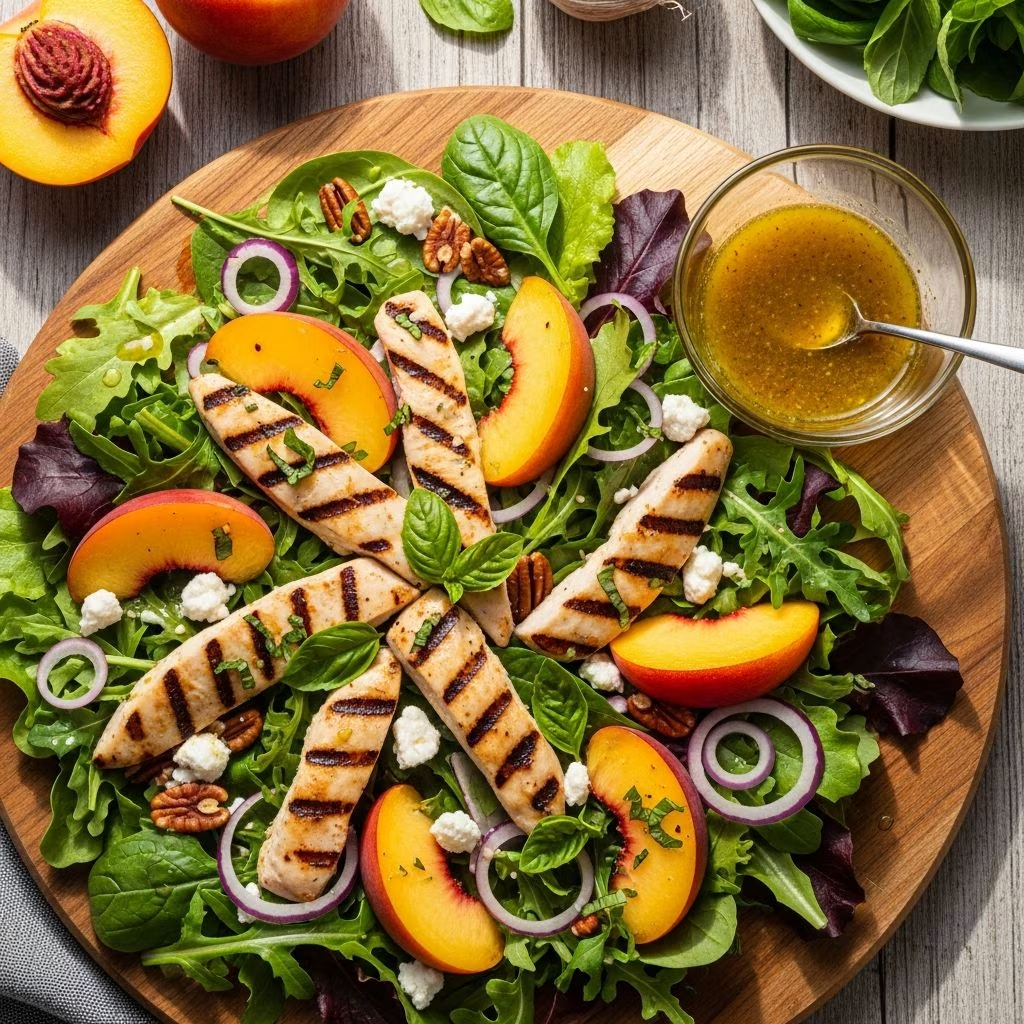
When the warm months arrive, home cooks often seek meals that balance nutrition with seasonal flavors. The combination of grilled chicken, fresh stone fruit, and leafy greens represents one of the most versatile approaches to summer dining. This particular salad configuration has gained popularity among those looking for quick weeknight dinners or impressive entertaining options. The interplay of savory, sweet, and peppery elements creates a dish that satisfies multiple taste preferences while remaining relatively simple to execute.
Understanding the Core Components
Every successful salad begins with understanding how each ingredient contributes to the final dish. The foundation of this recipe relies on quality ingredients that work synergistically to create depth and complexity.
Selecting Quality Chicken
Chicken breast serves as the primary protein component in this salad. The choice between bone-in and boneless varieties affects both cooking time and final texture. Thin-sliced cutlets cook quickly on a grill, typically requiring 3-5 minutes per side depending on thickness and heat intensity. This rapid cooking method helps prevent the meat from drying out, which remains a common concern with lean poultry.
Proper seasoning before grilling creates a flavorful exterior through the Maillard reaction, the chemical process that develops complex tastes when proteins are exposed to high heat. Simple salt and pepper applications work effectively, though some variations incorporate garlic powder, paprika, or herb combinations to enhance the final flavor profile.
Peaches as the Seasonal Star
The selection of peaches represents a critical decision point. Slightly underripe fruits maintain their structure during grilling, while fully ripe specimens may become mushy when exposed to direct heat. The optimal peach state offers firmness with a gentle give when pressed, indicating peak ripeness without excessive softness.
Grilling peaches for 1-2 minutes per side develops caramelization and concentrates the natural sugars. This technique transforms the fruit from simply sweet to complex, adding subtle smoky undertones that complement both the chicken and the greens. The visual presentation improves significantly when peaches acquire grill marks, creating aesthetic appeal alongside flavor enhancement.
Arugula and Fresh Greens
Peppery arugula provides the salad’s foundation, offering a distinctive flavor that distinguishes it from milder greens like spinach or lettuce. The peppery quality comes from naturally occurring compounds that stimulate the palate, creating a flavor contrast that balances sweeter elements like peaches. Baby arugula tends to offer a milder peppery profile compared to mature varieties, making it more approachable for those sensitive to intense flavors.
Crafting the Perfect Dressing
The vinaigrette represents the element that ties all components together, either elevating or diminishing the overall dining experience. Understanding the balance between acidic, oily, and flavorful components creates the foundation for dressing success.
The Oil and Vinegar Foundation
Extra virgin olive oil provides richness and helps distribute fat-soluble flavor compounds throughout the salad. The typical ratio of 3 parts oil to 1 part vinegar creates an emulsion that coats greens evenly. Balsamic vinegar offers deep, slightly sweet notes that complement both peaches and grilled chicken, while options like lemon juice or white wine vinegar provide brighter, more acidic profiles.
Emulsifying Agents and Flavor Builders
Dijon mustard serves dual purposes: it adds flavor complexity and acts as an emulsifying agent, helping oil and vinegar combine into a stable mixture. Minced garlic contributes savory depth, while honey introduces subtle sweetness that bridges the gap between fruit and proteins. Combining these elements in a sealed jar and shaking vigorously creates the proper emulsion, eliminating the need for whisking by hand.
Optional Flavor Variations
Creative cooks often experiment with dressing variations to match personal preferences. Lime-based vinaigrettes with basil offer a fresher, more herbaceous approach. Honey-Dijon combinations appeal to those preferring sweeter dressings. Red wine vinegar provides earthier notes compared to balsamic options. The flexibility of this component allows customization while maintaining the salad’s essential character.
Assembly and Serving Techniques
The sequence of assembly affects both the eating experience and the salad’s structural integrity. Unlike warm composed plates, cold salads benefit from thoughtful arrangement that ensures even distribution of all components in each bite.
Layering Strategy
Placing arugula on the serving vessel first creates a base that allows other ingredients to nestle among the greens rather than settling to the bottom. Distributing chicken pieces evenly across the greens ensures every portion includes adequate protein. Scattering peach slices, red onion, and optional cheese creates visual interest while preventing any single ingredient from dominating the palate.
Timing Considerations
Dressing the salad immediately before serving maintains textural contrast between crisp greens and tender proteins. If prepared ahead for gatherings, components should remain separate until the final moment of service. This practice preserves the structural integrity of delicate arugula leaves and prevents the greens from becoming soggy through prolonged contact with oil-based dressing.
Ingredient Variations and Customization
While the core recipe remains consistent, numerous ingredient variations allow personalization based on availability, dietary preferences, and flavor inclinations.
Cheese Options
| Cheese Type | Flavor Profile | Texture | Best Quantity |
|---|---|---|---|
| Pecorino Romano | Sharp, salty | Crumbly | 2 ounces grated |
| Burrata | Creamy, mild | Soft, creamy | 1 large ball broken into pieces |
| Feta | Tangy, salty | Crumbly | 4 ounces crumbled |
| Goat Cheese | Tangy, mild | Creamy | 2-3 ounces crumbled |
Additional Protein Alternatives
Rotisserie chicken from grocery stores offers convenience when time constraints prevent home preparation. Turkey breast provides a leaner protein option with similar grilling characteristics. For those reducing meat consumption, grilled tofu or tempeh can substitute effectively, though cooking times and temperatures require adjustment. Shrimp represents another quick-cooking option that pairs harmoniously with peaches and arugula.
Supplementary Ingredients
Nuts like toasted almonds, pecans, or walnuts add textural contrast and nutritional value through healthy fats and minerals. Fresh herbs including basil, mint, and parsley enhance aromatic complexity. Red onion provides sharp, pungent notes that balance sweetness. Blueberries introduce additional sweetness and visual appeal. Corn adds textural variety and mild sweetness that complements the peach flavor profile.
Nutritional Considerations
This salad configuration provides substantial nutritional benefits beyond simple caloric content. Grilled chicken contributes high-quality protein essential for muscle maintenance and satiety. Peaches deliver vitamin C and fiber while remaining relatively low in calories. Arugula contains glucosinolates, compounds with potential anti-inflammatory properties. The olive oil provides monounsaturated fats that support cardiovascular health.
The combination creates a balanced macronutrient profile suitable for various dietary approaches. The high protein content supports satiety, making this salad particularly appropriate for lunch meals. The carbohydrate content remains moderate, primarily derived from fruit and vegetables rather than refined sources.
Preparation and Timing Guidelines
Advance Preparation
Most components can be prepared several hours before serving. Chicken can be grilled and refrigerated, then brought to room temperature before final assembly. Peaches should be sliced closer to serving time to prevent browning, though a light coating of lemon juice slows oxidation effectively. The vinaigrette stores well in sealed containers for up to five days under refrigeration.
Grilling Temperature and Technique
Preheating the grill ensures even cooking and proper browning. Medium-high heat prevents the chicken exterior from burning before the interior reaches safe temperatures. A meat thermometer reading of 165 degrees Fahrenheit (74 degrees Celsius) indicates proper doneness without overcooking. Allowing grilled chicken to rest for several minutes before slicing permits carryover cooking and promotes juiciness.
Seasonal Adaptability
While this salad reaches its peak during peak peach season, the fundamental structure adapts to other seasons. Spring variations might incorporate early greens and substitute grilled asparagus for peaches. Fall preparations could feature grilled apple slices and toasted nuts. Winter versions work with roasted pears or preserved fruit options, though the fresh, bright quality diminishes with non-seasonal substitutions.
Frequently Asked Questions
Can this salad be prepared in advance?
Components can be prepared separately several hours ahead, but final assembly should occur just before serving to maintain textural contrast and prevent sogginess. Storing the vinaigrette separately from greens preserves crispness.
What if ripe peaches are unavailable?
Nectarines provide similar flavor and texture, though slightly firmer structure may require adjusted grilling times. Canned peaches in juice represent an acceptable alternative when fresh options lack quality, though fresh fruit produces superior results.
How can this salad be made more substantial?
Adding grains like quinoa, farro, or couscous increases satiety and transforms the dish into a more complete meal. Incorporating additional proteins through nuts or legumes provides alternative nutritional profiles.
Is this salad suitable for meal preparation?
Components store separately well for 3-4 days, making it suitable for meal prep containers when components remain unmixed. Assembling immediately before consumption maintains optimal quality.
Can vegetarians adapt this recipe?
Grilled tofu, tempeh, or hearty vegetables like grilled portobello mushrooms substitute effectively for chicken while maintaining the salad’s essential character and satisfaction level.
Serving Suggestions and Pairings
This salad works excellently as a standalone lunch, providing adequate nutrition for most individuals’ midday requirements. As a dinner component, pairing with crusty bread and a light beverage complements the meal effectively. Wine pairing considerations favor crisp white wines like Sauvignon Blanc or light rosés that don’t overpower the delicate peach flavors.
For entertaining contexts, this salad presents an elegant option requiring minimal last-minute preparation. The visual appeal of grilled peaches and chicken against peppery greens creates an impressive presentation without excessive complexity.
References
- Nutritional Properties of Arugula and Leafy Greens — United States Department of Agriculture (USDA) FoodData Central. 2024. https://fdc.nal.usda.gov
- Food Safety Guidelines for Poultry Cooking Temperatures — United States Department of Agriculture (USDA) Food Safety and Inspection Service. 2024. https://www.fsis.usda.gov/food-safety/safe-food-handling-and-preparation/poultry
- The Maillard Reaction in Cooking and Food Chemistry — McGee, Harold. On Food and Cooking: The Science and Lore of the Kitchen. Scribner, 2004.
- Health Benefits of Extra Virgin Olive Oil — European Food Safety Authority (EFSA). 2023. https://www.efsa.europa.eu
- Stone Fruit Ripeness and Quality Assessment — University of California Division of Agriculture and Natural Resources. 2023. https://ucanr.edu