The grilled cheese sandwich stands as one of America’s most beloved comfort foods, combining simple ingredients into a satisfying meal that appeals to both children and adults. In recent years, creative home cooks have reimagined this classic by transforming it into a casserole format, making it possible to feed a crowd while maintaining the familiar flavors that make grilled cheese so irresistible. This baked interpretation offers convenience, scalability, and the opportunity to customize flavors while preserving the essence of what makes the original sandwich special.
Understanding the Foundation: Why This Format Works
Converting a grilled cheese sandwich into a casserole requires understanding how the basic components interact when baked together. The traditional sandwich relies on the contrast between crispy bread exterior and melted cheese interior, achieved through direct heat on a skillet. A casserole version achieves similar results through a different method: layering bread with cheese and binding everything with an egg custard mixture that creates a cohesive, satisfying dish.
The beauty of this transformation lies in its versatility. Rather than cooking individual sandwiches one at a time, a single casserole can serve multiple people simultaneously. This makes it particularly attractive for family dinners, brunch gatherings, or meal preparation. The custard base ensures every piece of bread absorbs flavor while creating a tender, almost bread pudding-like texture that distinguishes it from the original sandwich.
Core Ingredient Categories and Selection
Bread Selection: Building Your Base
Bread choice significantly influences the final outcome. Quality country-style breads work exceptionally well because they have a sturdy crumb structure that can absorb the custard mixture without becoming mushy. Options include ciabatta, sourdough, brioche, and focaccia, each contributing distinct flavor profiles. Ciabatta provides an airy texture with subtle tang, while sourdough adds complexity and structure. Brioche introduces richness and tenderness, making it ideal for more indulgent preparations. The bread should be cubed into uniform pieces, typically one-inch chunks, to ensure even cooking and consistent texture throughout the casserole.
Cheese Components: Creating Richness
Cheese selection presents an opportunity to customize the dish according to personal preference. American cheese offers creamy melting properties and mild flavor, making it a classic choice. Sharp cheddar provides robust flavor and maintains its structure during baking. Mozzarella adds stretchiness and a more neutral taste profile. Many successful recipes combine multiple cheese types to achieve complexity in flavor and texture. For example, layering sharp cheddar with mozzarella creates depth while ensuring proper melting consistency throughout the casserole.
The Custard Base: Binding Everything Together
The egg and milk mixture serves as the binding agent that transforms separate ingredients into a cohesive dish. This custard base ensures every piece of bread is moistened and flavored, while the eggs provide structure as they set during baking. Standard proportions use approximately one egg and one-half cup of milk per four cups of bread cubes, though recipes vary. The custard should be thoroughly mixed and allowed to soak into the bread for at least twenty minutes before baking, ensuring optimal absorption and texture development.
Recipe Variations: From Simple to Sophisticated
The Classic Version
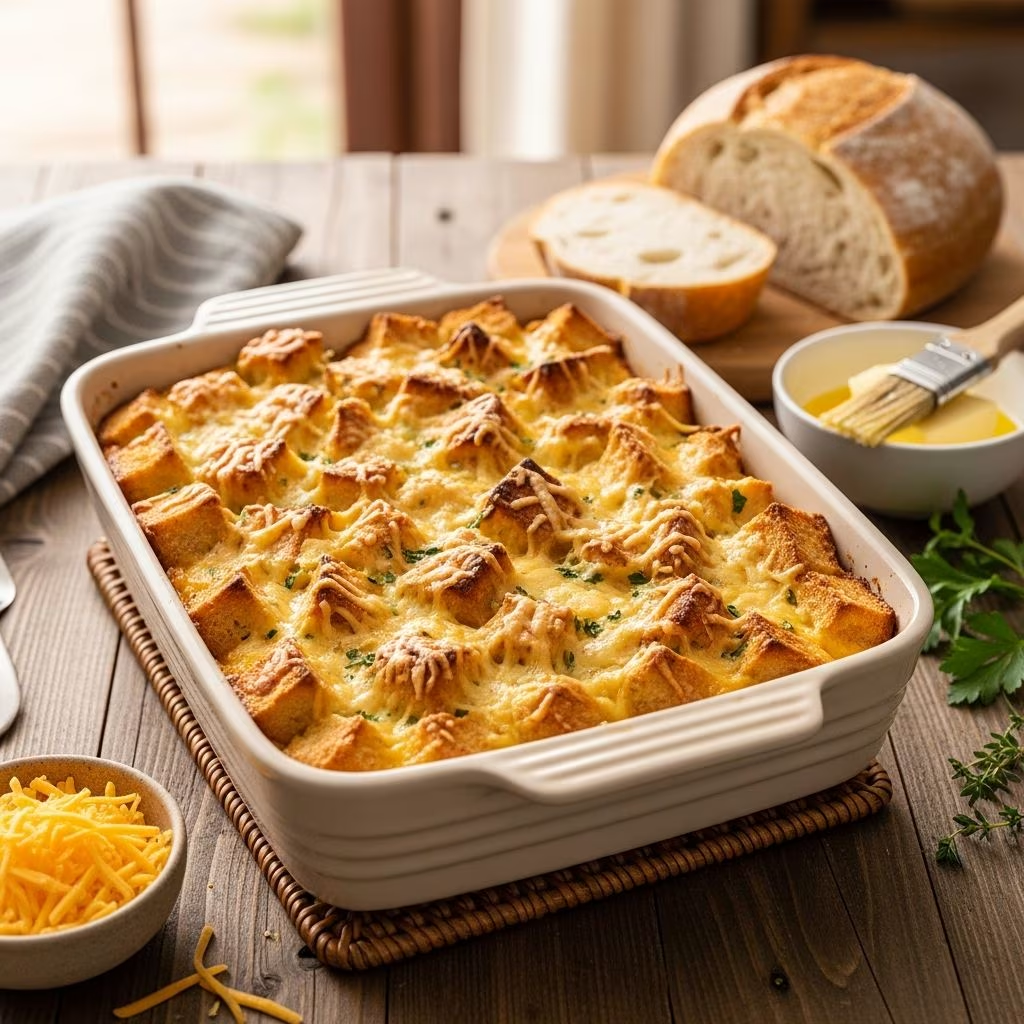
The most straightforward preparation begins with cubed bread, which is soaked in an egg-milk mixture seasoned with salt and pepper. Once adequately moistened, cheese is stirred in along with optional additions like halved cherry tomatoes. The mixture transfers to a buttered casserole dish, receives a topping of additional butter and fresh cracked pepper, then bakes until the cheese melts and the bread develops a lightly golden exterior. This version typically requires fifteen to twenty minutes at three hundred seventy-five degrees Fahrenheit.
The Soup-Infused Adaptation
An innovative variation incorporates condensed tomato soup, creating a dish that evokes the pairing of grilled cheese with soup—a beloved combination. This version begins with toasted bread cubes, which provide textural contrast. Melted butter and garlic salt coat the bread, followed by a layer of shredded cheddar cheese. The soup concentrates pour over the cheese layer, topped with additional mozzarella for final richness. Baking at three hundred fifty degrees Fahrenheit for approximately twenty-five to thirty minutes allows the soup to create a flavorful, slightly saucy environment around the bread and cheese.
The Bacon-Enhanced Interpretation
This more decadent version layers brioche bread slices with bacon and American cheese, creating individual sandwich-like arrangements within the casserole. The entire structure soaks in an egg and milk custard before baking. This preparation often benefits from overnight refrigeration, allowing the custard to fully penetrate the bread. Baking proceeds until the top achieves a golden brown color, typically forty to forty-five minutes at three hundred fifty degrees Fahrenheit. The result combines the familiar comfort of grilled cheese with the added depth that bacon provides.
Preparation Techniques: Achieving Optimal Results
Bread Preparation Methods
How you prepare the bread affects the final texture. Some recipes call for toasting bread cubes in the oven before assembly, which removes excess moisture and creates a more structured base that resists over-soaking. This method proves particularly useful when working with softer bread varieties. Toasting typically occurs at three hundred seventy-five degrees Fahrenheit for about ten minutes, until the cubes begin to dry out but haven’t yet browned significantly.
Alternatively, fresh bread cubes work well when the soaking time is carefully monitored. The bread should absorb sufficient custard to become thoroughly moistened but shouldn’t break down or become overly soft. Tossing the bread with the custard every five minutes during the soaking period ensures even distribution.
Layering and Assembly
The order of layering influences flavor distribution and texture. Beginning with a layer of bread in a buttered casserole dish provides a foundation. Alternating layers of bread, cheese, and other ingredients like tomatoes or bacon ensures that each component gets represented throughout the dish. If using a soup-based liquid, the bread layer typically comes first, followed by cheese and seasonings, with the soup poured over everything at the end.
Make-Ahead Advantages
Preparing the casserole the night before baking offers significant convenience advantages. After assembling the ingredients in the casserole dish and pouring the custard base over everything, cover the dish with plastic wrap and refrigerate overnight. The extended contact time allows the custard to deeply penetrate the bread, resulting in more uniform texture and flavor. Simply bake the chilled casserole the next day without thawing, adding a few minutes to the total baking time if needed.
Baking Guidelines and Temperature Control
| Recipe Type | Oven Temperature | Baking Time | Key Indicator of Doneness |
|---|---|---|---|
| Classic Version | 375°F (190°C) | 15-20 minutes | Cheese is melted and bubbly |
| Soup-Based Variation | 350°F (175°C) | 25-30 minutes | Top is hot and cheese is fully melted |
| Bacon-Enhanced Version | 350°F (175°C) | 40-45 minutes | Top is golden brown, edges set |
Temperature consistency matters significantly. Using an oven thermometer ensures accuracy, as many home ovens run hot or cool. The casserole is fully baked when the cheese has melted completely, the bread has set around the edges, and the center shows signs of firmness without becoming dry. A slight jiggle in the center indicates proper doneness for versions with more custard base.
Customization Possibilities and Creative Additions
Vegetable Additions
Cherry tomatoes provide sweetness and acidity that complements rich cheese. Caramelized onions add depth and a sophisticated flavor dimension. Sautéed mushrooms contribute earthiness, while fresh herbs like chives or parsley offer brightness. These additions should be incorporated into the bread-cheese mixture or layered strategically to prevent excess moisture from compromising texture.
Protein Enhancements
Beyond bacon, options include diced ham, cooked sausage, or smoked turkey. These proteins should be pre-cooked and incorporated into the layers for optimal flavor development. Their addition transforms the casserole from a cheese-forward dish into a more substantial, protein-rich main course.
Seasoning Creativity
The custard base accepts various seasonings beautifully. Dry mustard powder adds a subtle tang reminiscent of classic cheese and mustard combinations. Garlic salt, paprika, or cayenne pepper introduce complexity. Fresh cracked black pepper should always top the casserole before baking, not only for flavor but for visual appeal as well.
Serving and Storage Considerations
Allow the casserole to cool for approximately five minutes after removal from the oven. This resting period allows the custard to set slightly, making it easier to cut into neat portions while remaining warm and creamy. Serve directly from the casserole dish or transfer individual portions to plates, allowing the full presentation to showcase the layers of bread, cheese, and golden-brown top.
Leftover casserole stores well in the refrigerator for up to three days when covered. Reheat gently in a three hundred twenty-five degree oven until warmed through, typically five to ten minutes depending on the portion size. Microwaving is possible but may result in uneven heating and slight textural changes.
Frequently Asked Questions About Grilled Cheese Casserole
Can I prepare this casserole several days in advance?
Yes, the assembled (but unbaked) casserole keeps refrigerated for up to two days. However, extended storage may result in the bread absorbing too much custard, potentially creating a texture more similar to bread pudding than the intended casserole. For best results, bake within forty-eight hours of assembly.
What bread varieties should I avoid?
Avoid very soft breads like sandwich bread or white bread, as they disintegrate too easily during soaking. Whole wheat bread can work but may impart a heavier texture. Fresh focaccia or ciabatta provide ideal structure and flavor.
How do I prevent the casserole from becoming dry?
Ensure adequate custard mixture (approximately one egg and half cup milk per four cups bread cubes) and avoid overbaking. The casserole should appear slightly jiggly in the center when removed from the oven; carryover cooking will firm it up as it cools.
Can I make this in individual ramekins?
Absolutely. Divide ingredients among individual ramekins and reduce baking time to ten to fifteen minutes at three hundred seventy-five degrees. Individual portions cook more quickly and present beautifully for plated service.
Is this recipe suitable for dietary modifications?
The basic recipe adapts to lactose-free preparations using lactose-free milk and dairy-free cheese alternatives, though results may vary. Gluten-free bread works well if substituted for regular bread. Always test chosen alternatives in small quantities first.
Why Grilled Cheese Casserole Deserves a Place in Your Rotation
This casserole format achieves what the original sandwich cannot: feeding multiple people simultaneously while maintaining the familiar comfort and satisfaction that makes grilled cheese timeless. The custard-soaked bread creates a texture sophisticated enough for brunch entertaining yet humble enough for casual family dinners. Whether prepared as a simple weeknight meal or an impressive dish for guests, the grilled cheese casserole delivers reliable deliciousness with minimal complexity.
The flexibility to customize with seasonal vegetables, various cheeses, and complementary proteins means endless possibilities for creative cooks. Whether you prefer the classic version, incorporate soup for added richness, or go all-in with bacon and brioche, the fundamental appeal remains unchanged: a warm, cheesy, satisfying dish that celebrates the enduring charm of the grilled cheese sandwich in its most crowd-pleasing form.
References
- Grilled Cheese Bake — Framed Cooks. Accessed April 2026. https://www.framedcooks.com/grilled-cheese-sandwich-casserole/
- Grilled Cheese & Tomato Soup Bake | Easy Casserole Recipe — Picky Palate. Accessed April 2026. https://picky-palate.com/grilled-cheese-tomato-soup-bake/
- Grilled Cheese Casserole With Bacon — The Flavor Bender. Accessed April 2026. https://www.theflavorbender.com/bacon-grilled-cheese-sandwich-casserole/
- Betty Crocker’s Cheese Sandwich Casserole — 12 Tomatoes. Accessed April 2026. https://12tomatoes.com/betty-crockers-cheese-sandwich-casserole/