Butternut squash represents one of the most versatile vegetables for outdoor cooking, offering a natural sweetness that caramelizes beautifully on the grill. This guide explores everything you need to know about transforming this humble autumn vegetable into a memorable side dish that appeals to both vegetarians and meat-eaters alike.
Understanding Butternut Squash Selection and Quality
The foundation of an exceptional grilled butternut squash dish begins with selecting the right specimen from your grocery store or farmers market. When evaluating butternut squash, focus on several key characteristics that indicate ripeness and quality. The skin should display a uniform beige coloration without any large cuts, gouges, or significant bruising that might compromise the flesh underneath.
Weight serves as another indicator of quality and readiness for grilling. A medium-sized butternut squash, typically weighing between 1.5 to 2.5 pounds, offers the ideal balance between ease of handling and sufficient flesh for multiple servings. The stem end should feel firm when gently pressed, and the overall squash should have a hard exterior that resists puncturing with a fingernail.
Avoid specimens with soft spots, mold, or an overly wrinkled appearance, as these indicate deterioration or age beyond peak quality. The squash should feel heavy for its size, suggesting adequate moisture and proper development of the flesh inside.
Essential Preparation Techniques
Properly preparing butternut squash before grilling requires careful attention and the right tools. Begin by thoroughly washing the entire squash under cool running water to remove any dirt or debris from the field.
Peeling and Cutting Methods
The dense outer skin presents the first challenge in preparation. Using a sharp vegetable peeler, methodically remove the hardest outer layer of skin. Due to the thickness of butternut squash skin, you may need to make two passes with the peeler—one to remove the tough outer layer and a second to eliminate the white or pale green layer between the skin and the flesh.
After peeling, trim away the stem end and the bottom using a sharp chef’s knife. Position the squash with the cut side down on a stable cutting board, then carefully slice the squash in half lengthwise. This creates two long halves that are easier to manage than attempting to work with the whole squash.
Using a sturdy spoon or ice cream scoop, scrape away the stringy fibers and seeds from the hollow center of each half. These seeds, though edible when roasted, should be removed to prevent burning during grilling and to create a clean cooking surface.
Slicing for Optimal Grilling
Once the halves are cleaned and ready, lay each one flat on the cutting board with the cut side facing down. Using a sharp knife, slice the squash into uniform pieces. The ideal thickness ranges from 1/4 inch to 1/2 inch, depending on your preferred texture. Thinner slices cook faster and develop more caramelization on the surface, while thicker slices maintain more moisture and develop a creamier interior.
For a more rustic presentation, cut the squash into half-moon shapes rather than traditional slices. These pieces are easier to handle on the grill and less likely to fall through the grates. Consistency in thickness ensures even cooking across all pieces.
Grill Preparation and Temperature Management
Successful grilling of butternut squash depends on proper grill setup and temperature control. Preheat your grill to medium-high heat, with internal temperatures reaching approximately 450°F (230°C). This temperature range allows the exterior to develop attractive char marks and caramelization while the interior becomes tender.
Before placing any squash on the grill, oil the grates thoroughly to prevent sticking. You can accomplish this by folding a paper towel into a small bundle, dipping it in neutral oil, and rubbing it across the grates using long tongs. A well-oiled grate is crucial for achieving clean grill marks and preventing the delicate squash flesh from adhering to the metal.
If using a charcoal grill, arrange coals to create zones of varying heat intensity. Position more coals on one side to create a high-heat zone and leave the opposite side with fewer coals for a cooler area. This setup allows you to manage cooking and prevent burning of the sugar-based glazes that many recipes employ.
Flavor Foundation: The Base Preparations
The simplest preparation combines olive oil, salt, and pepper applied directly to the squash slices before grilling. Mix 1/2 cup of high-quality extra-virgin olive oil with 1 teaspoon each of kosher salt and freshly ground black pepper. Brush this mixture generously on both sides of each squash slice, ensuring complete coverage for even seasoning and moisture retention during cooking.
For those seeking additional flavor depth, brown butter serves as an exceptional foundation. Melt 8 tablespoons of salted butter in a medium saucepan over medium heat. Once completely melted, reduce heat to medium-low and swirl the butter continuously every two minutes. Watch for the milk solids at the bottom of the pan to transform from white to light brown, a process taking approximately 8 to 10 minutes. The resulting browned butter develops a rich, nutty aroma that elevates the natural sweetness of the squash significantly.
Using a pastry brush, apply the browned butter liberally to both sides of each squash slice. The clear butterfat from the top of the pan transfers smoothly and provides excellent coverage, while the browned solids settle to be used for garnishing later.
Sweet and Savory Seasoning Options
Butternut squash’s inherent sweetness pairs beautifully with both sweet and savory ingredients, offering flexibility for different occasions and palates.
| Flavor Profile | Key Ingredients | Best Use |
|---|---|---|
| Sweet and Simple | Brown sugar, cinnamon, nutmeg | Family dinners, fall gatherings |
| Herbaceous | Fresh sage, thyme, rosemary | Contemporary plating, sophisticated meals |
| Spiced Heat | Red pepper flakes, cayenne, chili powder | Adventurous eaters, Asian-inspired menus |
| Umami-Rich | Parmesan cheese, balsamic vinegar | Vegetarian mains, elegant presentations |
Enhanced Butter Preparations
After browning butter, enhance it with complementary flavors. Fresh sage leaves, with their subtle earthiness, are an excellent addition. Add 2 tablespoons of fresh sage leaves directly to the browned butter and let them infuse for one minute before removing from heat. The sage imparts a sophisticated flavor that elevates simple grilled squash into restaurant-quality fare.
For those who prefer heat, incorporate 1/2 teaspoon of crushed red pepper flakes to the browned butter. This addition provides a subtle punch that balances the squash’s natural sweetness without overwhelming the palate.
Sugar-Based Glazes
Coconut sugar and brown sugar both work effectively in glazes for grilled butternut squash. Combine 1/2 cup of either sugar variety with 1/2 cup of extra-virgin olive oil and your chosen seasonings. Whisk the mixture until it reaches a smooth, emulsified consistency. This glaze caramelizes during cooking, creating a beautiful golden-brown exterior with deep flavor complexity.
Apply the sugar glaze after the squash has already been oiled with the base preparation. The double-coating ensures adequate coverage and promotes even caramelization. During grilling, monitor the squash closely to prevent the sugar from burning—rotate pieces from hot spots to cooler areas as needed to achieve caramelization without charring.
The Grilling Process: Step-by-Step Execution
Once your grill reaches the proper temperature and your squash is prepared and seasoned, carefully arrange the slices on the oiled grates. Position them so each piece makes direct contact with the hot surface, promoting even heat transfer and attractive grill marks.
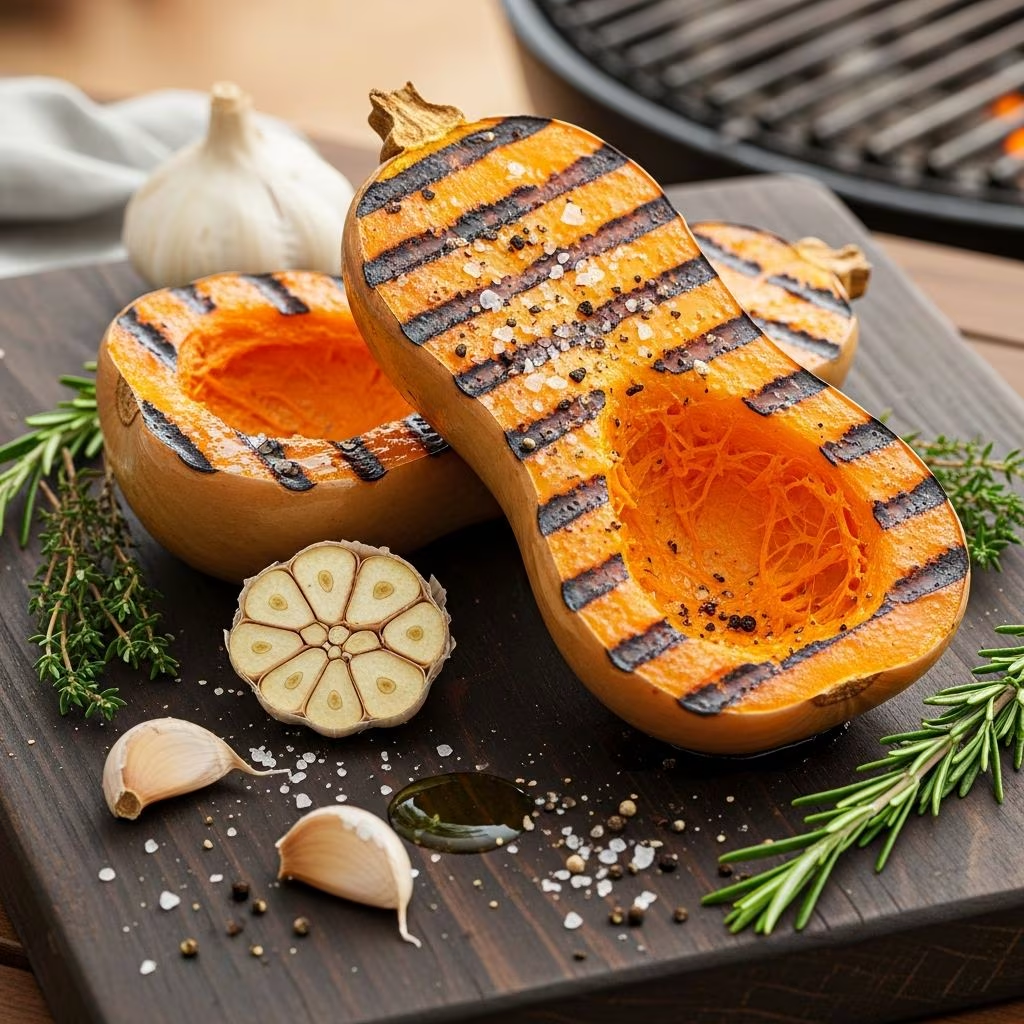
Cook each side for approximately 5 to 10 minutes, depending on the thickness of your slices and the exact temperature of your grill. Thinner slices require less time, while 1/2-inch thick pieces may need closer to 10 minutes per side. The squash is done when the exterior develops caramelization and light charring, and the flesh pierces easily with a fork when tested.
Rotate pieces every few minutes to ensure even cooking and prevent burning. This constant attention is especially important if using sugar-based glazes, as the sugar can burn quickly in hot spots. Transfer pieces from high-heat zones to cooler areas as needed to manage the cooking process and achieve the desired caramelization.
The finished squash should be tender enough to slice easily but still maintain its structure without becoming mushy. The exterior should display attractive caramelization with some darker spots indicating proper cooking without excessive charring.
Finishing Techniques and Presentation
Transfer the finished grilled squash to a serving platter immediately after removing from the grill while the pieces are still warm. If you prepared browned butter with herbs, drizzle the reserved mixture over the hot squash. The warmth of the squash releases the aromatic compounds in the herbs, intensifying their flavor impact.
Freshly shaved Parmesan cheese provides an excellent finishing touch, offering umami depth and textural contrast to the soft grilled squash. Using a vegetable peeler to create thin shards of Parmesan, rather than pre-shredded varieties, significantly enhances both flavor and presentation quality.
Serve the grilled butternut squash immediately while still warm. The dish can be offered as individual slices or presented as substantial halves for guests to scoop servings directly from the skin using spoons.
Advanced Serving and Pairing Strategies
Grilled butternut squash serves multiple roles in meal planning. As a vegetable side dish, it pairs excellently with grilled proteins including chicken, pork, and beef. The caramelized sweetness creates a beautiful contrast with savory mains and smoky grilling flavors.
For vegetarian and vegan meals, grilled butternut squash functions as a substantial component that provides satisfying texture and natural richness. Combine grilled squash with roasted grains, legumes, and fresh greens for complete plant-based meals.
Leftover grilled butternut squash can be repurposed in salads, added to grain bowls, incorporated into soups, or mashed as a side vegetable. The versatility extends the value of grilling squash beyond a single serving occasion.
Common Questions About Grilled Butternut Squash
Can butternut squash be grilled without preheating?
Preheating is essential for optimal results. A properly heated grill allows for quick caramelization of exterior surfaces while maintaining tender interiors. Grilling on cold or insufficiently heated grates results in soggy, steamed squash rather than the desired caramelized texture.
What thickness works best for grilling?
Slices between 1/4 and 1/2 inch thick provide the best balance of exterior caramelization and interior tenderness. Thinner slices cook quickly but may become mushy, while thicker pieces may not cook through before the exterior burns.
How can I prevent butternut squash from sticking to the grill?
Thoroughly oil both the grates and the squash slices before grilling. Allow the squash to sit undisturbed on the grates for the first 3 to 4 minutes before attempting to move it, allowing a crust to form that prevents sticking.
Can gas and charcoal grills both be used?
Both grill types work equally well for butternut squash. Gas grills offer precise temperature control, while charcoal grills provide traditional smoky flavor. Adjust cooking times slightly based on heat distribution and intensity variations between grill types.
Is it necessary to peel squash before grilling?
Peeling is recommended as it allows better heat penetration and flavor absorption. Unpeeled squash can be grilled but requires longer cooking times and produces a different textural result.
References
- Grilled Butternut Squash — Leite’s Culinaria. Accessed April 10, 2026. https://leitesculinaria.com/108968/recipes-grilled-butternut-squash.html
- Grilled Butternut Squash with Browned Butter and Sage — Hey Grill Hey. Accessed April 10, 2026. https://heygrillhey.com/grilled-butternut-squash/
- Traeger Grilled Butternut Squash — Or Whatever You Do. November 2019. https://www.orwhateveryoudo.com/2019/11/traeger-grilled-butternut-squash.html
- Grilled Butternut Squash with Chimichurri — It Doesn’t Taste Like Chicken. Accessed April 10, 2026. https://itdoesnttastelikechicken.com/grilled-butternut-squash-with-chimichuri/
- Butternut Squash with Sage — Kalyn’s Kitchen. Accessed April 10, 2026. https://kalynskitchen.com/recipe-for-foil-wrapped-grilled/