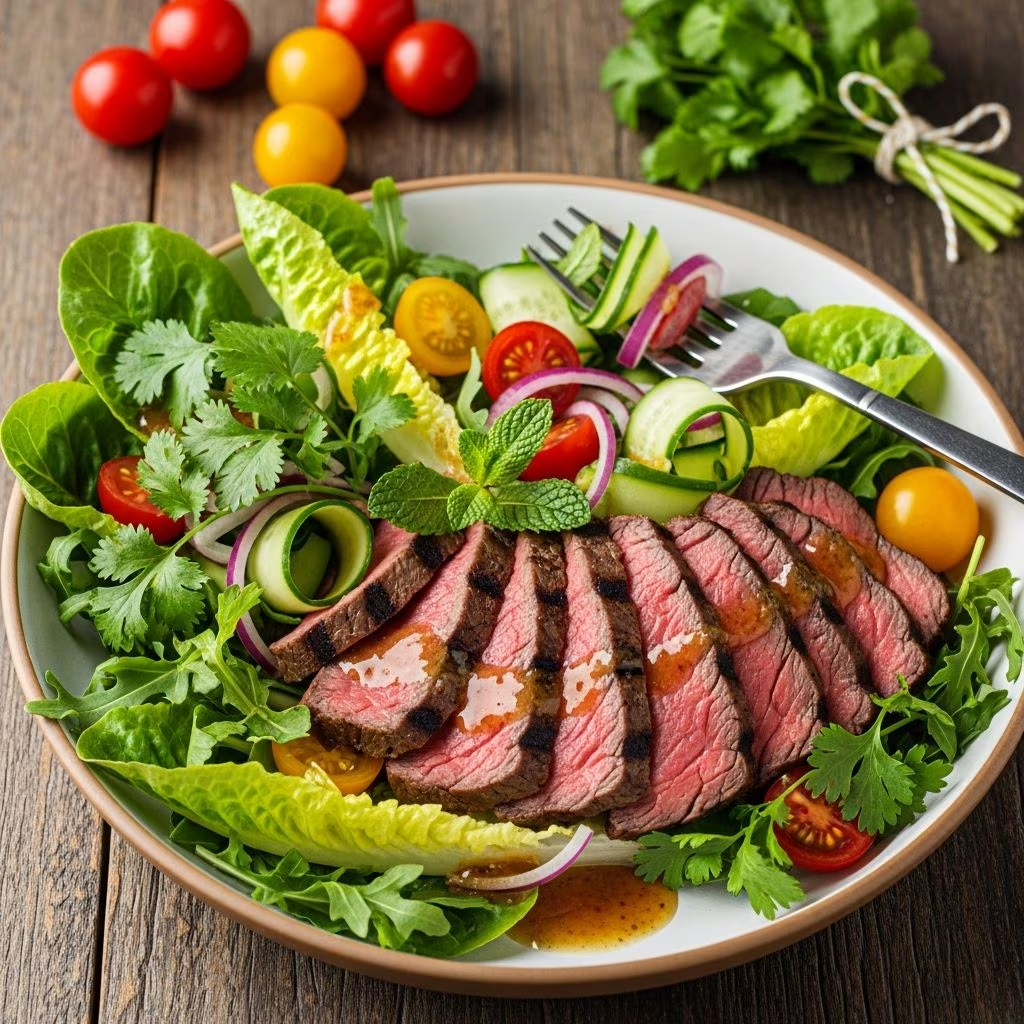
A well-crafted salad that incorporates grilled protein becomes an entirely different dining experience—one that transcends the typical vegetable-focused plate and transforms into a hearty, satisfying meal. When you combine tender, perfectly charred beef with vibrant, aromatic herbaceous elements, you create something that appeals equally to those seeking nutrition and those desiring pure culinary pleasure.
Understanding the Foundation of This Dish
This particular preparation represents a modern approach to salad construction, where the protein becomes the star rather than a secondary component. The beauty of this recipe lies in its balance—the richness of grilled beef is counteracted by fresh vegetables and bright, aromatic dressing that prevents the overall dish from feeling heavy or monotonous.
The fundamental concept involves building layers of flavor and texture that work harmoniously together. Each element serves a distinct purpose: the beef provides savory depth, the greens contribute freshness and nutritional value, and the herb-based sauce ties everything into a cohesive whole.
Preparing Your Beef for Optimal Results
Success begins with selecting the right cut of beef. You’ll want to choose a cut that responds well to high-heat cooking and maintains tenderness after grilling. Premium cuts like ribeye, strip steak, or skirt steak work exceptionally well because they contain sufficient marbling to stay juicy during the cooking process.
Key Steps for Beef Preparation
- Remove from refrigeration: Allow your beef to sit at room temperature for 20-30 minutes before grilling. This promotes even cooking throughout the meat rather than creating an overcooked exterior with an undercooked interior.
- Season generously: Use kosher salt and freshly ground black pepper on both surfaces at least 15 minutes before cooking. Salt actually helps create a better crust by drawing moisture to the surface, which then evaporates to allow proper browning.
- Oil your grill:
- Monitor temperature: Use a meat thermometer to achieve your desired doneness: 125°F for rare, 135°F for medium-rare, 145°F for medium, and 160°F for medium-well.
- Rest the meat: After removing beef from the grill, allow it to rest for at least 5-10 minutes. This resting period allows juices to redistribute throughout the meat, ensuring each slice remains moist and tender.
Ensure your grill grates are clean and lightly oiled to prevent sticking and to promote beautiful char marks that add visual appeal and complex flavor.
Crafting the Aromatic Herb Sauce
The distinguishing feature of this salad is the vibrant green sauce that coats the greens and beef. While traditional basil pesto typically includes pine nuts and cheese, this version can be adapted to personal preferences and dietary requirements. The sauce should be bright, fragrant, and provide a counterpoint to the savory meat.
Essential Components of the Dressing
Fresh basil forms the aromatic foundation. Choose young leaves for the most delicate flavor, as older leaves can taste slightly bitter. Other complementary herbs might include parsley for earthiness or mint for a subtle cooling effect. Garlic provides pungency and depth, though use it judiciously to avoid overpowering the other flavors. Good quality olive oil acts as the binding agent and flavor carrier, while acid from lemon juice or wine vinegar brightens everything. Optional additions like toasted nuts, hard cheese, or seeds add textural contrast and richness.
Selecting and Preparing Your Greens
The salad base requires careful consideration to ensure it complements rather than competes with the bold beef and sauce. A combination of tender and slightly sturdy leaves works best. Baby arugula provides peppery notes that harmonize with herb flavors, while softer lettuces like butter lettuce or oakleaf add delicate texture. You might also incorporate radicchio for slight bitterness that provides balance, or tender spinach for its mild earthiness.
Wash and thoroughly dry your greens to ensure the dressing adheres properly and no excess water dilutes the flavors. Use a salad spinner or clean kitchen towels to remove moisture—this step is crucial for creating a salad that tastes bright rather than soggy.
Building and Presenting Your Salad
Assembly technique significantly impacts both the eating experience and visual presentation. Begin by placing your bed of greens in a large bowl or on individual plates. Dress the greens lightly with your herb sauce, tossing gently to coat without overwhelming them. Slice your rested beef against the grain into pieces roughly half an inch thick. Arrange the beef over the dressed greens, allowing a few slices to overlap for visual interest.
Consider additional embellishments that add complexity: thinly shaved vegetables like radish or cucumber for crunch, halved cherry tomatoes for color and acidity, or crispy croutons for textural contrast. A drizzle of additional herb sauce over the beef and a final grind of fresh pepper completes the presentation.
Flavor Combinations Worth Exploring
While basil remains the classic choice, various herb combinations offer interesting alternatives. Consider a rosemary and garlic version that emphasizes the beef’s richness, or a combination of cilantro and lime for a more dynamic, contemporary approach. Mediterranean-inspired variations might incorporate oregano and lemon, while Asian-influenced preparations could feature Thai basil with ginger and sesame oil.
Timing and Preparation Strategy
This dish works wonderfully for both casual weeknight dinners and more formal entertaining. The herb sauce can be prepared up to two days in advance and stored in the refrigerator, though the flavor intensity will be greatest when freshly made. Beef can be grilled a few hours ahead, then served at room temperature or gently reheated before serving. Greens should be prepared just before serving to maintain their crisp texture.
Make-Ahead Suggestions
- Prepare herb sauce 24 hours in advance
- Grill beef 3-4 hours before serving
- Wash and dry greens 1-2 hours in advance, storing in the refrigerator
- Slice beef just before final assembly
- Compose the complete salad within 15 minutes of serving
Nutritional Considerations
This preparation offers excellent nutritional balance. The beef provides high-quality protein, B vitamins, and iron—nutrients essential for muscle maintenance and energy production. Fresh greens contribute fiber, vitamins, and phytonutrients, while the olive oil in the herb sauce contains heart-healthy monounsaturated fats and polyphenols with antioxidant properties. For those monitoring their diet, this salad can be easily adapted by adjusting portion sizes or ingredient selections without sacrificing satisfaction or flavor.
Frequently Asked Questions
What is the best way to achieve a perfect sear on grilled beef?
Ensure your grill reaches proper temperature (around 450-500°F), pat the beef completely dry before grilling, and avoid moving it excessively on the grill. Allow 3-4 minutes per side for a medium-rare finish on a one-inch thick steak, developing a flavorful crust while maintaining a tender interior.
Can this salad be made ahead for meal prep?
Yes, components can be prepared separately and assembled fresh before eating. Store cooked beef and herb sauce in separate containers in the refrigerator for up to four days. Keep greens in a separate container with paper towels to absorb excess moisture.
What if I don’t have fresh basil available?
Substitute with fresh parsley, arugula, spinach, or even fresh dill depending on your preference. Each will create a distinctly different flavor profile while maintaining the dish’s essential character.
How should I adjust cooking time for different beef cuts?
Thinner cuts like skirt steak require 2-3 minutes per side, while thicker ribeye or strip steaks may need 4-5 minutes per side. Always use a meat thermometer to ensure accuracy rather than relying solely on time.
Is this suitable for entertaining guests?
Absolutely. Prepare components ahead of time and assemble individual plates just before serving for restaurant-quality presentation. This approach impresses guests while reducing stress during the actual meal service.
Versatility and Seasonal Adaptations
This salad format accommodates seasonal ingredient availability beautifully. Spring preparations might feature fresh peas and young greens with lighter, more delicate herb variations. Summer versions can incorporate grilled vegetables alongside the beef, while autumn presentations might include roasted beets and heartier lettuces. Winter adaptations could feature warmer preparations with roasted root vegetables, maintaining the beef as the centerpiece.
Wine Pairing Recommendations
A medium-bodied red wine works exceptionally well with this dish. The tannins in wines like Merlot or Cabernet Sauvignon complement the beef’s savory qualities without overwhelming the fresh herbs. Alternatively, a crisp white wine like Sauvignon Blanc pairs beautifully with the herbaceous elements, particularly if your sauce features bright, citrus-forward components.
Conclusion
This grilled beef and herb salad represents an elegant solution for those seeking protein-forward meals without sacrificing the nutritional benefits and refreshing qualities of fresh vegetables. By understanding each component’s role and preparing them with intention and care, you create a dish that satisfies multiple desires simultaneously—it’s hearty enough for a main course, elegant enough for entertaining, and flexible enough to adapt to your preferences and available ingredients. Whether you’re cooking for family weeknight dinners or impressing guests with your culinary skills, this preparation demonstrates that salads need not be relegated to side dish status when constructed thoughtfully.
References
- Meat Science and Grilling Techniques — National Cattlemen’s Beef Association. 2024. https://www.beef.org/
- Food Safety Guidelines for Beef Preparation — United States Department of Agriculture Food Safety and Inspection Service. 2024. https://www.fsis.usda.gov/
- Nutritional Composition of Beef and Olive Oil — Food Data Central, U.S. Department of Agriculture. 2024. https://fdc.nal.usda.gov/
- Culinary Techniques for Herb-Based Sauces — The Culinary Institute of America, Professional Chef Series. 2023. https://www.ciachef.edu/