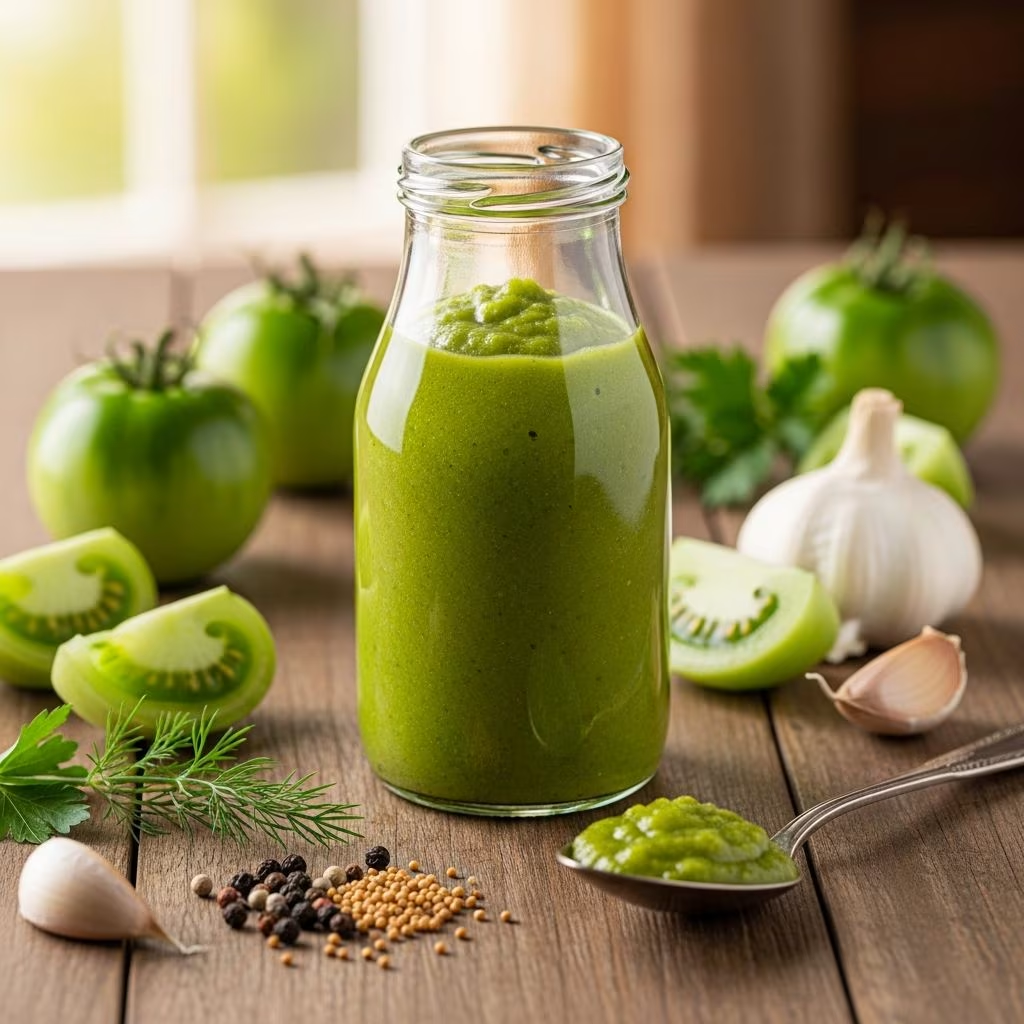
Green tomatoes, often overlooked at the end of the growing season, offer a unique opportunity to create a flavorful condiment that rivals store-bought versions. This sweet and tangy ketchup captures the essence of unripe tomatoes, blending their natural tartness with spices and sweeteners for a versatile pantry staple. Ideal for gardeners facing early frosts or abundant harvests, this recipe turns potential waste into a delicious product suitable for burgers, fries, or marinades.
Why Choose Green Tomato Ketchup?
Unripe green tomatoes provide a firmer texture and brighter acidity compared to ripe red ones, resulting in a ketchup with a distinct zesty profile. Unlike traditional tomato ketchup, this version incorporates onions, vinegar, and pickling spices to enhance depth and complexity. It’s a practical way to preserve summer’s bounty, extending shelf life through proper canning. Home preservers appreciate its adaptability—adjust sweetness or heat to personal taste—while beginners find the process straightforward with basic kitchen tools.
- Seasonal Solution: Utilizes green tomatoes before frost damages vines.
- Customizable Flavor: Balances tartness with sweeteners like honey or agave.
- Long Storage: Canning ensures months of usability without refrigeration.
Essential Ingredients for Success
The foundation of great green tomato ketchup lies in fresh, high-quality components. Start with about 6 pounds of green tomatoes, roughly 12 medium-sized fruits, which yield around six pint jars. Pair them with 1.5 to 3 pounds of onions for savory balance. Key seasonings include dry mustard, black pepper, Worcestershire sauce, and mixed pickling spices, which infuse aromatic notes. Apple cider vinegar provides acidity for safety and tang, while bottled lemon juice boosts preservation. Sweeteners such as 3/4 to 1 cup honey, agave nectar, or sugar counteract the tomatoes’ sharpness.
| Ingredient | Quantity | Purpose |
|---|---|---|
| Green tomatoes | 6 lbs (about 12 medium) | Base flavor and tartness |
| Onions, chopped | 1.5-3 lbs | Savory depth |
| Dry mustard | 1 Tbsp | Spicy warmth |
| Black pepper | 1-2 tsp | Subtle heat |
| Worcestershire sauce | 1 tsp | Umami boost |
| Mixed pickling spices | 2 tsp (in cheesecloth) | Aromatic complexity |
| Apple cider vinegar | 1.5-2 cups | Acidity and preservation |
| Bottled lemon juice | 2 Tbsp | Extra tang and safety |
| Honey or agave | 3/4-1 cup | Sweetness balance |
Note: Use paste-type green tomatoes like Roma for better yield and smoother texture, though any variety works.
Step-by-Step Preparation Guide
Preparing green tomato ketchup involves chopping, slow cooking, blending, and canning. Begin by washing tomatoes and onions thoroughly. Slice or chop into small pieces to ensure even cooking. Combine in a large Dutch oven or stockpot with pepper, mustard, Worcestershire, and pickling spices tied in cheesecloth for easy removal.
- Assemble Base: Add vinegar to the pot, stirring to coat vegetables.
- Low Simmer: Cook on very low heat for 4-6 hours, stirring occasionally to prevent sticking. The mixture will soften and release juices, melding flavors.
- Blend Smooth: Remove spice bag, then puree using an immersion blender, food processor, or standard blender in batches. For ultra-smooth results, pass through a fine mesh strainer or food mill to eliminate seeds and skins.
- Sweeten and Thicken: Return puree to the pot, bring to a boil, and stir in lemon juice and initial sweetener amount. Taste with a clean spoon (to avoid contamination), adjusting sweetness and adding salt if needed. Simmer uncovered 30-60 minutes until thickened to ketchup consistency.
Monitor thickness by drawing a spoon through the mixture; it should hold its path without immediately closing.
Safe Canning Practices
Proper canning is crucial for shelf-stable ketchup. Sterilize pint or half-pint jars by boiling for 10 minutes, adjusting for altitude. Fill hot jars with boiling ketchup, leaving 1/4-inch headspace. Wipe rims clean, apply lids and bands fingertip-tight. Process in a boiling water bath for 5-10 minutes (adjust for elevation: add 5 minutes over 1,000 feet). Cool undisturbed for 24 hours, checking seals by pressing lids—no flexing means success. Store in a cool, dark place for up to a year.
- Altitude Adjustments: 0-1,000 ft: 5 min; 1,001-6,000 ft: 10 min.
- Troubleshooting: If jars don’t seal, refrigerate and use within weeks.
Flavor Variations and Twists
Experiment to suit preferences. For heat, add diced green chili or ginger during cooking. Incorporate a diced apple or fennel seeds for subtle sweetness and earthiness. Quebec-style versions use layered salting overnight to draw out moisture, followed by apples in a spice bag. Reduce vinegar for milder tang or amp up spices like coriander and star anise for exotic notes. Sweeten with brown sugar for caramel undertones or sherry for sophisticated finish.
| Variation | Additions | Effect |
|---|---|---|
| Spicy Kick | 1 green chili, thumb ginger | Fiery warmth |
| Apple Infusion | 1 large apple, diced | Natural sweetness |
| Quebec Style | Overnight salting, apple bag | Thicker, robust |
| Herb Boost | Celery seeds, bay leaves | Complex aromatics |
Nutritional Profile and Health Benefits
This homemade version is lower in sugar than commercial ketchups, especially with natural sweeteners like agave or honey. A 2-tablespoon serving offers approximately 20-30 calories, minimal fat, and vitamins A and C from tomatoes. Onions contribute antioxidants, while vinegar aids digestion. It’s naturally gluten-free and vegan (omit Worcestershire if needed). Compared to sugar-laden store brands, it allows control over sodium and additives.
- Vitamin C: Supports immunity from fresh tomatoes.
- Low Glycemic: Honey options suit balanced diets.
- Probiotic Potential: Ferment briefly before canning for gut health.
Serving Suggestions and Pairings
Beyond classic fries and burgers, drizzle on roasted vegetables, mix into meatloaf, or use as a barbecue sauce base. It elevates grilled meats, eggs, or cheese boards. Thin with vinegar for salad dressing or blend with mayo for aioli. In baking, substitute in cornbread or glazes for ham.
Storage, Troubleshooting, and Tips
Sealed jars last 12-18 months in pantry. Opened, refrigerate up to 3 months. If too thin, simmer longer; if too thick, add vinegar. Common issues: separation (stir before use) or spice floaters (strain finer). Always use bottled lemon juice for consistent acidity—fresh varies.
Frequently Asked Questions
Can I use red tomatoes instead?
Yes, but green provide unique tartness. Red yields milder flavor.
Is pressure canning required?
No, water bath suffices due to high acidity.
How do I know it’s thickened enough?
Spoon test: path stays open; or 220°F on thermometer.
Can I halve the recipe?
Absolutely, for small batches—canning times unchanged.
What if I lack cheesecloth for spices?
Use a tea ball or strain after cooking.
Mastering green tomato ketchup empowers home cooks to preserve harvests creatively. With its tangy-sweet allure, it becomes a kitchen favorite year-round.
References
- Green Tomato Ketchup Recipe — This Mama Cooks! On a Diet. 2021-10-06. https://www.thismamacooks.com/2020/08/green-tomato-ketchup-recipe.html
- Green Tomato Ketchup — Creative Canning. N/A. https://creativecanning.com/green-tomato-ketchup/
- Green Tomato Ketchup — From The Larder. N/A. https://fromthelarder.co.uk/green-tomato-ketchup/
- Green Tomato Ketchup Quebec Style — A Canadian Foodie. 2011-10-09. https://www.acanadianfoodie.com/2011/10/09/green-tomato-ketchup/