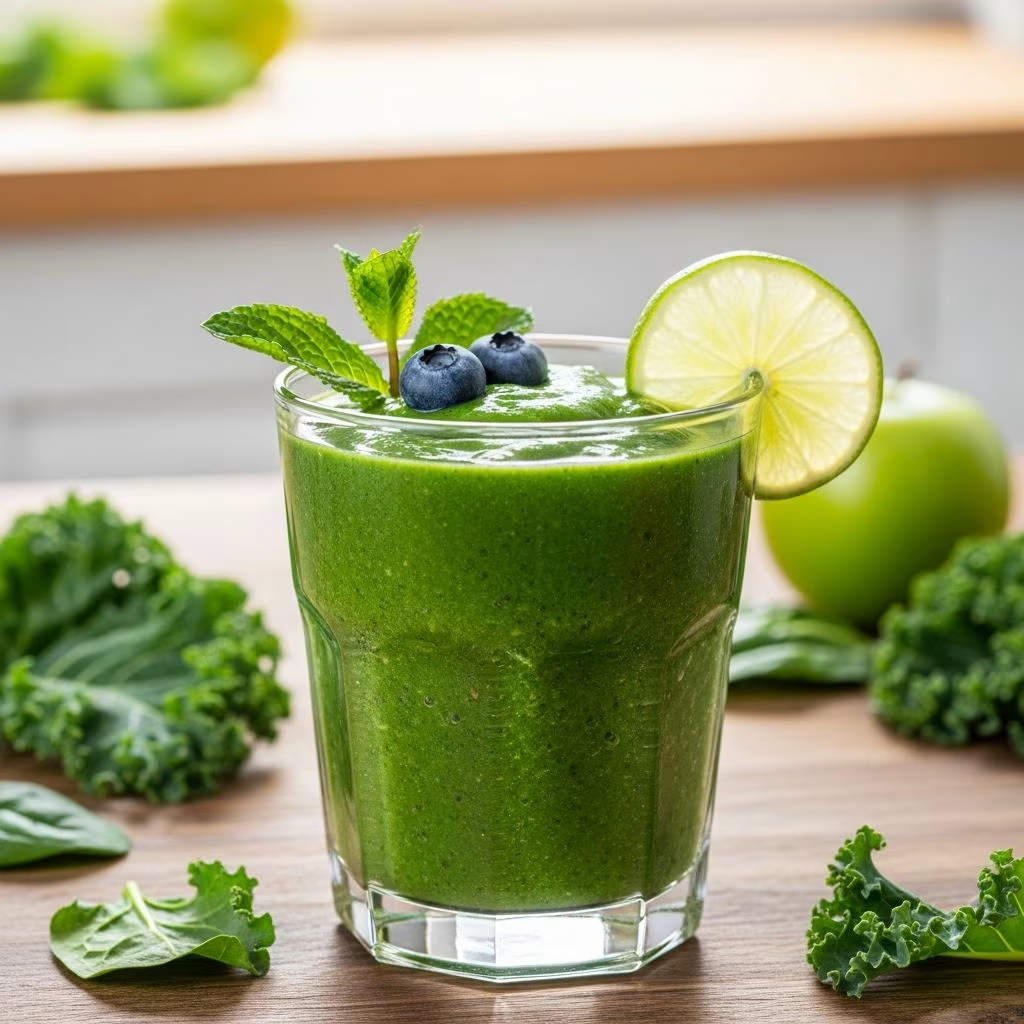
Transform your morning routine with a vibrant green power smoothie that combines the earthy flavors of kale and spinach with sweet, frozen fruits. This recipe delivers a creamy texture without dairy, packing vitamins, fiber, and antioxidants into one glass. Ideal for busy days, it takes just minutes to blend and offers sustained energy.
Why Kale and Spinach Make the Perfect Smoothie Base
Kale and spinach stand out as leafy green powerhouses in smoothies due to their nutrient density. Kale brings robust levels of vitamins A, C, and K, along with minerals like calcium and potassium, supporting bone health and immunity. Spinach complements this with high iron, folate, and additional vitamin K, aiding blood health and detoxification. Together, they create a mild green base that blends seamlessly with fruits, masking any bitterness.
These greens are low in calories yet high in fiber, promoting digestion and satiety. Unlike juicing, blending retains fiber for better gut health. Studies from health authorities confirm leafy greens reduce inflammation and support heart health when consumed regularly.
Essential Ingredients for Your Green Power Smoothie
Gather these simple, accessible items to craft a balanced smoothie. Focus on fresh greens and frozen fruits for optimal texture and flavor.
- Liquid base: 1.25 cups unsweetened almond milk or oat milk for creaminess without added sugar.
- Greens: 2 cups packed spinach (baby or regular) and 1 cup kale (stems removed).
- Frozen fruits: 1 cup mango chunks and 1 cup peach slices for natural sweetness and tropical notes.
- Creamy element: ½ cup raw cashews or ½ cup Greek yogurt for thickness.
- Sweetener: 1 tablespoon honey or a ripe banana.
- Boosters: 1 tablespoon chia seeds or flaxseeds for omega-3s and extra fiber.
Adjust quantities based on your blender’s power and taste preferences. Frozen fruits eliminate the need for ice, keeping the smoothie thick and cold.
Step-by-Step Guide to Blending Perfection
Master the art of smoothie making with this foolproof method. Proper order prevents chunks and ensures smoothness.
- Prep greens: Wash spinach and kale thoroughly. Remove tough kale stems to avoid fibrous bits.
- Layer ingredients: Start with liquid in the blender, followed by greens, then fruits, nuts, and boosters. This order allows greens to puree first.
- Initial blend: Pulse on low until greens break down, about 30 seconds. Scrape sides as needed.
- High-speed blend: Increase to high for 1-2 minutes until velvety. Add ¼ cup water if too thick.
- Serve immediately: Pour into glasses. Yields 2 servings, around 16 oz each.
Total time: 5 minutes. No cooking required, making it beginner-friendly.
Nutrition Breakdown and Health Benefits
One serving (half the recipe) provides approximately 250-300 calories, with 5-7g protein, 40g carbs, 10g fiber, and healthy fats from nuts or seeds. Key nutrients include over 100% daily vitamin C, A, and K from greens and fruits.
| Nutrient | Per Serving | % Daily Value |
|---|---|---|
| Vitamin A | 5000 IU | 100% |
| Vitamin C | 90 mg | 150% |
| Vitamin K | 400 mcg | 500% |
| Fiber | 10 g | 40% |
| Potassium | 800 mg | 20% |
Benefits extend to weight management, as the fiber and protein curb hunger. Antioxidants combat oxidative stress, per USDA data on leafy greens. Those with thyroid issues should moderate kale due to goitrogens, but blending with vitamin C-rich fruits mitigates this.
Customizing Your Smoothie for Different Needs
Tailor this base recipe to fit dietary goals or available ingredients. Experiment responsibly to maintain balance.
- Protein boost: Add Greek yogurt, peanut butter, or protein powder for muscle recovery.
- Low-sugar version: Swap honey for stevia and use berries instead of mango.
- Tropical twist: Include pineapple or coconut water for hydration.
- Kid-friendly: Double fruits and add a splash of orange juice to hide greens.
- Anti-inflammatory: Incorporate ginger, turmeric, or avocado.
For vegan options, stick to plant milks and nuts. Freezing greens extends shelf life if prepping ahead.
Common Mistakes and Pro Tips
Avoid pitfalls for restaurant-quality results every time.
- Overloading greens: Start small to prevent bitterness.
- Weak blender: Use a high-speed model or blend in stages.
- Skipping liquids: Always measure to achieve pourable consistency.
- Pro tip: Soak cashews overnight for ultra-creaminess without grit.
- Storage: Best fresh, but refrigerate up to 24 hours in an airtight container; shake before drinking.
Invest in a tamper for stubborn blends. Clean immediately to prevent staining from greens.
Pairing Ideas and Meal Prep Strategies
Elevate this smoothie as part of a larger routine. Pair with nuts or yogurt for a complete breakfast. For meal prep, portion ingredients in freezer bags for grab-and-blend convenience.
- Post-workout: Add banana and oats for carbs and recovery.
- Detox day: Combine with lemon and cucumber for cleansing.
- Winter warmer: Blend with warm almond milk (post-blend).
Batch prep yields 4-6 servings, freezing well for up to a month. Thaw overnight for quick access.
Frequently Asked Questions (FAQs)
Can I use frozen kale and spinach?
Yes, reduce fresh amounts by half when using frozen to avoid over-dilution.
Is this smoothie good for weight loss?
Absolutely, its low calories and high fiber promote fullness without spiking blood sugar.
How do I make it sweeter without sugar?
Use more ripe banana, dates, or frozen pineapple for natural sweetness.
Can I substitute cashews?
Try almonds, sunflower seeds, or silken tofu for similar creaminess.
Does kale taste strong in smoothies?
Not when paired with fruits; massaging kale first softens its texture.
Advanced Variations for Foodies
Elevate your skills with these gourmet twists. Incorporate superfoods like matcha for an energy kick or cacao for a dessert-like treat. A savory version with avocado and herbs works for lunch.
Seasonal swaps: Use berries in summer, apples in fall. Track macros via apps for precision nutrition.
References
- USDA FoodData Central: Kale, raw — United States Department of Agriculture. 2023-05-15. https://fdc.nal.usda.gov/fdc-app.html#/food-details/168421/nutrients
- USDA FoodData Central: Spinach, raw — United States Department of Agriculture. 2023-05-15. https://fdc.nal.usda.gov/fdc-app.html#/food-details/168462/nutrients
- National Institutes of Health: Vitamin K Health Professional Fact Sheet — NIH Office of Dietary Supplements. 2024-01-10. https://ods.od.nih.gov/factsheets/VitaminK-HealthProfessional/
- Harvard T.H. Chan School of Public Health: The Nutrition Source – Leafy Greens — Harvard University. 2023-08-22. https://www.hsph.harvard.edu/nutritionsource/food-features/leafy-greens/
- Journal of Nutrition: Dietary Leafy Greens and Cardiovascular Disease Risk — Oxford University Press (peer-reviewed). 2022-06-01. https://doi.org/10.1093/jn/nxac123