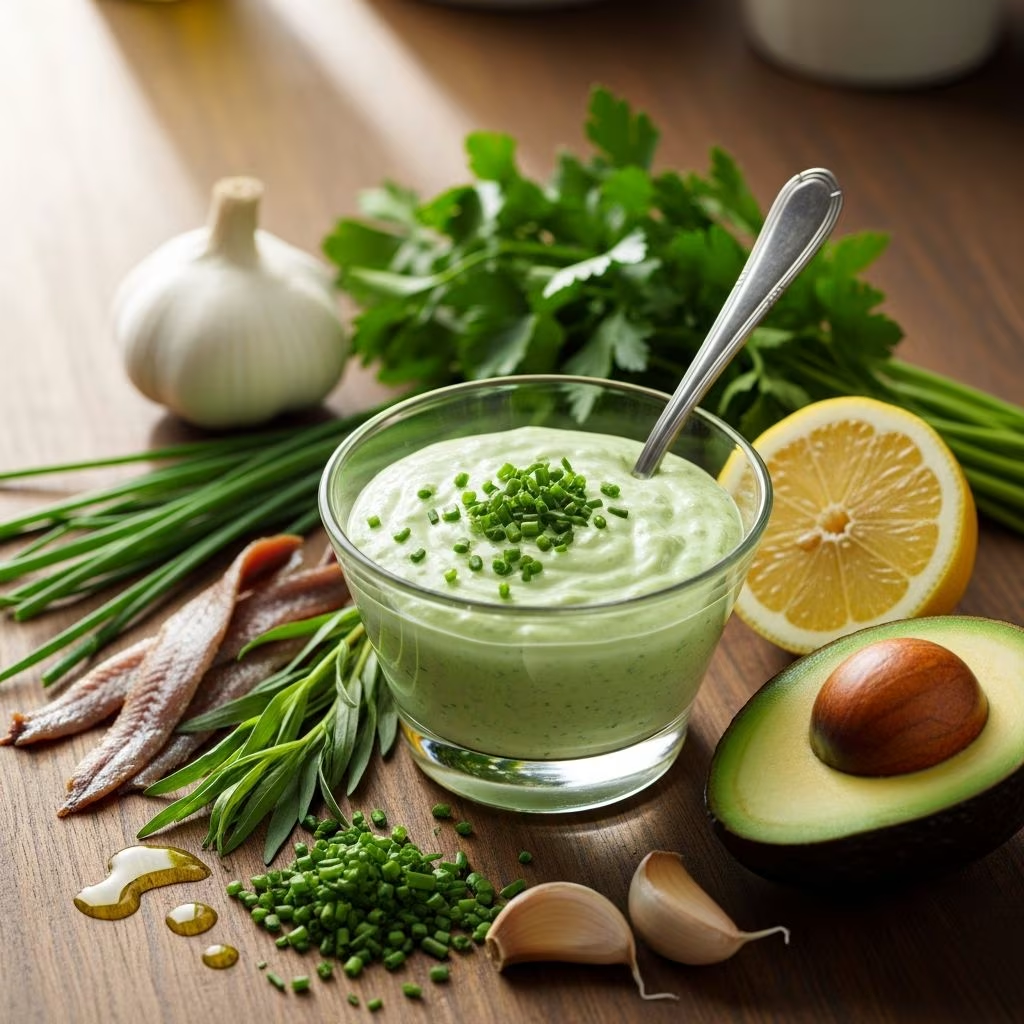
Green goddess dressing stands as one of the most versatile and beloved condiments in contemporary cuisine. This creamy, herb-infused sauce has transcended its origins to become a staple in kitchens around the world, valued equally as a salad dressing, vegetable dip, or accompaniment to grilled proteins. The beauty of this preparation lies in its simplicity—a carefully balanced combination of mayonnaise, sour cream, and a trio of distinctive herbs creates a sauce that is simultaneously sophisticated and approachable for home cooks of all skill levels.
The Fascinating Origin Story of Green Goddess Dressing
The narrative behind green goddess dressing is rooted in San Francisco’s culinary history. Executive Chef Philip Roemer of the Palace Hotel created this distinctive dressing in 1923 as a tribute to renowned actor George Arliss, who was residing at the hotel during his theatrical run in a production titled “The Green Goddess.” This origin story illustrates how culinary innovations often emerge from the intersection of hospitality, creativity, and cultural moments. The dressing gained significant popularity throughout California during the mid-twentieth century, becoming particularly associated with the Golden State’s approach to lighter, herb-forward cuisine.
The classic 1970s California-style version of this dressing maintains a closer connection to the original formulation than many modern interpretations. Contemporary variations often substitute yogurt for mayonnaise or minimize the vinegar component, which can alter the intended flavor profile. Understanding the authentic composition helps home cooks appreciate why certain ingredient ratios matter and how they contribute to the final result.
Essential Ingredients and Their Roles
Creating an exceptional green goddess dressing begins with understanding how each component contributes to the overall flavor and texture profile. The foundation of this sauce requires careful attention to both quantity and quality.
The Creamy Base Components
The foundation of any green goddess dressing consists of two primary dairy elements. Mayonnaise serves as the primary structural component, providing richness and emulsification while acting as a canvas for other flavors. A cup of high-quality mayonnaise creates the base, though homemade versions offer superior flavor and texture compared to commercial alternatives. Sour cream contributes tanginess and reduces the heaviness of the mayonnaise while introducing subtle acidic notes. Typically, three-quarters to one cup of sour cream balances the mayonnaise perfectly, creating a consistency that works equally well as a pourable dressing or a thicker dip.
The Herb Trilogy
Three specific herbs form the cornerstone of authentic green goddess dressing, and substituting or eliminating any one of them fundamentally changes the sauce’s character. These herbs should be fresh rather than dried, as the drying process concentrates flavors in ways that can overpower the delicate balance.
- Flat-leaf Italian parsley comprises approximately one-third cup of finely chopped leaves and provides a clean, slightly peppery base note that doesn’t overpower other ingredients
- Fresh tarragon, also about one-third cup of chopped leaves, delivers the signature sweet aromatic quality that distinguishes this dressing from other herb preparations
- Fresh chives, roughly one-quarter cup when finely chopped, contribute a subtle onion note with grassy undertones that round out the flavor profile
The interplay between these three herbs creates a complexity that cannot be replicated by using fewer options or different selections. Each herb plays a specific role in building the overall flavor architecture of the sauce.
Supporting Flavor Components
Beyond the primary elements, several additional ingredients refine and balance the dressing. A single garlic clove, finely minced or crushed, provides subtle pungency without overwhelming the herb flavors. One anchovy fillet or three tablespoons of anchovy paste contributes umami depth and complexity. The anchovy presence enhances other flavors rather than announcing itself, creating a more interesting and complete taste experience. For acidity, a combination approach works best: approximately one tablespoon each of rice vinegar or tarragon wine vinegar alongside fresh lemon juice. This dual-acid strategy prevents the dressing from tasting one-dimensional while maintaining brightness. Finally, salt and freshly ground black pepper, adjusted to taste, ensure all flavors reach their full potential.
Step-by-Step Preparation Method
Equipment Selection and Preparation
The method of combining ingredients affects the final texture and how smoothly the components incorporate. A regular blender produces the smoothest results, though food processors and immersion blenders offer viable alternatives. Before beginning, arrange all ingredients in accessible positions, roughly chop the herbs to reduce fiber length (particularly important for chives to prevent wrapping around the blade), and ensure all equipment is clean and dry.
The Blending Process
Begin by adding the mayonnaise to the blender as the base layer. Pour the sour cream directly onto the mayonnaise without pre-mixing. Add the minced garlic clove, allowing it to distribute throughout the base ingredients. Position the anchovy fillet in the center of the mixture. Pour the vinegar and fresh lemon juice over these components, which begin the process of breaking down the mayonnaise structure and allowing it to become more fluid.
Next, add the three prepared herbs—parsley, tarragon, and chives—directly into the blender. Secure the lid and blend on high speed for approximately one to two minutes. The duration depends on your specific blender’s power and the size of herb pieces. Stop occasionally to assess smoothness; the dressing should transform from a chunky mixture into a completely uniform, creamy sauce with a vibrant green hue. The color provides visual feedback indicating thorough blending and adequate herb incorporation.
Final Adjustments
Once the dressing reaches the desired smoothness, taste it before serving. Adjust salt and pepper according to preference, remembering that flavors can continue developing after blending. If the dressing seems too thick, thin it with additional sour cream or lemon juice. If flavors taste muted, add a pinch more salt or a squeeze of fresh lemon juice to brighten the profile.
Ingredient Variations and Substitutions
While the classic formula remains time-tested, thoughtful modifications can accommodate dietary preferences or available ingredients without compromising quality. Greek yogurt can replace a portion of the sour cream for those seeking higher protein content, though this substitution alters the flavor profile slightly by adding tanginess. Some modern interpretations substitute plain yogurt entirely for mayonnaise, creating a lighter version that appeals to health-conscious cooks, though this deviates significantly from the traditional preparation.
For the acidic component, white wine vinegar substitutes adequately for tarragon vinegar when the latter is unavailable. However, the distinctive tarragon flavor profile requires using fresh tarragon leaves rather than a substitution; no other herb truly replicates tarragon’s unique characteristics. If fresh herbs prove impossible to source, frozen herbs (thawed and drained) work better than dried alternatives, though fresh remains superior.
The anchovy component generates the most discussion among cooks. Some omit it entirely for vegetarian preparations, accepting that the umami depth will be diminished. Others increase it slightly for deeper complexity. Tamari or soy sauce cannot adequately replace anchovy, though a small amount might add umami dimensions.
Storage and Shelf Life Considerations
Properly stored green goddess dressing maintains optimal quality for approximately one week when kept in an airtight container in the refrigerator. Mason jars with tight-fitting lids provide excellent storage solutions that protect the dressing from oxidation and absorption of refrigerator odors. The color may darken slightly over several days as the herbs continue oxidizing, though taste typically remains consistent. Before using stored dressing, stir thoroughly to recombine any separated components, and taste again to confirm seasoning remains satisfactory.
Versatile Applications Beyond Salads
While green goddess dressing excels as a salad accompaniment, its applications extend throughout the culinary repertoire. As a vegetable dip, it pairs beautifully with raw carrots, celery, cucumber, bell peppers, and radishes. For grilled or roasted proteins, dollop the dressing over chicken, fish, or beef to add brightness and moisture. Spread it on sandwiches and wraps for distinctive flavor layers, or use it as a topping for baked potatoes and grain bowls. The versatility of this sauce makes it worthwhile to prepare in quantity for multiple applications throughout the week.
Common Questions About Green Goddess Dressing
Can green goddess dressing be made vegan?
Creating a fully vegan version requires replacing mayonnaise with vegan alternatives and sour cream with cashew cream or coconut yogurt. While technically possible, these substitutions significantly alter the original flavor and texture, creating an entirely different preparation. The result may be delicious on its own merits but won’t replicate the classic sauce.
Why does my dressing taste bitter or unpleasant?
Bitterness typically indicates over-blending, which damages herb cells and releases bitter compounds. Blend only until completely smooth, typically no longer than two minutes. Additionally, ensure the anchovy doesn’t overwhelm; start with half a fillet and increase only if the umami seems insufficient after tasting.
What consistency should the finished dressing have?
The ideal texture flows easily from a spoon yet clings to salad greens without running off excessively. If too thick, add lemon juice or vinegar by the teaspoon. If too thin, incorporate additional mayonnaise to thicken.
Can this dressing be prepared ahead for entertaining?
Yes, preparing the dressing one or two days in advance allows flavors to meld more fully, often resulting in a more cohesive final taste. Simply store in a sealed container in the refrigerator and stir before serving.
Troubleshooting Tips for Optimal Results
If ingredients separate after blending, the mayonnaise may have been too cold or the blending too vigorous. In such cases, begin anew with room-temperature ingredients and blend more gently. If the dressing appears grainy rather than smooth, the herbs may not have processed sufficiently; continue blending in short bursts until completely uniform.
Should you accidentally over-salt the dressing, adding additional sour cream and lemon juice helps dilute the salt concentration while maintaining texture. Remember that salt intensity becomes more pronounced the longer the dressing sits, so initial seasoning should err slightly on the conservative side, allowing for adjustment as flavors develop.
Elevating Your Green Goddess Dressing
For those seeking to distinguish their version from standard preparations, several refinements produce remarkable results. Using freshly squeezed lemon juice rather than bottled juice dramatically improves brightness and complexity. Selecting high-quality mayonnaise, preferably made with egg yolks from pastured chickens, contributes superior flavor depth. For adventurous cooks, adding a small pinch of cayenne introduces subtle heat that complements the herb profile without overwhelming it.
Toasting herbs lightly before blending—which involves gently heating them in a dry pan for ten to fifteen seconds to awaken their essential oils—can intensify flavor, though this step is optional and requires careful attention to prevent scorching.
Conclusion: Mastering a Culinary Essential
Green goddess dressing represents a perfect intersection of simplicity and sophistication, combining humble ingredients through straightforward technique to produce restaurant-quality results in a home kitchen. Understanding the historical context, appreciating the role of each ingredient, and practicing proper technique ensures consistent success. Whether served as a salad dressing, vegetable dip, or culinary accent, this versatile sauce rewards mastery with countless opportunities for creative application. As you prepare this dressing repeatedly, your palate will develop familiarity with how flavors balance and evolve, enabling confident adjustments that reflect your personal preferences while maintaining the essential character that has made green goddess dressing beloved since its 1923 inception.
References
- Green Goddess Dressing Recipe – Delicious Table — Delicious Table. May 15, 2024. https://www.delicioustable.com/green-goddess-salad-dressing-moms-recipe/
- How to Make Green Goddess Dressing & Dip — Food Wishes. May 2014. https://foodwishes.blogspot.com/2014/05/green-goddess-dressing-oh-my-god.html
- Chef John’s Green Goddess Dressing — PantryLink Recipes. https://pantrylink.app/recipes/chef-johns-green-goddess-dressing