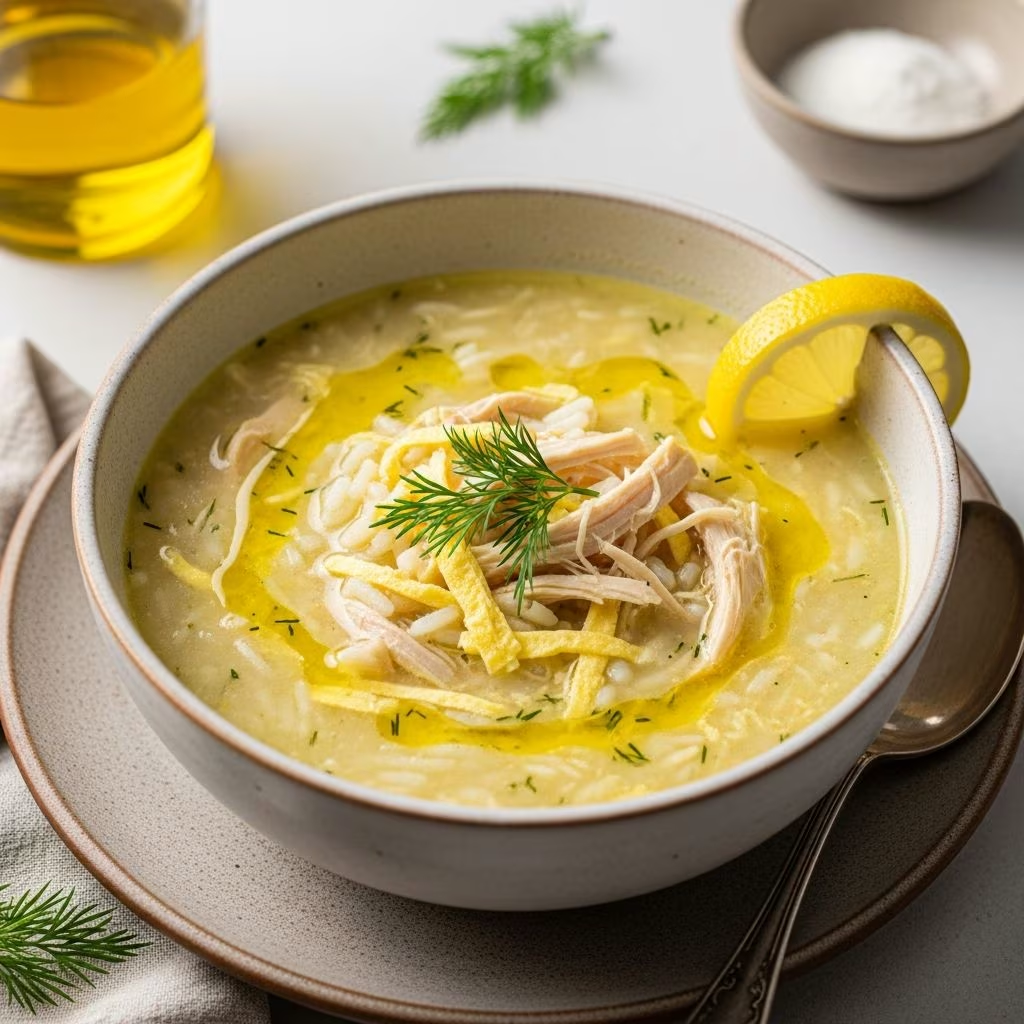
One of the most beloved soups in Mediterranean cuisine, Greek lemon chicken soup represents comfort and tradition in a single bowl. Known locally as avgolemono (pronounced ah-vgo-le-mono), this dish combines tender chicken, silky broth, and a distinctive lemon-egg sauce that creates a rich, velvety texture. Despite its elegant appearance and sophisticated flavor profile, this soup can be prepared in just 30 minutes, making it an ideal choice for busy weeknight dinners or impressive entertaining.
Understanding the Foundation: What Makes This Soup Special
The magic of Greek lemon chicken soup lies in its unique preparation method and ingredient balance. Unlike heavy cream-based soups, this dish achieves its luxurious consistency through an innovative technique where eggs are tempered with hot broth and then gently incorporated into the cooking liquid. This creates a naturally creamy texture while maintaining the soup’s bright, refreshing character. The foundation consists of quality chicken broth, which serves as the flavor base, combined with tender chicken pieces, a starch component (typically rice or orzo pasta), and the signature avgolemono sauce.
The soup’s distinctive tanginess comes from fresh lemon juice and zest, which add both acidity and aromatic brightness. This combination of flavors makes the dish both comforting and surprisingly light, which is why it has remained a staple in Greek households for generations and has become increasingly popular in modern home kitchens.
Essential Ingredients and Selection Guide
Creating an authentic Greek lemon chicken soup begins with understanding each ingredient’s role. The following components form the backbone of this classic recipe:
Protein and Broth Components
- Chicken Broth or Stock: Use 8 to 10 cups of quality chicken broth as your base. Low-sodium varieties allow you to control salt levels, while homemade broth provides superior flavor depth. The broth should be clear and aromatic, not cloudy or overly salty.
- Chicken: Boneless, skinless chicken breasts (approximately 1 pound) work best for quick cooking and easy shredding. Alternatively, use pre-cooked rotisserie chicken to reduce total cooking time. If using raw chicken, select pieces without visible fat or discoloration.
Flavor-Building Aromatics
- Fresh Lemons: Select firm, unblemished lemons with thin skin. You’ll need approximately three medium lemons to yield ½ cup of juice plus zest. Freshly squeezed juice offers superior flavor compared to bottled alternatives.
- Garlic: Use 6 to 8 cloves of fresh garlic, minced finely. Garlic should be fragrant and free from sprouting or soft spots.
- Onion: One large sweet onion, thinly sliced or diced, provides natural sweetness and depth. Yellow onions work well for a more traditional preparation.
- Olive Oil: Select high-quality extra virgin olive oil for both cooking and finishing. Use approximately 3 tablespoons for sautéing aromatics.
Starch and Texture Components
- Orzo or Rice: Dried orzo (rice-shaped pasta) or white rice (1 cup uncooked) serves as the primary starch. Both options cook within 15 minutes, though rice may require slightly longer cooking. Pearl couscous offers a finer texture alternative.
- Additional Vegetables (Optional): Diced carrots and celery add nutritional value and create a more complex flavor base. These vegetables should be cut into uniform pieces for even cooking.
The Signature Sauce Components
- Eggs: Use 2 to 3 large eggs plus additional egg yolks for richness. Eggs should be room temperature before use to prevent curdling.
- Cayenne Pepper: A pinch of cayenne (approximately 1/8 teaspoon) adds subtle heat and complexity without overwhelming the palate.
- Finishing Ingredients: Fresh dill, parsley, or chives provide garnish and aromatic enhancement. Crumbled feta cheese adds a tangy, salty element.
Step-by-Step Preparation Method
Successful preparation of Greek lemon chicken soup requires attention to timing and technique. Follow these sequential steps to achieve optimal results:
Stage One: Aromatic Foundation (Minutes 0-5)
Heat olive oil in a large soup pot or Dutch oven over medium heat. Once the oil shimmers, add diced onions, minced garlic, and any optional vegetables (carrots and celery). Sauté these aromatics for 3 to 5 minutes, stirring occasionally, until they become translucent and softened. The vegetables should begin releasing their aromatic compounds without browning. This foundation layer creates depth of flavor that permeates the entire soup.
Stage Two: Protein Cooking (Minutes 5-15)
Add the chicken broth, lemon peel (save the juice for later), and raw chicken breasts to the pot. Increase heat to medium-high and bring the mixture to a gentle boil. Once boiling, reduce heat to medium-low and maintain a gentle simmer. Cover the pot and cook for 10 minutes, or until the chicken is completely cooked through but still tender. The internal temperature should reach 165°F when measured with a meat thermometer.
Carefully remove the cooked chicken using tongs and place it on a cutting board. Once cool enough to handle, shred the chicken using two forks or your hands, creating bite-sized pieces. Set the shredded chicken aside. Remove and discard the lemon peel from the broth.
Stage Three: Starch Addition (Minutes 15-30)
Return the broth to a boil and add your chosen starch (orzo or rice). Stir well and maintain a steady boil. Cook for 12 to 15 minutes for orzo, or until the starch is tender but still maintains a slight bite. For white rice, cooking typically requires the full 15 minutes. Taste a piece to verify doneness before proceeding.
Stage Four: Sauce Preparation (Concurrent with Stage Three)
While the starch cooks, prepare the signature avgolemono sauce. In a medium bowl, vigorously whisk together room-temperature eggs and egg yolks until they become light and foamy, approximately 2 minutes of continuous whisking. The mixture should noticeably increase in volume and appear pale.
Still whisking continuously, slowly add the fresh lemon juice to the egg mixture. Then, while maintaining constant whisking motion, gradually ladle in 1 cup of the hot broth from the cooking pot, adding it slowly in small increments. This tempering process prevents the eggs from scrambling and creates a smooth, silky sauce. The sauce should gradually increase in temperature through this slow addition of hot liquid.
Stage Five: Final Assembly (Minutes 30-35)
Once the starch has reached desired tenderness, remove the pot from direct heat. Reduce heat to the lowest setting. Slowly pour the prepared avgolemono sauce into the pot while stirring gently with a wooden spoon. Move the spoon slowly through the soup in 2 to 3 swirling motions rather than vigorous stirring, which can cause the sauce to break.
Add the shredded chicken back to the pot and stir gently to incorporate. Return the pot to the lowest heat and warm through for 2 to 3 minutes. Do not allow the soup to boil or bubble once the sauce has been added, as high heat will cause the eggs to curdle.
Critical Technique: Preventing Sauce Separation
The most common challenge when preparing Greek lemon chicken soup involves achieving a smooth, integrated sauce rather than scrambled eggs. Success depends on three key factors: temperature control, whisking consistency, and gradual liquid addition.
First, ensure all ingredients are properly temperature-matched before combining. Eggs should be at room temperature, not cold from the refrigerator. Second, maintain vigorous whisking throughout the tempering process to prevent any egg solids from setting. Third, add hot broth gradually in small increments rather than a large quantity at once. Many home cooks rush this stage, adding broth too quickly and causing the mixture to separate.
If the sauce appears to be breaking or the soup develops a curdled texture, remove it immediately from heat and whisk vigorously while incorporating cooler broth gradually. Some separation can occasionally be remedied this way, though prevention through proper technique remains the best approach.
Ingredient Variations and Substitutions
While the classic recipe follows traditional lines, several substitutions and variations can accommodate different preferences and dietary needs.
| Component | Traditional Option | Alternative 1 | Alternative 2 |
|---|---|---|---|
| Starch | Orzo pasta or white rice | Pearl couscous | Farro or quinoa |
| Protein | Chicken breast | Rotisserie chicken (pre-cooked) | Turkey or fish |
| Broth Base | Chicken broth | Vegetable broth | Bone broth for enhanced flavor |
| Egg Component | Whole eggs + yolks | Egg yolks only (richer texture) | Egg whites only (lighter version) |
| Aromatics | Garlic, onion, lemon | Add fresh dill during cooking | Include saffron for complexity |
Serving Suggestions and Presentation
Present Greek lemon chicken soup in warmed bowls to maintain optimal temperature throughout consumption. Drizzle each serving with a small amount of premium extra virgin olive oil, which adds richness and visual appeal. Garnish generously with fresh dill, flat-leaf parsley, or chives for aromatic enhancement and color contrast.
For additional complexity, offer crumbled feta cheese on the side, allowing diners to customize the salty, tangy component to their preference. A slice of crusty bread or traditional Greek pita serves as an excellent accompaniment for soaking up the flavorful broth. Some Greek families traditionally serve the soup with grilled lemon halves, allowing diners to add additional juice according to their taste.
Storage and Make-Ahead Strategies
Greek lemon chicken soup stores well in the refrigerator for up to 3 days when properly cooled and covered. Allow the soup to cool to room temperature before transferring to airtight containers, as this prevents condensation buildup.
For longer storage, freeze the soup in portion-sized containers for up to 2 months. However, note that the egg-based sauce may separate slightly upon reheating. To restore smoothness, gently reheat over low heat and whisk in additional fresh lemon juice or a small amount of room-temperature egg yolk mixture.
Many cooks prepare the soup through the starch-cooking stage ahead of time, then complete the avgolemono sauce and final assembly just before serving. This approach ensures the sauce maintains its silky texture and prevents any potential separation issues.
Frequently Asked Questions
Can I use canned or boxed broth instead of homemade?
Yes, canned or boxed chicken broth works effectively. Select low-sodium varieties and taste before adding additional salt, as broth sodium content varies significantly between brands. Quality matters here; premium broths will yield noticeably better soup than lower-grade alternatives.
What happens if my sauce curdles?
If eggs scramble during preparation, remove the soup from heat immediately and whisk vigorously while gradually incorporating cooler broth. While some texture changes may persist, this technique often salvages the dish. Prevention through proper technique and temperature control remains preferable.
Is this soup appropriate for gluten-free diets?
Traditional Greek lemon chicken soup is naturally gluten-free when orzo is replaced with rice or other gluten-free starches. Verify that your broth contains no gluten-containing additives by checking package labels carefully.
How can I reduce cooking time further?
Using pre-cooked rotisserie chicken eliminates the 10-minute poaching stage. Select rice varieties that cook quickly, or use pearl couscous instead of orzo, which requires only 3 to 5 minutes to become tender. With these modifications, total cooking time can reduce to approximately 20 minutes.
What is the nutritional profile of this soup?
Each serving contains approximately 300 calories, 20 grams of protein, 35 grams of carbohydrates, and 8 grams of fat. Exact values depend on ingredient proportions and serving size. The soup provides substantial protein from chicken and eggs while remaining relatively light due to the broth-based preparation.
Conclusion: Mastering This Timeless Classic
Greek lemon chicken soup represents more than a simple recipe; it embodies centuries of Mediterranean culinary tradition adapted for modern kitchens. By understanding each ingredient’s purpose, mastering the critical sauce-preparation technique, and respecting proper timing and temperature control, home cooks can consistently create restaurant-quality results. Whether serving this comforting soup as a simple weeknight meal or as an impressive first course for entertaining, this versatile dish delivers both nourishment and satisfaction in every spoonful.
References
- Culinary basics: tempering eggs for sauces — The Culinary Institute of America. 2023. https://www.ciachef.edu
- Mediterranean dietary patterns and health outcomes — World Health Organization. 2024. https://www.who.int
- Traditional Greek cuisine: regional recipes and techniques — Greek Ministry of Agriculture. 2023. https://www.agriculture.gov.gr
- Food safety guidelines for poultry preparation — U.S. Department of Agriculture Food Safety and Inspection Service. 2024. https://www.usda.gov
- Lemon juice composition and culinary applications — University of California Department of Nutrition Science. 2023. https://nutrition.ucdavis.edu