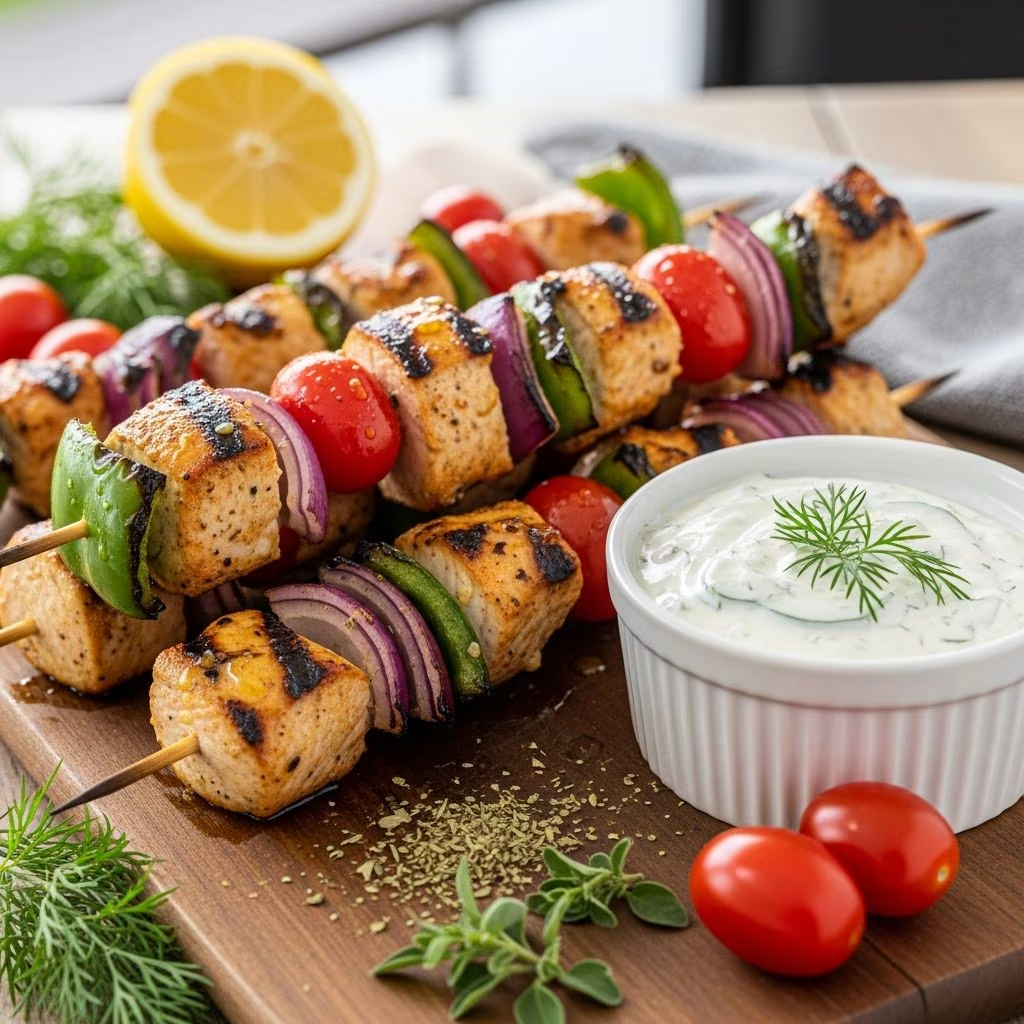
Grilled chicken skewers represent one of the most beloved dishes across Mediterranean coastal regions, particularly throughout Greece where this preparation has been perfected over generations. This culinary classic combines simple, high-quality ingredients with straightforward cooking techniques to create a dish that tastes far more sophisticated than its preparation suggests. The beauty of this recipe lies in its versatility—it works equally well for casual weeknight dinners, entertaining guests, or outdoor celebrations during warmer months.
Understanding the Foundation: Classic Marinade Composition
The marinade serves as the flavor foundation for this dish, infusing the chicken with Mediterranean essence. A proper marinade balances acidic components with aromatic herbs and quality fat to create depth and complexity. The typical ratio combines fresh lemon juice as the primary acidic element, providing brightness and tenderness to the meat fibers.
- Lemon juice contributes acidity that breaks down protein structures, allowing flavor penetration
- Extra virgin olive oil carries fat-soluble flavors and adds richness to the finished dish
- Dried oregano provides the distinctive herbaceous character essential to Greek cuisine
- Fresh garlic delivers pungent, complex notes that mellow slightly during marinating
- Kosher salt enhances all flavors while helping the meat retain moisture during cooking
The marinating duration significantly impacts flavor development. While thirty minutes represents the minimum threshold for basic seasoning, extending the process to two hours allows deeper penetration of flavors throughout the chicken pieces. Some culinary professionals recommend overnight marinating in refrigeration for maximum flavor saturation, though this requires advance planning.
Preparing the Protein: Cutting and Portioning Techniques
The size and shape of chicken pieces directly affect cooking time and texture outcomes. Uniformly cutting the chicken into one-inch cubes ensures even cooking throughout, preventing some pieces from becoming dry while others remain undercooked. Boneless, skinless chicken breasts work best for this application, as they cook quickly and absorb marinade flavors readily.
Before cutting, allow refrigerated chicken to reach room temperature for approximately fifteen minutes. This step promotes even cooking and prevents the exterior from overcooking before the interior reaches proper temperature. Remove any visible fat or sinew, as these can create uneven cooking and affect the final texture.
Crafting the Yogurt-Based Sauce: Technical Approaches
The accompanying creamy sauce presents a study in balancing moisture, flavor, and texture. Greek-style yogurt provides the sauce’s creamy foundation while contributing tangy flavor notes that complement grilled chicken. Unlike regular yogurt, the Greek variety contains less whey, resulting in a thicker, more luxurious consistency.
Cucumber preparation demands attention to moisture management. Fresh cucumbers contain significant water content that, if not properly addressed, dilutes the sauce and compromises texture. The standard technique involves salting diced cucumber and allowing it to drain in a fine-mesh colander for five to ten minutes. This draws out excess moisture through osmosis, concentrating the cucumber flavor while preventing a watery sauce.
After draining, gently press the cucumber against the colander to extract additional liquid. Transfer the cucumber to a mixing bowl and combine with yogurt, freshly minced garlic, lemon juice, and additional salt. Fresh mint leaves, added just before serving, provide aromatic freshness that brightens the overall flavor profile.
Vegetable Selection and Preparation for Skewering
Beyond the chicken itself, the accompanying vegetables contribute texture, flavor, and visual appeal to the finished dish. Zucchini and red onions represent classic choices that pair harmoniously with the marinade flavors while withstanding grill heat without becoming mushy.
| Vegetable | Preparation Method | Benefits |
|---|---|---|
| Zucchini | Cut into 1-inch rounds or half-moons | Mild flavor, firm texture, caramelizes beautifully |
| Red Onion | Cut into 1-inch chunks | Sweet when grilled, structural support, visual contrast |
| Cherry Tomatoes | Leave whole or halve if large | Add color, bursts of fresh flavor, require minimal cooking |
When threading vegetables and chicken onto skewers, alternate pieces to ensure even cooking and create visual interest. This arrangement also allows marinading liquid to access all surfaces more effectively. For wooden skewers, soaking in water for thirty to forty-five minutes prevents burning during cooking.
Grill Preparation and Temperature Management
Successful grilling depends upon proper heat management and grill preparation. Preheat the grill to medium-high heat, allowing the grates to become thoroughly hot before adding skewers. This high initial temperature creates the attractive caramelization that develops complex flavors through the Maillard reaction.
Clean grill grates prevent sticking and promote even browning. Use a grill brush or crumpled aluminum foil to remove previous residue. Lightly oil the grates immediately before placing skewers to create a non-stick surface.
Cooking Technique and Timing Considerations
Place prepared skewers directly onto preheated grates and resist the urge to move them frequently. Allow four to five minutes on the first side to develop color and crust. Turn skewers carefully using tongs or a spatula designed for skewer handling, then cook for an additional four to five minutes on the second side.
The chicken reaches safe consumption temperature at 165°F (74°C) internal temperature. Using an instant-read thermometer provides definitive confirmation, though experienced cooks can judge doneness by firmness and color. The meat should feel firm to the touch and display no pink at the thickest point.
Alternative Cooking Methods for Every Kitchen
While outdoor grilling represents the traditional approach, alternative cooking methods accommodate various situations and preferences. Pan-searing on a stovetop skillet produces excellent results, particularly in urban environments without outdoor space. Heat oil in a large skillet over medium-high heat until shimmering, then add chicken pieces in a single layer. Cook for six to seven minutes per side until golden brown and cooked through.
Oven-baking offers another convenient option. Preheat the oven to 450°F, arrange skewers on a foil-lined baking sheet, and bake for twenty minutes, flipping halfway through. This method produces evenly cooked chicken with minimal attention required.
Flavor Enhancement and Marinade Variations
While the classic lemon and oregano combination provides timeless appeal, creative variations accommodate different preferences and ingredient availability. Substituting a portion of the lemon juice with dry white wine adds complexity and depth. Adding rosemary introduces piney notes, while sweet paprika contributes subtle smokiness and color.
For those preferring additional intensity, red wine vinegar provides tangy character without overwhelming delicate chicken flavors. Fresh herbs like dill or thyme offer interesting alternatives to oregano, though oregano’s assertive character makes it particularly well-suited to this preparation.
Serving Suggestions and Complementary Accompaniments
Presentation significantly influences the dining experience. Serve chicken skewers hot, either on or off the skewers depending on preference and occasion. Warm pita bread provides the perfect vehicle for constructing individual portions, allowing diners to customize their combinations.
Traditional accompaniments include sliced tomatoes, cucumbers, red onions, and kalamata olives. Crisp lettuce provides textural contrast, while additional tzatziki sauce allows generous application. For more substantial presentations, serve with Mediterranean salad, roasted vegetables, or Greek rice.
Make-Ahead Planning and Storage Guidance
The tzatziki sauce benefits from advance preparation, developing deeper flavors over several hours of refrigeration. Prepare it a full day ahead if desired, storing in an airtight container. The creamy consistency and flavor remain stable for three to four days when properly refrigerated.
Chicken can marinate for up to twenty-four hours, with longer marinating times yielding more pronounced flavors. However, extending beyond this duration may result in over-marinating that affects texture negatively. Always marinate in the refrigerator and bring to room temperature before cooking for even results.
Frequently Asked Questions
How long should chicken rest after grilling?
Allow grilled chicken to rest for three to five minutes after removing from heat. This brief resting period permits carryover cooking while allowing juices to redistribute throughout the meat, promoting tenderness and juiciness.
Can I use boneless, skinless chicken thighs instead of breasts?
Yes, chicken thighs work well for this preparation. They contain more fat than breasts, remaining juicier even if slightly overcooked. Thighs require similar cooking time but benefit from the additional marinating period due to their denser structure.
What if I don’t have wooden skewers?
Metal skewers represent a permanent alternative requiring no soaking. They heat up during cooking, which some find advantageous for more thorough cooking while others prefer wooden skewers that don’t conduct heat directly to vegetables.
How can I prevent vegetables from becoming too soft?
Cut vegetables into uniform sizes and consider par-cooking softer items like zucchini before skewering. Alternatively, add tender vegetables toward the end of cooking when chicken is nearly finished.
Can I prepare this dish indoors during cold months?
Absolutely. Pan-searing or oven-baking produce excellent results. These methods require no special outdoor equipment while delivering comparable flavor development through proper heat management and technique.
References
- USDA Food Safety and Inspection Service – Safe Internal Temperature Guide — U.S. Department of Agriculture. 2024. https://www.fsis.usda.gov/food-safety/safe-food-handling-and-preparation/food-safety-basics/safe-temperatures-internal-temperatures
- The Maillard Reaction in Food Chemistry — McGee, Harold. 2004. On Food and Cooking: The Science and Lore of the Kitchen. Scribner. Academic discussion of flavor development in grilled foods.
- Mediterranean Diet and Culinary Traditions — Oldways Preservation Trust. 2025. https://oldwayspt.org/