When winter arrives and temperatures drop, German households and Christmas markets throughout Bavaria and beyond reach for a beloved warming beverage that has been enjoyed for centuries. Glühwein, which translates to “glow wine,” represents more than just a drink—it embodies the warmth, comfort, and festive spirit of the holiday season in Central Europe. This spiced wine preparation has deep historical roots and continues to be a cornerstone of winter celebrations, offering both comfort and sophisticated flavor complexity that appeals to diverse palates.
Understanding Glühwein: History and Cultural Significance
The origins of Glühwein trace back through centuries of European beverage traditions, with documented evidence suggesting its use in medicinal contexts dating to the early 1800s. Historical nursing manuals referenced its therapeutic properties, recommending it as a restorative drink for patients seeking comfort and warmth. The name itself provides insight into traditional preparation methods—the “glow” referenced in the name originates from the practice of using heated metal implements to warm the wine rapidly, creating a distinctive visual effect that became associated with the beverage.
Today, Glühwein stands as an essential part of German holiday culture, particularly at Christmas markets where vendors serve this aromatic concoction to crowds of festive visitors. The beverage represents a bridge between tradition and contemporary celebration, maintaining its authentic character while adapting to modern tastes and preferences. Its popularity extends beyond Germany into neighboring countries and increasingly into international holiday traditions, as more people discover its unique appeal.
Essential Components: Selecting Quality Base Wines
The foundation of exceptional Glühwein begins with thoughtful wine selection. While the beverage will be enhanced with spices and sweeteners, starting with a respectable quality base wine ensures superior final results. Red wine varieties remain the traditional choice, with several excellent options available to home preparers.
- Merlot provides a smooth, fruity foundation with moderate tannins that complement warming spices without overwhelming them
- Spätburgunder, a German Pinot Noir equivalent, offers elegance and complexity that elevates the final preparation
- Dornfelder brings a deeper color and richer body, ideal for those preferring more substantial mouthfeel
- Cabernet Sauvignon, Malbec, and Syrah work beautifully for those seeking fuller-bodied expressions
- Chianti and red Zinfandel provide alternative Old World and New World perspectives respectively
Interestingly, white wine varieties can also serve as the base for Glühwein, offering lighter, more delicate interpretations. Dry Riesling, Pinot Grigio, Chardonnay, and Muscato all provide interesting alternatives for those seeking different flavor profiles or preferring lighter beverages.
A crucial consideration involves alcohol content preservation. Unlike some cooking applications where alcohol fully evaporates, Glühwein maintains its alcoholic component throughout preparation. The wine should reach temperatures between 150-170°F (65.5-76.5°C) during preparation, carefully avoiding the 180°F threshold where alcohol begins cooking off. This temperature precision ensures the finished beverage retains its warming alcoholic properties while achieving the smooth, integrated flavor profile that distinguishes excellent Glühwein from mediocre preparations.
The Aromatic Spice Foundation
Beyond wine selection, the artistry of Glühwein creation emerges through spice combinations that have evolved over generations. Traditional formulations rely on several key spices that work synergistically to create complexity and warmth.
| Spice Component | Typical Quantity | Flavor Profile | Function |
|---|---|---|---|
| Cinnamon Sticks | 2-3 pieces | Warm, sweet, slightly woody | Primary warming spice, provides foundation flavor |
| Whole Cloves | 3-10 pieces | Intense, peppery, slightly sweet | Adds depth and sophisticated complexity |
| Star Anise | 2 pieces | Licorice-like, aromatic | Contributes subtle exotic notes |
| Cardamom Pods | 1-2 pods | Floral, slightly citrusy, warming | Elevates aromatic character, adds nuance |
| Vanilla Pod | 1 pod or 1 tsp extract | Sweet, complex, creamy | Adds roundness and subtle sweetness |
| Fresh Ginger | 1-inch piece | Sharp, peppery, warming | Introduces brightness and digestive warmth |
| Mace or Nutmeg | Pinch to 1/4 tsp | Warm, slightly sweet, woody | Optional enhancement for depth |
The beauty of Glühwein preparation lies in its flexibility—while traditional formulations provide excellent guidance, individual preferences and regional variations allow for creative experimentation. Some preparers prefer emphasizing certain spices, while others introduce variations reflecting their heritage or taste preferences. The key involves maintaining balance so no single spice dominates, creating instead a harmonious blend where each component contributes without overshadowing others.
Citrus Elements: Brightness and Complexity
Fresh citrus provides essential brightness and complexity that prevents Glühwein from becoming one-dimensional or overly heavy. Both orange and lemon contribute distinct qualities that enhance the overall drinking experience.
Oranges should be organic when possible, as the preparation involves using peel in addition to flesh. The natural oils in organic produce provide superior aromatic contribution without pesticide residue concerns. Thin-sliced rounds can be added whole, or peel strips can be prepared separately, ensuring the bitter white pith is carefully removed to maintain flavor integrity.
Lemons offer a counterbalance to sweet spice elements, introducing acidity that brightens the palate. Some traditional preparations include lemon zest strips, while others prefer lemon juice integration. Fresh lemon provides both tartness and aromatic qualities that complement cinnamon and cloves beautifully.
Sweetening Strategies and Balance
Sugar represents a crucial component requiring thoughtful consideration. Typical preparations incorporate 3-4 tablespoons of sugar per wine bottle, though this serves as a starting point rather than a fixed requirement. Brown sugar contributes richer, more complex sweetness compared to standard white sugar, with subtle molasses notes that enhance spice integration.
Some experienced preparers prefer Belgian rock sugar, which dissolves slowly and provides consistent sweetness without the graininess sometimes associated with standard sugar. The gradual dissolution contributes to more refined final flavor development. Regardless of sugar type chosen, the key principle involves tasting throughout preparation and adjusting sweetness to personal preference, recognizing that sweetness perception changes as the beverage cools.
Step-by-Step Preparation Technique
Preparation begins with citrus preparation. Thoroughly wash oranges and lemons under running water, using a gentle scrub to remove surface debris. Slice oranges into thin rounds, creating attractive rounds that can float in the finished beverage. For lemons, carefully peel thin strips of zest, ensuring you leave behind the bitter white pith that would introduce unpleasant flavors.
Wine heating represents the next critical phase. Pour the entire wine bottle into a large pot, introducing it over medium heat. Add the orange slices, lemon zest, cinnamon sticks, cloves, star anise, cardamom pods, and ginger slices. Avoid immediately bringing the mixture to a rolling boil—instead, gradually increase temperature while monitoring carefully. The goal involves reaching a gentle simmer where heat allows flavors to infuse without cooking off precious alcohol content.
Flavor infusion requires patience and attention. Once the mixture reaches appropriate temperature, remove it from direct heat and allow it to steep, covered, for 10-15 minutes. This resting period permits spices and citrus to fully integrate with the wine, developing the layered complexity that distinguishes fine Glühwein from hastily prepared versions. During this time, the characteristic aroma emerges—a perfumed blend of wine, spices, and citrus that signals successful preparation.
Sweetness incorporation finalizes the base preparation. Keeping the pot off heat, stir in sugar gradually while the mixture remains warm, ensuring complete dissolution. Taste the preparation, adjusting sweetness as needed. Remember that sweetness perception intensifies as the beverage cools, so err toward slight under-sweetness at this stage.
Optional spirit enhancement can be introduced at this stage. Some traditionalists add 1/4 cup of rum or brandy, boosting the warming effect and adding sophisticated depth. This addition should be stirred thoroughly and can be added before or after straining, depending on preference.
Serving Traditions and Presentation
Glühwein achieves its full potential when served properly. Ideally, the beverage should be maintained at a warm temperature throughout serving—typically 150-170°F—without allowing it to boil or cool significantly. Traditional German Christmas markets accomplish this through large kettles fitted with spigots that serve guests throughout the day.
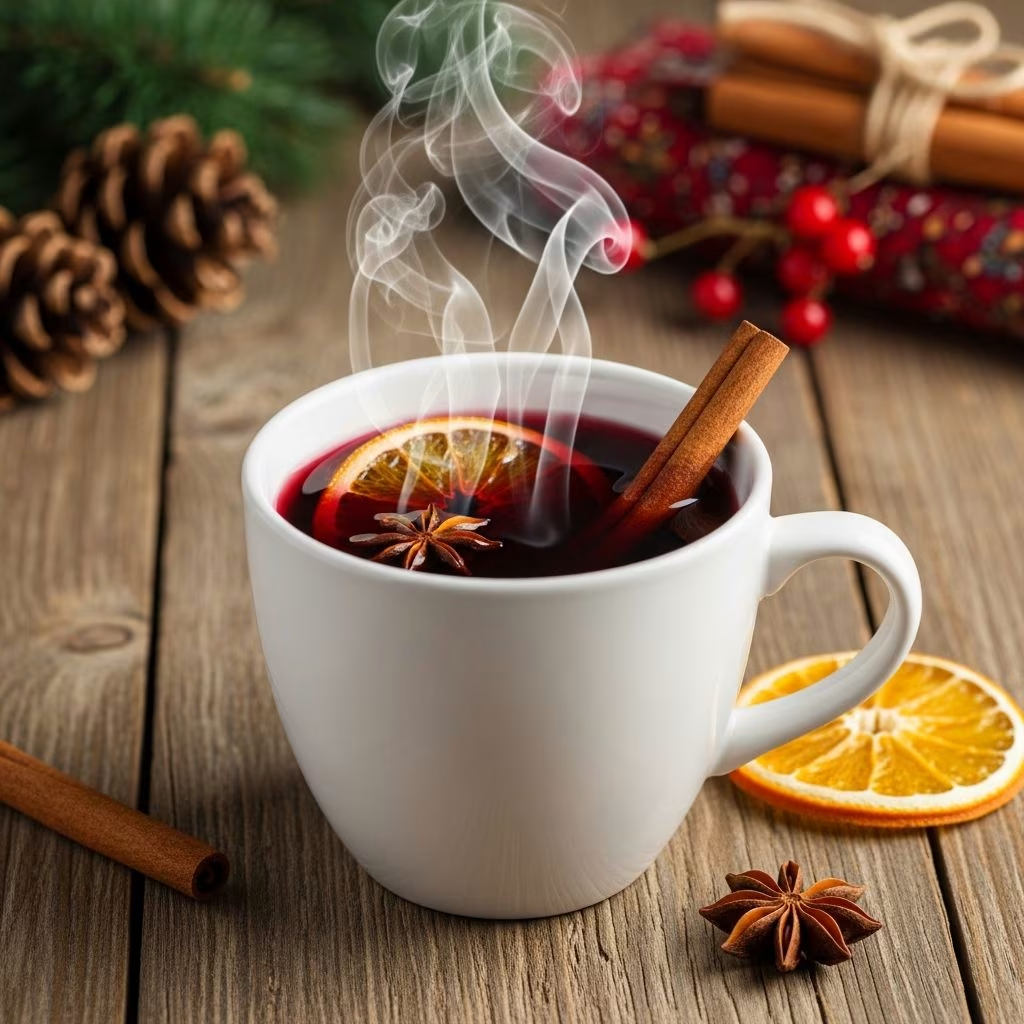
Mugs or heatproof glasses provide the traditional serving vessel, allowing drinkers to hold the warm container while sipping. Many Germanic traditions call for ceramic mugs specifically, with some featuring decorative Christmas designs or regional patterns. The vessel choice extends the warming experience beyond simply drinking the beverage—the warm mug itself contributes to the overall comfort and coziness associated with Glühwein consumption.
Garnishing with fresh citrus slices, cinnamon sticks, or whole spices floating in the beverage adds visual appeal and allows drinkers to encounter aromatic elements as they consume. Some contemporary preparations include citrus wheels frozen into ice cubes that gradually release flavor as they melt, modernizing presentation while maintaining traditional qualities.
Variations and Creative Interpretations
While traditional recipes provide excellent starting points, Glühwein welcomes creative variations reflecting personal preferences and cultural influences. Some Nordic interpretations combine dry red wine with port-style wines, creating richer, sweeter preparations. Others introduce white wine bases for lighter, more delicate versions suitable for different occasions or preferences.
Spice variations might emphasize certain elements—some preparers prefer pronounced clove character, while others highlight cinnamon warmth or cardamom florality. Additional ingredients like honey, star fruit slices, or even espresso shots have appeared in contemporary interpretations, offering modern twists on traditional foundations.
Storage and Make-Ahead Considerations
The concentrate base of Glühwein can be prepared in advance and stored in the refrigerator for up to one week. When ready to serve, simply reheat gently without boiling. This convenience makes Glühwein ideal for holiday gatherings where advance preparation reduces day-of stress. Some experienced preparers prepare larger batches several days ahead, finding that flavors actually improve as components continue integrating during storage.
Frequently Asked Questions
Can Glühwein be prepared without alcohol?
Yes, a non-alcoholic version can be created by substituting red grape juice or a mixture of red fruit juices for wine. The preparation technique remains identical, though the depth and warming effects will differ. Some preparers use a combination of fruit juices with a small amount of apple cider vinegar to achieve complexity similar to wine-based versions.
How long should Glühwein steep?
Traditional steeping times range from 10-15 minutes after heat is removed. Longer steeping intensifies spice flavors, while shorter periods produce more delicate preparations. Personal preference should guide this decision—taste periodically and remove from heat when flavor reaches desired intensity.
Can Glühwein be made in large quantities?
Absolutely. Simply multiply ingredient quantities proportionally. A typical batch serving 6-8 people uses one 750ml wine bottle, but quantities can easily be scaled to serve larger groups. Large kettles or slow cookers work well for maintaining proper temperature throughout serving.
What’s the difference between Glühwein and mulled wine?
While these terms are often used interchangeably, Glühwein specifically refers to the German preparation using traditional spice combinations and serving conventions. Mulled wine is a broader category encompassing various spiced wine preparations from different cultures and traditions.
Should Glühwein be strained before serving?
Straining is optional and depends on personal preference. Leaving citrus slices and spices in the beverage maintains aromatic qualities and provides visual appeal, though some prefer removing solids for a cleaner presentation. Either approach is acceptable.
Conclusion: Embracing a Winter Tradition
Glühwein represents far more than a simple spiced wine—it embodies centuries of European tradition, warmth, and festive celebration. Whether enjoyed at a traditional Christmas market or crafted at home for intimate gatherings, this warming beverage offers comfort and sophistication that transcends seasons and cultural boundaries. By understanding ingredient selection, preparation technique, and serving traditions, anyone can create authentic Glühwein that honors its heritage while reflecting personal taste preferences. The beauty of this preparation lies in its approachability combined with its capacity for refinement, making it equally suitable for casual gatherings and formal celebrations.
References
- Traditional Glühwein Recipe | Authentic German Mulled Wine — GetOurs. 2024. https://www.getours.com/expert-travel-advice/food-drink/recipes/traditional-bavarian-gluhwein
- 1809 Glühwein – A Vintage Recipe for German Mulled Wine — Gen-eat-alogy. 2023. https://www.gen-eat-alogy.com/recipes/1809-glhwein
- German Mulled Wine (Glühwein) — Dirndl Kitchen. 2024. https://dirndlkitchen.com/easy-mulled-wine/
- Traditional Glühwein (German Mulled Wine) — My Dinner. 2024. https://mydinner.co.uk/mulled-wine/
- Easiest Glühwein Recipe In History — Armchair Sommelier. 2023. https://armchairsommelier.com/wines/gluhwein-recipe/