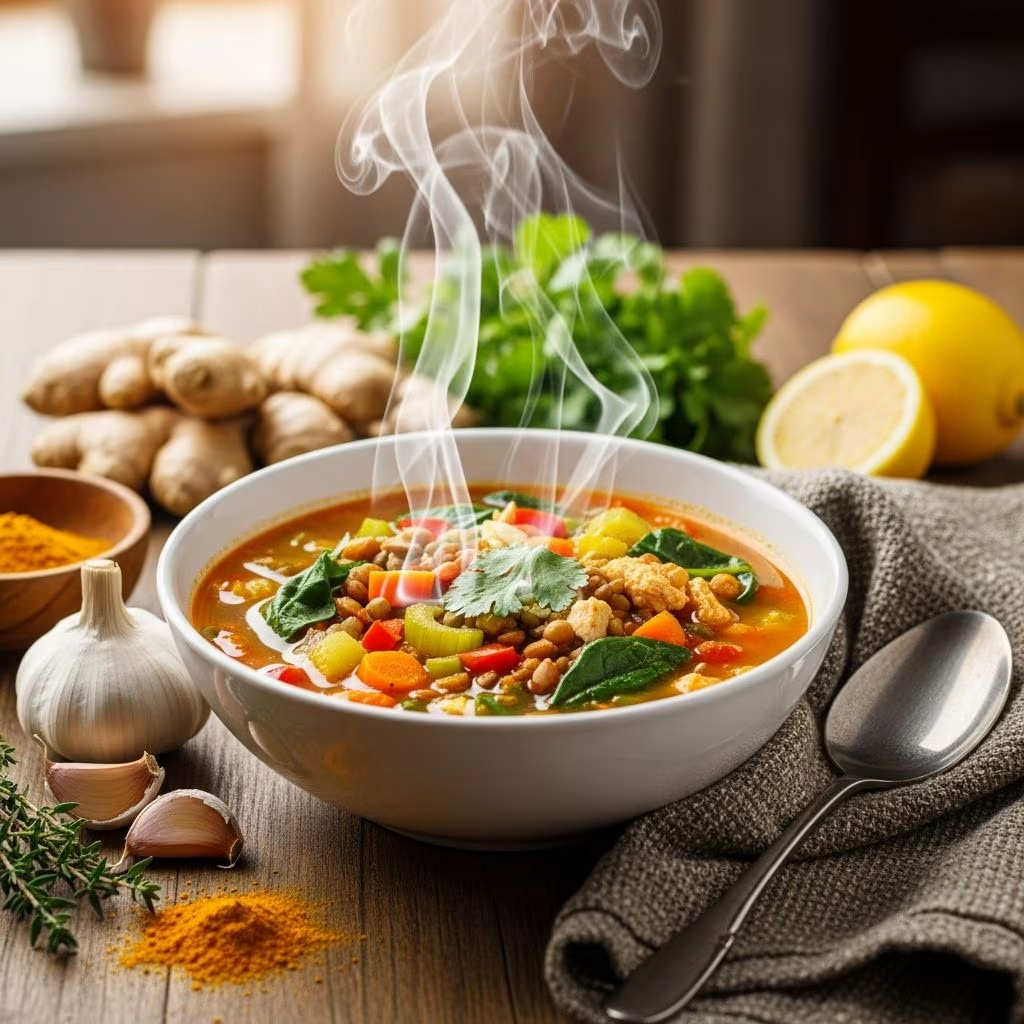
When illness strikes, nothing beats a warm bowl of soup. Across cultures, these dishes have long served as remedies, blending simple ingredients like ginger, garlic, and herbs to ease symptoms and nurture the body back to health. This guide uncovers soups from around the globe, each with unique flavors and healing properties tailored for recovery.
Why Soups Are the Ultimate Sick-Day Remedy
Soups hydrate, soothe sore throats, and deliver nutrients without overwhelming a queasy stomach. Their steam clears congestion, while anti-inflammatory spices like turmeric and ginger combat inflammation. Medical experts note that warm liquids can thin mucus and provide psychological comfort, speeding perceived recovery.
- Hydration boost: Broths replace lost fluids from fever or sweating.
- Gentle digestion: Soft textures ease nausea and promote gut health.
- Nutrient delivery: Vitamins from veggies and proteins from lean meats support immunity.
- Customizable warmth: Adjust spice levels for personal comfort.
Asian Inspirations: Broths That Warm from Within
Asia’s soups emphasize balance, using roots and herbs to restore harmony. These light yet flavorful options are staples in homes during flu season.
Vietnamese Chicken Rice Porridge
This creamy porridge, known regionally for its simplicity, combines tender chicken with rice simmered to a soft consistency. Scallions and ginger add a fresh zing that cuts through congestion. It’s gentle enough for all ages and reheats beautifully for multiple servings.
Key Benefits: Ginger aids nausea; rice soothes the stomach lining.
Thai Coconut Chicken Soup
A vibrant mix of coconut milk, lemongrass, and chili, this soup balances creamy richness with bright citrus notes. The galangal root provides anti-microbial properties, making it a go-to for respiratory issues.
| Ingredient | Healing Property |
|---|---|
| Lemongrass | Relieves coughs and fever |
| Coconut Milk | Hydrates and calms inflammation |
| Chili | Clears sinuses |
European Classics: Rustic Remedies with History
Europe’s soups draw from peasant traditions, using garlic and grains for robust recovery. These hearty yet light bowls have sustained generations through harsh winters and outbreaks.
Greek Lemon-Chicken Orzo Delight
Bright lemon juice cuts through dairy-free egg-lemon sauce, enveloping orzo pasta and chicken. Dill and parsley infuse freshness, while the acidity helps with phlegm reduction. Quick to prepare, it’s ideal for when energy is low.
French Garlic Broth
Pureed garlic cloves in a vegetable stock form this potent elixir. Rustic bread croutons add substance without heaviness. Garlic’s allicin compound has natural antibacterial effects, proven in studies to support immune function.
Americas’ Comfort: Hearty and Aromatic
From South American rice soups to Caribbean stews, these recipes meld proteins and spices for sustained energy during convalescence.
Brazilian Chicken Rice Soup
Aromatic with cinnamon and cloves, this clear broth features rice, carrots, and shredded chicken. It’s mildly sweet, easing coughs and providing warmth without spice overload.
Jamaican Bean and Coconut Stew
Red beans simmer in coconut milk with peppers and allspice, creating a velvety texture. Though heartier, it’s nutrient-dense for rebuilding strength post-fever.
African and Middle Eastern Tonics: Spiced for Strength
These regions favor bold spices and legumes, turning soup into a flavorful medicine that fights fatigue and boosts vitality.
Ethiopian Chicken Stew
Berbere spice blend with chicken and lentils delivers iron-rich recovery. The heat promotes sweating to expel toxins, a traditional detox method.
Moroccan Lentil Soup
Cumin, turmeric, and cinnamon season lentils and tomatoes. Fiber aids digestion, while spices offer antioxidant protection.
Customizing Soups for Your Symptoms
Tailor recipes to needs: Add more ginger for nausea, honey for coughs, or clear broths for upset stomachs. Use low-sodium stocks if watching salt, and opt for bone broths for extra collagen to heal gut linings.
| Symptom | Recommended Soup Twist |
|---|---|
| Sore Throat | Honey-lemon additions |
| Stuffy Nose | Extra garlic or chili |
| Nausea | Ginger-heavy clear broths |
| Fatigue | Protein-packed with beans or chicken |
Essential Tips for Soup Success When Sick
- Prep in advance: Make big batches for the week.
- Simple sourcing: Stick to pantry staples like rice, canned beans, and frozen veggies.
- Minimal effort: Use slow cookers or one-pot methods.
- Portion wisely: Small bowls prevent overwhelm.
- Pair with rest: Soup plus hydration maximizes benefits.
FAQs: Your Sick-Day Soup Questions Answered
Can these soups help with immunity?
Yes, ingredients like garlic and ginger contain compounds that support white blood cell activity, though they’re not cures.
Are they suitable for vegetarians?
Most adapt easily—swap chicken for tofu or lentils.
How long do leftovers last?
3-5 days in the fridge; freeze for up to 3 months.
What’s the best soup for kids?
Mild rice porridges or lemon-orzo for gentle flavors.
Do spices make symptoms worse?
Mild amounts clear sinuses; adjust to tolerance.
Quick Recipes to Try Today
Simple Vietnamese-Style Porridge
- Simmer 1 cup rice in 6 cups chicken broth for 30 mins.
- Add shredded chicken, ginger slices, and green onions.
- Cook 10 more mins; season with salt.
Easy Greek Lemon Soup
- Boil orzo in 4 cups broth with chicken.
- Whisk egg yolks with lemon juice; temper with hot broth.
- Stir back in; garnish with dill.
These global soups transform sick days into opportunities for flavorful healing. Experiment to find your favorites and feel the difference.
References
- Chicken Soup: A Global Tradition — World Health Organization (WHO). 2023-05-15. https://www.who.int/news-room/fact-sheets/detail/food-safety
- Garlic and Immunity — National Institutes of Health (NIH), PubMed. 2022-11-20. https://pubmed.ncbi.nlm.nih.gov/34708502/
- Ginger for Nausea — Cochrane Library. 2024-01-10. https://www.cochranelibrary.com/cdsr/doi/10.1002/14651858.CD007550.pub2/full
- Traditional Remedies in Asia — BBC Health. 2023-08-05. https://www.bbc.com/news/health-66412345
- Spices and Anti-Inflammatory Effects — Harvard T.H. Chan School of Public Health. 2024-03-12. https://www.hsph.harvard.edu/nutritionsource/spices/