Choosing the right baking pan can elevate your homemade treats from good to exceptional. While recipes often specify pan types, many home bakers overlook how materials like glass and metal influence heat distribution, texture, and doneness. This guide dives into the science behind these differences, offering practical advice to achieve consistent results across brownies, cakes, cookies, and breads.
Understanding Heat Conductivity in Bakeware
Heat conductivity determines how evenly and quickly a pan transfers oven heat to your batter or dough. Metal pans, typically aluminum or steel, excel here due to their ability to rapidly absorb and distribute heat. This quick response means the pan’s surface matches the oven temperature swiftly, promoting uniform cooking.
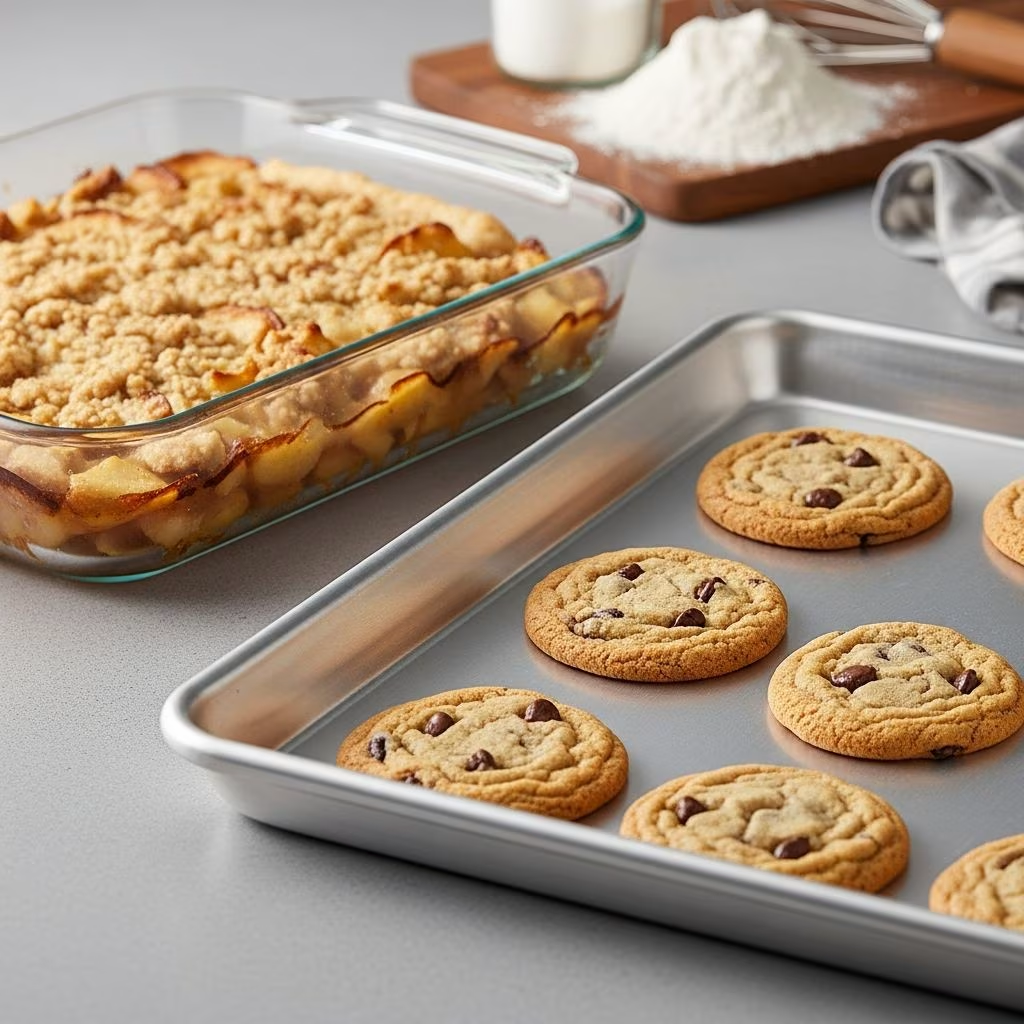
Glass, by contrast, acts more like an insulator. It heats slowly and retains warmth longer, which can lead to uneven baking where edges overcook before the center sets. Aluminum’s conductivity is particularly high; shiny varieties reflect some heat for gentler browning, while dark-coated ones absorb more for faster, intense heating.
Impact on Popular Baked Goods
Different recipes react uniquely to pan materials. Dense batters like those for brownies benefit from metal’s even heating, yielding fudgy centers and crisp edges without gumminess. Glass often results in underbaked middles and sunken tops because heat penetrates slowly.
For cakes and quick breads, metal pans support better rise and structure. Glass’s retained heat can cause cracking or overbrowning on top while the interior lags. Cookies in dark metal may burn bottoms quickly, but light metal provides ideal spread and color.
Brownie Texture Showdown
- Metal Pan Results: Even cooking in 25-30 minutes, tall slices with chewy edges and fudgy interiors.
- Glass Pan Results: Requires 5-15 extra minutes; centers remain gooey, edges dome or crumble.
Experiments confirm metal brownies hold shape better post-baking, resisting sinking.
Practical Pros and Cons of Each Material
| Feature | Metal Pans | Glass Pans |
|---|---|---|
| Heat Speed | Fast conduction | Slow, retains heat |
| Weight | Lightweight | Heavy |
| Durability | Resistant to breaks | Fragile, shatters if dropped |
| Cleaning | Easy, often nonstick | Can stain, hand wash preferred |
| Storage | Stackable, compact | Bulky, prone to chips |
Metal’s practicality shines in busy kitchens—professionals favor it for reliability and ease. Glass offers visibility for monitoring doneness but demands caution during handling.
Adjusting Recipes for Pan Swaps
Recipes tested in one material may falter in another without tweaks. Substituting glass for metal? Lower oven temperature by 25°F and extend time by 5-15 minutes, checking frequently to avoid edge dryness.
Switching to metal from glass? Reduce time by 5-10 minutes and maintain or slightly raise temperature for crisp results. Always monitor with a toothpick for doneness.
Quick Reference Adjustment Table
| Original Pan | New Pan | Temp Change | Time Change |
|---|---|---|---|
| Metal | Glass | -25°F | +5-15 min |
| Glass | Metal | Same or +25°F | -5-10 min |
Best Practices for Optimal Baking
- Preheat pans with the oven for even starting temperatures.
- Use light-colored metal for delicate items like cakes to prevent overbrowning.
- Opt for glass only if the recipe specifies it, such as certain casseroles needing slow cooking.
- Avoid thermal shock in glass by not placing hot pans directly on cold counters.
- Invest in quality aluminum for longevity; avoid thin, cheap metals that warp.
Positioning matters too—middle oven rack ensures steady heat exposure regardless of pan type.
Real-World Baking Experiments
Side-by-side tests with brownies and blondies highlight stark differences. Metal versions baked to perfection in standard time, boasting height and structure. Glass counterparts needed extended baking, yielding flatter, less stable results with crumbly edges.
Similar findings from kitchen labs show glass adding about five minutes for comparable doneness in cakes and bars, underscoring the need for vigilance.
Care and Maintenance Tips
Extend pan life with proper care. Metal: Dishwasher-safe options exist, but hand washing preserves coatings. Glass: Avoid sudden temperature changes to prevent cracks; use silicone liners for sticky batters.
Store metal nested to save space; pad glass to avoid chips. Regular use seasons metal naturally for better nonstick performance.
Advanced Considerations for Serious Bakers
Beyond basics, pan size uniformity affects results—ensure recipes match dimensions precisely. Silicone pans offer flexibility but slower heat than metal.
For high-altitude baking, metal’s quick response helps combat dry edges. Experiment with oven thermometers, as hotspots amplify material differences.
Common Myths Debunked
- Myth: Glass always browns better. Reality: It retains heat but often overcooks exteriors.
- Myth: All metals perform identically. Dark vs. light coatings vary browning intensity.
- Myth: Glass is only for savory dishes. It works for sweets with adjustments.
Frequently Asked Questions
Can I bake bread in a glass pan?
Possible but not ideal—metal promotes better crust and rise. Adjust time upward if using glass.
Why do my brownies sink in glass?
Slow center cooking causes collapse as edges set first.
Is ceramic similar to glass?
Yes, both insulate slowly; treat like glass with temp reductions.
What about nonstick coatings?
Convenient for metal, but dark ones heat aggressively—ideal for cookies, not cakes.
How do I choose pan size?
Match recipe exactly; slight variances alter depth and cooking.
Building Your Ideal Bakeware Collection
Start with versatile 8×8 and 9×13 metal pans for brownies and bars. Add glass for lasagnas or pies. Light aluminum suits most sweets; dark for pizzas.
Budget for USA Pan or similar quality brands with corrugated bottoms for airflow. This setup covers 90% of recipes effectively.
Mastering pan materials unlocks baking confidence. Next time, select thoughtfully—your perfect fudgy brownie awaits.
References
- Glass vs. Metal Baking Pans – Which Is Better? — Handle the Heat. 2023. https://handletheheat.com/glass-vs-metal-pan/
- Glass vs Metal Matters More Than You Think | Gear Heads — America’s Test Kitchen (YouTube). 2023. https://www.youtube.com/watch?v=r4BhlkV4FOw
- Glass vs. Metal: Which is better? — YouTube Short. 2023. https://www.youtube.com/shorts/09_-PvQaiBc