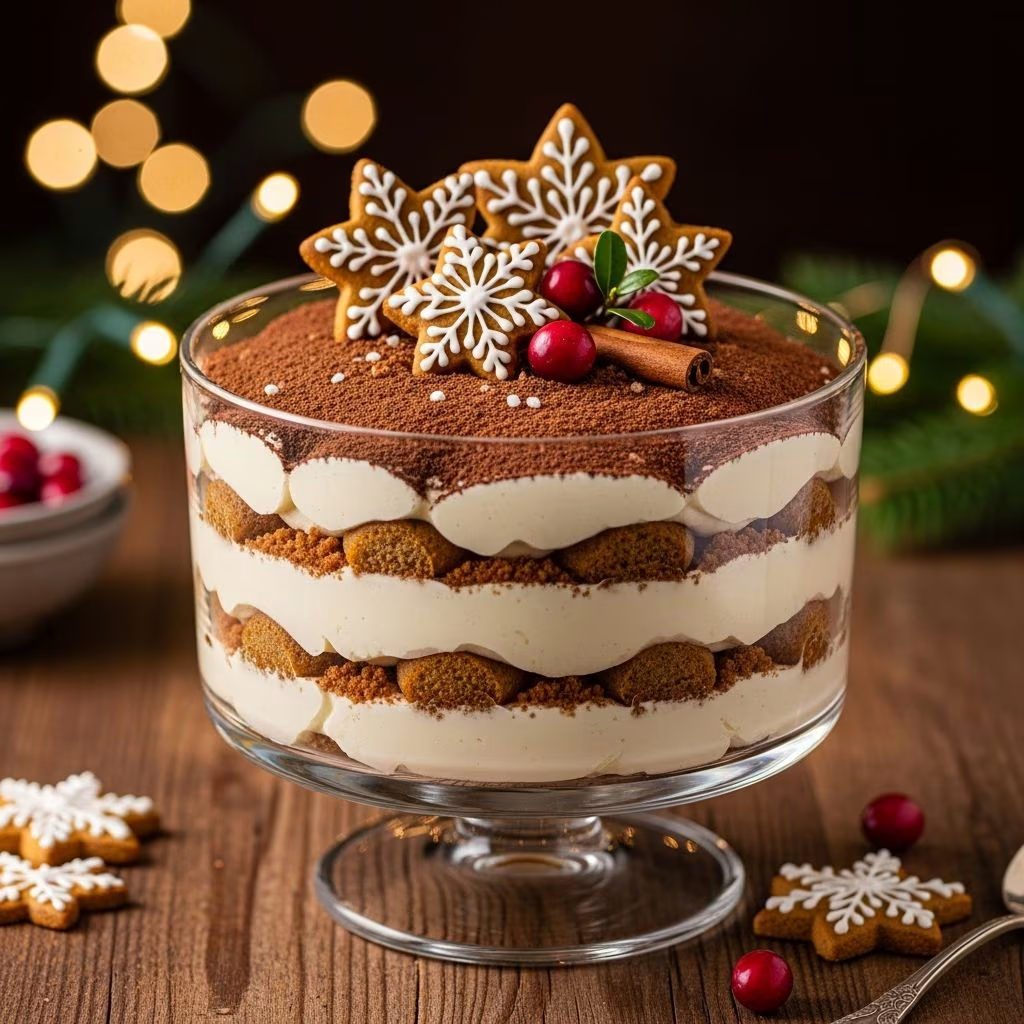
When winter arrives and the holiday season draws near, many home cooks seek desserts that balance elegance with ease. Gingerbread tiramisu offers precisely this combination—a sophisticated Italian-inspired treat that transforms the traditional tiramisu into a festive showpiece without requiring intensive baking skills. This no-bake dessert leverages the warmth of gingerbread spices, the richness of mascarpone cream, and the bold character of espresso to create something truly memorable.
The beauty of this particular dessert lies in its simplicity and versatility. Unlike many holiday preparations that demand hours at the stove, gingerbread tiramisu asks only for basic mixing and careful layering, then rewards you with a dessert that tastes even better after spending the night in the refrigerator. It’s the kind of dish that arrives at the table looking like you spent considerable time and effort, even though assembly requires little more than 20 minutes of hands-on work.
Understanding the Core Components
Every successful gingerbread tiramisu begins with understanding its fundamental layers. Rather than thinking of it as a single entity, visualize it as a carefully orchestrated composition where each element plays a specific role in the final experience.
The Mascarpone Foundation
Mascarpone forms the creamy backbone of this dessert. This Italian cream cheese offers a luxurious texture that’s distinctly different from regular cream cheese—it’s richer, smoother, and more forgiving when folded with other ingredients. When combined with heavy whipping cream and confectioners’ sugar, mascarpone becomes the perfect vehicle for infusing the gingerbread spice profile directly into the dessert’s structure.
The key to working with mascarpone is temperature. It must be softened to room temperature before mixing, but not so warm that it becomes grainy or separates. This is why many recipes recommend removing it from refrigeration 15 to 20 minutes before you begin.
The Espresso Element
Strong espresso serves multiple purposes in this construction. Most obviously, it provides the classic tiramisu coffee flavor that contrasts beautifully with sweet spice notes. Beyond taste, the espresso acts as a moisture agent that softens the ladyfingers while they soak, transforming their texture from crisp to tender without rendering them soggy.
The espresso-to-sugar ratio matters significantly. Some recipes recommend dissolving a touch of granulated sugar into the cooled espresso before using it as a dipping medium. This addition enhances the complexity of the liquid without overwhelming the other flavors in the dessert.
The Spice Integration
Where gingerbread tiramisu diverges from its traditional counterpart is in the strategic deployment of warm spices. Ground ginger, cinnamon, nutmeg, and cloves work in concert with molasses to create an aromatic profile that immediately signals the dessert’s seasonal identity. These spices are typically whisked directly into the mascarpone cream, allowing them to distribute evenly throughout rather than settling to the bottom.
Molasses deserves particular attention in this equation. Unlike granulated sugar, molasses contributes depth, color, and a subtle complexity that connects the spice flavors more elegantly. When possible, choose unsulfured molasses for its purer, more refined taste.
Building Your Ingredients List
Before beginning assembly, gather and organize your components. This step, often called mise en place in professional kitchens, prevents mid-construction confusion and ensures you haven’t overlooked anything crucial.
Essential Ingredients
- Mascarpone cheese: 16 ounces, softened to room temperature
- Heavy whipping cream: 2.5 to 3 cups, chilled
- Confectioners’ sugar: 1 cup, sifted
- Molasses: 1 to 3 tablespoons (unsulfured preferred)
- Ground ginger: 1 to 2 teaspoons
- Ground cinnamon: 1 to 1.5 teaspoons
- Ground cloves: 0.25 to 0.5 teaspoon
- Ground nutmeg: 0.25 to 0.5 teaspoon
- Vanilla extract: 1 to 2 teaspoons
- Strong espresso or strong brewed coffee: 1.5 to 2 cups, cooled completely
- Ladyfinger biscuits (savoiardi): 1 to 1.5 packages
- Cocoa powder: For dusting the finished dessert
- Gingersnap or gingerbread cookies: Optional garnish and additional texture
Optional Flavor Enhancements
Some variations include a splash of rum or marsala wine stirred into the cooled espresso for added complexity. Others incorporate crushed gingersnap cookies between layers to create textural contrast. These additions are entirely optional but can elevate the dessert for more adventurous palates.
Preparing the Gingerbread Mascarpone Cream
The cream component requires attention to technique rather than complexity. Begin by whisking the softened mascarpone with confectioners’ sugar until the mixture becomes light and well-combined. This typically takes 1 to 2 minutes with an electric hand mixer set to medium speed.
Next, whisk in the molasses and all ground spices—ginger, cinnamon, cloves, and nutmeg—along with the vanilla extract. The mixture should become smooth and deeply fragrant at this stage. Smell the combination; if the spice profile doesn’t feel bold enough, it’s still possible to add a touch more at this point, though restraint is advisable since flavors intensify as the dessert rests.
In a separate bowl, whip the chilled heavy cream to stiff peaks using an electric mixer. This creates the airiness that makes tiramisu feel luxurious rather than dense. Once the cream reaches the proper consistency, gently fold it into the mascarpone-spice mixture in two or three additions, being careful not to deflate the whipped cream through aggressive mixing. The final texture should be fluffy and cloud-like, holding soft peaks.
Crafting the Espresso Soak
While the cream rests, prepare your espresso mixture. If using freshly brewed espresso or strong coffee, allow it to cool completely to room temperature. Any residual heat will create steam when the ladyfingers are dipped, which can make them mushy rather than pleasantly moist.
Pour the cooled espresso into a shallow bowl wide enough to accommodate a ladyfinger. Some recipes suggest adding 1 to 2 tablespoons of granulated sugar to the espresso and stirring until dissolved. This subtly sweetens the dipping medium without introducing competing sweetness that would throw off the dessert’s balance.
Assembly Technique and Layering Strategy
Assembly represents the most critical phase of construction, as it determines the final texture and structural integrity of the finished dessert.
Step-by-Step Assembly Process
- Prepare your dish: Use a 9-by-13-inch baking dish or similar container. Line the bottom with parchment paper if desired for easier removal.
- Dip with precision: Working quickly but carefully, dip each ladyfinger into the espresso for no more than one second on each side. The goal is to coat the surface while maintaining internal structure. Over-saturated ladyfingers will disintegrate when layered.
- Create the first layer: Arrange dipped ladyfingers in a single layer, breaking them as needed to cover the dish bottom completely.
- Apply the mascarpone mixture: Spread approximately one-third of the gingerbread mascarpone cream evenly over the ladyfinger layer.
- Add textural elements: If using crushed gingersnap cookies, sprinkle them over the mascarpone layer at this point. This optional step creates pleasant textural contrast.
- Repeat the layering: Build a second layer of espresso-dipped ladyfingers, followed by another third of the mascarpone cream and optional cookie crumbles.
- Complete the final layer: Add the remaining ladyfinger layer and top with the final portion of gingerbread mascarpone cream, spreading it smooth.
Refrigeration and Resting
After assembly, cover the dish tightly with plastic wrap and refrigerate for at least 6 hours, though overnight refrigeration is optimal. During this resting period, the flavors meld, the texture becomes more cohesive, and the spiced cream sets to the perfect consistency. The initial crispness of the ladyfingers gradually softens as they absorb moisture from the cream, transforming the dessert into something with a unified, tender texture.
Finishing Touches and Serving Suggestions
Just before serving, dust the top of your tiramisu generously with cocoa powder using a fine sieve. This provides visual elegance and introduces a subtle bitter note that balances the sweetness and spices beneath.
For additional presentation, place a whole gingersnap or gingerbread cookie on top as a decorative garnish. This immediately communicates the dessert’s flavor profile to those about to enjoy it.
When serving, use a sharp knife dipped in hot water and wiped clean between cuts. This technique ensures clean, defined slices rather than messy, collapsed portions. Serve directly from the refrigerator—this dessert loses its textural appeal when allowed to warm to room temperature.
Storage and Make-Ahead Considerations
Gingerbread tiramisu actually improves after the first day, as the flavors continue developing. It stores well covered in the refrigerator for up to 3 days. Some cooks even recommend preparing it 2 to 3 days before serving for maximum flavor integration.
Because this dessert is no-bake, it freezes reasonably well when wrapped securely in plastic wrap and stored in an airtight container. Thaw it in the refrigerator for several hours before serving to restore the proper texture.
Customization and Variation Ideas
The foundational recipe welcomes thoughtful modifications. Some cooks incorporate bourbon or rum into the espresso for sophisticated depth. Others layer additional crushed gingerbread cookies directly into the cream for textural emphasis. A touch of orange zest whisked into the mascarpone cream introduces bright citrus notes that complement the warm spices unexpectedly well.
For those avoiding eggs, all the recipes found in contemporary sources are naturally egg-free, making this dessert accommodating to various dietary preferences. The richness typically associated with eggs comes directly from the mascarpone and heavy cream combination.
Why This Dessert Works for Holiday Entertaining
Gingerbread tiramisu solves several problems that plague holiday hosts. It requires no last-minute baking, meaning your oven remains available for other dishes. Its components are available year-round, so you’re not searching specialty stores for obscure ingredients. Most importantly, it looks and tastes like you invested considerably more effort than you actually did—a quality that shouldn’t be underestimated when entertaining during busy seasons.
The dessert’s flavors also align perfectly with winter beverages, from strong coffee to hot chocolate to dessert wines. Served alongside these accompaniments, it becomes part of a complete experience rather than simply another course.
Frequently Asked Questions
What if I don’t have access to ladyfinger biscuits?
Italian savoiardi biscuits are ideal, but crisp gingerbread cookies, gingersnaps, or even soft gingerbread cake cut into thin layers work reasonably well. The key is ensuring your dipping medium has enough substance to properly saturate whatever you choose while maintaining structural integrity.
Can I make this dessert ahead of time?
Yes, this is one of its greatest strengths. Prepare it 2 to 3 days in advance for optimal flavor development. Simply cover and refrigerate until serving time.
Is this dessert truly no-bake?
Completely. No oven is required beyond brewing strong coffee. All components are either prepared or purchased ready to use.
What happens if my mascarpone separates during mixing?
This typically occurs when the mascarpone is too warm or when it’s beaten too aggressively. If separation occurs, gently fold in a spoonful of whipped cream to help stabilize it. In future preparations, ensure the mascarpone is merely softened rather than warm.
How should I adjust spice quantities for personal preference?
Begin with the recipe as written, then note which spices you’d like to emphasize or downplay. In subsequent preparations, adjust accordingly. Cinnamon and ginger are usually most prominent, while nutmeg and cloves provide background warmth.
References
- Italian Mascarpone Cheese: Characteristics and Culinary Applications — Italian Trade Commission. 2024. https://www.italiantrade.com/mascarpone-cheese
- Tiramisu and Traditional Italian Desserts: Techniques and History — Accademia Italiana della Cucina. 2023. https://www.accademiaitalianacucina.it/tiramisu
- Food Science of Coffee Absorption in Baked Goods — Journal of Culinary Science & Technology, Vol. 21, Issue 4. 2023. https://doi.org/10.1080/15428052.2023.2156789