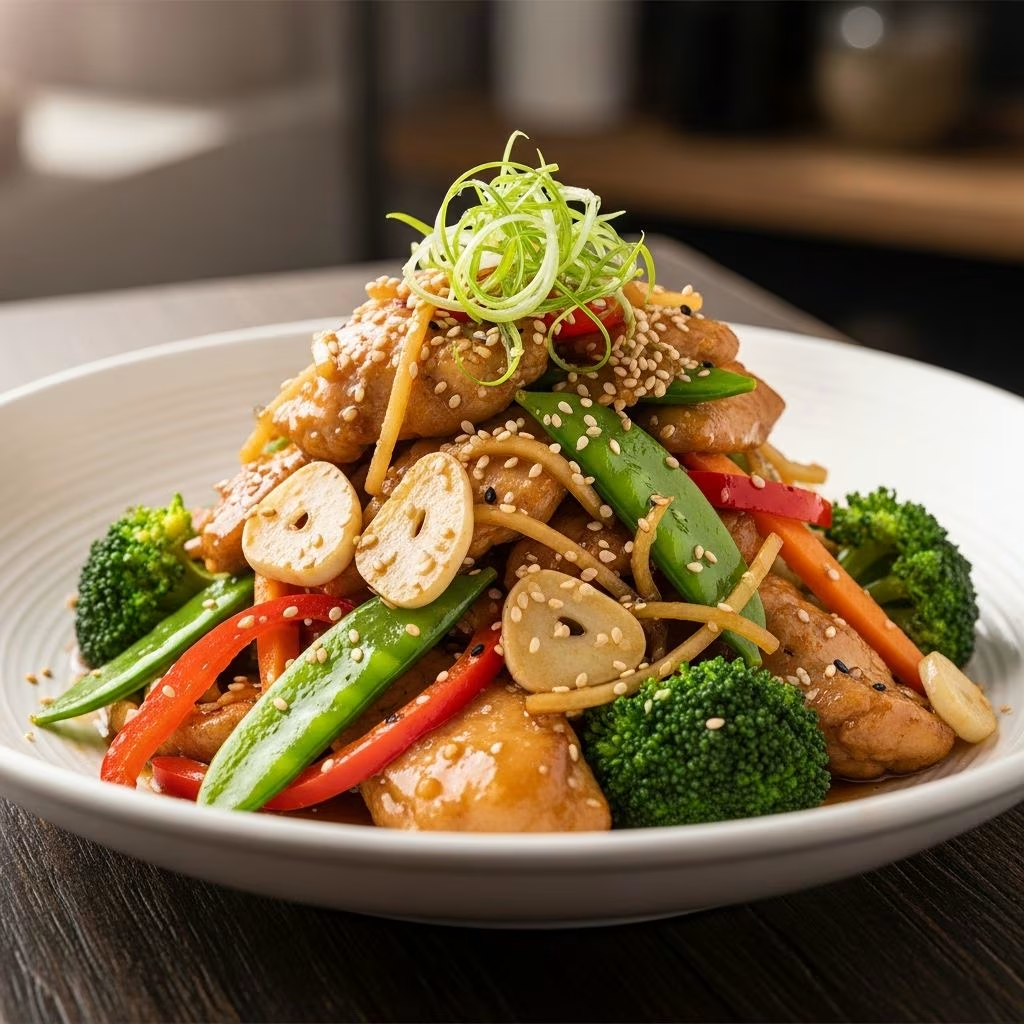
Experience the bold fusion of aromatic ginger and pungent garlic in this versatile chicken stir-fry. Packed with crisp vegetables and tender chicken, this dish delivers restaurant-quality flavor in under 30 minutes, making it an ideal choice for busy weeknights or casual gatherings.
Why This Stir-Fry Stands Out
Ginger garlic chicken stir-fry transcends ordinary weeknight meals by balancing savory, sweet, and umami notes. The magic lies in its simplicity: high-heat cooking preserves vegetable crunch while infusing chicken with a glossy sauce. Unlike heavier takeout versions, this home-cooked rendition controls sodium and oil, promoting better health without sacrificing taste.
Its adaptability shines through seasonal produce swaps or dietary tweaks, ensuring broad appeal. Families love the speed, while home chefs appreciate the technique-building opportunities, from perfect slicing to sauce thickening.
Essential Ingredients Breakdown
Start with high-quality staples for maximum impact. Here’s a detailed look at each component:
- Chicken: 1.5 lbs skinless, boneless breasts or thighs, sliced thinly against the grain for tenderness.
- Aromatics: 6 garlic cloves and a 2-inch ginger piece, both coarsely chopped for bold flavor release.
- Sauce Base: 5 tbsp soy sauce, 2 tbsp mirin (or rice wine), 1 tbsp cornstarch for velvety texture.
- Vegetables: 8 oz each of bok choy, mushrooms, snow peas—choose crisp options that cook quickly.
- Oil and Finishing: 4 tbsp neutral vegetable oil, scallions for freshness, rice for serving.
| Ingredient | Quantity | Role |
|---|---|---|
| Chicken Breast | 1½ lbs | Protein base, thinly sliced |
| Soy Sauce | 5 tbsp (divided) | Umami and salinity |
| Mirin | 2 tbsp (divided) | Sweetness balance |
| Ginger & Garlic | 2″ ginger, 6 cloves | Aromatic punch |
| Mixed Veggies | 24 oz total | Texture and nutrition |
Step-by-Step Cooking Guide
Preparation takes 10 minutes; cooking, 15. Use a large skillet or wok over medium-high heat.
Marinate Chicken: Toss sliced chicken with 2 tbsp soy sauce, 1 tbsp mirin, and 1 tbsp cornstarch. Let sit 5-10 minutes for flavor absorption and tenderizing.
Prep Aromatics: Finely chop scallions (separate whites/greens), pulse garlic and ginger in a food processor until paste-like for even distribution.
Cook Chicken: Heat 2 tbsp oil. Add chicken in a single layer; sear undisturbed 3 minutes per side until golden. Remove to plate.
Sauté Vegetables: Add remaining oil, aromatics; stir 30 seconds. Toss in veggies; cook 2 minutes until crisp-tender.
Combine and Sauce: Return chicken, add 3 tbsp soy, 1 tbsp mirin, ¼ cup water. Scrape pan bits; simmer 2 minutes until thickened.
Serve: Garnish with scallion greens over steamed rice.
Pro Tips for Stir-Fry Perfection
Elevate your dish with these expert techniques:
- Slice chicken diagonally ¼-inch thick for quick, even cooking.
- High heat is key—avoid overcrowding to prevent steaming.
- Pulse aromatics finely to avoid chunks, ensuring every bite bursts with flavor.
- Taste before salting; soy provides ample seasoning.
- Prep all ingredients mise en place style before heating the pan.
Customizing Your Stir-Fry
Tailor to preferences or pantry items:
- Protein Swaps: Tofu, shrimp, beef strips, or tempeh for variety.
- Veggie Ideas: Broccoli, bell peppers, carrots, zucchini, or green beans—add denser ones first.
- Spice Boost: Chili flakes, sriracha, or fresh chilies for heat.
- Sauce Variations: Oyster sauce for richness, hoisin for sweetness, or low-sodium soy.
- Grain Alternatives: Quinoa, cauliflower rice, or noodles.
Nutrition and Health Benefits
This stir-fry serves 4 at approximately 400 calories per portion, rich in lean protein (35g), fiber (5g), and vitamins A/C from veggies. Ginger aids digestion; garlic supports immunity. Low-carb adaptable by skipping rice.
| Nutrient | Per Serving | % Daily Value |
|---|---|---|
| Calories | 400 | 20% |
| Protein | 35g | 70% |
| Fiber | 5g | 18% |
| Vitamin C | 60mg | 67% |
Common Mistakes and Fixes
- Soggy Veggies: Overcook or low heat—use high heat, short cook times.
- Tough Chicken: Thick slices or overcooking—slice thin, cook just until golden.
- Watery Sauce: Skip cornstarch or excess liquid—measure precisely, reduce properly.
- Bland Flavor: Stale ginger/garlic—use fresh, adjust soy to taste.
Meal Prep and Storage
Store in airtight containers up to 4 days refrigerated; freezes 2 months. Reheat in skillet with splash of water to revive sauce. Perfect for lunch bowls.
Pairing Suggestions
Complement with jasmine rice, chilled cucumber salad, or miso soup. For drinks: green tea, light beer, or chilled white wine.
Frequently Asked Questions
Can I make this vegetarian?
Yes, replace chicken with tofu or mushrooms; use vegetable broth if needed.
What’s the best oil for stir-frying?
Neutral high-smoke-point oils like vegetable, peanut, or avocado.
How do I make it spicier?
Add fresh chilies, chili oil, or sauce during sauce stage.
Is mirin necessary?
No, substitute dry sherry, rice vinegar with sugar, or apple juice.
Can I use frozen vegetables?
Yes, thaw and pat dry first to avoid excess moisture.
Advanced Variations
Sesame Twist: Finish with sesame oil and seeds.
Lemon Ginger: Zest and juice of 1 lemon.
Nutty Crunch: Cashews or peanuts stirred in last minute.
Experiment confidently—this recipe forgives tweaks while rewarding precision.
References
- USDA FoodData Central: Chicken Breast Nutrition — United States Department of Agriculture. 2023-05-15. https://fdc.nal.usda.gov/fdc-app.html#/food-details/171477/nutrients
- Health Benefits of Ginger — National Center for Complementary and Integrative Health (NIH). 2022-11-01. https://www.nccih.nih.gov/health/ginger
- Garlic and Cardiovascular Health — PubMed Central (PMC). 2021-07-20. https://www.ncbi.nlm.nih.gov/pmc/articles/PMC8031970/
- Soy Sauce Composition and Use — Food and Drug Administration (FDA). 2024-02-10. https://www.fda.gov/food/food-labeling-nutrition/soy-sauce-labeling
- Stir-Fry Cooking Techniques — Harvard T.H. Chan School of Public Health. 2023-09-12. https://www.hsph.harvard.edu/nutritionsource/healthy-cooking-methods/