Creating a memorable ginger chicken salad requires more than simply tossing ingredients together. This refreshing dish combines tender protein, vibrant vegetables, and a zesty dressing that transforms simple components into something extraordinary. Whether you’re preparing a weeknight dinner or planning ahead for meal prep, understanding the fundamentals of building this salad will elevate your culinary repertoire.
Understanding the Foundation of a Great Ginger Chicken Salad
A truly supreme ginger chicken salad stands on three pillars: quality protein, fresh produce, and a well-balanced dressing. Each element plays a crucial role in creating a dish that feels both satisfying and light. The interplay between the aromatic ginger, savory sesame components, and crisp vegetables creates layers of flavor that develop as you eat.
The beauty of this salad lies in its versatility. You can prepare it with freshly grilled chicken for a restaurant-quality presentation, or use rotisserie chicken when time is limited. Both approaches yield delicious results, though the cooking method you choose will influence the overall texture and depth of flavor.
Selecting and Preparing Your Chicken
The protein foundation determines much of the salad’s success. Boneless, skinless chicken breasts work exceptionally well for this recipe, offering a lean option that absorbs flavors beautifully. When shopping, look for breasts of similar thickness to ensure even cooking.
If grilling, season your chicken with salt and pepper before cooking. Grill over medium-high heat until the juices run clear and the internal temperature reaches 175°F. This prevents overcooking while ensuring food safety. Allow the cooked chicken to rest for several minutes before slicing—this keeps the meat tender and juicy.
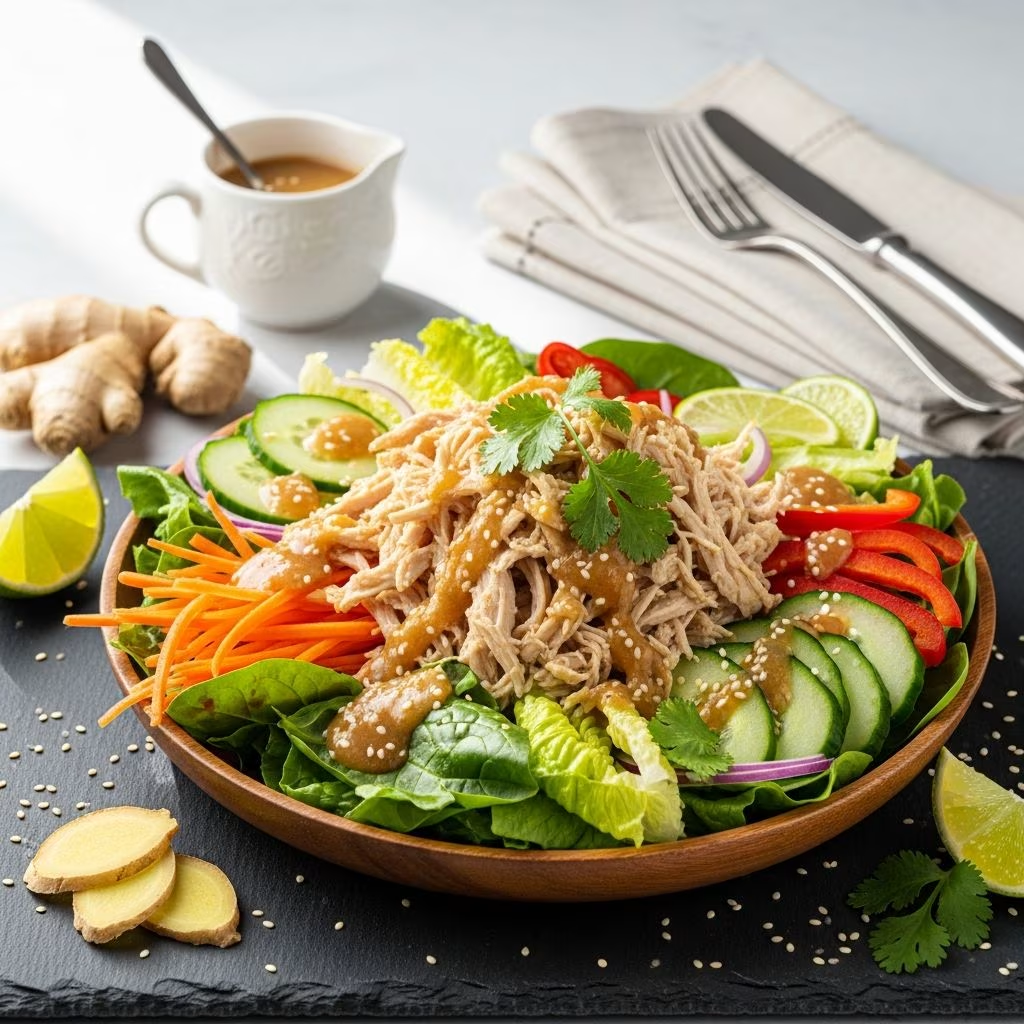
For those preferring convenience, a quality rotisserie chicken serves as an excellent shortcut. The pre-cooked nature means you can assemble dinner in minutes, and the well-seasoning complements the ginger dressing beautifully. Simply shred the meat and add it to your salad base.
Crafting the Signature Ginger Dressing
The dressing is where this salad transcends the ordinary. A proper ginger-sesame dressing balances several flavor profiles: the warmth of fresh ginger, the nuttiness of sesame, the tang of vinegar, and the saltiness of soy sauce.
Key Components of the Dressing
- Fresh ginger: Always use freshly grated ginger rather than ground. A piece roughly 1.5 inches square provides authentic flavor and complexity.
- Sesame oil: This aromatic oil is essential, typically using about ¼ cup for a standard batch.
- Rice vinegar: Choose unseasoned rice vinegar for balance, using approximately ⅓ cup.
- Soy sauce: Adds umami depth; use ¼ cup unless you prefer a lighter version.
- Honey: Provides subtle sweetness to round out the dressing; 3-4 tablespoons typically suffices.
- Garlic: Three cloves create a savory backbone without overwhelming other flavors.
- Neutral oil: Peanut or vegetable oil helps create proper emulsification and balance.
Dressing Preparation Method
Combine all dressing ingredients in a food processor or blender and blend until completely smooth. This creates an emulsified dressing that coats vegetables evenly. If using a blender, work in batches if needed to prevent overflow. The finished dressing should have a creamy consistency without visible chunks of ginger or garlic.
For those seeking alternative dressings, a peanut-based version offers creamier texture. Combine creamy peanut butter, coconut milk, lime juice, ginger-garlic paste, soy sauce, and a touch of sriracha for heat. This variation provides a richer, more indulgent option while maintaining the essential ginger-sesame profile.
Vegetable Selection and Preparation
Fresh, crisp vegetables provide textural contrast and nutritional balance. The variety of vegetables you choose determines both the visual appeal and the eating experience.
Traditional Vegetable Components
| Vegetable | Quantity | Preparation | Benefit |
|---|---|---|---|
| Napa cabbage | 4 cups chopped | Rough chop into bite-sized pieces | Crisp, mild base that holds dressing well |
| Romaine lettuce | 4 cups chopped | Tear into manageable pieces | Provides structure and lighter texture |
| Red bell pepper | 1 pepper, thinly sliced | Remove seeds and slice into strips | Adds sweetness and bright color |
| Carrots | ½ cup grated or 1 julienned | Use box grater or spiralizer | Provides crunch and natural sweetness |
| Green onions | 2-3, thinly sliced | Slice both white and green parts | Adds mild onion flavor and visual interest |
| Fresh cilantro | ¼ cup chopped | Roughly chop leaves | Provides herbaceous, aromatic quality |
Optional Vegetable Enhancements
Consider adding broccoli slaw for extra vegetable content and sturdy texture that withstands dressing. Shredded red cabbage adds color and a slightly peppery note. Edamame provides plant-based protein and a pop of green. Thinly sliced cucumber contributes refreshing crispness, while radishes add peppery bite. These additions allow customization based on seasonal availability and personal preference.
Protein Additions Beyond Chicken
While chicken forms the traditional protein base, other options maintain the salad’s healthful character. For vegetarians, cashews or peanuts provide richness and texture. Beans, nuts, or quinoa work particularly well for those avoiding poultry. Edamame offers plant-based protein with authentic Asian appeal. These alternatives allow the recipe to accommodate various dietary preferences while maintaining flavor integrity.
Assembly and Serving Techniques
Proper assembly ensures every bite contains balanced flavors and textures. Start by combining all salad ingredients—vegetables, greens, and protein—in a large mixing bowl. This step should be performed just before dressing to maintain vegetable crispness.
Add the dressing gradually rather than all at once. This allows you to control the final moisture level and ensures thorough coating without oversaturation. Toss gently but thoroughly, ensuring the dressing reaches all vegetables and coats the chicken evenly.
Taste the dressed salad before serving and adjust seasoning as needed. Sometimes a squeeze of fresh lime juice or an additional teaspoon of soy sauce elevates the final dish. Serve immediately for optimal texture and temperature contrast.
Storage and Make-Ahead Strategies
One of this salad’s greatest advantages is its meal-prep friendliness. Store assembled salad in an airtight container in the refrigerator for up to three days. The vegetables remain crisp due to the nature of Napa cabbage and broccoli slaw, which hold up better than delicate lettuces.
For longer storage, keep the dressing separate from the salad components. Store dressing in a glass jar where it will keep for approximately one week. This separation prevents vegetable wilting and allows you to dress just the portion you’ll eat, with flexibility for the remainder.
When preparing multiple servings, consider portioning components separately. This modular approach enables quick assembly throughout the week and accommodates individual preferences for dressing amounts.
Nutritional Profile and Health Benefits
This salad delivers substantial nutritional benefits alongside its delicious flavors. Chicken provides lean protein essential for muscle maintenance and satiety. Fresh vegetables contribute vitamins, minerals, and fiber. Ginger offers anti-inflammatory properties often associated with digestive support. Sesame oil provides healthy fats including omega-6 and omega-3 fatty acids.
The combination of protein, vegetables, and healthy fats creates a balanced meal suitable for various dietary approaches. This makes it an excellent option for those managing weight, following paleo or keto protocols, or simply seeking nutritious whole-food meals.
Variations and Creative Adaptations
While the classic version excels on its own, creative variations maintain interest for regular preparation. Consider adding mandarin oranges for citrus sweetness and contrasting acidity. Crispy wonton strips or chow mein noodles add textural crunch, though they increase calorie density.
A low-carb version substitutes coleslaw mix and broccoli slaw for traditional lettuces, reducing overall carbohydrate content significantly. This adaptation works particularly well for those following specific macronutrient targets.
Incorporating sesame seeds as a finishing touch adds visual appeal and additional nutty flavor. Peanuts or cashews provide satisfying crunch and richness. Experiment with different seed varieties or nut options based on availability and personal preference.
Common Questions About Ginger Chicken Salad Supreme
Can I prepare this salad the day before serving?
Yes, but with strategic planning. Store all components separately—dressing, vegetables, and cooked chicken in separate containers. Assemble the salad just before eating to maintain optimal texture and prevent sogginess.
What are suitable oil substitutes if I lack sesame oil?
While sesame oil provides irreplaceable aromatic qualities, you can use additional neutral oil and add sesame seeds for similar flavor. However, this changes the dressing’s character somewhat.
How do I prevent the dressing from separating?
The food processor method creates a well-emulsified dressing. Shake or whisk vigorously if separation occurs. Adding a small amount of honey or mustard can improve emulsification stability.
Can frozen ginger work in the dressing?
Frozen grated ginger provides convenience and works well in dressings, though fresh ginger offers superior flavor complexity and aromatic quality.
Is there a nut-free version of this salad?
Absolutely. Omit nuts entirely or substitute seeds like sunflower or pumpkin seeds. The salad remains satisfying and flavorful without nut components.
Tips for Restaurant-Quality Results
Achieving salad excellence requires attention to details. Use fresh, high-quality ingredients—old spices and wilted vegetables compromise the final dish. Ensure proper chicken cooking temperature for food safety without drying out the meat. Taste as you go, adjusting seasonings incrementally rather than making drastic corrections at the end.
Presentation matters for both visual appeal and eating experience. Arrange salad components thoughtfully rather than haphazardly tossing everything together. A professional appearance elevates the perceived quality of homemade cooking.
Temperature plays a role in flavor perception. Serve salad immediately after dressing, when the temperature differential between cooler vegetables and room-temperature dressing creates pleasant contrast.
Conclusion
Mastering ginger chicken salad supreme empowers you to create restaurant-quality meals at home. By understanding each component’s role and executing proper technique, you’ll consistently produce a salad that satisfies nutritionally and deliciously. Whether serving for weeknight dinner or meal prep, this versatile recipe adapts to your preferences and schedule while delivering genuine culinary pleasure.
References
- Chinese Chicken Salad – Light, Crunchy & Perfect for Summer — Once Upon a Chef. 2024. https://www.onceuponachef.com/recipes/chinese-chicken-salad-with-sesame-ginger-dressing.html
- Sesame Ginger Chicken Salad — Low Carb Hoser. 2024. https://lowcarbhoser.com/sesame-ginger-chicken-salad/
- Crunchy Sesame-Ginger Chicken Salad — The Pantry Raid. 2017. https://www.thepantryraid.net/feed/2017/01/crunchy-sesame-ginger-chicken-salad
- Asian Chicken Salad Recipe (with Ginger Salad Dressing) — Perry’s Plate. 2024. https://www.perrysplate.com/2024/07/ginger-salad.html
- Asian Chicken Salad with Sesame Ginger Dressing — Joyful Healthy Eats. 2024. https://www.joyfulhealthyeats.com/asian-chicken-salad-sesame-ginger-dressing/