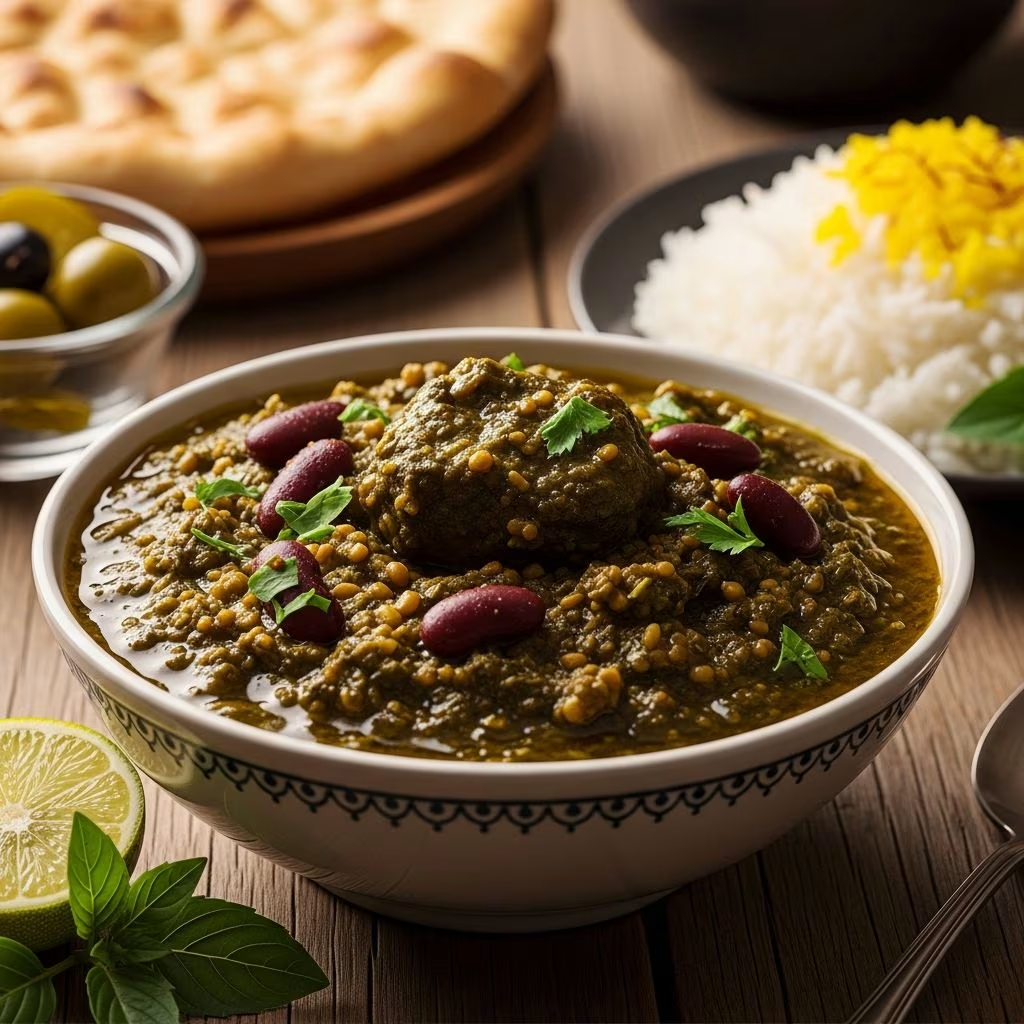
Ghormeh Sabzi stands as one of the most cherished dishes in Persian cuisine, celebrated for its deep, earthy flavors derived from a generous blend of fresh herbs, tender meat, and the unique tang of dried limes. This stew, often called the ‘king of Persian stews,’ combines simplicity in ingredients with complexity in taste, resulting from hours of patient simmering. Originating from Iran, it reflects the nation’s love for herb-forward cooking, where greens dominate the dish both visually and aromatically.
The Heart of Persian Culinary Tradition
In Persian cooking, stews known as khoresh form the backbone of meals, paired traditionally with chelow, or steamed basmati rice. Ghormeh Sabzi exemplifies this tradition, balancing bitterness from herbs, richness from meat, creaminess from beans, and acidity from limoo amani (dried Persian limes). Families pass down recipes across generations, each adding personal touches like extra fenugreek for depth or saffron for luxury. The dish’s popularity extends beyond Iran to Persian communities worldwide, evoking nostalgia and comfort at gatherings.
Historically, the abundance of fresh herbs in Iran’s markets inspired such recipes, turning simple ingredients into gourmet fare. Unlike quicker curries, Ghormeh Sabzi demands time—typically 2 to 3 hours—to meld flavors, teaching patience as a culinary virtue.
Essential Ingredients for Genuine Flavor
Success in Ghormeh Sabzi hinges on quality ingredients, particularly the herbs, which should comprise at least 70% of the stew’s volume before cooking. Here’s a breakdown:
- Herbs (Sabzi): Parsley (4 cups packed), cilantro (2 cups), chives or green onions (1 cup), spinach (2 cups), and fenugreek leaves (1/2 cup dried or 1 cup fresh). These provide the signature green hue and herbal punch.
- Protein: 1.5 lbs stewing beef or lamb, cubed into 1.5-inch pieces for tenderness after slow cooking.
- Beans: 1 can (15 oz) red kidney beans, drained, or 1/3 cup dried soaked overnight, adding body and mild sweetness.
- Aromatics: 1 large onion, 4-5 garlic cloves, 1 tsp turmeric for earthiness, salt, and pepper.
- Acid: 4-5 dried limes, pierced to release flavor gradually; fresh lemon juice optional at end.
- Fats: 6-8 tbsp neutral oil like canola or olive for sautéing herbs and onions.
Proportions matter: too few herbs dilute the taste; excess meat overpowers the greens. Opt for fresh, vibrant herbs from farmers’ markets for best results.
Step-by-Step Cooking Guide
Preparing Ghormeh Sabzi involves distinct phases: browning the base, sautéing herbs separately, and long simmering. Use a heavy Dutch oven for even heat distribution.
- Prepare the Meat Base: Dice onion finely and sauté in 3 tbsp oil over medium heat until golden, about 8-10 minutes. Add minced garlic, turmeric, pepper, and cubed meat. Brown meat on all sides, 10 minutes. Pour in 3-4 cups water or broth, cover partially, and simmer 1 hour until meat softens.
- Sauté the Herbs: In a wide skillet, heat 4 tbsp oil. Add chopped parsley, cilantro, chives, spinach, and fenugreek. Stir over medium-high heat 10-15 minutes until volume reduces by half and herbs darken to deep green, releasing moisture and intensifying flavor. Avoid scorching.
- Combine and Simmer: Pierce dried limes multiple times. Add sautéed herbs, drained beans, and limes to the meat pot. Adjust water for a thick stew consistency. Simmer covered on low 1.5-2 hours, stirring occasionally. Meat should shred easily; herbs fully integrate.
- Final Adjustments: Remove limes if desired (or serve aside). Taste; add lemon juice, salt, or pepper. Simmer uncovered 15 minutes to thicken. Optional: Bloom saffron in hot water and stir in for aroma.
Total time: 3 hours active and passive. Yields 6 servings.
Ingredient Variations and Substitutions
While traditionalists stick to classics, adaptations suit modern kitchens:
| Traditional | Substitution | Notes |
|---|---|---|
| Stewing beef | Lamb shoulder | Lamb adds gamier depth; cook slightly longer. |
| Fresh fenugreek | Dried (1/2 amount) | Dried is more potent; add last to prevent bitterness. |
| Dried limes | Lemon juice + zest | Use sparingly; lacks complexity of limoo amani. |
| Kidney beans | Black-eyed peas | Maintains texture; soak dried for authenticity. |
| Fresh spinach | Frozen chopped | Thaw and squeeze dry; reduces prep time. |
Vegan version: Omit meat, use mushrooms and extra beans. Always prioritize fresh herbs for vibrancy.
Critical Cooking Techniques Explained
Sautéing herbs separately prevents sogginess and concentrates flavors by evaporating water content. High heat wilts them quickly, transforming raw greens into a flavorful base. Piercing limes controls sourness release, avoiding over-acidity early on. Low, slow simmering breaks down collagen in meat for fork-tenderness without boiling, which toughens it. Stir infrequently post-combination to preserve herb integrity. Taste iteratively: herbs mellow, so season conservatively initially.
Common pitfalls include undercooking herbs (grassy taste), overcrowding the pot (steaming instead of sautéing), or ignoring bean soak (gassiness and crunch).
Pairing and Serving Suggestions
Serve Ghormeh Sabzi hot over tahdig—crispy-bottomed rice—or plain steamed basmati. Accompany with Shirazi salad (cucumber, tomato, onion in lime dressing) for crunch and freshness. Yogurt or mast-o-khiar (cucumber yogurt) tempers richness. For drinks, doogh (yogurt soda) or chilled ayran complements the stew’s intensity.
Portions: Generous ladle per plate, ensuring herbs and meat mix with rice. Leftovers deepen in flavor, lasting 4 days refrigerated or freezing well up to 3 months.
Frequently Asked Questions
What if I can’t find dried limes?
Substitute with 2 tbsp verjuice or lemon juice added late, but order limoo amani online for authenticity—they’re pantry staples.
Can I use a pressure cooker?
Yes: Cook meat base 30 minutes, add herbs/beans/limes for another 20. Natural release preserves flavors.
Why are my herbs bitter?
Overcooking fenugreek or burning greens. Add fenugreek last, use medium heat.
Is Ghormeh Sabzi gluten-free?
Naturally yes, if using tamari instead of bouillon containing wheat.
How spicy is it?
Not spicy; flavor is herbal and tangy. Add chili flakes for heat if desired.
Nutritional Profile and Health Benefits
Per serving (1/6 recipe): ~450 calories, 30g protein, 25g fat, 20g carbs. Herbs pack vitamins A, C, K; beans provide fiber and iron; lean meat offers B12. Antioxidants from greens support immunity; turmeric aids anti-inflammation. Moderate sodium by controlling salt.
It’s hearty yet balanced, fitting keto (reduce beans) or high-protein diets.
Advanced Tips from Persian Kitchens
– Reserve fried onions (piaz dagh) from meat base to top the stew.
– For silkier texture, blend 1 cup herbs before adding.
– Slow cooker: Meat base 4 hours low, add rest for 2 more.
– Scale up herbs for bolder color; Persian recipes use pounds of greens.
Experiment confidently—Ghormeh Sabzi rewards practice with rave reviews.
References
- Ghormeh Sabzi Recipe (Persian Herb Stew) — Little Spice Jar. 2023. https://www.littlespicejar.com/ghormeh-sabzi/
- Traditional Ghormeh Sabzi (Persian Herb Stew) — Proportional Plate. 2024. https://www.proportionalplate.com/gourmeh-sabzi/
- Ghormeh Sabzi – Persian Herb Stew — Cooking With Ayeh. 2023. https://cookingwithayeh.com/ghormeh-sabzi-persian-herb-stew/
- Ghormeh Sabzi ~ Persian Herb Stew — My Persian Kitchen. 2022. http://www.mypersiankitchen.com/ghormeh-sabzi-persian-herb-stew/
- Ghormeh Sabzi (Persian Beef Stew with Herbs and Dried Lime) — The Mediterranean Dish. 2024. https://www.themediterraneandish.com/ghormeh-sabzi/
- GHORMEH SABZI – PERSIAN HERB STEW — Persian Mama. 2023. https://persianmama.com/persian-herb-stew-ghormeh-sabzi-sabzi-ghorma/