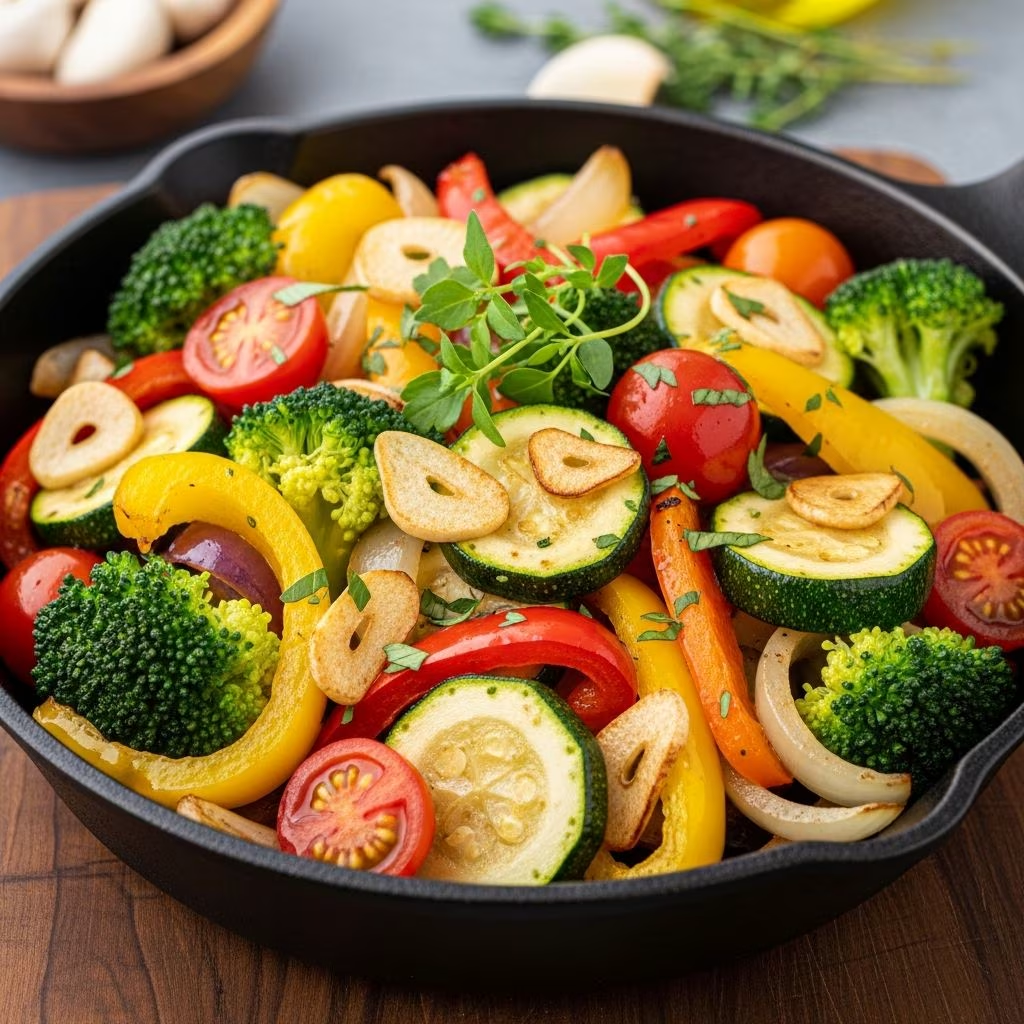
Transform everyday vegetables into a vibrant, flavorful dish with the magic of garlic and a hot pan. This garlic-infused veggie sauté is a staple for anyone looking to boost their vegetable intake without sacrificing taste. Ready in under 20 minutes, it’s ideal for pairing with grilled meats, fish, or as a standalone light meal. The key lies in high-heat cooking that locks in nutrients while developing caramelized edges and a buttery garlic essence.
Why This Sauté Stands Out in Your Kitchen
Unlike boiled or steamed veggies that can turn mushy, sautéing preserves texture and amplifies natural sweetness. Garlic, when added at the right moment, releases its pungent aroma without burning, infusing every bite with depth. This method encourages using seasonal produce, making it budget-friendly and versatile. Health enthusiasts appreciate its low-calorie profile packed with fiber, vitamins, and antioxidants from colorful veggies like bell peppers, zucchini, and broccoli.
Studies from nutrition experts highlight how quick-cooking methods like sautéing retain more heat-sensitive nutrients compared to longer processes. For instance, vitamin C in peppers and broccoli stays intact when exposed to brief high heat. This dish also supports balanced eating by combining various vegetable groups for a complete nutrient spectrum.
Essential Ingredients for Success
Gather fresh, firm vegetables and a few pantry staples. Focus on a mix of sturdy and tender varieties for balanced cooking times.
- Vegetables (4-6 cups total): Choose broccoli florets, sliced bell peppers (red, yellow, green), zucchini or yellow squash halves, carrots cut into thin diagonals, mushrooms, onions, or green beans.
- Fats: 2 tablespoons olive oil or butter (or a mix) for richness and non-stick sautéing.
- Aromatics: 3-4 garlic cloves, minced, for bold flavor.
- Seasonings: Salt, black pepper, optional herbs like thyme, tarragon, or parsley.
- Optional boosts: A splash of broth, soy sauce, lemon juice, or honey for extra dimension.
Pro tip: Prep veggies uniformly—about ¼ to ½-inch thick slices—to ensure even cooking. Wash and dry thoroughly to avoid steaming instead of sautéing.
Step-by-Step Cooking Guide
Follow these precise steps for restaurant-quality results every time.
- Prep station: Chop vegetables. Start with hard ones like carrots or broccoli (blanch if needed for 2-4 minutes in boiling water, then shock in ice water). Softer ones like zucchini and peppers go in later.
- Heat the pan: Use a large 12-inch skillet or wok over medium-high heat. Add oil; wait until shimmering (about 1 minute).
- Sauté in stages: Add hardest veggies first (carrots, onions). Stir occasionally for 4-5 minutes until edges brown. Introduce medium ones (peppers, broccoli) next, cooking 3-4 minutes.
- Add tenders: Toss in zucchini, mushrooms. Cook 2-3 minutes, stirring frequently to prevent sogginess.
- Garlic finale: Clear a space in the pan’s center, add butter and garlic. Sauté 30-60 seconds until fragrant. Mix everything, season with salt and pepper. Off heat, stir in fresh herbs.
Total time: 15-20 minutes. Serves 4-6 as a side.
Customizing Your Sauté for Every Palate
This recipe shines in its adaptability. Tailor to dietary needs or what’s in your fridge.
| Variation | Key Additions | Flavor Profile |
|---|---|---|
| Asian-Inspired | Soy sauce, ginger, sesame oil, sesame seeds | Umami-rich, savory |
| Herbaceous | Fresh thyme, tarragon, rosemary | Earthy, aromatic |
| Mediterranean | Lemon zest, feta crumbles, olives | Bright, tangy |
| Sweet & Savory | Honey, balsamic glaze | Caramelized, balanced |
| Brothy | Vegetable broth splash | Juicy, comforting |
For vegan versions, swap butter for more oil. Low-carb? Skip starchy add-ins like corn. Kids’ favorite: Mild peppers and extra carrots.
Nutrition Breakdown and Health Benefits
One serving (about 1 cup) delivers roughly 100-150 calories, 5g fiber, and high vitamin A, C, K from the veggie medley. Garlic provides allicin, a compound with anti-inflammatory properties. Butter adds healthy fats for satiety.
- Heart health: Low sodium base; customize with herbs over salt.
- Weight management: High volume, low calories fill you up.
- Immune boost: Antioxidant-packed peppers and broccoli.
Per USDA guidelines, aim for 2-3 cups veggies daily—this dish covers half effortlessly.
Pro Tips for Perfect Texture and Flavor
- Don’t overcrowd the pan; cook in batches if needed for browning.
- High heat is crucial—medium won’t crisp edges.
- Taste as you go; garlic potency varies.
- Make ahead: Sauté, cool, store in fridge up to 3 days. Reheat gently.
- Pairings: Grilled chicken, salmon, tofu, or quinoa for mains.
Common Mistakes to Avoid
Steaming instead of sautéing happens with wet veggies or low heat—pat dry and crank it up. Overcooking garlic turns it bitter; add last. Skipping stages leads to uneven doneness—patience pays off.
Storage, Freezing, and Meal Prep Ideas
Refrigerate in airtight containers up to 4 days. Reheat in skillet with a lid for steam. Freeze portions up to 2 months; thaw overnight. Meal prep: Divide into lunch bowls with protein and grains.
Seasonal Twists for Year-Round Enjoyment
Spring: Asparagus, snap peas. Summer: Eggplant, cherry tomatoes. Fall: Brussels sprouts, butternut squash. Winter: Cabbage, root veggies. Local markets ensure peak freshness and flavor.
FAQs
Can I use frozen vegetables?
Yes, but thaw and dry first to avoid excess water. Adjust cook time down by 2 minutes.
Is this recipe gluten-free?
Naturally yes. Use tamari instead of soy for stricter needs.
How do I make it spicier?
Add red pepper flakes with garlic or sliced jalapeños early.
What’s the best oil for sautéing?
High smoke-point options like avocado or grapeseed; olive for flavor.
Can this be a main dish?
Absolutely—add chickpeas, tofu, or shrimp for protein.
References
References
- Dietary Guidelines for Americans, 2020-2025 — U.S. Department of Agriculture and U.S. Department of Health and Human Services. 2020-12-01. https://www.dietaryguidelines.gov/sites/default/files/2020-12/Dietary_Guidelines_for_Americans_2020-2025.pdf
- Garlic: Health benefits and uses — Mayo Clinic. 2023-07-12. https://www.mayoclinic.org/drugs-supplements-garlic/art-20347417
- Vegetable Group — MyPlate.gov (USDA). 2024-01-15. https://www.myplate.gov/eat-healthy/vegetables
- Effect of Cooking Methods on Vegetable Nutrients — Journal of Food Science (Wiley). 2022-05-10. https://doi.org/10.1111/1750-3841.16123
- USDA FoodData Central — United States Department of Agriculture. 2025-03-20. https://fdc.nal.usda.gov/