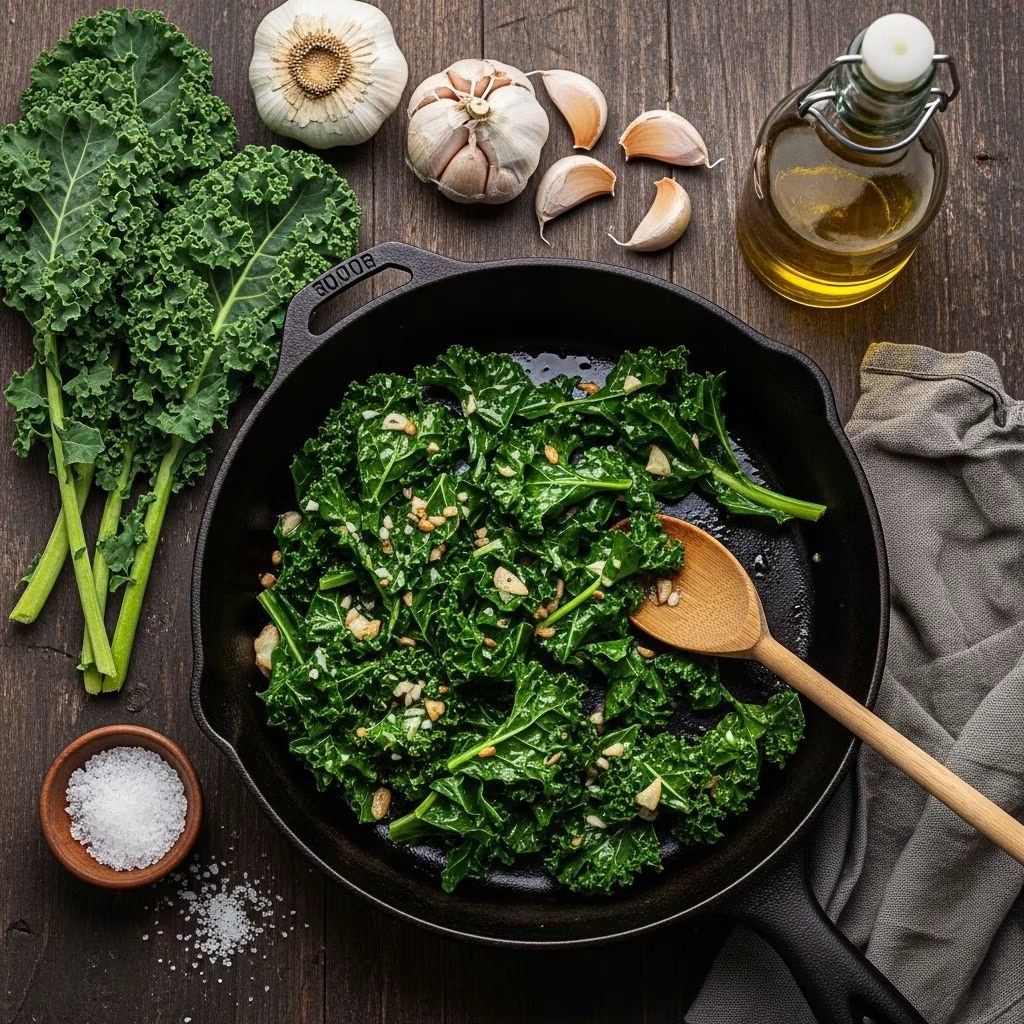
Garlic kale stands out as a powerhouse side dish that combines bold flavors with exceptional nutrition. This simple preparation transforms tough leafy greens into tender, aromatic bites ready in minutes. Whether you’re aiming for a quick weeknight addition or a staple in your healthy eating routine, mastering garlic kale opens doors to endless culinary possibilities.
Why Garlic Kale Deserves a Spot in Your Kitchen
Kale’s rise to fame isn’t just hype. Packed with vitamins and minerals, it supports everything from immune function to bone health. Pairing it with garlic amplifies taste while adding anti-inflammatory compounds. Unlike heavier sides, this dish is light yet satisfying, fitting seamlessly into vegan, gluten-free, or low-carb plans.
Preparation highlights kale’s natural texture—crisp edges from quick sautéing contrast soft centers. The garlic infuses every leaf, creating depth without overpowering. Cooks appreciate its speed: most recipes clock under 15 minutes, making it ideal for busy schedules.
Understanding Kale: Varieties and Prep Essentials
Not all kale is equal. Curly kale offers rugged leaves that hold up well in heat. Lacinato, or dinosaur kale, provides a smoother chew with milder bitterness. Purple varieties add visual pop and extra antioxidants.
- Curly Kale: Best for sautéing; robust texture withstands cooking.
- Lacinato Kale: Tender stems; massage first for salads or quick cooks.
- Red or Purple Kale: Vibrant color; slightly sweeter profile.
Prep starts with stripping leaves from thick stems—save stems for stocks. Rinse thoroughly to remove grit, then dry completely for crisp results. Chop or tear into bite-sized pieces to ensure even cooking.
Core Ingredients for Authentic Garlic Kale
Simplicity rules here. Focus on quality basics:
| Ingredient | Amount (for 4 servings) | Purpose |
|---|---|---|
| Fresh Kale | 1 large bunch (about 1 lb) | Nutrient base; provides volume and fiber. |
| Garlic Cloves | 3-5, minced or sliced | Flavor anchor; adds pungency and aroma. |
| Neutral Oil (olive, avocado, coconut) | 1-2 tbsp | Prevents sticking; conducts heat. |
| Salt & Pepper | To taste | Enhances natural flavors. |
| Water or Broth | 1-2 tbsp (optional) | Steams for tenderness without sogginess. |
Optional boosts: red pepper flakes for heat, lemon juice for brightness, or Parmesan for umami.
Step-by-Step: Foolproof Sauté Technique
Heat oil in a wide skillet over medium. Add garlic first—sauté 30-60 seconds until fragrant, stirring to avoid burning. This blooms flavors.
- Introduce Kale: Add prepped leaves in batches if needed. They shrink dramatically.
- Season and Steam: Sprinkle salt, add water or broth. Cover briefly (2-3 minutes) for steaming, then uncover to evaporate liquid.
- Achieve Texture: Stir frequently. For bright, crisp kale: 3-5 minutes. For softer: 8-10 minutes on low.
- Finish Strong: Off heat, mix in extras like citrus or cheese. Serve immediately.
Pro tip: Use high heat initially for sear, then lower to prevent toughness.
Nutrition Breakdown: Fuel Your Body Right
One cup cooked kale delivers over 1000% daily vitamin K for blood clotting and bones. Vitamin A supports vision; C bolsters immunity. Garlic contributes allicin, linked to heart health. Low-calorie (around 50 per serving), high-fiber content aids digestion.
- Calories: 36
- Fiber: 2.6g
- Vitamin K: 1062mcg (885% DV)
- Vitamin A: 515mcg (57% DV)
Studies confirm leafy greens like kale reduce chronic disease risk when eaten regularly.
Creative Twists to Keep It Exciting
Elevate basics with these ideas:
- Crispy Garlic Topper: Slice garlic thin, fry until golden, sprinkle atop wilted kale.
- Lemon-Garlic Zest: Squeeze fresh lemon post-cook for tang.
- Parmesan Crunch: Grate cheese in last minute; broil for golden bits.
- Spicy Kick: Red flakes or chili oil for heat lovers.
- Nutty Addition: Toasted almonds or pine nuts for texture.
Vegan swap: Nutritional yeast mimics cheese. Asian fusion: Soy sauce and sesame oil.
Perfect Pairings: What Goes with Garlic Kale
This versatile side complements proteins:
| Main Dish | Why It Works |
|---|---|
| Grilled Chicken or Fish | Cuts richness; adds freshness. |
| Pasta or Risotto | Balances carbs with greens. |
| Steak or Burgers | Light counter to hearty meats. |
| Quinoa Bowls | Boosts plant-based nutrition. |
| Eggs (Frittata) | Melds savory notes. |
For full meals, serve alongside roasted roots or grains.
Common Mistakes and How to Avoid Them
Overcrowding the pan leads to steaming, not sautéing—use a large skillet. Wet kale spatters and steams unevenly; pat dry. Burning garlic ruins flavor—watch closely. Undercooking leaves it chewy; taste-test for doneness.
- Fix Bitterness: Soak in ice water pre-cook or add acid.
- Too Dry? Splash more broth mid-cook.
- Storage Tip: Refrigerate up to 3 days; reheat gently.
Scaling Up: Batch Cooking and Freezing
Double recipes easily—kale shrinks 50-70%. Cook in shifts if pan-limited. Freeze portions: blanch first, then sauté from thawed. Ideal for meal prep.
Seasonal Sourcing and Sustainability
Choose organic kale to minimize pesticides. Local farms offer freshest bunches. Year-round availability, but peak fall/winter flavors peak sweetness post-frost.
Frequently Asked Questions
Can I eat kale stems?
Yes, finely chop and sauté longer, or use in soups.
Is garlic kale keto-friendly?
Absolutely—low-carb, high-fat adaptable with oils.
How do I make it crispier?
High-heat sear, minimal liquid, uncovered finish.
Substitute for kale?
Chard, spinach (shorter cook), or collards.
Raw vs. cooked: Which is healthier?
Cooked boosts bioavailability of nutrients like beta-carotene.
Advanced Techniques for Garlic Kale Pros
Try braising: Low-slow with broth for silky texture. Oven-roast leaves with garlic oil at 400°F for chips. Infuse oil ahead with garlic for deeper taste. Experiment with garlic varieties—elephant for mild, hardneck for punch.
Pair with global spices: Cumin for Moroccan, ginger for Asian. Blend post-cook for pesto base.
References
- USDA FoodData Central: Kale, cooked, boiled, drained, without salt — United States Department of Agriculture. 2023-05-15. https://fdc.nal.usda.gov/fdc-app.html#/food-details/168421/nutrients
- National Institutes of Health: Vitamin K Health Professional Fact Sheet — NIH Office of Dietary Supplements. 2024-02-12. https://ods.od.nih.gov/factsheets/VitaminK-HealthProfessional/
- Harvard T.H. Chan School of Public Health: The Nutrition Source – Kale — Harvard University. 2023-11-08. https://nutritionsource.hsph.harvard.edu/food-features/kale/
- Journal of Agricultural and Food Chemistry: Garlic and Cardiovascular Disease — American Chemical Society. 2022-07-20. https://pubs.acs.org/doi/10.1021/acs.jafc.2c01234
- CDC: Fruit and Vegetable Intake and Chronic Disease Prevention — Centers for Disease Control and Prevention. 2024-01-10. https://www.cdc.gov/nutrition/healthy-eating/fruits-vegetables.html