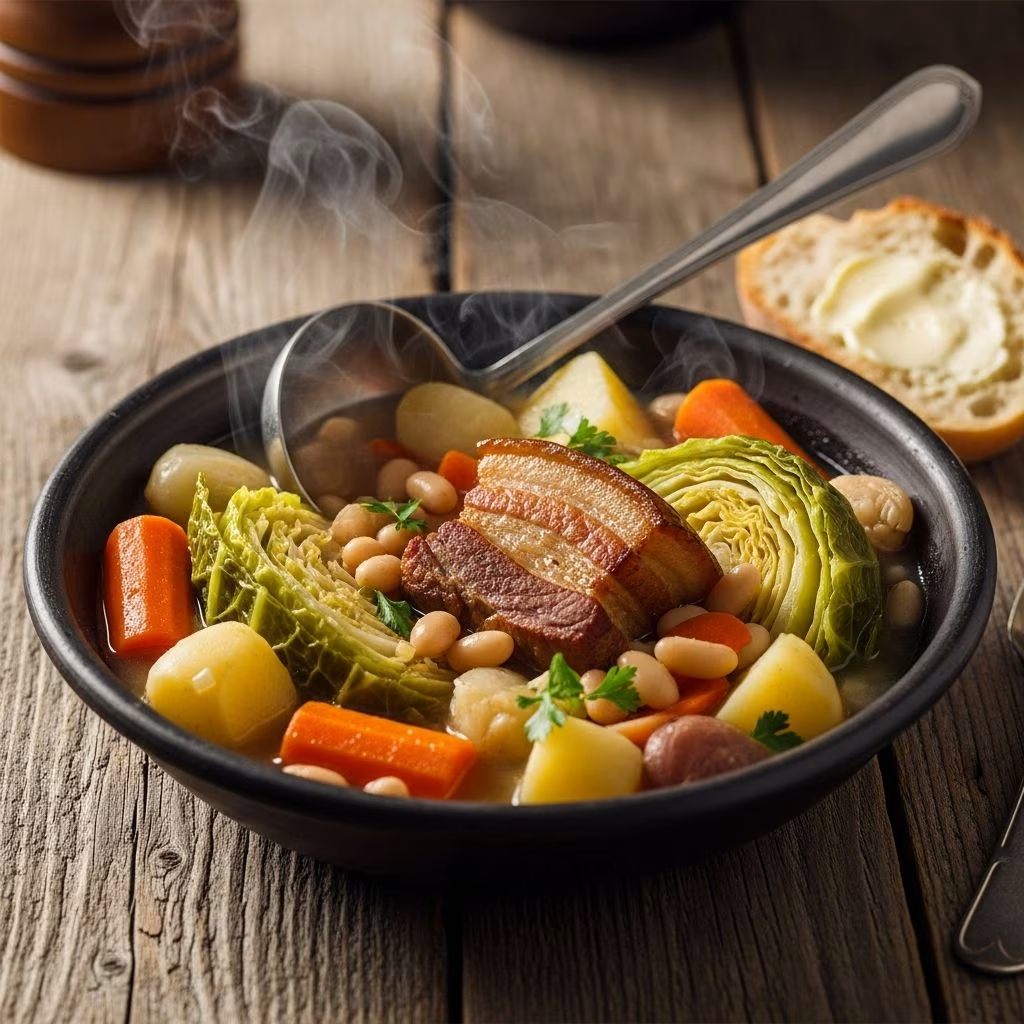
This robust dish from the southwest of France combines tender pork, crisp cabbage, and creamy white beans in a thick, flavorful broth. Ideal for chilly days, Garbure offers nourishment and satisfaction in every spoonful.
Origins and Cultural Significance of Garbure
Garbure traces its roots to Gascony, particularly regions like Béarn, Landes, and the Pyrenees. This peasant-style stew evolved from resourceful cooking, using available meats, beans, and winter vegetables. Families adapted it seasonally, making it a staple in rural homes where it symbolized sustenance and community. Traditionally served during winter, it was often thickened to stand a ladle upright, showcasing its hearty nature.
In Gascon culture, Garbure appears at gatherings, sometimes enhanced with duck confit for festive occasions. Its versatility allowed cooks to incorporate local ingredients, from cured hams to foraged greens, ensuring no waste. Today, it endures as a testament to simple, flavorful French provincial cooking.
Essential Ingredients for Authentic Garbure
The beauty of Garbure lies in its straightforward components, which build deep umami through slow simmering. Core elements include cured pork products for smokiness, sturdy vegetables for bulk, and beans for creaminess.
- Pork elements: Cured ham, salted pork belly, or smoked ham hocks (about 200g each for 4 servings). These infuse the broth with richness.
- Beans: Dried white beans like cannellini or navy, soaked overnight (200g). They thicken the stew naturally.
- Vegetables: Savoy cabbage (half head), potatoes (3 medium), carrots (2), leeks (2), celery (2 stalks), turnip (1), onion (1 large), garlic (half head crushed).
- Aromatics: Bouquet garni (bay leaves, thyme, parsley), cloves (3), black pepper, and optional vinegar for brightness.
- Optional luxuries: Duck or goose confit legs for added decadence, common in Béarn traditions.
These ingredients create balance: fats from pork coat the palate, acids cut richness, and starches provide body.
Step-by-Step Guide to Cooking Garbure
Preparation takes time but rewards with minimal effort during cooking. Plan for 3-4 hours total, mostly hands-off simmering.
- Prep beans: Soak 200g dried white beans in water overnight or quick-soak by boiling 2 minutes then resting 1 hour. Drain.
- Brown meats and aromatics: In a large pot, render fat from pork belly chunks (200g) or bacon slices. Add chopped onion, carrots, leeks, celery, and turnip (1-2cm pieces). Sweat until soft, 10 minutes.
- Build broth: Add cured ham (200g chunks), pork knuckle, bouquet garni, cloves-studded onion half, crushed garlic, and beans. Cover with water or light stock (about 3 quarts). Simmer 1.5-2 hours, skimming scum.
- Incorporate late additions: Add cubed potatoes and shredded cabbage (remove thick ribs). Simmer 1 hour more. If using confit, fry golden first and add last 20 minutes.
- Finish and thicken: Remove bouquet and onion. Crush some veggies against pot sides for thickness. Season with salt, pepper, and a vinegar splash. Stew should hold a ladle.
Serve hot with crusty bread. Leftovers improve as flavors meld.
Variations Across French Regions and Modern Twists
Garbure isn’t rigid; regional tweaks reflect local bounty. In Béarn, duck confit elevates it to holiday fare. Coastal Landes versions might include sausage like linguica for spice.
| Variation | Key Addition/Substitution | Region/Influence |
|---|---|---|
| Classic Gascon | Duck confit, salted pork | Béarn/Pyrenees |
| Chicken-Based | Chicken legs, smoked sausage | Modern American-French |
| Vegetarian | Mushrooms, extra beans (omit pork) | Contemporary adaption |
| Spicy | Crushed red pepper, garlic salt | Portuguese-influenced |
For lighter versions, use chicken broth and less fat. Slow cookers work well: layer ingredients on low 6-8 hours.
Nutritional Profile and Health Benefits
Garbure is nutrient-dense. Per serving (1/4 recipe): ~500 calories, high in protein (30g from pork/beans), fiber (15g from veggies/beans), and vitamins A/C/K from cabbage/carrots. Pork provides iron and B vitamins; beans add plant protein.
It’s filling yet balanced, supporting immune health via garlic/onions and bone health from calcium-rich cabbage. Low-GI carbs from potatoes/beans stabilize blood sugar. Opt for leaner cuts to reduce sodium/fat.
Pairing Suggestions and Serving Ideas
Garbure pairs with bold reds like Madiran or Cahors from Gascony—tannins cut fat. Whites like crisp Jurançon work too. Rustic bread or cornichons complement.
- Serve in deep bowls with grated cheese sprinkle.
- Top with fresh herbs or crème fraîche swirl.
- Accompany with green salad for contrast.
Common Mistakes and Pro Tips
Avoid rushing simmer—low heat extracts flavors. Don’t over-salt early; cured meats add plenty. Taste before thickening.
- Tip 1: Skim fat regularly for cleaner broth.
- Tip 2: Use Savoy cabbage for texture; it holds up.
- Tip 3: Freeze in portions; reheats excellently.
Frequently Asked Questions (FAQs)
What is Garbure?
A thick French stew from southwest France with pork, cabbage, beans, and veggies.
Can I make Garbure vegetarian?
Yes, replace pork with mushrooms/stock; add smoked paprika for depth.
How long does Garbure last in the fridge?
4-5 days; flavors deepen over time.
Is duck confit necessary?
No, but it adds luxury. Substitute bacon or omit.
What’s the best way to thicken it?
Crush potatoes/beans or simmer uncovered.
References
References
- The great vegetable and pork stew from the southwest of France. Garbure — Pete’s Pans (YouTube). Accessed 2026. https://www.youtube.com/watch?v=9V7UWCmwMtA
- French Garbure Stew — That Skinny Chick Can Bake. 2024. https://www.thatskinnychickcanbake.com/garbure-frenchfridayswithdorie/
- Garbure: A comforting, rustic soup born in the South West of France — Blue Kitchen. 2024-01-10. https://blue-kitchen.com/2024/01/10/garbure/