Summer rolls represent one of the most versatile and refreshing dishes in Asian cuisine, combining the vibrancy of Southeast Asian flavors with the light, cool appeal perfect for warm weather dining. The gado-gado summer roll is a modern interpretation that merges Indonesian vegetable traditions with Vietnamese rice paper aesthetics, creating a fusion dish that satisfies both health-conscious eaters and flavor enthusiasts. This culinary creation brings together fresh produce, aromatic herbs, and a rich peanut-based sauce that ties everything together in harmony.
Understanding the Gado-Gado Tradition
Gado-gado, meaning “mix-mix” in Indonesian, is a traditional vegetable salad concept that celebrates the abundance of produce available in Southeast Asian markets. The dish traditionally combines blanched vegetables with a savory peanut sauce, creating a balanced meal that can be served as a side dish, appetizer, or complete meal depending on the added proteins. The evolution of gado-gado into summer roll form demonstrates how traditional cuisines adapt and innovate while maintaining their core flavor principles.
The gado-gado philosophy centers on versatility and seasonal adaptation. Cooks can adjust vegetables based on availability while maintaining the essential element: the peanut sauce that binds the dish together. This flexibility makes gado-gado summer rolls an ideal recipe for home cooks who wish to customize their meals according to preferences and dietary requirements.
Essential Ingredients for Your Rolls
Creating gado-gado summer rolls requires organizing ingredients into two categories: the rolling components and the sauce elements. Understanding each ingredient’s role ensures successful roll construction and optimal flavor development.
Vegetable Components
The vegetable selection forms the foundation of these rolls, providing texture, nutrition, and visual appeal. Fresh produce should be prepped appropriately to ensure they roll smoothly and maintain their nutritional integrity.
- Cabbage leaves: Serve as the primary wrapper when rice paper is unavailable, requiring careful blanching to soften without becoming mushy. Aim for 7-8 outer leaves that remain intact during handling.
- Green beans: Contribute a satisfying crunch and earthy flavor when cut into thin batons. Blanch these for 2-3 minutes until tender-crisp.
- Fresh carrot batons: Provide natural sweetness and vibrant color while maintaining structural integrity throughout the rolling process.
- Bean sprouts: Add delicate texture and fresh, mild flavor. These require minimal cooking—a 20-second blanch prevents wilting while maintaining crispness.
- Leafy greens: Spinach and other tender greens introduce mineral content and a subtle earthiness that complements the peanut sauce beautifully.
- Protein additions: Tofu and tempeh offer plant-based substance when added to rolls, requiring careful preparation to prevent crumbling.
The Peanut Sauce Foundation
The sauce transforms simple vegetables into a cohesive, memorable dish. This component requires attention to balance and proper technique to achieve the desired consistency and flavor profile.
- Roasted peanuts: Ground or processed peanuts form the base, typically requiring about one cup for a standard batch. Using quality roasted peanuts ensures rich, developed flavor.
- Aromatics: Garlic and shallots, when finely sliced and properly cooked, create a fragrant foundation that develops complexity through gentle frying.
- Chili elements: Long red chilies bring heat and depth. Adjust quantities based on personal spice tolerance and desired intensity.
- Sweet soy sauce: Kecap manis provides umami sweetness and authentic flavor, distinguishing this sauce from generic peanut preparations.
- Palm or coconut sugar: Balances heat and acidity while adding caramel notes that enhance overall complexity.
- Acidic components: Lime juice and tamarind juice brighten flavors and cut through richness, creating balance on the palate.
- Coconut oil: Used for frying aromatics, this oil adds subtle coconut undertones that complement other ingredients.
Preparation Techniques and Methods
Preparing Vegetables for Rolling
Proper vegetable preparation determines whether your rolls maintain their integrity and deliver optimal texture in each bite. Blanching serves as the key technique, as it softens vegetables while preserving their nutritional value and preventing them from releasing excessive moisture into the rolls.
Begin by bringing a large pot of salted water to a rolling boil. Working with one vegetable type at a time prevents flavor mixing and allows you to control cooking time precisely. Cabbage leaves require 10-20 seconds of blanching to become pliable without losing their structural integrity. Longer-cooking items like carrots and green beans need 2-3 minutes to achieve tender-crisp texture. Delicate vegetables such as spinach and bean sprouts demand only 20 seconds to prevent overcooking.
After removing vegetables from boiling water, immediately transfer them to an ice bath or cold running water. This rapid cooling halts the cooking process and preserves the vegetables’ bright color and crisp texture. Drain thoroughly after cooling to prevent excess moisture from compromising your rolls during assembly.
Crafting the Perfect Peanut Sauce
The sauce requires methodical preparation to balance its four essential flavor dimensions: richness, heat, sweetness, and acidity. Begin by processing roasted peanuts until smooth, creating a paste-like consistency. Some traditional methods employ a mortar and pestle for grinding, which develops flavor through friction, though modern food processors provide efficient alternatives.
Heat coconut oil in a wide saucepan over medium-low heat and add your sliced garlic and shallots. Allow these aromatics to cook gently until fragrant and beginning to color, typically 3-5 minutes. Add sliced chilies and continue cooking briefly to release their essential oils. Pour in your ground peanut paste and stir thoroughly, allowing the mixture to fry gently for 2-3 minutes.
Add kecap manis and palm sugar, stirring until completely incorporated. The mixture should become fragrant and deepen slightly in color. Begin adding water gradually while stirring constantly, achieving your desired sauce consistency. Most recipes require approximately one cup of water, though this varies based on initial peanut paste texture. The sauce should flow easily but coat a spoon without being runny.
Finish by adding lime juice and tamarind juice, tasting and adjusting seasoning as needed. The sauce should taste balanced—neither overly sweet, salty, sour, nor spicy, but rather a harmonious combination of all four dimensions. Allow the sauce to simmer gently for a few additional minutes, stirring occasionally, then remove from heat.
Assembly and Rolling Techniques
Successfully rolling gado-gado summer rolls requires practice and proper technique, but the skill develops quickly with repetition. If using cabbage leaves, trim away some (but not all) of the thick stem portion to enable easier rolling. If using rice paper, you may skip this step.
Lay your chosen wrapper on a clean, flat surface. Arrange a selection of each prepared vegetable along the center, being careful not to overfill, which makes tight rolling difficult. If adding protein like tofu or tempeh, place these components strategically where they won’t protrude from the finished roll.
Beginning from the bottom edge closest to you, fold the wrapper tightly over the vegetables, pressing gently to compress the filling. Fold in the left and right edges, then continue rolling toward the top, maintaining tension throughout to create a compact roll. Once fully rolled, trim away any raggedy ends by slicing on a slight angle with a sharp knife. This angling creates an attractive presentation while removing excess wrapper material.
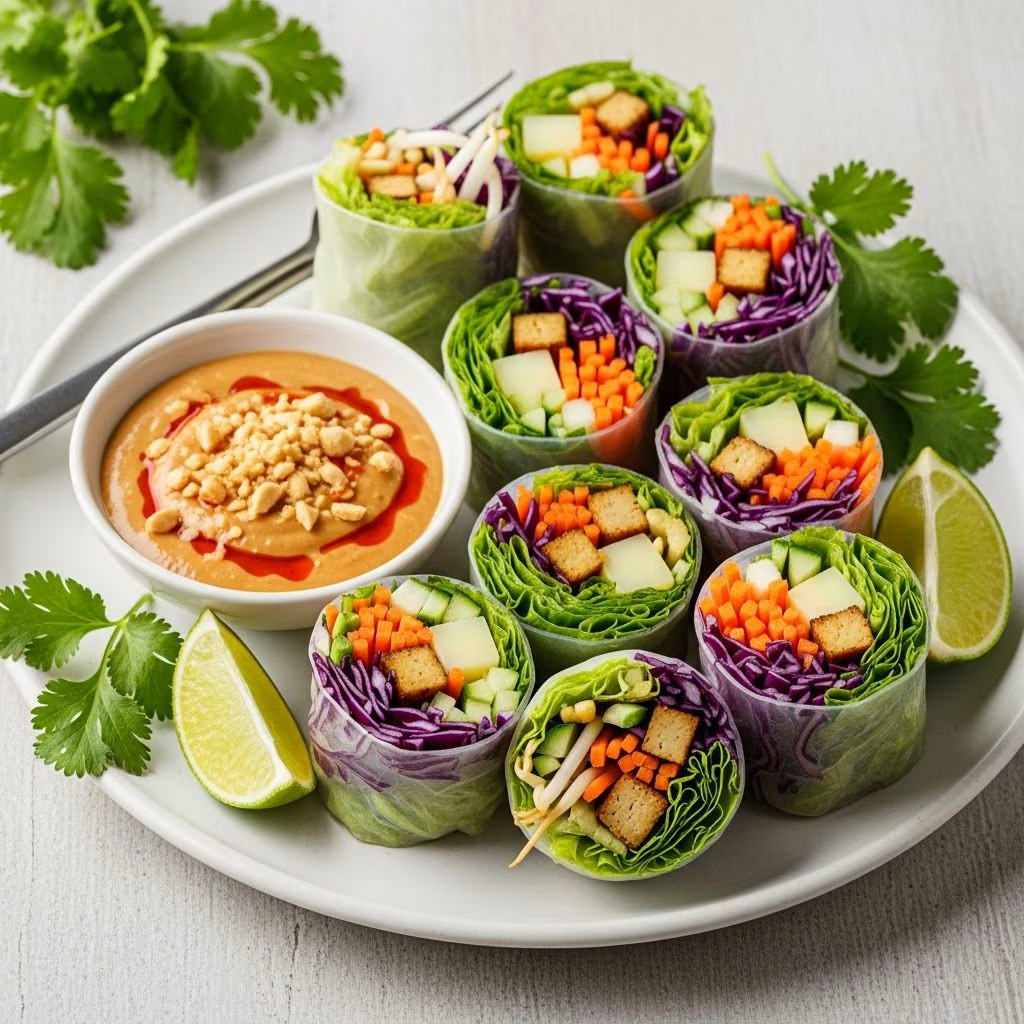
Slice each roll in half on the same angle used for trimming ends. This cutting technique reveals the colorful interior layers, creating visual appeal that makes these rolls Instagram-worthy before they disappear from your plate.
Serving Suggestions and Variations
Temperature and Presentation
Gado-gado summer rolls can be served at any temperature, though the peanut sauce is traditionally served warm, which enhances its aromatic qualities and makes flavors more pronounced. However, for a refreshing summer meal, you may serve rolls chilled with room-temperature sauce for contrast. Arrange rolls on a platter in a circular pattern or standing upright to showcase their beautiful cross-sections. Drizzle sauce over the top or serve it in a separate dipping bowl to maintain roll integrity.
Customization Options
The beauty of gado-gado summer rolls lies in their adaptability. Vegetarians and vegans will appreciate that the traditional recipe contains no animal products, though you may add hard-boiled eggs, shrimp, or chicken for additional protein. Different regional variations might incorporate vegetables like cucumber, zucchini, or bell peppers. Some cooks add fresh herbs like cilantro, Thai basil, or mint within rolls for additional aromatics.
The peanut sauce itself offers modification opportunities. For gluten-free preparation, replace kecap manis with tamari while adjusting sugar content to taste. Those avoiding tree nuts can explore alternative nut butters, though peanuts remain traditional. Some recipes incorporate coconut milk for additional richness and creaminess.
Nutritional Considerations
Gado-gado summer rolls offer substantial nutritional benefits, combining vegetables rich in fiber, vitamins, and minerals with plant-based protein from nuts and legumes. The peanut sauce provides healthy fats, particularly beneficial unsaturated varieties when made with quality roasted peanuts. The variety of vegetables ensures diverse micronutrient intake, while the blanching process preserves much of their nutritional content compared to raw-only preparations.
For those tracking macronutrients, each roll provides approximately 8-12 grams of protein from the vegetables and sauce, with healthy fats comprising the majority of calories. The fiber content supports digestive health, while the plant-based nature makes this dish suitable for vegetarian and vegan diets.
Frequently Asked Questions
Can I prepare these rolls in advance?
Yes, gado-gado summer rolls can be prepared several hours ahead and refrigerated until serving. Wrap assembled rolls in damp paper towels and store in an airtight container to prevent drying. The peanut sauce can be made 1-2 days in advance and reheated gently before serving.
What if I don’t have rice paper?
Blanched cabbage leaves serve as an excellent alternative to rice paper, creating a heartier wrapper that some prefer. Other options include collard greens or large spinach leaves, though these require proper blanching beforehand.
How do I prevent the sauce from becoming too thick?
Add water gradually and taste as you go. If the sauce thickens too much during cooking, thin it by adding water a tablespoon at a time. Remember that the sauce will continue thickening slightly as it cools.
Can I make these rolls without blanching vegetables?
While it’s possible to use raw vegetables, blanching serves important purposes: it softens vegetables to enable easy rolling, removes any surface dirt or pesticides, and prevents excess moisture from making rolls soggy. For raw preparation, use only tender vegetables like cucumber and raw herbs.
What’s the best storage method?
Store unserved rolls wrapped in damp paper towels in an airtight container in the refrigerator for up to 24 hours. The peanut sauce keeps refrigerated for 3-4 days in a covered container. Both components can be frozen separately for up to one month.
Troubleshooting Common Issues
If your rolls fall apart during rolling or slicing, the wrapper may be too dry or your filling too moist. Ensure vegetables are well-drained after blanching and cooling. If the wrapper tears easily, it likely became overcooked during blanching—reduce cooking time by a few seconds.
A grainy peanut sauce indicates insufficient grinding of peanuts or inadequate cooking time. Process peanuts until completely smooth and fry the sauce mixture for at least 2-3 minutes. If the sauce tastes flat, it probably lacks acid or salt—add lime juice or tamarind juice incrementally until flavors brighten.
For overly spicy results, dilute the sauce with additional water and balance with sweetness by adding more sugar. For insufficient spice, add finely minced fresh chilies or chili flakes directly to the sauce before serving.
References
- Gado-Gado Summer Rolls with Satay Sauce — My Green Passion. Accessed April 8, 2026. https://mygreenpassion.com/gado-gado-summer-rolls-with-satay-sauce/
- Gado Gado Rolls with Peanut Sauce — Quite Good Food. Accessed April 8, 2026. https://quitegoodfood.co.nz/gado-gado-rolls-peanut-sauce/
- Fresh Gado Gado Spring Rolls — Food Network Asia. Accessed April 8, 2026. https://www.youtube.com/watch?v=8vnI4H5afcM