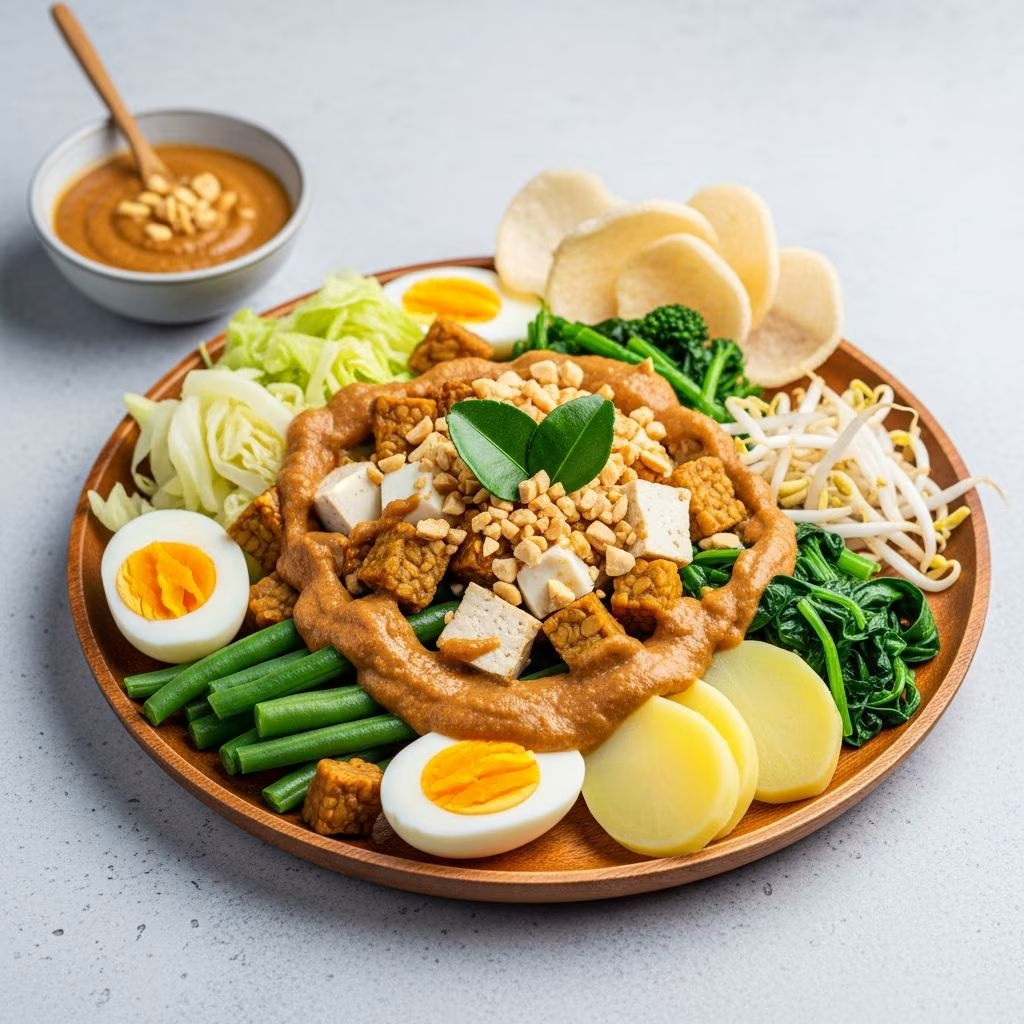
Gado gado stands as a cornerstone of Indonesian cuisine, embodying the essence of balance through its combination of textures, flavors, and nutrients. This dish, often translated as \”mix-mix,\” features an assortment of vegetables—some raw, others blanched or boiled—arranged artfully and drenched in a rich, nutty peanut sauce. It’s not just a side; it’s a complete meal that satisfies with protein from tofu or tempeh and healthy fats from the sauce.
The Origins and Cultural Significance of Gado Gado
Rooted in Java, Indonesia, gado gado has evolved from street food to a national treasure. Its name reflects the joyful medley of ingredients, making it accessible and adaptable across regions. Vendors in Bali and beyond serve it warm or at room temperature, often with prawn crackers or fried shallots for crunch. As one of Indonesia’s five national dishes, it highlights the country’s agricultural bounty and communal eating traditions.
Historically, gado gado emerged in the mid-20th century amid Indonesia’s push for unified cuisine. It draws from Javanese warung (small eateries) where fresh produce meets fermented soy products like tempeh—a staple protein fermented from soybeans, rich in probiotics and complete proteins.
Essential Ingredients for Authentic Gado Gado
Flexibility defines gado gado, but core elements ensure authenticity. Vegetables vary by season and availability, but common choices include green beans, potatoes, cabbage, bean sprouts, carrots, and cucumbers. Proteins like crispy fried tempeh or tofu add substance, while hard-boiled eggs provide creaminess. The star is the peanut sauce, made creamy with coconut milk or water, sweetened with kecap manis (sweet soy sauce), and spiced with garlic, chilies, and tamarind.
- Vegetables: Green beans (blanched), potatoes (boiled), bean sprouts (raw or blanched), cabbage (shredded), carrots (julienned), cucumber (sliced), tomatoes (wedged).
- Proteins: Tempeh or tofu (fried until golden), hard-boiled eggs (halved).
- Sauce Base: Peanut butter or roasted peanuts, coconut milk, kecap manis, lime juice, garlic, ginger, tamarind paste.
- Garnishes: Fried shallots, crushed peanuts, fresh cilantro, prawn crackers.
For vegan versions, omit eggs and use plant-based alternatives. Seasonal swaps like broccoli or spinach keep it fresh.
Mastering the Peanut Sauce: The Heart of Gado Gado
The peanut sauce elevates gado gado from simple salad to irresistible feast. Start with natural peanut butter or ground roasted peanuts for depth. Sauté aromatics—shallots, garlic, chilies—in oil, then whisk in peanut butter, coconut milk, and water until smooth. Simmer to thicken, balancing sweet (kecap manis or palm sugar), sour (tamarind or lime), salty (soy sauce), and spicy notes.
Quick Peanut Sauce Recipe (Serves 4):
- Heat 1 tbsp oil in a saucepan over medium heat. Sauté 2 minced garlic cloves, 1 chopped shallot, and 1-2 chilies for 2 minutes.
- Stir in ½ cup peanut butter, ⅓ cup coconut milk, ⅓ cup water, 3 tbsp kecap manis, 1 tsp tamarind paste, and 1 tsp grated ginger.
- Simmer 5 minutes, stirring until pourable. Adjust with lime juice or salt. If too thick, add water.
This sauce doubles as a dip for satay or dressing for noodles, lasting up to a week refrigerated.
Step-by-Step Guide to Preparing Gado Gado
Preparation is straightforward: cook components separately, assemble fresh. Prep time: 20 minutes; cook time: 15 minutes; serves 4.
Prepare the Vegetables
Boil potatoes until tender (8-10 minutes). Blanch green beans and bean sprouts in boiling water for 1-2 minutes, then plunge into ice water for crispness. Shred cabbage and grate carrots raw. Slice cucumbers and tomatoes just before serving.
Fry the Proteins
Cube 8 oz tempeh or tofu. Heat 1 tbsp neutral oil in a skillet over medium-high. Fry until crispy and golden, about 8 minutes, seasoning with soy sauce for umami.
Boil Eggs and Make Sauce
Hard-boil 4 eggs (8 minutes), peel, and halve. Prepare sauce as above. Keep warm.
Assemble the Platter
Layer salad greens or cabbage as base. Arrange veggies in colorful piles: potatoes, beans, sprouts, carrots, cukes, tomatoes. Top with fried tempeh/tofu and eggs. Drizzle generously with warm sauce. Garnish with peanuts, shallots, and herbs.
| Component | Prep Method | Time |
|---|---|---|
| Potatoes | Boil | 10 min |
| Green Beans | Blanch | 2 min |
| Tempeh | Fry | 8 min |
| Sauce | Simmer | 5 min |
Nutritional Benefits and Health Perks
Gado gado is a nutritional powerhouse. Vegetables deliver fiber, vitamins A and C from carrots and sprouts, while tempeh offers 19g protein per 100g. Peanut sauce provides healthy monounsaturated fats. A serving (about 500g) clocks in at 600 calories, balanced with 25g protein, 40g carbs, and 35g fat—ideal for plant-based diets.
- High in Antioxidants: Colorful veggies combat inflammation.
- Probiotic Boost: Fermented tempeh supports gut health.
- Heart-Healthy: Peanuts lower cholesterol; coconut milk adds MCTs for energy.
- Low Glycemic: Minimal refined sugars keep blood sugar stable.
Customizations for diets: gluten-free (tamari instead of soy), low-carb (skip potatoes).
Creative Variations and Modern Twists
Adapt gado gado globally: add quinoa for grain bowl vibes, shrimp for seafood flair, or avocado for creaminess. In Bali, it’s lighter with more raw elements; Javanese versions are heartier.
- Vegan Gado Gado: Tofu + extra tempeh, no eggs.
- Spicy Sriracha Version: Infuse sauce with sriracha.
- Warm Winter Edition: Roasted veggies like sweet potatoes and broccoli.
- Deconstructed Bowl: Layer in meal prep jars for grab-and-go.
Pair with rice or lontong (compressed rice) for fullness.
Perfect Pairings and Serving Suggestions
Serve family-style on a large platter for sharing. Accompany with satay skewers, nasi goreng, or fresh tropical fruits like mango. Beverages: iced tea, young coconut water, or ginger beer complement the spice.
For parties, scale up and add emping (melinjo nut crackers). It’s picnic-perfect—veggies hold well at room temp.
Frequently Asked Questions (FAQs)
What does gado gado mean?
It translates to \”mix-mix\” in Indonesian, referring to the varied vegetables and components.
Can I make gado gado ahead?
Yes, prep veggies and sauce up to 2 days ahead. Fry tempeh fresh and assemble before serving.
Is tempeh necessary?
No, substitute tofu, eggs, or chickpeas. Tempeh adds authentic fermented flavor.
How do I store leftovers?
Keep components separate; sauce thickens in fridge—thin with water when reheating. Best within 2 days.
Gluten-free options?
Use tamari instead of kecap manis and check peanut butter labels.
Tips for Gado Gado Success
– Use natural peanut butter without added sugar for control.
– Blanch veggies briefly to retain crunch.
– Warm sauce slightly before drizzling—it clings better.
– Experiment with veggies but keep 5-7 types for balance.
– Toast peanuts for garnish to boost aroma.
References
- Indonesian-Style Gado-Gado (Mixed Vegetable Platter with Peanut Sauce) — The Vegan Atlas. 2023-05-15. https://theveganatlas.com/indonesian-gado-gado-mixed-vegetable-platter-with-peanut-sauce/
- Gado Gado (Indonesian salad with peanut sauce) — RecipeTin Eats. 2022-08-10. https://www.recipetineats.com/gado-gado-indonesian-salad-with-peanut-sauce/
- Gado gado (Indonesian salad with peanut sauce) — Caroline’s Cooking. 2021-11-20. https://www.carolinescooking.com/gado-gado/
- Gado-gado (Indonesian salad with peanut sauce) — Kitchen Stories. 2023-02-14. https://www.kitchenstories.com/en/recipes/gado-gado-indonesian-salad-with-peanut-sauce
- Gado Gado – Indonesian Salad with EASY Peanut Sauce — YouTube (Marion’s Kitchen). 2022-06-05. https://www.youtube.com/watch?v=Soubce77rCc