Creating the perfect fudgy brownie requires more than just mixing ingredients together. The distinction between a dense, gooey brownie and a dry, cakey one comes down to understanding how each component functions within the recipe and the precise ratios that make all the difference. Whether you are a novice baker or an experienced pastry enthusiast, comprehending these fundamental building blocks will elevate your brownie-baking game significantly.
The Foundation: Understanding Fat and Moisture
The textural foundation of fudgy brownies relies heavily on the balance between solid and liquid fats. Unsalted butter serves as the primary fat source in most recipes, contributing richness and flavor depth. However, many expert bakers incorporate additional neutral oils alongside butter to achieve heightened moisture retention. This combination creates a tender crumb structure that resists drying out during baking and cooling.
The inclusion of oil—whether vegetable, canola, or coconut varieties—plays a crucial role in maintaining that characteristic fudgy texture. While butter alone can produce satisfactory results, the addition of two to three tablespoons of oil per batch significantly enhances the brownie’s ability to stay moist and yielding. This technique is particularly valuable for those seeking brownies that remain chewy hours after baking.
The Power Player: High-Quality Cocoa Powder
Unsweetened cocoa powder represents one of the most critical ingredients in your fudgy brownie arsenal. The quality of cocoa powder directly impacts both flavor intensity and the overall chocolate experience. Higher-quality varieties deliver concentrated chocolate notes without excessive bitterness, allowing bakers to control sweetness levels independently.
When selecting cocoa powder, opt for pure, unsweetened versions that contain no added sugars or fillers. The cocoa solids in premium cocoa powder contribute significantly to the fudgy texture by creating a denser crumb structure. Most successful fudgy brownie recipes call for between one-half to three-quarters cup of cocoa powder per batch, ensuring adequate chocolate flavor presence without overpowering the overall taste profile.
Sugar’s Multifaceted Role in Brownie Development
Sugar performs multiple functions beyond simple sweetening in brownie recipes. Granulated sugar, when beaten with eggs, creates air pockets that contribute to a lighter yet still fudgy texture. The combination of white and brown sugar provides complex flavor dimensions—white sugar offers brightness while brown sugar introduces molasses notes that enhance depth and richness.
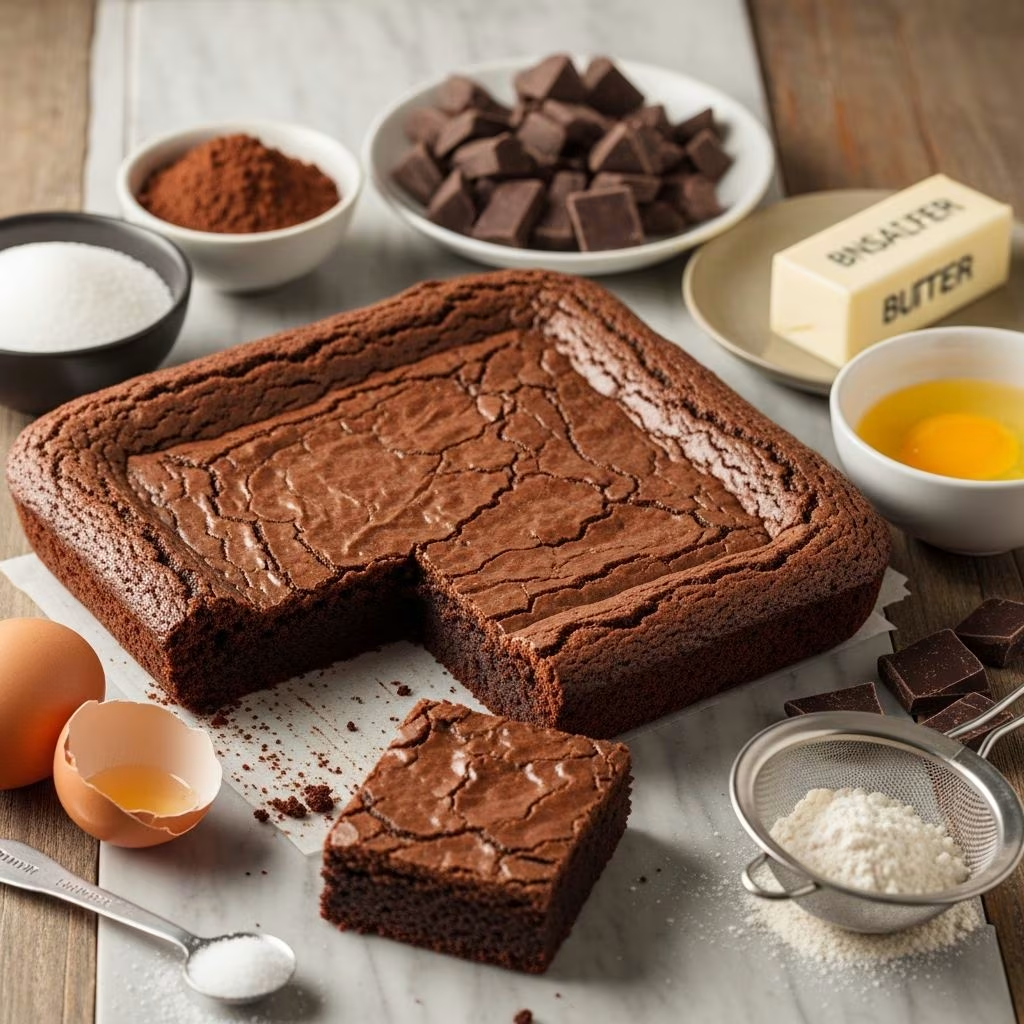
During baking, sugar liquifies and creates moisture in the center of the brownies, producing that coveted gooey consistency. Additionally, sugar migrates toward the surface during baking, creating that distinctive shiny, crackly top layer that characterizes exceptional fudgy brownies. Most recipes call for approximately one and one-quarter to one and one-half cups of sugar per batch, with brown sugar comprising roughly one-quarter to one-half of that total.
Egg Selection and Preparation
Eggs serve as structural binders while simultaneously adding moisture and richness to brownie batters. Large eggs at room temperature integrate more smoothly into the fat and sugar mixture, creating a more homogenous batter. Room-temperature eggs also emulsify more effectively with the other ingredients, resulting in superior texture and moisture retention throughout the baking process.
The number of eggs used directly influences brownie density and fudginess. Recipes typically call for two to four large eggs per batch, with the higher egg count producing denser, more fudgy results. When eggs are beaten with sugar, they incorporate air that creates a slightly puffed structure while still maintaining that essential gooey center when slightly underbaked.
Chocolate Selection: Beyond the Basics
Chocolate components in fudgy brownies exist in multiple forms: melted chocolate bars, chocolate chips, and cocoa powder all work in concert to create complex chocolate flavor. Semi-sweet or dark chocolate chips mixed with chopped chocolate bars provide both flavor intensity and textural variation. The larger chocolate chunks melt into pockets throughout the brownie, creating those luxurious gooey surprises in every bite.
Quality chocolate makes a substantial difference in the final product. Premium chocolate contains higher cocoa butter content, which contributes to superior melting characteristics and smoother mouthfeel. When selecting chocolate for folding into brownie batter, choose either high-quality chocolate chips or roughly chop a chocolate bar into varied-sized pieces. This approach ensures some chocolate melts completely while other pieces retain their structure, creating textural complexity.
The Supporting Cast: Flour and Leavening Agents
All-purpose flour provides structure to brownie batter while keeping the crumb tender. Too much flour results in cakey, dry brownies, while insufficient flour creates a mixture that spreads excessively in the oven. Most recipes call for between three-quarters and one cup of all-purpose flour per batch.
Leavening agents play a subtle but important role in brownie construction. Many recipes incorporate minimal leavening—either no baking powder, or just one-half teaspoon per batch. This approach prevents excessive rising that would compromise the desired dense, fudgy texture. The limited rise allows the brownies to settle into their characteristic flat, dense form while maintaining interior moisture.
Flavor Enhancers: Vanilla and Salt
Pure vanilla extract adds subtle depth that enhances chocolate perception without announcing itself. One to two teaspoons of quality vanilla extract ties together all flavor components, creating a cohesive taste experience. This ingredient represents one of those elements that consumers rarely notice in isolation, yet its absence becomes immediately apparent.
Salt serves as a critical flavor amplifier in brownie recipes. Between one-half and one teaspoon of salt per batch enhances chocolate perception and balances the sweetness from sugar. Salt also strengthens the structural matrix of gluten in the flour, contributing to the brownie’s ability to hold its shape while maintaining fudgy texture.
Ingredient Ratios and Their Impact on Texture
| Ingredient Component | Typical Ratio | Texture Impact |
|---|---|---|
| Butter and Oil Combined | 3/4 to 1 cup total | Creates moisture and tender crumb |
| Cocoa Powder | 1/2 to 3/4 cup | Provides chocolate flavor and density |
| Sugar | 1.25 to 1.5 cups | Creates moisture and fudgy center |
| Eggs | 2 to 4 large | Adds structure and richness |
| Flour | 3/4 to 1 cup | Provides structure while limiting density |
| Chocolate Pieces | 1 to 1.5 cups | Creates indulgent pockets |
Preparation Techniques That Preserve Fudginess
Understanding ingredient function means little without proper technique. The order of ingredient combination significantly impacts final texture. Combining melted butter with oil and sugar creates a base that dissolves throughout the batter evenly. Adding eggs to this mixture and beating gently incorporates them without creating excessive air.
The most critical technique involves minimal mixing once dry ingredients enter the equation. Overmixing develops gluten strands that tighten the crumb structure, transforming fudgy brownies into undesirable cake-like results. Dry ingredients should be folded in using a spatula with gentle motions until barely combined—lumps of flour are preferable to overdeveloped gluten.
Baking Temperature and Timing Considerations
Temperature precision directly affects whether brownies emerge fudgy or overdone. Most recipes call for baking at 350°F (175°C) for 17 to 20 minutes. This moderate temperature allows the exterior to set while the interior remains underbaked—a critical distinction for achieving fudgy results. Checking brownies at the 17-minute mark prevents overcooking that would eliminate the desired gooey center.
The brownie should appear slightly underbaked when removed from the oven. A toothpick inserted in the center should encounter moist crumbs rather than emerging completely clean. This underbaking ensures that residual heat continues cooking the brownie during cooling, producing the perfect balance between set edges and fudgy center.
Ingredient Storage and Quality Maintenance
Ingredient freshness directly impacts brownie quality. Cocoa powder can absorb moisture and odors, so storage in an airtight container away from direct light preserves its potency. Butter and oil should be stored in cool conditions to prevent rancidity. Chocolate maintains quality longest when wrapped tightly and kept in a cool, dry environment.
Frequently Asked Questions About Fudgy Brownie Ingredients
Can I substitute oil for butter in brownie recipes?
While recipes specifying all butter produce excellent results, replacing all butter with oil often yields overly dense, oily brownies. The optimal approach uses primarily butter with supplemental oil—typically two to three tablespoons—to enhance moisture while maintaining butter’s flavor contribution.
What cocoa powder type works best for fudgy brownies?
Dutch-processed cocoa powder creates darker, more sophisticated flavors, while natural cocoa powder offers brighter chocolate notes. Both types work in fudgy brownie recipes; choice depends on personal flavor preference rather than fudginess achievement.
Should I use melted chocolate plus cocoa powder, or choose one?
Using both melted chocolate and cocoa powder creates superior results. Melted chocolate contributes cocoa butter and smooth texture, while cocoa powder provides intense flavor concentration. This combination produces complex chocolate taste with excellent fudgy texture.
How does egg temperature affect brownie texture?
Room-temperature eggs blend more smoothly with other ingredients, creating better emulsification. This produces more uniform texture throughout the brownie and enhances moisture retention, supporting fudgy results.
Is baking powder necessary for fudgy brownies?
Minimal or no baking powder works best for fudgy brownies. Excessive leavening creates cake-like texture, while minimal leavening allows the brownie to remain dense and fudgy throughout.
Conclusion: Ingredient Harmony Creates Brownie Excellence
Achieving fudgy brownies involves understanding how each ingredient contributes to final texture and flavor. Quality cocoa powder, proper fat ratios, appropriate sugar levels, and room-temperature eggs combine with careful technique to produce exceptional results. The distinction between mediocre and outstanding fudgy brownies often comes down to ingredient selection and respect for the delicate balance that these components create together. By mastering these foundational elements, any baker can consistently produce brownies that deliver that coveted gooey center surrounded by barely-set edges that define brownie perfection.
References
- Gooey Fudgy Brownie Recipe — Kitchen 335. Accessed April 2026. https://kitchen335co.com/fudgy-brownies/
- Ultimate Fudgy Chocolate Brownies — Cafe Delites. Accessed April 2026. https://cafedelites.com/worlds-best-fudgiest-brownies/
- The Only Fudgy Chewy Brownie Recipe You Need — Grandbaby Cakes. Accessed April 2026. https://grandbaby-cakes.com/fudgy-chewy-brownies/
- The Best Fudge Brownies (with Crackly Tops) — Baker by Nature. Accessed April 2026. https://bakerbynature.com/the-best-cocoa-fudge-brownies/
- Seriously Fudgy Homemade Brownies — Sally’s Baking Addiction. Accessed April 2026. https://sallysbakingaddiction.com/seriously-fudgy-homemade-brownies/