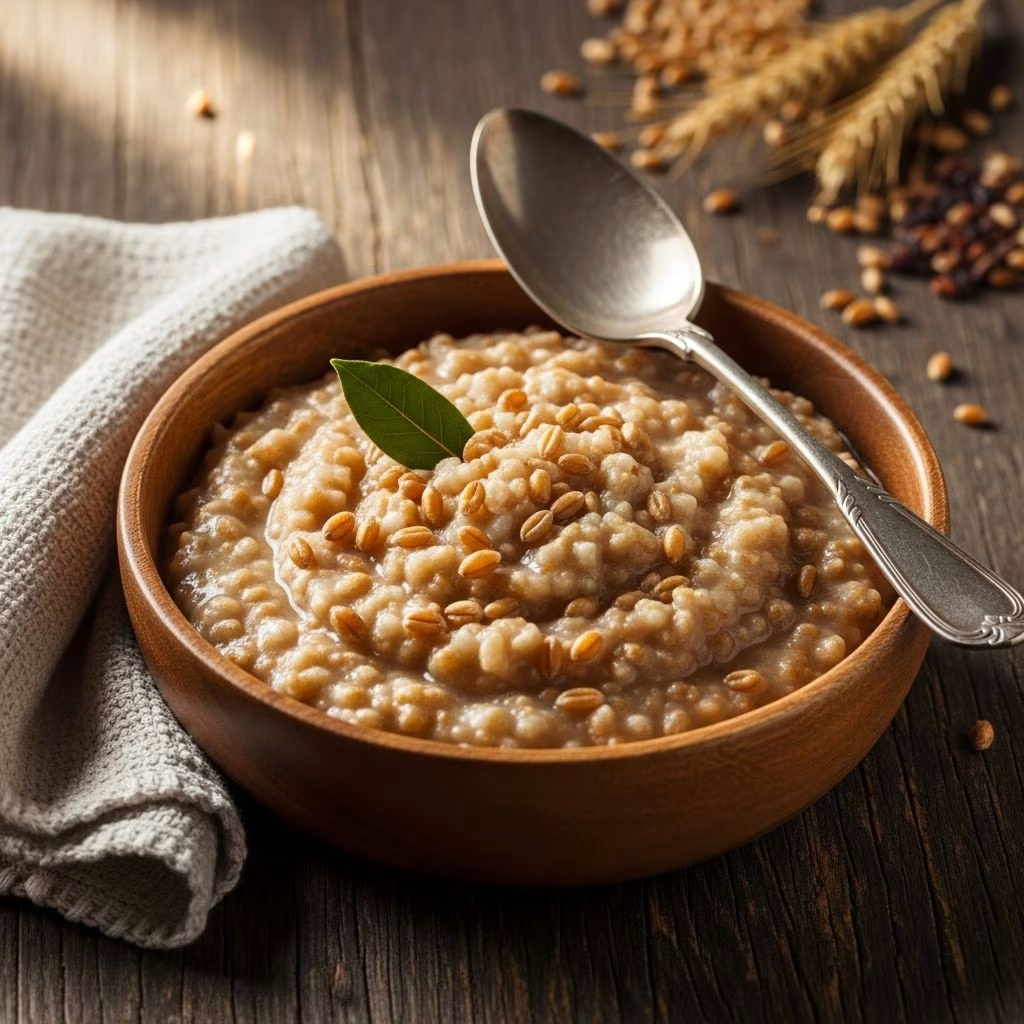
Frumenty stands as one of the oldest recorded dishes in European culinary history, a simple yet versatile porridge crafted from cracked wheat grains simmered in liquid. Originating in medieval times, it served as sustenance for peasants and a delicacy for nobility alike, evolving through centuries with added luxuries like spices, dried fruits, and dairy[10]. This dish’s enduring popularity lies in its adaptability, offering warmth and nourishment across seasons and social classes.
The Roots of Frumenty in Medieval Europe
Frumenty traces its beginnings to the Middle Ages, where it emerged as a staple in English and broader European kitchens. Derived from the Latin frumentum meaning wheat, it was prepared by boiling hulled or cracked wheat in water, broth, or milk until tender[10]. Historical records from the 13th to 15th centuries reveal it as a common accompaniment to venison, symbolizing winter’s endurance and spring’s promise among lords and clerics.
In everyday life, frumenty was unadorned—a plain gruel providing essential calories. During harvest festivals or Christmas, it transformed into a celebratory treat enriched with saffron, honey, and almonds, reflecting seasonal abundance. Manuscripts from this era detail variations tied to religious observances: meat broth for feast days and almond milk for fasting periods. This duality underscores frumenty’s role in both survival and festivity.
Essential Ingredients and Their Historical Significance
At its core, frumenty relies on whole or cracked wheat berries, which retain a chewy texture even after prolonged cooking, distinguishing it from smoother oat porridges. Common additions include:
- Milk or broth: Cow’s milk for richness, stock for savory depth, or almond milk for meatless versions.
- Sweeteners: Honey or sugar to enhance natural grain flavors, often introduced in later Victorian adaptations.
- Spices: Nutmeg, saffron, cinnamon, or ginger for aromatic warmth, luxuries signaling wealth.
- Dried fruits and nuts: Raisins, currants, or almonds for texture and subtle sweetness.
- Eggs or cream: Optional enrichments that create a custard-like consistency in upscale recipes.
These components not only improved taste but also boosted nutrition, combining carbohydrates from wheat with proteins from dairy and fats from nuts. Sourcing quality wheat was key; spelt berries, for instance, offered superior flavor and nutrients.
Classic Preparation Methods
Traditional frumenty demands patience, as wheat grains require slow cooking to achieve softness without mushiness. A basic medieval recipe yields about 6 servings:
| Ingredient | Quantity |
|---|---|
| Cracked wheat (bulgur or kibbled) | 275g |
| Water | 2 pints |
| Salt | To taste |
| Milk or stock | 150ml |
Steps involve boiling wheat in water until absorbed, then stirring in milk and simmering gently. For a Norman-style elevation, incorporate beaten egg yolks and saffron in the final stage, heating low until thickened. Baking offers an alternative: combine grains with hot milk, dot with butter, and oven-bake at 150°C for an hour until browned and creamy.
Slow cookers modernize this process—add cold milk to wheat and fruits, set on low for 4-6 hours, stirring occasionally. This hands-off approach yields tender results ideal for busy cooks recreating history.
Regional and Temporal Variations
Frumenty’s evolution showcases cultural influences. In Victorian England, inspired by figures like Mrs. Crocombe, it became a sweet dessert with eggs, spices, and prunes, adapting Ukrainian influences like those in kutya with nuts and honey. Medieval texts highlight savory pairings with meat or fish between courses.
By the 20th century, Lincolnshire farmers prepared festive versions on Christmas morning, spiking with rum or brandy. Contemporary takes emphasize health: vegan adaptations swap honey for maple syrup and cream for coconut. Nutritional profiles vary—spelt versions pack fiber, protein, and minerals, making it a superfood porridge.
Nutritional Profile and Health Benefits
Frumenty excels as a wholesome meal. A serving provides sustained energy from complex carbs, alongside B vitamins, iron, and magnesium from whole grains. Additions like almonds contribute healthy fats and vitamin E, while fruits add antioxidants.
- High fiber: Aids digestion and satiety.
- Protein boost: From milk, eggs, or nuts for muscle repair.
- Low glycemic index: Prevents blood sugar spikes.
Compared to modern cereals, frumenty offers chewiness that enhances mindful eating, with calories around 300-400 per serving depending on enrichments.
Modern Twists and Serving Suggestions
Revive frumenty for breakfast by slow-cooking overnight with orange zest, raisins, and nutmeg, topping with fresh fruit. Savory options pair it with roasted vegetables or venison for authenticity. Experiment with:
- Ginger or cloves for spice depth.
- Toasted nuts for crunch.
- Crystallized ginger for sweet heat.
Serve warm with cream, a brandy splash, or yogurt for contrast. Its versatility suits fall harvests or winter mornings, bridging past and present.
Step-by-Step Modern Frumenty Recipe
Ingredients (Serves 4-6):
- 200g wheat berries or bulgur
- 1L milk (or plant-based alternative)
- 100g raisins or currants
- 2 tbsp honey
- Pinch of saffron and nutmeg
- Zest of 1 orange
- 50g almonds, chopped
- Soak wheat overnight if whole berries.
- Boil in water until tender (1-2 hours), drain excess.
- Add milk, fruits, spices, and zest; simmer 20-30 minutes.
- Stir in honey and almonds; cook until creamy.
- Rest 5 minutes, serve hot.
Total time: 2 hours active + soaking. Prep mimics medieval simplicity while yielding luxurious results.
Frumenty in Cultural Context
Beyond kitchens, frumenty symbolized resilience—eaten post-harvest or during Lent[10]. Its presence in literature and customs, like Christmas traditions, highlights communal bonds. Today, it inspires historical reenactments and farm-to-table movements valuing ancient grains.
Frequently Asked Questions
What is frumenty made of?
Primarily cracked wheat boiled in milk or water, often enhanced with spices, fruits, and sweeteners[10].
Is frumenty healthy?
Yes, rich in fiber, vitamins, and minerals from whole grains and nuts.
Can frumenty be made vegan?
Absolutely—use plant milk, maple syrup, and coconut cream.
How long does frumenty take to cook?
1-2 hours stovetop or 4-6 hours slow cooker.
What to serve with frumenty?
Venison historically, or modern toppings like yogurt and fresh berries.
Preserving Frumenty’s Legacy
In a fast-food era, frumenty reminds us of slow-cooked comforts. Its journey from gruel to gourmet underscores wheat’s foundational role in cuisine. Home cooks can easily adopt it, fostering appreciation for heritage foods that nourish body and soul.
References
- In the Kitchen: Furmenty — Mina Murray. Accessed 2026. https://minamurray.com/blogs/oh-the-glamourous-life/posts/7384106/in-the-kitchen-furmenty
- Frumenty: A European Recipe in the Medieval Culinary Tradition — Alena Minko, Central European University. 2024-05. https://www.etd.ceu.edu/2024/minko_alena.pdf
- Frumenty Recipe — George Sykes, Samsung Food. 2023-08-17. https://app.samsungfood.com/recipes/107d1db57b065e64f10ae0ca3225e2fb0a9
- How to make Frumenty – What is this Medieval Porridge? — Avery Raassen, YouTube. 2021-04-19. https://www.youtube.com/watch?v=TZkKwvKSIdY
- Frumenty: a Breakfast Wholegrain Wheat Porridge — Tin and Thyme. 2020-12. https://tinandthyme.uk/2020/12/frumenty/
- Frumenty — Mrs Simkins. Accessed 2026. https://mrssimkins.co.uk/Recipes/Frumenty