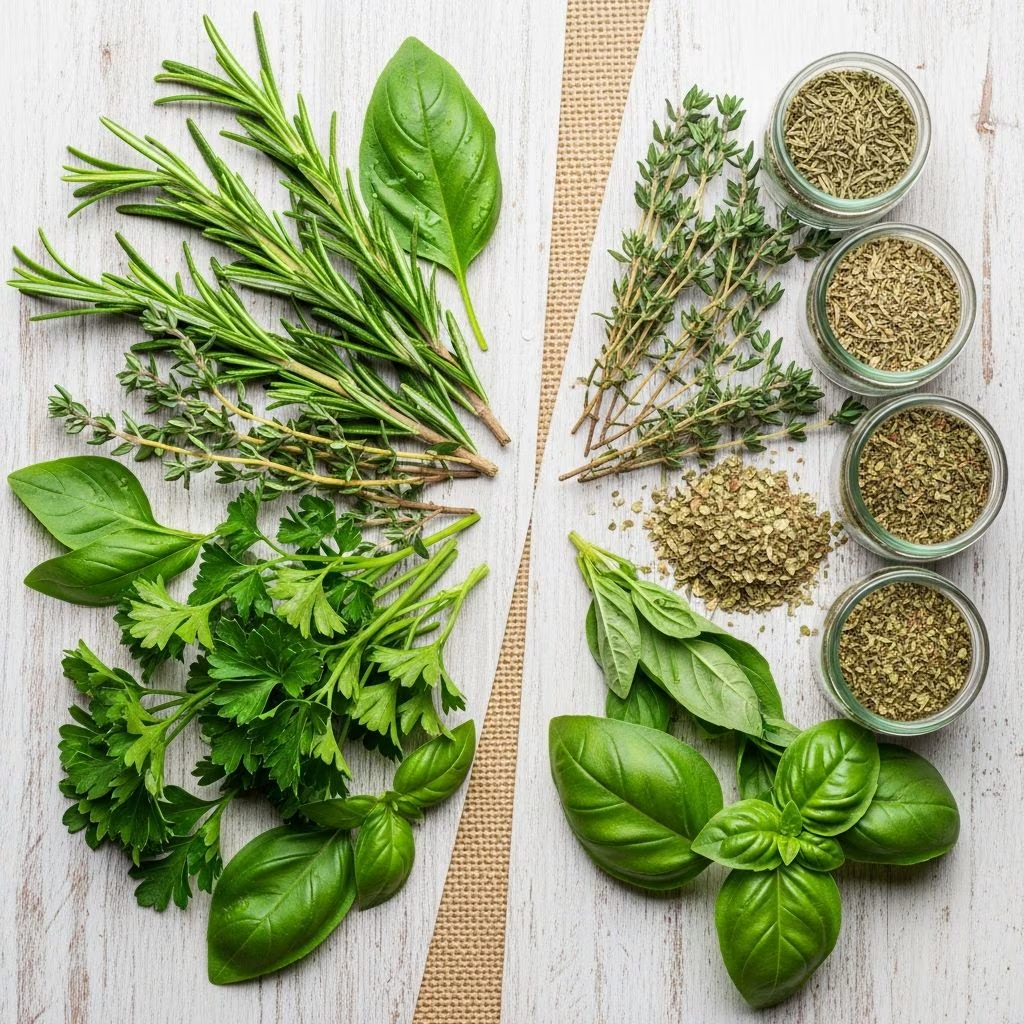
Swapping dried herbs for fresh ones is a game-changer in the kitchen, especially when your garden is bare or the store is out of stock. The key lies in understanding how dehydration concentrates flavors, allowing you to maintain balance without overpowering your dish. This guide breaks down the science, provides practical ratios, and offers tailored advice for common herbs.
Why Dried Herbs Pack More Punch
Fresh herbs contain up to 90% water, which dilutes their essential oils—the source of their aroma and taste. Drying removes this moisture, intensifying the flavor compounds significantly.1 tablespoon fresh equals about 1 teaspoon dried for most leafy varieties, following a reliable 3:1 ratio.
This concentration means less volume is needed, but potency varies by herb type. Soft herbs like basil lose vibrancy quickly when dried, while hardy ones like rosemary retain—and amplify—their strength. Always start conservatively and taste as you go, since older dried herbs may fade in intensity over time.
Mastering the Core Conversion Ratios
The standard guideline is straightforward: divide fresh herb amounts by three to get the dried equivalent. For ground herbs, which are even finer and more potent, use a 4:1 ratio from dried leaf to ground.
| Fresh Herb Amount | Dried Leaf Equivalent | Ground Herb Equivalent |
|---|---|---|
| 1 tablespoon | 1 teaspoon | ½ teaspoon |
| 1 teaspoon | ⅓ teaspoon | ¼ teaspoon (approx.) |
| 2 tablespoons | 2 teaspoons | 1 teaspoon |
| ¼ cup | 4 teaspoons (about 1 tablespoon + 1 teaspoon) | 2 teaspoons |
| ½ cup | 3 tablespoons | 4 teaspoons |
These conversions work across most recipes, from soups to marinades. For precision, chop fresh herbs finely before measuring, as larger pieces affect volume.
Herb-by-Herb Breakdown: Tailored Adjustments
Not all herbs behave the same when dried. Here’s how to handle popular ones:
- Basil: Delicate and sweet fresh, it becomes earthy when dried. Stick to 3:1, but add a pinch more if the dish simmers long.
- Oregano: Bold and peppery; the ratio holds perfectly. Ideal for tomato sauces and meats.
- Thyme: Its lemony-earth notes concentrate well. Use exactly 1 tsp dried per 1 tbsp fresh in roasts or stews.
- Rosemary: Woody and pine-like; dried is exceptionally strong. Start with ¾ tsp per tbsp fresh to avoid bitterness.
- Sage: Similar to rosemary—potent and savory. Opt for less initially in stuffings or poultry dishes.
- Parsley: Best fresh for garnish, but dried works in stocks at 3:1. Avoid overcooking to preserve color.
- Dill: Tricky; dried loses feathery lightness. Use 2:1 if possible, or combine with fresh at the end.
For less common herbs like marjoram or savory, the 3:1 rule applies reliably as they are hardy varieties.
Reversing the Swap: Dried to Fresh
Running low on dried? Triple the amount when using fresh instead. A recipe calling for 1 tsp dried needs 1 tbsp fresh, chopped.
Timing is crucial here: introduce dried herbs early in cooking to release oils through heat and moisture. Save fresh for the final stir or garnish to preserve brightness—especially for basil, cilantro, or parsley, which can turn bitter under prolonged heat.
Pro tip: Blend both for layered flavor. Add dried midway through simmering, then finish with fresh for vibrancy.
Advanced Tips for Flavor Perfection
- Storage Check: Crush a pinch of dried herb; if the aroma is faint, it’s past prime. Replace annually for best results.
- Crush Before Use: Rub dried leaves between fingers to wake up oils before adding to dishes.
- Ground vs. Leaf: Ground forms dissolve faster but intensify quicker—ideal for rubs, less so for long cooks.
- Freeze-Dried Option: These mimic fresh color and texture; treat them like fresh in recipes.
- Quality Matters: Source from reputable suppliers to ensure purity and potency.
Common Pitfalls and How to Avoid Them
Over-substituting is the biggest mistake, leading to bitter or muddled tastes. With potent herbs like rosemary or sage, err on the light side and adjust.
Another issue: ignoring cooking stage. Dried herbs need time to soften; dumping them in at the end wastes their potential. Conversely, fresh herbs wilt and lose punch if cooked too long.
For baked goods or quick sautés, taste midway and tweak. Remember, you can always add more, but removal is impossible.
Conversion Chart for Quick Reference
| Recipe Calls For (Fresh) | Use This (Dried Leaf) | Use This (Ground) | Best Addition Time |
|---|---|---|---|
| 1 tbsp | 1 tsp | ½ tsp | Early (dried), End (fresh) |
| 2 tbsp | 2 tsp | 1 tsp | Same |
| 3 tbsp | 1 tbsp | 2¼ tsp | Same |
| ¼ cup (4 tbsp) | 4 tsp (1 tbsp + 1 tsp) | 1 tbsp | Same |
FAQs: Answering Your Herb Questions
Can I substitute dried for fresh in baking?
Yes, but use the 3:1 ratio and add dried early in the mix for even distribution. Test in small batches for delicate flavors like dill.
What if my dried herbs smell weak?
They’re likely stale. Toss and buy fresh stock—aroma is your potency indicator.
Does the ratio work for all herbs?
Mostly, but hardy ones like thyme yes; soft like cilantro, better fresh or minimal dried.
How do I store herbs to maximize shelf life?
Keep in airtight jars, cool/dark place. Whole leaves last longer than ground.
Is there a difference between air-dried and store-bought?
Store-bought are consistent; home-dried may vary, so taste-test ratios.
Experimenting with Herb Blends
Create your own mixes using these ratios. For Italian seasoning, combine equal parts dried oregano, basil, thyme (3:1 from fresh base). Herbes de Provence shines with rosemary, thyme, and savory—start light on rosemary.
In global cuisines, adjust culturally: Mexican blends favor cilantro fresh, with dried oregano; French fines herbes need parsley and chive fresh atop dried tarragon.
This flexibility turns pantry staples into fresh-tasting triumphs every time.
References
- Substitute dried herbs for fresh: Easy Ratios and Tips — Cooler Kitchen. 2023. https://www.coolerkitchen.com/blogs/news/substitute-dried-herbs-for-fresh
- Herbs: Dried vs Fresh – The Correct Ratio for Substituting — Midwest Weight Loss Center. 2023. https://mwlc.com/news/dried-herbs-vs-fresh-herbs-the-correct-ratio-for-substituting
- Fresh-to-Dried Herb Conversion Guide (Plus Garlic, Onion Powder) — Forks Over Knives. 2023. https://www.forksoverknives.com/how-tos/fresh-to-dried-herb-conversion-guide-plus-garlic-onion-powder/
- Fresh Herbs to Dried: Perfect Conversion Ratios for Every Cook — Reluctant Gourmet. 2023. https://reluctantgourmet.com/converting-fresh-herbs-to-dried-ratios/
- How To Substitute Fresh Herbs For Dried — & Vice Versa — Rachael Ray Show (YouTube). 2023. https://www.youtube.com/watch?v=xKWEM17f-VU