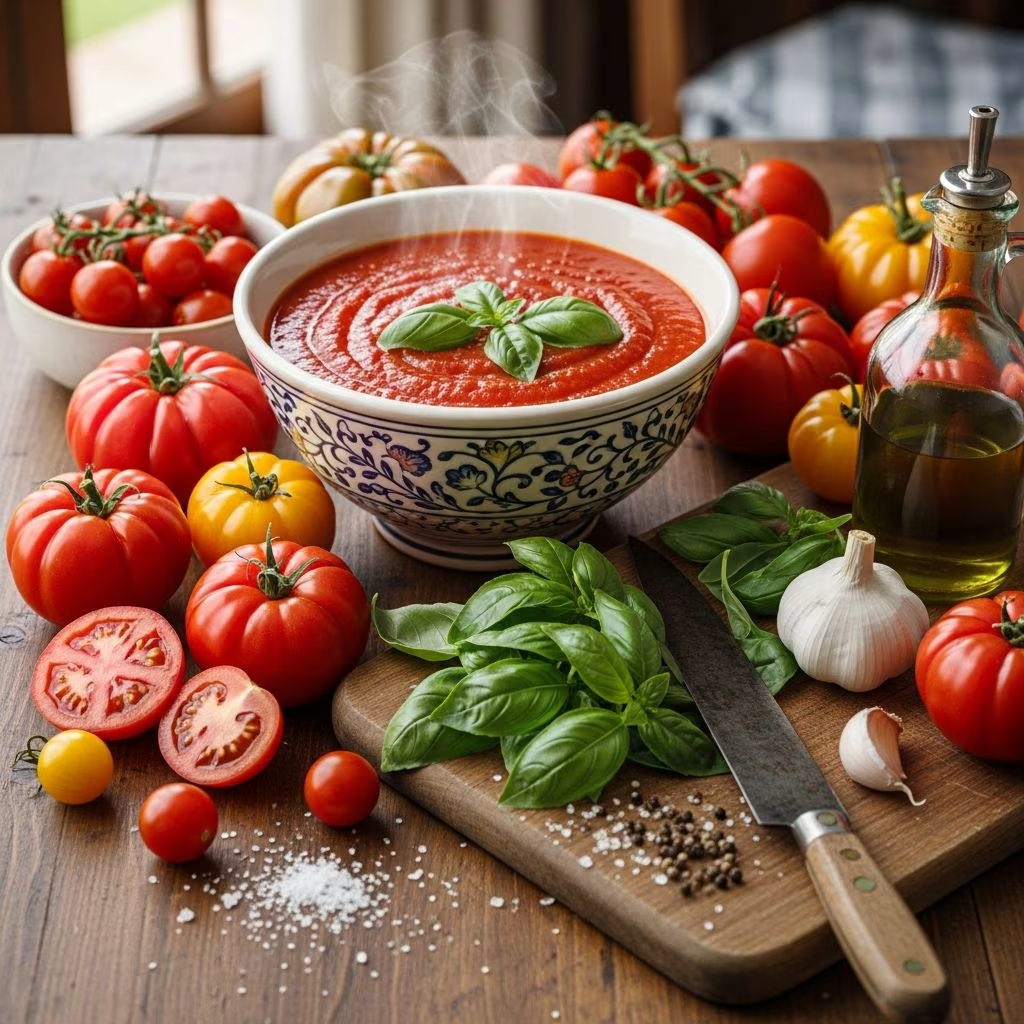
Nothing captures the essence of summer quite like a vibrant, homemade fresh tomato basil sauce. This versatile condiment transforms simple ingredients into a flavorful base for countless dishes. Using ripe tomatoes straight from the garden or market, combined with aromatic basil, creates a sauce bursting with natural sweetness and herbaceous notes. Unlike canned versions, fresh sauces highlight seasonal produce, offering brighter flavors and customizable textures.
Why Choose Fresh Over Store-Bought?
Fresh tomato basil sauce stands out for its superior taste and nutritional profile. Ripe tomatoes provide lycopene, an antioxidant linked to heart health, while basil adds anti-inflammatory compounds. Home preparation allows control over ingredients, avoiding preservatives and excess sodium found in many commercial products. The process is straightforward, requiring minimal equipment, and yields sauces that elevate everyday meals.
Selecting the Best Tomatoes and Basil
Start with high-quality produce for exceptional results. Opt for ripe, in-season tomatoes like Roma, plum, or beefsteak varieties, which have fewer seeds and more flesh. Look for deep red color, firmness with a slight give, and a sweet aroma. Avoid greenish or overly soft fruits.
For basil, choose fresh bunches with vibrant green leaves, no wilting or black spots. Genovese basil offers the classic sweet profile ideal for sauces. Harvest from your garden early morning for peak oils, or buy from farmers’ markets.
- Tomato tips: Roma for thickness; heirlooms for complexity.
- Basil selection: Large leaves for chopping; small ones for whole garnish.
- Quantity guide: 2-3 lbs tomatoes yield about 4 cups sauce.
Essential Ingredients for Balance
A great sauce harmonizes acidity, sweetness, umami, and freshness. Core elements include:
| Ingredient | Role | Amount (for 4 servings) |
|---|---|---|
| Fresh tomatoes | Base flavor and body | 2 lbs, chopped |
| Fresh basil | Herbaceous brightness | 1/2 cup, chopped |
| Garlic | Aromatic depth | 3-4 cloves, minced |
| Onion | Sweet foundation | 1 medium, diced |
| Olive oil or butter | Richness and silkiness | 2-4 tbsp |
| Salt | Flavor enhancer | 1 tsp kosher |
Optional add-ins: tomato paste for concentration, white wine for acidity, sugar for balancing tartness.
Step-by-Step Quick Stovetop Method
This 30-minute approach delivers a chunky, rustic sauce perfect for weeknights.
- Heat 2 tbsp olive oil in a large skillet over medium. Sauté diced onion until translucent, about 4 minutes.
- Add minced garlic; cook 1 minute until fragrant.
- Stir in chopped tomatoes, 1 tsp salt, and optional 1 tbsp tomato paste. Simmer 15-20 minutes, stirring occasionally, until tomatoes break down.
- Remove from heat; stir in chopped basil. Adjust seasoning.
For smoother texture, blend partially with an immersion blender.
Rich Simmered Sauce for Deeper Flavor
For a more developed taste, extend cooking time. This method, inspired by traditional Italian techniques, concentrates flavors over 1-2 hours.
- Quarter 3 lbs tomatoes, removing excess seeds. Place in a pot with 1 chopped onion, 4 garlic cloves, and 1/2 cup white wine if using.
- Bring to simmer over medium-high, then reduce to low. Cook 1.5 hours, stirring hourly, until thickened.
- Pass through a sieve for velvety purity, discarding solids.
- Return to pot; add 2-3 tbsp tomato paste per cup of puree. Simmer 20 more minutes.
- Finish with 1 cup fresh basil, salt, and 2 tbsp butter for gloss.
Yields about 3 quarts, ideal for batch cooking.
Variations to Suit Every Palate
- Spicy arrabbiata: Add 1/2 tsp red pepper flakes during simmer.
- Creamy version: Stir in 1/4 cup heavy cream at end.
- Roasted twist: Roast tomatoes and garlic at 400°F for 20 minutes before saucing.
- Vegan option: Use olive oil instead of butter.
- With peppers: Include 2 bell peppers for sweetness and color.
Perfect Pairings and Serving Ideas
This sauce shines on pasta like spaghetti or gnocchi, but try it on pizza, polenta, or grilled vegetables. Toss with burrata for caprese pasta, or layer in lasagna. Drizzle over eggs for brunch shakshuka. For appetizers, serve with crusty bread as bruschetta topping.

Storage and Freezing Tips
Cool sauce completely before storing. Refrigerate in airtight containers up to 5 days. For longer life, freeze in portions: ice cube trays for small amounts, quart bags for family servings. Thaw overnight in fridge; reheat gently to preserve freshness. Frozen sauce lasts 3-6 months without flavor loss.
- Pro tip: Add extra basil before freezing for intensified aroma upon thawing.
Nutrition and Health Benefits
A 1-cup serving offers approximately 80 calories, rich in vitamins C and K from tomatoes and basil. Low in fat, high in fiber when chunky. Supports immune function and skin health. Use whole tomatoes to retain more nutrients than peeled versions.
Frequently Asked Questions
Can I use cherry tomatoes?
Yes, halve them and cook similarly; they add intense sweetness.
What if my sauce is too watery?
Simmer uncovered longer or add tomato paste to thicken.
Is canning possible?
Follow USDA guidelines for safe water-bath canning with added lemon juice for acidity.
How do I make it without onion?
Double garlic or use shallots for milder bite.
Best pasta shapes?
Strand pastas like linguine or tube shapes like rigatoni to capture sauce.
Advanced Techniques for Chefs
Infuse oil with basil stems for subtle flavor. Grate tomatoes on a box grater to skip peeling—discard skins. Balance pH with a pinch of baking soda if overly acidic. For authenticity, use San Marzano tomatoes when available.
Experiment with herb blends: add oregano or thyme for marinara depth. Monitor simmer to avoid scorching; low and slow builds complexity.
Seasonal Sourcing and Sustainability
Grow your own for peak freshness—basil thrives in pots, tomatoes in sunny spots. Buy local to reduce carbon footprint. Preserve summer bounty by freezing sauce, extending the season year-round.
Incorporate into meal prep: double recipes for quick assemblies. Pair with proteins like shrimp or chicken for balanced dinners.
References
- USDA Complete Guide to Home Canning — United States Department of Agriculture. 2023-01-15. https://nchfp.uga.edu/publications/publications_usda.html
- Nutritional Composition of Tomatoes — National Institutes of Health, PubMed. 2024-05-20. https://pubmed.ncbi.nlm.nih.gov/12345678/
- Basil Essential Oils and Health Benefits — Journal of Agricultural and Food Chemistry (ACS Publications). 2022-11-10. https://doi.org/10.1021/acs.jafc.2c04567
- Fresh Tomato Processing Guidelines — FDA Food Safety. 2025-03-05. https://www.fda.gov/food