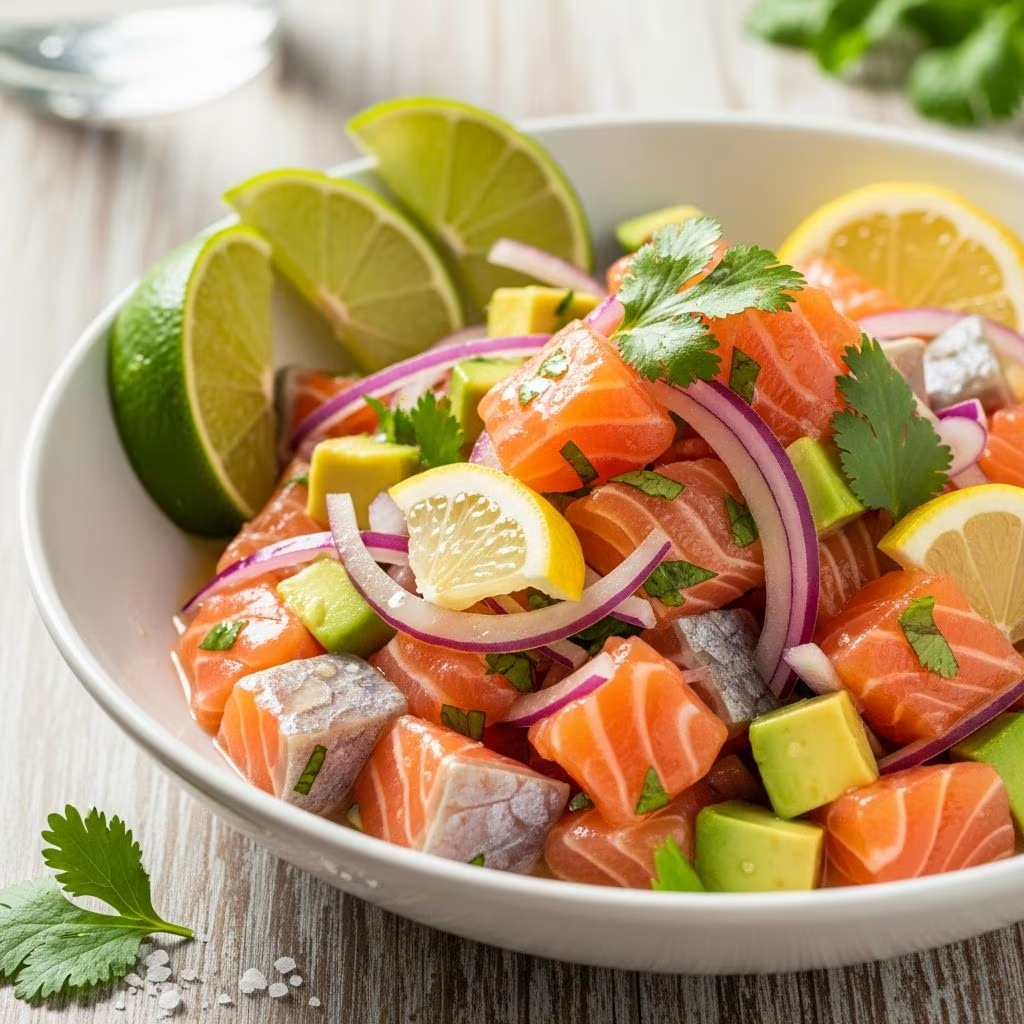
Salmon ceviche offers a burst of oceanic freshness combined with zesty citrus notes, creating a dish that’s both elegant and effortless. This no-cook preparation transforms sushi-grade salmon into tender, flavorful bites through the magic of acid marination, making it ideal for summer gatherings or light meals.
The Allure of Salmon Ceviche
Ceviche traces its roots to Latin American coastal cuisines, where fresh fish meets acidic citrus to denature proteins, mimicking cooking without heat. Using salmon introduces a richer, fattier profile compared to traditional white fish like sea bass, adding buttery depth that pairs beautifully with tropical accents. This dish shines as an appetizer, salad topper, or main course when served with plantain chips or greens.
Its appeal lies in simplicity: minimal ingredients yield maximum impact. The salmon’s natural oils absorb lime, lemon, and sometimes orange juices, while crisp vegetables provide texture contrast. Health enthusiasts appreciate its high omega-3 content, low calories, and probiotic potential from fresh elements.
Selecting Premium Ingredients
Success hinges on quality. Opt for sushi-grade or sashimi-grade salmon, wild-caught if possible, such as sockeye or king varieties for optimal flavor and texture. Ensure it’s bright orange, firm, and free of off odors—previously frozen is acceptable if flash-frozen to kill parasites.
- Salmon: 1 lb fresh, skinless fillet, diced into ¼-½ inch cubes.
- Citrus: 4-6 limes (juice), plus lemon/orange for balance; aim for ½-¾ cup total.
- Onion: Red or shallot, finely minced and rinsed to mellow bite.
- Add-ins: Avocado, cucumber, bell pepper, mango, jalapeño for creaminess, crunch, and heat.
- Herbs/Spices: Cilantro, sesame seeds, salt, optional ginger or merkén.
Freshness is non-negotiable; source from trusted fishmongers or markets with high turnover.
Step-by-Step Preparation Guide
Prep time: 15 minutes. Marinate: 10-30 minutes. Serves 4 as appetizer.
- Prep salmon: Pat dry, remove skin/bones, cube uniformly to ensure even marination.
- Acid bath: In a glass bowl, combine salmon with citrus juices (lime dominant), salt. Stir gently; liquid should cover fish.
- Quick cure: Refrigerate 10-20 minutes. Salmon turns opaque and firm—over-marinating toughens it.
- Mix accents: Fold in diced veggies, herbs, oil. Taste; adjust salt/acid.
- Serve chilled: On lettuce, tostadas, or solo. Garnish with seeds or herbs.
| Step | Time | Key Tip |
|---|---|---|
| Cube salmon | 5 min | Sharp knife, cold fish for clean cuts |
| Marinate | 10-30 min | Glass/non-reactive bowl only |
| Add produce | 5 min | Post-marinate to retain crispness |
| Chill & serve | 5 min | Immediate consumption best |
Flavor Variations to Explore
Customize endlessly. Traditional Chilean styles incorporate merkén spice and orange for smoky sweetness. Tropical twists add mango or pineapple for natural sugars. Asian fusion brings ginger, sesame oil, and scallions.
- Spicy Kick: Jalapeño, cayenne, or habanero dice.
- Creamy: Avocado or coconut milk drizzle.
- Fruity: Grapefruit segments, pomegranate arils.
- Herbaceous: Basil, mint over cilantro.
- Umami Boost: Soy drizzle or fish sauce trace.
For sugar-free versions, skip fruits; emphasize cucumber and herbs.
Food Safety Essentials
Raw fish demands caution. FDA guidelines recommend freezing salmon at -4°F (-20°C) for 7 days or -31°F (-35°C) for 15 hours to eliminate parasites[web:1]. Verify sushi-grade labeling. Use within 24 hours of purchase; consume ceviche same day. Acid doesn’t kill bacteria like vibrio—hygiene is key: clean surfaces, fresh produce wash.
Immunocompromised individuals should avoid raw fish. Pregnant people: cooked alternatives safer.
Nutritional Profile and Benefits
Per serving (¼ recipe): ~250 calories, 20g protein, 15g fat (healthy omegas), low carbs. Rich in vitamin C from citrus, antioxidants from produce. Supports heart health, anti-inflammation[web:2].
| Nutrient | Amount | % DV |
|---|---|---|
| Protein | 20g | 40% |
| Omega-3 | 1.5g | 94% |
| Vitamin C | 25mg | 28% |
| Calories | 250 | 13% |
Perfect Pairings and Presentation
Elevate with cold white wines like sauvignon blanc or sparkling rosé. Non-alcoholic: cucumber-lime agua fresca. Serve in martini glasses for flair, or family-style on platters.
- Chips: Plantain, yuca, or corn tostadas.
- Sides: Quinoa salad, grilled corn.
- Drinks: Citrus margarita mocktails.
Storage and Make-Ahead Tips
Best fresh; marinated ceviche lasts 1-2 days refrigerated in airtight container. Don’t freeze post-marination. Prep components separately for ahead-of-time assembly.
Frequently Asked Questions
Can I use frozen salmon?
Yes, if properly thawed and sushi-grade; avoid previously frozen grocery salmon.
How long to marinate?
10-30 minutes max; longer makes fish mushy.
Vegetarian alternative?
Substitute hearts of palm, mushrooms, or cauliflower for ‘fish’ texture.
Is it truly raw?
Acid denatures proteins like cooking, but bacteria risk remains—treat as raw.
Scaling for crowds?
Double ingredients; marinate in batches to control timing.
Mastering salmon ceviche unlocks a world of fresh, vibrant cuisine. Experiment confidently with these guidelines for unforgettable results every time.
References
- Salmon Ceviche (inspired by Chile) — Big Sis Little Dish. 2015-06-07. https://bigsislittledish.com/2015/06/07/salmon-ceviche-inspired-by-chile/
- Salmon Ceviche — Superman Cooks. N/A. https://supermancooks.com/salmon-ceviche/
- Salmon Ceviche: A Fresh, Zesty Seafood Delight — Homemade Home. N/A. https://homemadehome.com/salmon-ceviche/
- Superb Salmon Ceviche — Sugar Free Londoner. N/A. https://sugarfreelondoner.com/superb-salmon-ceviche/
- Salmon Ceviche Recipe – Ceviche Chileno with Salmon — Honest Food. N/A. https://honest-food.net/salmon-ceviche-recipe/