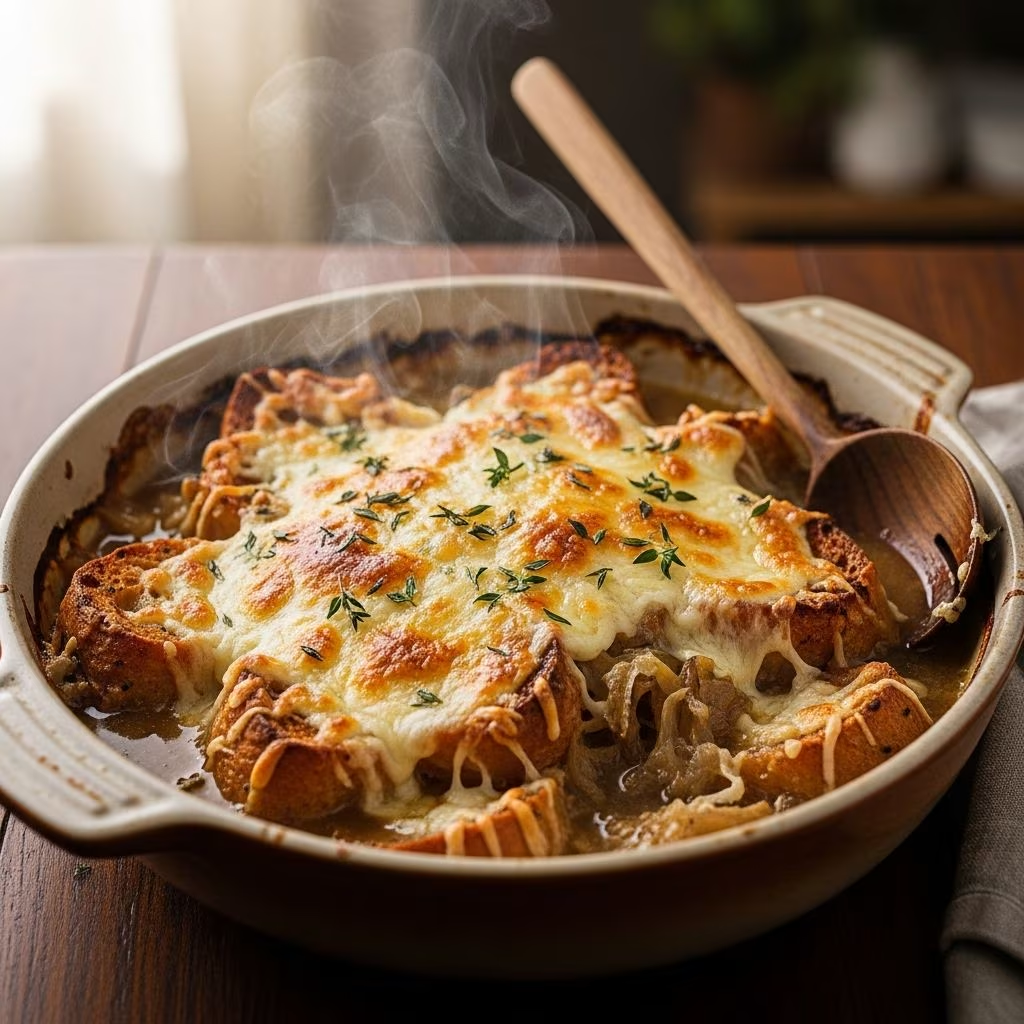
French onion soup has long been celebrated as a sophisticated yet approachable dish that combines humble ingredients into something truly extraordinary. The marriage of slowly caramelized onions, rich beef broth, and melted cheese creates an unforgettable dining experience. However, there’s a modern twist on this beloved classic that deserves your attention: the French onion soup casserole. This ingenious adaptation takes all the flavors you love about the traditional soup and transforms them into a hearty, baked casserole that’s perfect for family dinners, casual gatherings, or whenever you’re craving comfort food with a touch of elegance.
Why Choose a Casserole Version?
Converting French onion soup into a casserole format offers several practical and culinary advantages. The casserole presentation makes serving easier for groups, as you can portion it directly from the baking dish without the need for individual soup bowls and careful ladling. The texture becomes more substantial, with the bread and cheese creating a textured, layered experience rather than the traditional smooth, broth-based consistency. Additionally, baking allows the cheese to develop a golden, slightly crispy top that adds depth and visual appeal. This version also allows for make-ahead preparation and reheating, making it ideal for meal planning.
Selecting Your Essential Ingredients
The Foundation: Yellow Onions
The soul of any French onion preparation lies in the onions themselves. Large yellow onions serve as the primary ingredient, and you’ll need several of them—typically around five large onions, which should be julienned or thinly sliced into uniform pieces. Yellow onions are preferred because they contain natural sugars that caramelize beautifully when cooked slowly, developing a deep amber color and sweet, complex flavor. The key to achieving this transformation is patience; rushing the caramelization process results in unevenly cooked onions rather than the silky, golden-brown strips that define this dish.
Fats and Flavor Builders
The cooking medium is equally important as the onions themselves. A combination of unsalted butter—typically one stick or eight tablespoons—and extra virgin olive oil creates a flavorful base. The butter contributes richness and helps develop the golden color during caramelization, while the olive oil prevents the butter from burning at higher temperatures and adds its own subtle flavor profile. Some recipes incorporate white wine, which adds acidity and complexity while the alcohol cooks off, leaving behind sophisticated depth. Kosher salt and freshly ground black pepper serve as seasoning throughout the cooking process.
Building the Broth Foundation
Beef broth forms the liquid backbone of your casserole. Most recipes call for approximately three-quarters to one cup of beef broth, though this varies depending on how wet you prefer your final product. Some preparations enhance this with additional beef broth or even condensed French onion soup for extra richness. The broth should be good quality, whether homemade or store-bought, as it significantly impacts the final flavor profile.
The Cheese Component
Cheese selection offers flexibility while maintaining traditional French onion soup characteristics. Swiss cheese is commonly used for its mild, nutty flavor and excellent melting properties. However, gruyère—a classic French cheese with a rich, complex taste—works beautifully. Some recipes combine multiple cheeses, layering mozzarella for creaminess with Parmesan for a sharp, umami-rich finish. The cheese should comprise a generous layer that covers the entire top of the casserole, ensuring every portion gets that irresistible melted cheese topping.
The Textural Element: Bread
Crusty French bread or day-old baguette provides the structural element that transforms soup into casserole. The bread should be cut into approximately one-inch pieces or sliced, then lightly toasted before assembly. This toasting prevents the bread from becoming overly soggy while maintaining enough structure to hold the broth and cheese. Some preparations use garlic croutons for added flavor complexity.
The Cooking Process: Step by Step
Caramelizing the Onions: The Most Important Step
Begin by melting butter in a large, high-sided skillet over medium heat, then add the olive oil. Once the fats are combined and shimmering, add your sliced onions along with a generous pinch of kosher salt. The salt helps break down the onion cell walls, facilitating even cooking. Cook the onions over medium heat, stirring occasionally, for approximately thirty to forty minutes. During this time, the onions will gradually lose moisture, shrink significantly, and transform from pale yellow to deep amber. If the onions begin sticking to the pan, add a splash of water as needed. This lengthy cooking period is not optional—rushing it prevents proper caramelization and results in onions that are merely softened rather than truly caramelized.
Incorporating Flavor Layers
Once your onions have achieved that beautiful amber color, season them to taste with additional salt and pepper. At this point, some recipes call for sprinkling all-purpose flour over the onions, stirring until absorbed. This flour acts as a thickening agent, helping to bind the eventual sauce. Next, add your white wine if using, scraping the bottom of the pan with a wooden spoon to incorporate any browned bits—a technique called deglazing that adds tremendous depth of flavor. Allow the wine to cook for about one minute until mostly absorbed.
Creating the Broth Foundation
Pour in your beef broth and add fresh thyme (either whole sprigs or just the leaves, depending on your preference). Allow this mixture to simmer for one to two minutes, which allows the flavors to meld and gives any thickening agent time to activate. Taste and adjust seasoning with additional salt and pepper as needed. Remember that the cheese topping will add saltiness, so season conservatively.
Assembly and Final Preparation
Transfer your onion and broth mixture to a prepared casserole dish, using the back of a spoon to level it out evenly. The casserole should fill approximately two-thirds of the dish. Layer your lightly toasted bread pieces over the onion mixture, covering the surface in a single layer. If you’ve prepared croutons, distribute them evenly across the top. Finally, add your cheese layer, ensuring complete coverage so every piece gets golden, melted cheese.
Achieving the Perfect Finish
Broiling Method for Maximum Cheese Browning
Some recipes utilize the broiler to finish the casserole, preheating it while you complete earlier steps. Once assembled with cheese, place the casserole under the broiler for approximately three minutes until the cheese melts and begins to crisp slightly. This method offers quick, intense heat that creates a beautifully browned, bubbly cheese top while keeping the interior at the desired temperature.
Traditional Oven Baking
Alternative preparations prefer baking in a preheated 350-degree oven for twenty to thirty minutes until the cheese is completely melted and golden brown on top. This gentler approach ensures even heating throughout and prevents the onions from overcooking while the cheese browns. The longer baking time allows flavors to fully meld and intensify.
Creative Variations to Explore
Cheese Alternatives
While Swiss cheese remains traditional, experimentation with other cheeses opens new flavor possibilities. Fontina provides buttery richness, while sharp white cheddar adds pronounced flavor. Gouda introduces subtle smokiness, and a combination of two cheeses—perhaps mozzarella layered with Parmesan—creates complex taste profiles.
Protein Additions
Transform your casserole into a more substantial main course by incorporating ground beef, creating a hearty one-dish meal that combines French onion soup’s elegance with beef casserole heartiness. Some recipes include bacon or pancetta for added depth and smokiness.
Bread and Topping Variations
While French bread remains classic, try ciabatta, sourdough, or Italian bread for different textures. Crispy fried onions can replace traditional bread topping for additional crunch and onion flavor, or complement the bread layer for added textural complexity.
Liquid Variations
Experiment with beef broth quality levels, or incorporate a small amount of brandy or cognac for sophisticated depth. Some preparations reduce the broth beforehand to concentrate flavors, or add Worcestershire sauce for umami richness.
Serving and Storage Considerations
Optimal Serving Conditions
Serve the casserole immediately after cooking while the cheese is at peak temperature and texture. Present it directly in the baking dish for casual gatherings, or portion it carefully onto individual plates for more formal presentations. The casserole pairs beautifully with simple green salads, crusty bread for soaking up any remaining broth, or light vegetable sides.
Scaling for Larger Groups
To serve more people, double all ingredients and prepare the casserole in a standard 9-by-13-inch baking dish instead of smaller individual casseroles. Adjust cooking time slightly, potentially adding five to ten minutes if the larger volume requires additional time for heat penetration.
Make-Ahead and Storage
This dish is excellent for advance preparation. Cook the onion and broth mixture completely, cool it to room temperature, then refrigerate in your casserole dish for up to two days. When ready to serve, bring to room temperature, add the bread and cheese topping, then bake according to instructions. The completed casserole can be refrigerated for up to three days; reheat gently in a 300-degree oven until warmed through.
Frequently Asked Questions
Can I make this casserole vegetarian?
Yes. Replace beef broth with vegetable broth or mushroom broth for depth. Enhance umami flavors with miso paste, soy sauce, or nutritional yeast. The caramelized onions provide sufficient richness for a satisfying vegetarian version.
How long does the onion caramelization truly take?
Plan for thirty to forty minutes of active cooking for proper caramelization. This cannot be rushed, as high heat causes browning rather than the slow, even color development that creates authentic French onion soup flavors.
What if my onions are sticking to the pan?
Add small amounts of water as needed throughout cooking. This is completely normal and helps achieve even caramelization without burning.
Can I freeze this casserole?
The onion and broth component freezes well for up to three months. However, freeze before adding bread and cheese. Thaw overnight in the refrigerator and add fresh toppings before baking, as freezing adversely affects bread and cheese texture.
How do I prevent the bread from becoming soggy?
Lightly toast the bread before adding it to the casserole. This partially sets its structure and prevents excessive absorption of the broth. Additionally, avoid assembling the casserole too far in advance of cooking.
Nutritional Considerations and Serving Suggestions
This casserole is rich and satisfying, making small portions highly fulfilling. It works beautifully as a side dish for elegant dinners or as a substantial main course. The combination of caramelized onions, beef broth, cheese, and bread creates a complete, balanced dish requiring minimal additional accompaniments. Consider pairing with crisp white wine such as Sauvignon Blanc, which cuts through the richness and complements the caramelized onion flavors.
Mastering the Technique
French onion soup casserole represents an achievable way to create restaurant-quality comfort food at home. The technique is straightforward, requiring patience more than advanced culinary skills. The most crucial element remains proper onion caramelization, which transforms simple ingredients into something extraordinary. Once mastered, this recipe becomes a reliable crowd-pleaser that impresses family and guests alike, demonstrating how classic techniques adapted into new formats can create dishes that feel both timeless and contemporary.
References
- French Onion Soup Casserole Cooking Techniques — Anthony Michael Contrino. Accessed April 2026. https://anthonymichaelcontrino.com/french-onion-soup-casserole/
- French Onion Beef Casserole Variations — I Am Homesteader. Accessed April 2026. https://iamhomesteader.com/french-onion-beef-casserole/
- Incredibly Easy French Onion Casserole — The Seasoned Mom. Accessed April 2026. https://www.theseasonedmom.com/french-onion-soup-casserole/