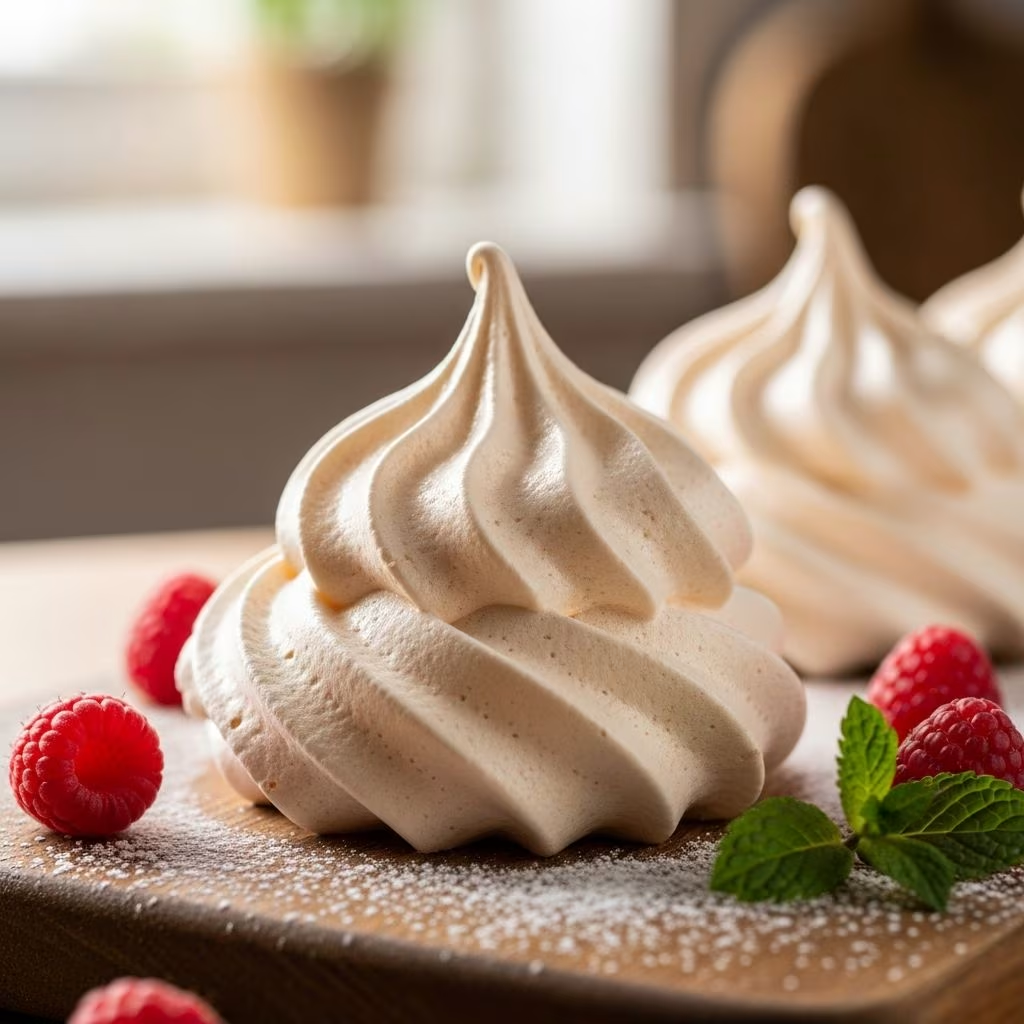
Light as clouds and crisp on the outside with a tender interior, French meringues represent the pinnacle of simple baking elegance. These delicate treats rely on just egg whites and sugar, whipped into glossy peaks and gently baked to perfection. Whether you’re a novice baker or a seasoned pro, mastering French meringues opens doors to stunning desserts like pavlovas, tart toppings, and standalone cookies.
Understanding the Magic of French Meringue
French meringue stands out as the most straightforward meringue style, distinguishing itself from Swiss or Italian methods by skipping the heating step for sugar syrup. It begins with raw egg whites beaten progressively with sugar until stiff, glossy peaks emerge. This uncooked base demands precision in whipping to ensure stability during low-temperature baking, which dries rather than cooks the mixture.
The science behind its airy texture lies in denatured proteins from the egg whites trapping air bubbles, stabilized by sugar’s hygroscopic properties that draw out moisture. Achieving success hinges on purity: even traces of fat or yolk can collapse the foam structure. Room-temperature whites incorporate more air, yielding superior volume.
Essential Ingredients for Flawless Results
Minimalism defines French meringue, but quality matters immensely. Here’s what you need for a standard batch yielding about 30-40 small cookies:
- Egg whites: 4 large (about 120-140g), preferably fresh and at room temperature for optimal whipping.
- Superfine or confectioners’ sugar: 2-2.25 cups (225-250g), finer grains dissolve quicker, preventing graininess.
- Cream of tartar or lemon juice: 1/4 tsp (optional but recommended for stabilization, especially in humid conditions).
- Vanilla extract: 1 tsp (optional, for subtle flavor enhancement without impacting structure).
Avoid table sugar if possible; its larger crystals take longer to dissolve, risking a weepy meringue. For larger batches, scale proportionally—egg whites to sugar at roughly 1:2 by weight ensures balance.
Step-by-Step Guide to Whipping Success
Patience defines the process. Rushing leads to collapse, so follow these stages meticulously.
- Prep your equipment: Wipe a glass, metal, or copper bowl and whisk with vinegar or lemon juice to eliminate grease. Copper bowls naturally stabilize via protein reactions, but stainless steel works well too.
- Preheat oven: Set to 200-225°F (95-110°C). Line sheets with parchment; avoid silicone mats if browning is a concern.
- Whip to foamy: Beat room-temp whites on medium-low until bubbly (2-3 minutes). Add acid here if using.
- Incorporate sugar gradually: Sprinkle 1 tbsp at a time over 8-10 minutes on medium speed. Test by rubbing between fingers—no grit means it’s ready.
- Achieve stiff peaks: Ramp to high speed for 5 minutes until glossy, voluminous, and peaks hold firmly when beaters lift. Overbeating dulls shine.
- Pipe or spoon: Transfer to a bag with round or star tip. Pipe 1-2 inch mounds, 1 inch apart. For nests, create bases then walls.
- Bake low and slow: 1-2 hours until firm and liftable. Turn off oven, prop door, cool 1-2 hours inside to prevent cracks.
Pro Tips for Meringue Mastery
Elevate your game with these expert strategies drawn from traditional techniques:
- Humidity is the enemy—bake on dry days or use a dehumidifier for crisp results.
- Fresh whites outperform carton varieties; separate eggs cold, then warm whites 30 minutes.
- Superfine sugar stream ensures smoothness; pulse granulated in a processor if needed.
- For giant patisserie-style meringues, dollop large (3-inch) shells and bake longer at 225°F for chewy centers.
- Add flavors post-peak: cocoa, coffee, or zest folded gently to preserve air.
Table of common variations:
| Variation | Add-Ins | Bake Time | Texture |
|---|---|---|---|
| Classic Cookies | None | 1 hour | Fully crisp |
| Chocolate | 2 tbsp cocoa | 1.5 hours | Crunchy exterior |
| Nests for Pavlovas | None | 1.5-2 hours | Marshmallowy inside |
| Flavored (e.g., Almond) | 1 tsp extract + nuts | 1 hour | Lightly chewy |
Troubleshooting Common Pitfalls
Meringues can falter, but most issues have quick fixes:
- Grainy texture: Sugar undissolved—whip longer or use finer sugar next time.
- Weeping (syrupy beads): High humidity or underbaking—extend oven cooling.
- Cracks or browning: Oven too hot—lower temp or shield with foil.
- Flat or deflated: Grease contamination or overfolding—start fresh with pristine tools.
- No volume: Cold whites or rushed sugar—warm eggs and add gradually.
If runny mid-process, add more sugar sparingly and whip to recovery. Store failures as Eton mess base with whipped cream and fruit.
Storage and Longevity Secrets
Fresh meringues keep crisp in airtight containers at room temp for 1-2 weeks. Avoid fridge moisture. Freeze unbaked piped discs up to 1 month; bake from frozen, adding 15 minutes. Revive softened ones in a 200°F oven for 10 minutes.
Creative Ways to Use French Meringue
Beyond cookies, versatility shines:
- Pavlova bases: Large nests filled with cream and berries.
- Tart/pie toppings: Torch for brulée effect.
- Layers in cakes: Villeroy-style with buttercream.
- Floats or kisses: Pipe tiny drops for hot chocolate toppers.
- Decorative shells: Giant versions for patisserie displays.
Frequently Asked Questions
Can I use a hand mixer for meringue?
Yes, but expect arm fatigue—medium speed works, taking 15-20 minutes total.
Why do my meringues stick to parchment?
Underdone or humid—ensure full drying and use quality parchment.
Is cream of tartar necessary?
No, but it stabilizes peaks, mimicking copper bowl benefits.
How do I know peaks are stiff enough?
Bowl upside-down test: meringue holds without sliding.
Can I make meringues vegan?
Aquafaba (chickpea liquid) substitutes at 3 tbsp per white, whipped similarly.
Scaling Up for Crowds
Double recipes easily, but whip in stable mixer batches to avoid overflow. For events, prepare ahead—meringues improve after 24 hours as moisture equalizes. Pair with coffee or as favors in cellophane bags.
Experiment with colors using gel paste post-whipping. For holidays, swirl in extracts like peppermint or pistachio.
References
- Authentic French Meringues | French Culinary Tours with TIK — The International Kitchen. 2023. https://www.theinternationalkitchen.com/recipes/authentic-french-meringues/
- Classic French Meringue Recipe — Heirloomed Blog. 2022-10-15. https://heirloomedblog.com/making-meringue/
- French Meringue Recipe – Light, Glossy, Easy to Make — Sweetly Cakes. 2024. https://sweetlycakes.com/en/french-meringue-cookies/
- How to Make Meringue (French Method) — Baker Bettie. 2023-05-20. https://bakerbettie.com/how-to-make-easy-meringue/
- French Techniques and Traditional Recipes: Meringue — KBC Bakery. 2024. https://kbcbakery.com/french-techniques-and-traditional-recipes-meringue/
- French Patisserie Meringues — West of the Loop. 2014-03-23. https://www.westoftheloop.com/2014/03/23/french-patisserie-meringues/