Creating the ideal pie crust represents one of baking’s most rewarding yet challenging endeavors. Many home bakers struggle with achieving that delicate balance between a sturdy structure and tender crumb, often resulting in tough, disappointing crusts that detract from their carefully prepared fillings. However, a time-tested formula exists that transforms pie crust baking from intimidating to accessible: the addition of vinegar and egg to your dough.
This combination of ingredients works as a foolproof system that ensures consistent results regardless of your experience level. Understanding how these components function individually and together unlocks the secrets to producing exceptional homemade pie crusts that rival those from professional bakeries.
Understanding the Role of Vinegar in Pie Dough
Vinegar serves as a critical ingredient in pie crust formulations, functioning as a protective agent against one of baking’s most common pitfalls: gluten overdevelopment. When flour combines with liquid and experiences physical manipulation, gluten strands form and strengthen, creating elasticity that can result in tough, chewy textures rather than the desired flakiness.
The acetic acid present in vinegar interferes with this gluten development process by weakening the protein bonds that form during mixing. This chemical intervention means you can handle your dough more freely without fear of overworking it—a factor that significantly reduces baker anxiety and improves success rates. Even if your technique isn’t perfect, the vinegar acts as insurance, protecting your crust from becoming dense or rubbery.
Different vinegar varieties produce slightly different results:
- White vinegar: Provides a neutral flavor profile and reliable gluten inhibition
- Apple cider vinegar: Adds subtle complexity while performing the same protective function
- Lemon juice: Serves as a suitable substitute with similar acidic properties
Regardless of which option you select, the vinegar remains completely undetectable in the finished product once the crust bakes. The acid simply vanishes during the heating process, leaving behind only the beneficial structural improvements it provided to your dough.
How Eggs Transform Pie Crust Texture and Appearance
Eggs contribute multiple valuable functions to pie crust formulations, working synergistically with other ingredients to produce superior results. These versatile ingredients act as binding agents, moisture providers, and browning catalysts all simultaneously.
The binding properties of eggs allow your pie dough to hold together more cohesively during rolling and shaping. This proves especially valuable for bakers who find themselves struggling with dough that cracks or fragments when transferred from rolling surface to pie pan. With egg incorporated into the mixture, your dough becomes more pliable and forgiving, maintaining integrity throughout the handling process.
From a moisture perspective, eggs contribute richness that prevents the crust from becoming excessively dry. This added moisture content creates a tender crumb structure while also facilitating more even browning during baking. The proteins in egg yolks also interact with flour proteins to create a slightly stronger dough structure, balancing the gluten-inhibiting effects of vinegar and preventing excessive fragility.
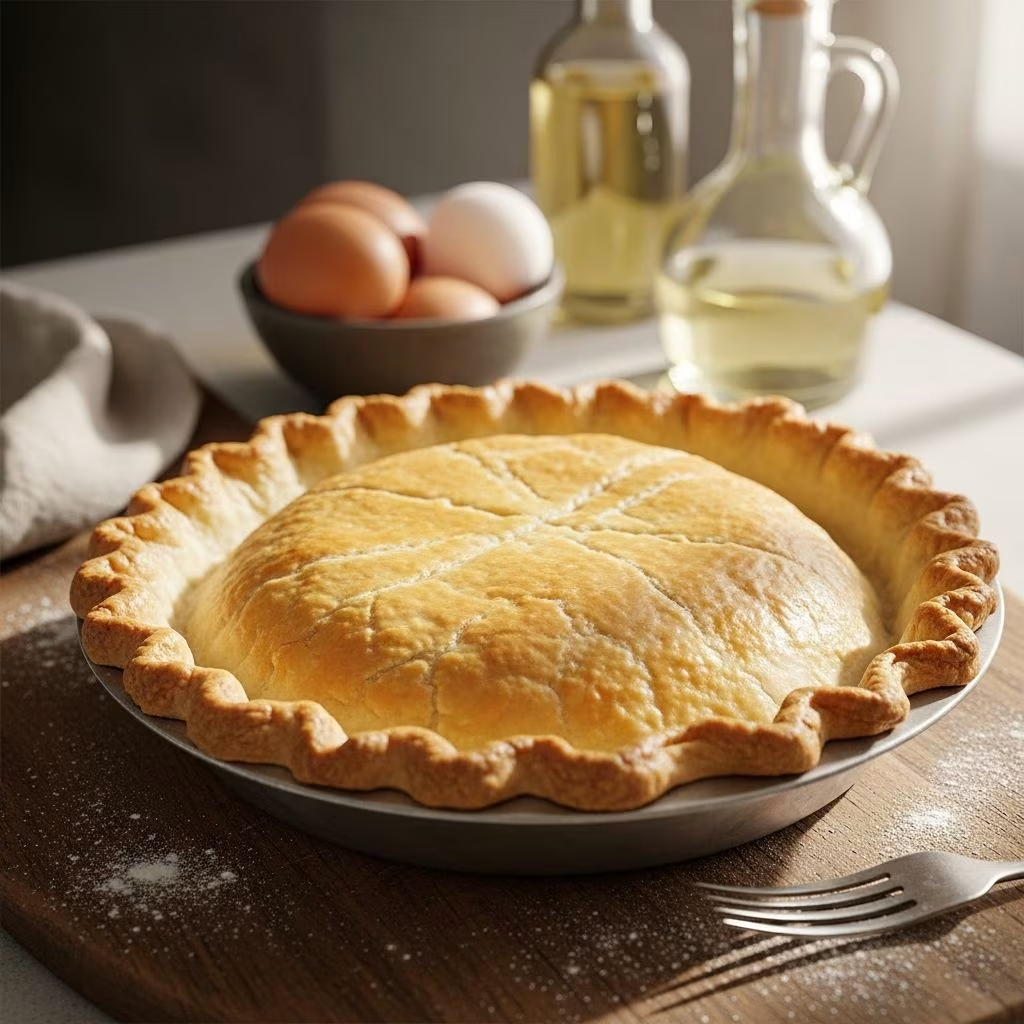
The visual benefits of egg-enriched pie crust manifest during baking as a beautiful golden-brown exterior that appears professionally crafted. This browning occurs because egg proteins and sugars undergo the Maillard reaction when exposed to heat, creating appealing color and subtle flavor development that distinguishes homemade crusts from pedestrian alternatives.
Essential Ingredients and Their Proportions
Building a successful pie crust requires understanding not just what ingredients go into your dough, but also the precise ratios that produce optimal results. The classic formulation balances fat, flour, liquid, and seasoning ingredients in proportions that have been refined through decades of baking practice.
| Ingredient | Function | Typical Amount |
|---|---|---|
| All-purpose flour | Provides structure and gluten network | 2.5 to 4 cups |
| Shortening or cold butter | Creates layers and flakiness | ¾ to 1.75 cups |
| Salt | Enhances flavor and regulates gluten | 1 to 2 teaspoons |
| Sugar | Adds subtle sweetness and browning | 1 to 2 tablespoons |
| Egg | Binds, moistens, and enriches | 1 large egg |
| Vinegar | Inhibits gluten development | 1 to 2 teaspoons |
| Ice water | Hydrates flour and binds ingredients | 3 to 8 tablespoons |
The fat-to-flour ratio represents the most critical proportion in pie crust work. Traditionally, bakers maintain approximately a 1:3 ratio of fat to flour, though some recipes adjust this slightly based on desired richness and texture. This ratio ensures sufficient fat for flakiness while maintaining enough gluten structure to prevent collapse.
Choose between shortening and butter based on your preferences and dietary considerations. Shortening produces exceptionally flaky crusts due to its higher melting point and molecular structure, while butter offers superior flavor at the potential cost of slightly reduced flakiness. Many bakers combine both fats to achieve optimal texture and taste balance.
Step-by-Step Technique for Building Perfect Dough
Success with vinegar and egg pie crust begins before you combine ingredients, requiring proper preparation and attention to temperature control throughout the process.
Preparation Phase: Begin by ensuring all equipment and ingredients remain cold. Warm ingredients compromise flakiness by causing fat to soften prematurely. Use a food processor or pastry cutter to cut cold fat into your flour mixture, creating pea-sized pieces rather than a uniform paste. These discrete fat particles remain intact during baking, creating steam pockets that produce the characteristic flakiness everyone desires.
Wet Ingredient Preparation: In a separate container, whisk together your egg, vinegar, and ice water. This combination should feel cold to the touch. If using melted butter alongside shortening, ensure it has cooled to room temperature before incorporating. Some bakers refrigerate this liquid mixture before combining with dry ingredients to maximize temperature control.
Combining Phases: Pour the cold liquid mixture over your flour-fat combination and use a spatula or hands to fold ingredients together gently. Work only until the flour becomes moistened and the dough just begins forming cohesive clumps. Overworking at this stage undoes the protective benefits of your vinegar and risks creating toughness.
Rest and Chill: Form your dough into disks, wrap tightly with plastic wrap, and refrigerate for at least thirty minutes before rolling. This resting period allows the gluten to relax, the flour to fully hydrate, and the fats to solidify, creating ideal conditions for rolling without cracking or shrinking during baking.
Rolling, Shaping, and Preparing Your Crust
Once your dough has rested adequately, you’re ready to transform it into a finished pie shell. Place your chilled dough disk on a lightly floured work surface and allow it to sit for several minutes to warm slightly, making it more pliable without becoming warm enough to soften the fat.
Using a rolling pin, apply gentle, even pressure while working from the center outward in all directions. The vinegar in your dough provides enough gluten inhibition that you can work more freely than with traditional recipes, though patience still rewards your efforts. If your dough tears or cracks, the egg provides sufficient binding that you can simply press torn sections back together without compromising the final result.
When your rolled dough reaches approximately one-eighth inch thickness and roughly two inches larger in diameter than your pie pan, you’re ready to transfer it. Fold the dough in quarters, position it in your pan with the point at the center, and unfold gently. Trim excess dough to about one-half inch beyond the pan rim, then fold this edge under itself and crimp decoratively.
At this point, many bakers refrigerate the shaped crust for an additional fifteen to thirty minutes. This final chill relaxes the gluten further, reducing shrinkage during blind baking or filling, and ensures maximum flakiness in your finished pie.
Baking Considerations and Best Practices
Whether you’re blind baking an empty crust or baking with filling, temperature management determines your success. Preheat your oven adequately, targeting 425°F for initial baking if blind baking, or following your specific pie recipe’s temperature guidance when baking with filling.
For blind baking empty crusts, line your shaped dough with parchment paper and fill with ceramic weights or dried beans. Bake at 425°F for twelve to fifteen minutes until the edges begin turning golden. Remove the weights and parchment, then return the crust to the oven for an additional five to ten minutes until the bottom begins setting and turning light golden.
When baking pies with filling, some recipes call for baking at a higher temperature initially before reducing heat partway through. This technique sets the crust while filling cooks. Your vinegar and egg formulation provides enough structure that your crust remains sturdy even with longer baking times, another advantage of this particular formula.
Frequently Asked Questions About This Crust Formula
Can I prepare this dough in advance? Yes, pie dough can be refrigerated for up to three days or frozen for up to three months. Wrap tightly to prevent drying and thaw overnight in the refrigerator before rolling.
Will I taste the vinegar in my baked pie? No, the vinegar’s acidity completely neutralizes during the baking process. Your finished crust will taste pleasantly mild with subtle buttery or shortening-derived flavors.
What if my dough seems too sticky? This formulation naturally produces slightly tacky dough due to the egg and liquid components. Flour your work surface generously and refrigerate longer if needed. The stickiness actually facilitates easier rolling without cracking.
Can I substitute ingredients in this recipe? Yes, apple cider vinegar replaces white vinegar, lemon juice substitutes for either vinegar type, and butter can replace some or all shortening. These variations produce slightly different textures but remain successful.
How many crusts does this recipe yield? Most formulations produce two single-crust pies or one double-crust pie, depending on recipe scaling and pie pan sizes used.
Troubleshooting Common Issues
Understanding potential problems and their solutions empowers you to diagnose and remedy issues quickly. If your crust shrinks excessively during baking, the dough likely experienced insufficient resting or your oven temperature was too high. Ensure adequate chilling and verify oven temperature accuracy with an independent thermometer.
Should your crust appear tough or rubbery after baking, you may have overworked the dough despite the vinegar’s protective effects, or your oven temperature may have been too low, causing excessive browning time. Next time, minimize mixing and verify oven calibration.
Cracks appearing during rolling typically indicate insufficient resting time between forming the dough and rolling, or possibly that your work surface remained too warm. Extend resting periods and work in a cool kitchen environment.
If your crust emerges pale rather than golden brown, your oven may run cool, or you may have used insufficient egg for optimal browning. Brush the crust with an additional egg wash before baking to encourage browning in future attempts.
Versatility and Creative Variations
This fundamental vinegar and egg crust formula serves as a canvas for creative adaptations. For chocolate pies, add one to two tablespoons of cocoa powder to your flour mixture. For herb-forward savory applications, incorporate dried herbs like thyme or rosemary into dry ingredients.
Some bakers reduce sugar content for savory applications or increase it for desserts. Others experiment with alternative flours like einkorn or whole wheat, adjusting liquid content slightly to maintain proper consistency. The vinegar and egg components prove robust enough to accommodate these variations while maintaining their protective and enriching functions.
Regardless of your chosen adaptations, understanding the fundamental roles played by vinegar and egg empowers confident experimentation while maintaining the reliability this formula provides.
References
- Vintage Vinegar Pie Crust – A Modern Homestead — A Modern Homestead. https://www.amodernhomestead.com/vintage-vinegar-pie-crust/
- Pie Crust with Egg and Vinegar — Amycakes Bakes. https://amycakesbakes.com/pie-crust-with-egg-and-vinegar/
- Foolproof Pie Crust with Egg and Vinegar — Of Batter and Dough. https://ofbatteranddough.com/fool-proof-pie-crust/
- Old Fashioned Pie Crust with Vinegar and Egg — The Baking Network. https://thebakingnetwork.com/old-fashioned-pie-crust-with-vinegar-and-egg/