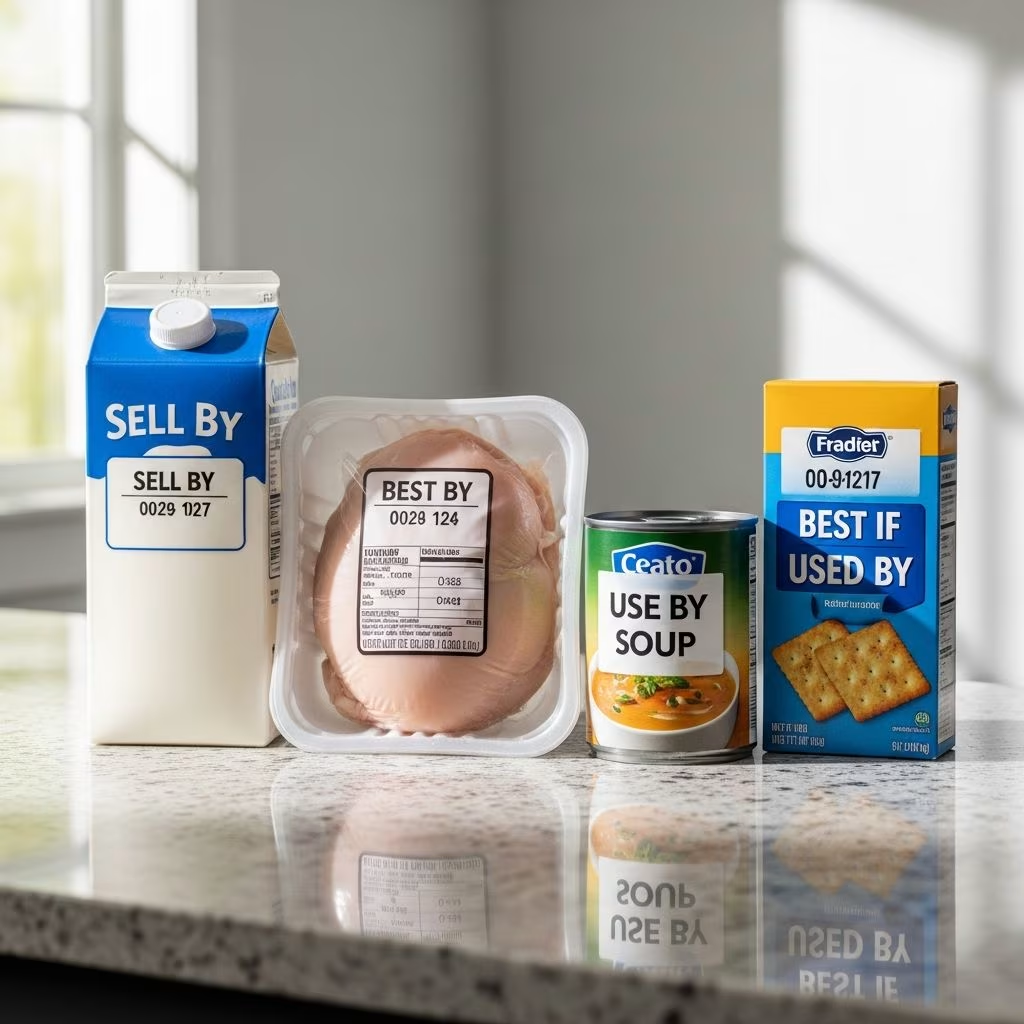
Food packaging features various date labels like sell-by, use-by, and best-by, but these terms often confuse consumers. These labels primarily indicate quality rather than safety, except in specific cases, helping you make informed choices to reduce waste and ensure freshness.
Why Date Labels Matter in Everyday Shopping
Date labels guide retailers and consumers on product freshness, but misconceptions lead to 20-40% of food waste in households. Understanding them empowers better purchasing and storage decisions, saving money and resources.
Labels are voluntary for most products under U.S. federal law, except infant formula. Manufacturers set dates based on quality testing, not uniform safety standards.
Breaking Down Common Date Label Types
Each label serves a distinct purpose. Here’s a clear overview:
- Sell-By: Directs stores on display duration. Products remain safe post-date if stored properly, though quality may decline.
- Best If Used By / Best By: Suggests peak quality period. Flavor, texture, or appearance might suffer afterward, but safety persists.
- Use-By: Manufacturer’s estimate for optimal use, especially perishables. Not a strict safety cutoff.
- Expiration: Rare absolute safety date; discard after, particularly for high-risk items.
Pack dates, often coded (e.g., MMDDYY or Julian), indicate production, irrelevant for consumers.
Safety Timelines for Popular Grocery Items
Use this table for post-sell-by guidelines from USDA Food Safety and Inspection Service. Always prioritize sensory checks: smell, look, texture.
| Food Type | Post-Sell-By Guideline |
|---|---|
| Milk | Good for about 1 week |
| Eggs | 3-5 weeks in fridge |
| Chicken, Turkey, Ground Meats | Cook/freeze within 2 days |
| Beef, Pork, Lamb (fresh) | Cook/freeze within 3-5 days |
| Fish | Cook/freeze within 1-2 days |
How Temperature Affects Label Accuracy
Proper storage is crucial. Refrigeration below 40°F (4°C) extends usability beyond labels. Fluctuations accelerate spoilage, overriding dates.
- Fridge: 32-40°F for perishables.
- Freezer: 0°F or below for long-term.
- Avoid door storage for milk/eggs; use shelves.
Thawed meats follow fresh timelines. Refreezing reduces quality.
Sensory Checks: Beyond the Dates
Labels guide, but senses confirm safety:
- Smell: Sour, rancid, or off odors signal discard.
- Look: Mold, discoloration, sliminess mean toss.
- Texture: Mushy produce or dry meats past prime.
- Taste: Small test if others pass (rarely needed).
For dry goods like pasta, check for pests or clumping. Canned items: bulging lids or dents indicate issues.
Dairy Dilemmas: Milk, Yogurt, Cheese
Dairy varies by type. Milk safe ~1 week post-sell-by if cold. Yogurt: 1-2 weeks, sniff for tartness. Hard cheeses age well; soft ones spoil faster.
State laws may regulate dairy dates, but federal guidelines apply broadly.
Meat and Poultry: High-Risk Handling
Proteins demand caution. Buy pre-sell-by. Ground meats: cook within 2 days. Steaks/roasts: longer. Freeze extras immediately.
Color changes (e.g., brown beef) aren’t always bad if vacuum-sealed; smell confirms.
Produce and Bakery Goods
Fresh produce lacks dates; ripeness guides. Bread: ‘Guaranteed Fresh’ means peak post-date. Freeze slices for longevity.
- Apples: Weeks in crisper.
- Leafy greens: 3-7 days, wash/dry well.
Canned and Shelf-Stable Products
Use-by dates ensure quality. Past date: inspect for damage. Dry goods (rice, flour): 1-2 years typically.
FDA pushes standardization, but variety persists.
Reducing Waste with Smart Strategies
Americans discard billions in ‘expired’ food yearly. Tips:
- Shop perimeter first for freshest.
- Freeze perishables near dates.
- Donate unopened past-sell-by to food banks (check laws).
- Use apps tracking fridge contents.
Buy smaller quantities; plan meals.
International Label Variations
U.S. voluntary; EU mandates ‘use by’ for perishables (safety), ‘best before’ for quality. Canada similar. Travelers: research local norms.
Special Cases: Baby Food and Formula
Federal law requires expiration; discard strictly. No ‘best by’ ambiguity.
FAQs on Food Date Labels
Q: Is food safe after use-by?
A: Often yes for quality dates; use senses. Absolute for expiration.
Q: Can stores sell past sell-by?
A: Yes, legally; prefer fresher stock.
Q: How to read pack codes?
A: Often MMDDYY or Julian; not consumer dates.
Q: Freezing resets dates?
A: Pauses clock; thaw and use quickly.
Q: Organic foods differ?
A: Same rules; faster spoilage possible.
Empowering Your Kitchen Choices
Mastering labels cuts waste, saves cash, boosts safety. Combine dates, storage, senses for confidence. Consult USDA/FDA for updates.
References
- Expiration, Use-By & Sell-By Dates: What Do They Really Mean? — Love Whole Foods. 2022-08-18. https://www.lovewholefoods.com/blog/2022/8/18/expiration-use-by-amp-sell-by-dates-what-do-they-really-mean
- Expiration, Use-By and Sell-By dates – UConn Extension — University of Connecticut Extension. 2019-10-30. https://publications.extension.uconn.edu/2019/10/30/expiration-use-by-and-sell-by-dates-what-do-they-really-mean/
- Understanding Expiration Dates: How Do I Know When My Food’s Gone Bad? — American Heart Association. N/A. https://www.heart.org/en/healthy-living/healthy-eating/cooking-skills/storing/understanding-expiration-dates-how-do-i-know-when-my-foods-gone-bad
- The Truth About Expiration Dates (Use By, Sell By, and Best By) — America’s Test Kitchen (YouTube). N/A. https://www.youtube.com/watch?v=el6a3g44fSc