Fonduta represents one of Italian cuisine’s most refined culinary techniques, transforming simple dairy products into a luxurious, velvety sauce that elevates even the most humble ingredients. When paired with fresh asparagus, this classic preparation becomes a sophisticated yet accessible dish that showcases the elegance of minimalist cooking. The combination demonstrates how quality ingredients and proper technique can create restaurant-worthy results in a home kitchen.
Understanding Fonduta: The Foundation of Italian Cheese Sauces
Fonduta originates from the Piedmont region of northern Italy, where it has been prepared for centuries as both a standalone course and an accompaniment to vegetables, bread, and proteins. Unlike many cheese sauces that rely on flour-based roux or cream-heavy foundations, traditional fonduta achieves its characteristic silky texture through the careful melting of cheese in liquid, typically white wine or broth, combined with egg yolks and butter. This method creates a sauce that coats the palate without leaving a heavy residue, allowing the delicate flavor of Parmesan cheese to shine through.
The name “fonduta” derives from the Italian verb “fondere,” meaning to melt, which perfectly captures the essence of this technique. The preparation requires attention to temperature control and timing, as the delicate emulsion can break if exposed to excessive heat. Understanding the chemistry behind fonduta—how proteins in cheese interact with fats and acids—ensures consistent, professional results every time.
Selecting Premium Ingredients for Superior Results
The quality of fonduta depends almost entirely on ingredient selection, as the preparation contains so few components that each one contributes meaningfully to the final dish. Parmesan cheese, specifically Parmigiano-Reggiano aged for at least 24 months, provides the nutty, complex flavor foundation that distinguishes exceptional fonduta from mediocre versions. The crystalline structure of aged Parmigiano-Reggiano melts more smoothly than younger varieties, creating a superior texture.
Beyond cheese, high-quality butter contributes richness and helps stabilize the emulsion, while egg yolks provide both binding properties and a luxurious mouthfeel. White wine with good acidity—such as Pinot Grigio or Vermentino—adds depth while preventing the sauce from becoming one-dimensional. Fresh asparagus should be firm with tightly closed tips, avoiding any that appear woody or withered, as these indicate age and declining quality.
Preparing Asparagus for Optimal Texture and Flavor
Asparagus preparation significantly influences the final dish’s success, requiring techniques that preserve the vegetable’s delicate structure while ensuring thorough cooking. The first step involves trimming the woody base, which typically comprises the bottom one-quarter to one-third of each spear. Rather than snapping asparagus randomly, a more precise approach involves cutting spears at a uniform angle—approximately 45 degrees—which creates an elegant presentation while ensuring consistent cooking times across all pieces.
Blanching asparagus in generously salted boiling water for three to four minutes, depending on spear thickness, achieves the ideal tender-crisp texture that complements fonduta’s richness. Immediately transferring blanched asparagus to an ice bath halts the cooking process, preserving its vibrant green color and preventing overcooking. Pat spears dry thoroughly before plating, as excess moisture can dilute the fonduta sauce.
Key Preparation Steps:
- Trim woody bases by cutting at a 45-degree angle for uniform appearance
- Blanch in salted boiling water for 3-4 minutes depending on thickness
- Transfer immediately to ice bath to halt cooking and preserve color
- Pat dry completely before combining with sauce
- Season lightly with sea salt and freshly ground black pepper
Mastering the Fonduta Preparation Technique
Creating fonduta requires methodical attention to temperature and timing, as the emulsion’s stability depends on proper technique. Begin by finely grating room-temperature Parmigiano-Reggiano, as grated cheese melts more evenly than chunks. Heat white wine gently in a heavy-bottomed saucepan over medium-low heat, bringing it to approximately 150 degrees Fahrenheit—warm but not simmering. This temperature is crucial, as it provides enough heat to melt cheese while remaining low enough to prevent curdling.
Add cheese gradually to the wine, stirring constantly with a wooden spoon to encourage even melting. This process should span several minutes, allowing each addition to fully incorporate before adding more cheese. Once all cheese has melted into a smooth consistency, reduce heat to low and add cold butter cut into small cubes, stirring gently until fully incorporated. Finally, whisk egg yolks in a small bowl with a pinch of salt, then add them slowly to the sauce while stirring constantly, ensuring the mixture remains below 165 degrees Fahrenheit to prevent scrambling.
Temperature Guidelines for Success:
- Wine heating: 140-150°F
- Cheese addition: maintain 150-160°F
- After egg addition: 140-155°F
- Final sauce consistency: silky and pourable, never grainy
Plating and Presentation Considerations
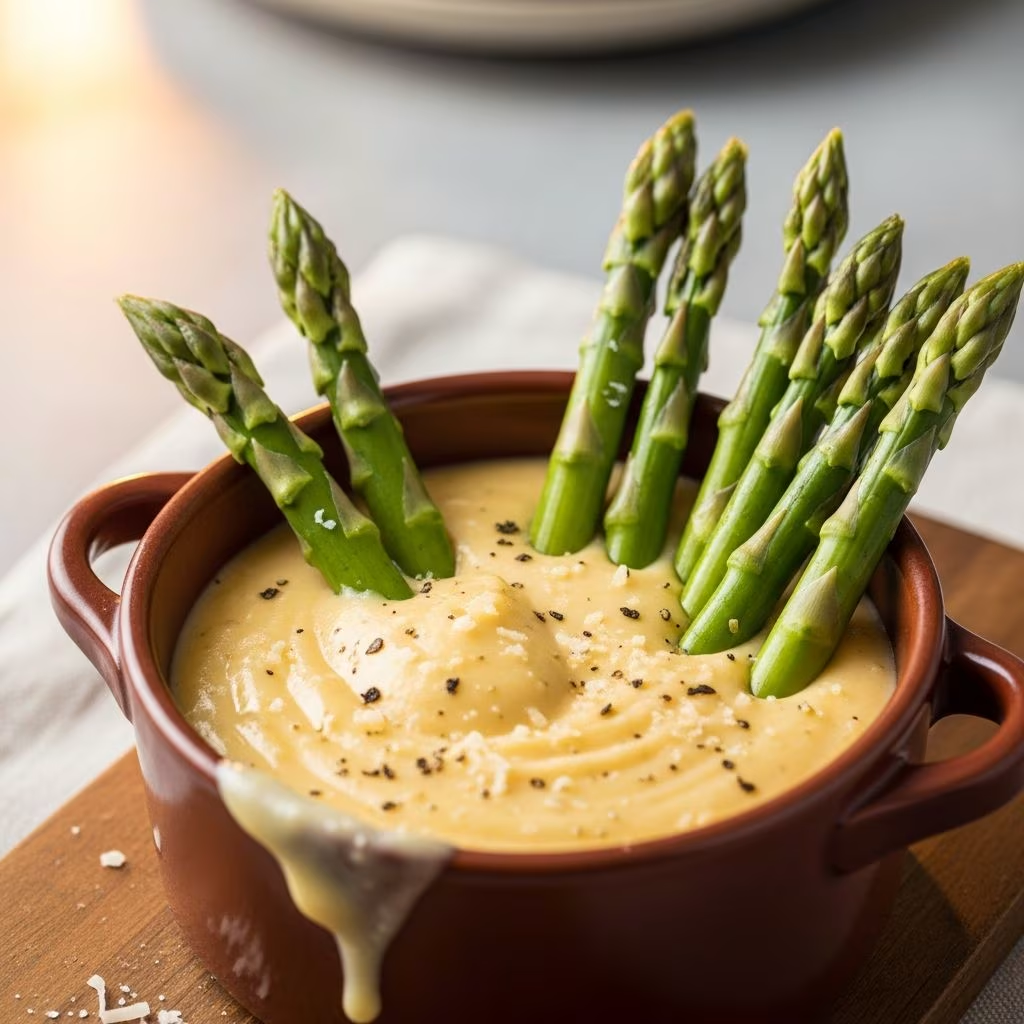
The visual presentation of this dish reflects its refined nature, suggesting both simplicity and sophistication. Arrange blanched asparagus spears parallel on warm plates, creating clean lines that guide the eye across the plate. Pour fonduta sauce alongside the asparagus rather than drowning the vegetables, allowing the sauce to coat partially while maintaining visual separation. This approach showcases both components’ colors and textures while preventing sogginess.
Finish the plate with freshly grated Parmigiano-Reggiano, a drizzle of premium olive oil, and finely chopped fresh parsley for color contrast and herbal notes. A small grind of black pepper and fleur de sel complete the presentation, adding visual interest and depth of flavor.
Flavor Variations and Creative Adaptations
While the classic preparation stands on its own merit, fonduta welcomes thoughtful variations that expand its versatility. Adding finely minced fresh herbs such as thyme, sage, or tarragon to the finished sauce introduces aromatic complexity without overwhelming delicate cheese flavor. A touch of white truffle oil or mushroom duxelles transforms the dish into an elegant dinner party centerpiece, while sun-dried tomato puree introduces acidity and color variation.
For those seeking richer preparations, a small spoonful of mascarpone stirred into the finished sauce creates additional body and silkiness, while anchovy paste—used judiciously—adds umami depth that amplifies perception of the cheese’s savory qualities. Different asparagus preparations offer textural variety: roasting spears with olive oil and garlic creates nutty flavors that complement fonduta differently than blanched versions.
Pairing Wine and Beverages with the Dish
Selecting appropriate beverages enhances the dining experience, as the wine’s acidity and body should complement the sauce’s richness. The same white wine used in fonduta preparation—Pinot Grigio or Vermentino—pairs naturally with the finished dish, providing continuity and harmony. Alternative selections might include Soave, a light Riesling, or Gavi, each offering appropriate acidity to cleanse the palate between bites.
For non-alcoholic options, sparkling water with lemon juice provides necessary acidity, while herbal tisanes such as chamomile or white tea complement the dish’s delicate nature without competing for attention.
Common Mistakes and Troubleshooting Solutions
| Problem | Cause | Solution |
|---|---|---|
| Grainy, broken sauce | Excessive heat or rapid temperature changes | Whisk vigorously off heat; add cold cream one tablespoon at a time |
| Too thick or pasty | Insufficient liquid or excess cheese | Warm additional wine and incorporate gradually while stirring |
| Separated appearance | Egg yolks added too quickly | Temper eggs by slowly adding warm sauce before incorporating into pan |
| Bland flavor | Low-quality cheese or insufficient seasoning | Use Parmigiano-Reggiano aged minimum 24 months; adjust salt carefully |
| Asparagus mushy or discolored | Overcooking or insufficient ice bath | Reduce blanching time; immediately transfer to ice bath upon removal |
Make-Ahead Strategies and Storage Guidelines
While fonduta achieves peak flavor and texture when served immediately after preparation, certain components can be prepared in advance. Asparagus can be blanched, shocked, and refrigerated up to two days ahead, requiring only a brief reheating in warm water or a quick sauté with butter before plating. The fonduta sauce itself should be prepared close to serving time, as refrigeration and reheating can compromise its silky texture.
If advance preparation is necessary, prepare individual components separately: grate cheese, measure wine and butter, and separate eggs several hours ahead. This approach minimizes actual cooking time while maintaining quality. Leftover fonduta can be refrigerated in an airtight container for up to three days, though reheating requires gentle temperature control over low heat with occasional stirring and small additions of warm wine to restore proper consistency.
Nutritional Considerations and Ingredient Information
This dish provides significant nutritional benefits alongside its indulgent flavor profile. Asparagus contributes dietary fiber, vitamins K and C, and folate, supporting digestive health and immune function. Parmesan cheese delivers substantial protein and calcium, essential minerals for bone health and muscle maintenance. While the fonduta sauce contains dietary fat from butter, egg yolks, and cheese, these fats facilitate absorption of fat-soluble vitamins and contribute to satiety.
A typical serving combining six to eight asparagus spears with approximately three ounces of fonduta sauce provides approximately 200-250 calories, with macronutrient distribution heavily favoring fat and protein over carbohydrates, making it appropriate for various dietary approaches.
Frequently Asked Questions
What is fonduta and how does it differ from other cheese sauces?
Fonduta is a traditional Italian cheese sauce created by melting cheese in wine with egg yolks and butter, distinguishing it from cream-based sauces like Alfredo or roux-based preparations. This technique creates a lighter, more delicate sauce that showcases cheese flavor more prominently.
Can fonduta be made without egg yolks?
While traditional fonduta relies on egg yolks for both emulsification and silky texture, an egg-free version can be created using additional butter and a small amount of cornstarch slurry, though the result differs notably in both texture and richness.
How do I prevent fonduta from breaking or separating?
Maintain consistent, moderate temperatures below 165 degrees Fahrenheit, add ingredients slowly, and stir frequently. If separation occurs, remove from heat and whisk vigorously while adding small amounts of cold cream or cold wine.
What’s the best way to reheat leftover fonduta?
Place fonduta in a heavy-bottomed saucepan over very low heat, stirring frequently and adding warm wine one tablespoon at a time until reaching desired consistency. Avoid high heat, which causes separation.
Can I use other cheeses in place of Parmigiano-Reggiano?
While aged Parmigiano-Reggiano remains the classic choice, aged Grana Padano or a mixture of Gruyère and Parmigiano-Reggiano can create interesting variations, though the flavor profile changes accordingly.
How far in advance can I blanch the asparagus?
Blanched asparagus stores well in the refrigerator for up to three days when properly dried and stored in an airtight container, requiring only brief reheating before serving.
References
- Bittman, M. — The New York Times. Accessed April 2026. https://www.nytimes.com/recipes
- McGee, H. — On Food and Cooking: The Science and Lore of the Kitchen. Scribner. 2004. https://www.penguinrandomhouse.com
- Consorzio del Formaggio Parmigiano-Reggiano — Official Standards and Production Methods. https://www.parmigiano-reggiano.it