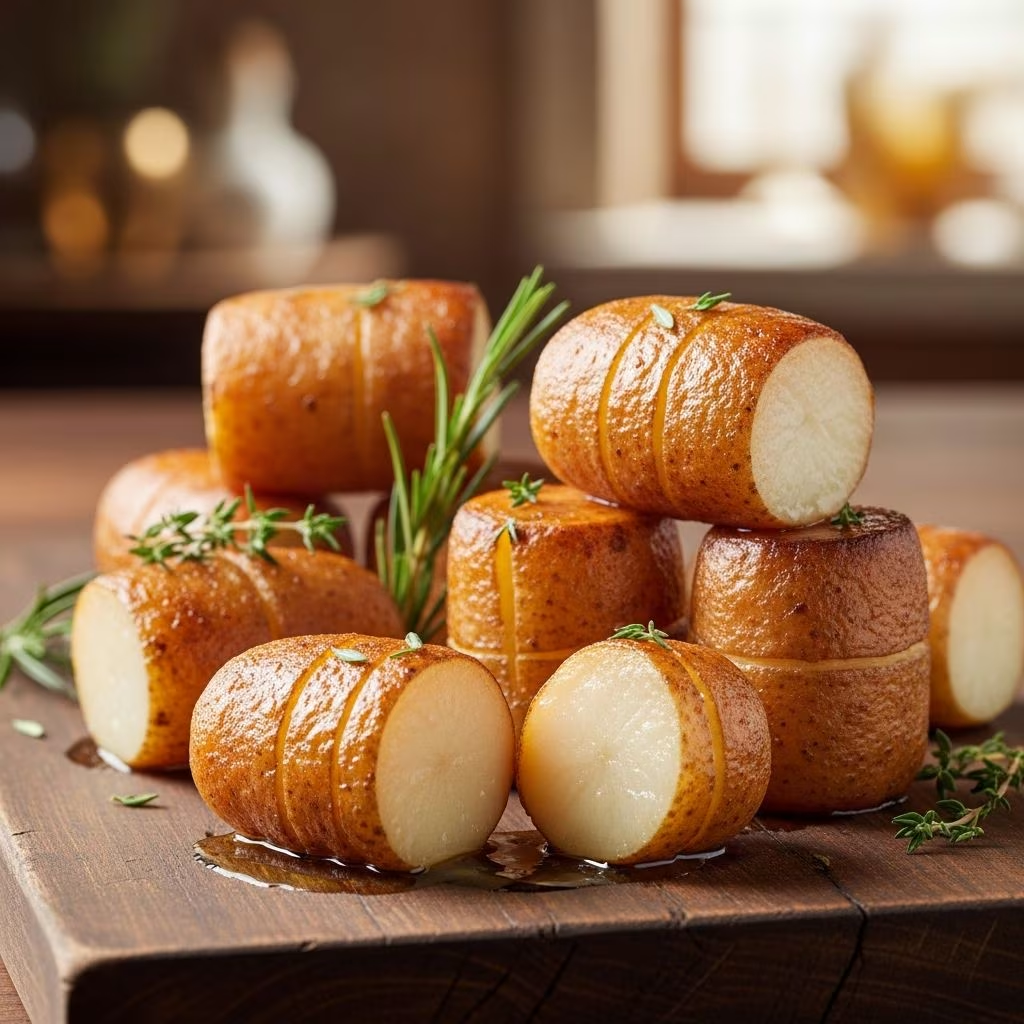
Fondant potatoes represent one of French cuisine’s most elegant yet straightforward side dishes. The name derives from the French word ‘fondant,’ meaning melting, which perfectly describes how these potato cylinders become tender and absorb rich buttery broth during cooking. This dish combines simple ingredients—potatoes, butter, herbs, and stock—to create something truly sophisticated that graces the tables of fine dining establishments worldwide.
Understanding Fondant Potatoes
At their core, fondant potatoes are cylindrical pieces of potato that undergo a specific cooking process to achieve their distinctive texture and appearance. The cooking method involves searing the potato cylinders in hot oil until they develop a golden-brown crust, then braising them in a mixture of butter, herbs, and chicken stock until they become meltingly tender throughout.
The appeal of fondant potatoes lies in the contrast between their exterior and interior. The outside develops a caramelized, crispy layer through the initial searing process, while the inside becomes creamy and infused with the flavors of the braising liquid. This dual texture creates a dining experience that elevates fondant potatoes beyond ordinary side dishes.
Essential Ingredients for Success
Creating perfect fondant potatoes requires quality ingredients and careful attention to proportions. Here are the key components:
- Potatoes: Choose large, long russet potatoes or starchy varieties like Yukon Gold. These potatoes hold their shape during cooking while becoming creamy inside
- Olive Oil: Use extra virgin olive oil for searing. The high heat tolerates the oil’s smoke point while contributing subtle flavor
- Unsalted Butter: Essential for the braising liquid, butter provides richness and helps develop the characteristic creamy texture
- Fresh Thyme: This herb infuses the braising liquid with aromatic complexity. Fresh sprigs work better than dried varieties
- Chicken Stock: Low-sodium chicken or vegetable broth forms the base of the braising liquid, allowing the potato flavor to shine through
- Garlic: Smashed or halved cloves add depth to the braising liquid without overpowering the delicate potato flavor
- Salt and Pepper: Kosher salt and freshly cracked black pepper season at various stages of cooking
Preparation Techniques That Matter
The preparation phase sets the foundation for successful fondant potatoes. Begin by peeling your potatoes completely, as the skin can interfere with the creamy texture development. After peeling, trim approximately half an inch to three-quarters of an inch from both the top and bottom of each potato to create flat surfaces.
Next, cut the potatoes into cylinders approximately two inches tall. Consistency in sizing ensures even cooking throughout the batch. Some chefs use cylindrical cutters for precision, while others shape the potatoes carefully with a sharp knife. Regardless of the method, aim for uniform height and diameter across all pieces.
Pat the cut potatoes dry with paper towels before cooking. This step proves crucial for achieving proper browning during the searing stage. Excess moisture prevents the development of that desirable golden crust and can cause the potatoes to steam rather than sear.
The Searing Process: Building Flavor
Searing creates the fondant potato’s signature exterior and begins the flavor development process. Heat olive oil in an oven-safe skillet over medium-high heat until it shimmers or lightly smokes. The high temperature enables rapid browning through the Maillard reaction, a chemical process that creates complex flavors and appealing color.
Carefully place the potato cylinders into the hot oil with the flat side down. Resist the urge to move them frequently; allow them to sit undisturbed for four to six minutes. This patience rewards you with a deep golden-brown crust. The edges should brown evenly, indicating proper heat application.
Season the first side with coarse salt as it cooks. When the first side achieves golden-brown color, flip each potato carefully and repeat the process on the second side. The second searing typically requires four to six minutes as well. Adjust heat if the oil appears too hot, preventing burning while maintaining the browning process.
Butter Basting and Flavor Infusion
Once both sides of the potatoes achieve golden-brown color, reduce the heat to low and add butter, garlic, and fresh thyme sprigs to the skillet. As the butter melts, begin spooning it over the potatoes in a technique called basting. This process coats the potatoes with rich butter and allows the herbs to infuse the oil with aromatic compounds.
Baste the potatoes for three to four minutes, ensuring even coating with the melted butter. You’ll notice the butter becoming increasingly fragrant as the thyme releases its essential oils. Some chefs prefer removing the garlic cloves at this point to prevent them from becoming overly browned during the oven phase, though others leave them throughout cooking for additional flavor.
The Braising and Oven Phase
Pour the chicken stock into the skillet, ensuring it reaches about halfway up the potatoes. The liquid should come to a boil as it combines with the hot butter and oil. Season this mixture with salt and pepper to taste, remembering that flavors concentrate as the liquid reduces during cooking.
Transfer the skillet to a preheated oven set to 390-450°F (200-230°C), depending on your preference for gentler or more aggressive braising. Place the skillet on the middle oven rack for even heat distribution. The oven transforms the cooking process, allowing the potatoes to absorb the flavorful braising liquid while the stock reduces and concentrates.
Baste the potatoes halfway through the cooking time, approximately at the fifteen-minute mark. This additional basting ensures even cooking and flavor absorption. The potatoes are ready when they become tender when pierced with a fork and display a well-browned exterior. Cooking typically requires twenty-five to thirty minutes, though timing varies based on potato size and oven characteristics.
Common Mistakes to Avoid
| Mistake | Consequence | Solution |
|---|---|---|
| Cutting potatoes to inconsistent sizes | Uneven cooking with some pieces undercooked while others become mushy | Measure and cut all potatoes to approximately the same height and diameter |
| Inadequate searing temperature | Pale, steamed potatoes without crispy exterior | Heat oil until it shimmers or smokes lightly before adding potatoes |
| Moving potatoes too frequently while searing | Prevents proper crust formation and creates a pale appearance | Leave potatoes undisturbed for 4-6 minutes per side |
| Using wet potatoes | Steam forms instead of proper browning, resulting in soggy potatoes | Pat potatoes completely dry with paper towels before cooking |
| Overfilling the pan with potatoes | Crowding reduces oil temperature and prevents proper browning | Arrange potatoes in a single layer with space between pieces |
| Using low-quality butter | Flat, uninspiring flavor in the finished dish | Choose unsalted, high-quality butter for optimal results |
Make-Ahead and Storage Strategies
Fondant potatoes accommodate make-ahead preparation, making them ideal for entertaining. After searing both sides and applying the initial butter basting, allow the potatoes to cool completely. Transfer them to a covered container and refrigerate for up to twenty-four hours. When ready to serve, remove the potatoes from the refrigerator, pour in the stock, season appropriately, and complete the braising in the oven as usual. This approach allows you to manage your time effectively during meal preparation.
Leftover fondant potatoes can be refrigerated for three to four days in an airtight container. Reheat them gently in a low oven or on the stovetop over low heat, adding a splash of stock to restore moisture. While reheating doesn’t restore the crispy exterior to its original condition, the interior remains creamy and flavorful.
Serving Recommendations
Fondant potatoes serve as an elegant accompaniment to fine protein dishes. They pair beautifully with beef steaks, roasted chicken, grilled fish, and pork chops. The rich, buttery flavor complements rather than competes with these main courses, making them a sophisticated choice for both casual and formal dining occasions.
Present fondant potatoes in their cooking skillet for an impressive table appearance, or transfer them carefully to a serving platter. Garnish with fresh thyme leaves and flaky salt just before serving. A light crack of black pepper adds visual appeal and flavor contrast to the finished dish.
Flavor Variations and Adaptations
While the classic recipe remains timeless, several variations allow for creative expression. Substitute vegetable stock for chicken stock when serving alongside vegetarian main courses. Add fresh rosemary alongside thyme for an earthier flavor profile. Some chefs introduce white wine into the braising liquid, replacing a portion of the stock with dry white wine for additional complexity.
Shallots can be minced and added to the butter for a subtle onion flavor. A squeeze of fresh lemon juice at the end of cooking brightens the overall taste. Experiment cautiously with additions, remembering that restraint often yields the most elegant results with French cuisine.
Equipment Considerations
Use an oven-proof skillet to successfully complete the entire cooking process in one vessel. Cast iron, carbon steel, or stainless steel skillets work well. Avoid non-stick cookware for the searing step, as it doesn’t achieve the same browning results at high temperatures. The chosen skillet should accommodate the potatoes in a single layer without crowding, typically requiring an eight to ten-inch diameter pan for four to six potatoes.
Frequently Asked Questions
What potato varieties work best for fondant potatoes?
Starchy potatoes like russets hold their shape excellently while developing creamy interiors. Yukon Gold and Gala potatoes offer good all-purpose characteristics. Avoid waxy potatoes, which don’t absorb the braising liquid as effectively.
Can I use vegetable stock instead of chicken stock?
Yes, vegetable stock works perfectly and allows the potato flavor to dominate. The resulting dish pairs well with vegetarian mains or as a standalone side dish.
How do I know when fondant potatoes are properly cooked?
Properly cooked fondant potatoes should be tender throughout when pierced with a fork and display a well-browned exterior. The braising liquid should reduce to a small amount of rich, concentrated butter sauce.
Can I double this recipe for larger gatherings?
Yes, simply multiply the ingredients proportionally. You may need to use multiple skillets to maintain proper browning during the searing phase.
What should I do if my potatoes are browning too quickly?
Lower the oven temperature by 25°F and extend the cooking time slightly. This prevents burning while allowing thorough cooking of the interior.
Final Thoughts on Mastering This Technique
Fondant potatoes represent accessible French cuisine that elevates home cooking to restaurant quality. The technique requires attention to detail and proper timing, but demands no advanced cooking skills. Understanding the purpose of each step—searing for flavor development, butter basting for richness, and braising for tender interiors—empowers you to adapt the recipe and troubleshoot any issues that arise.
Practice this recipe several times to develop intuition about cooking times and heat adjustments in your specific oven and with your preferred potato varieties. Each cooking session builds confidence and refines your technique, eventually allowing you to produce consistently excellent results.
References
- Fondant Potatoes Recipe (Pommes Fondantes) — Chef Billy Parisi. 2024. https://www.billyparisi.com/fondant-potatoes/
- Fondant Potatoes — RecipeTin Eats. 2024. https://www.recipetineats.com/fondant-potatoes/
- Fondant Potatoes – Easy Step-by-Step Recipe — Kitchen Sanctuary. 2024. https://www.kitchensanctuary.com/fondant-potatoes/
- Fondant Potatoes Recipe — Baked Bree. 2024. https://bakedbree.com/fondant-potatoes
- Best Fondant Potatoes Recipe (Melting Potatoes) — Pants Down Apron On. 2024. https://www.pantsdownapronson.com/best-fondant-potatoes-recipe/