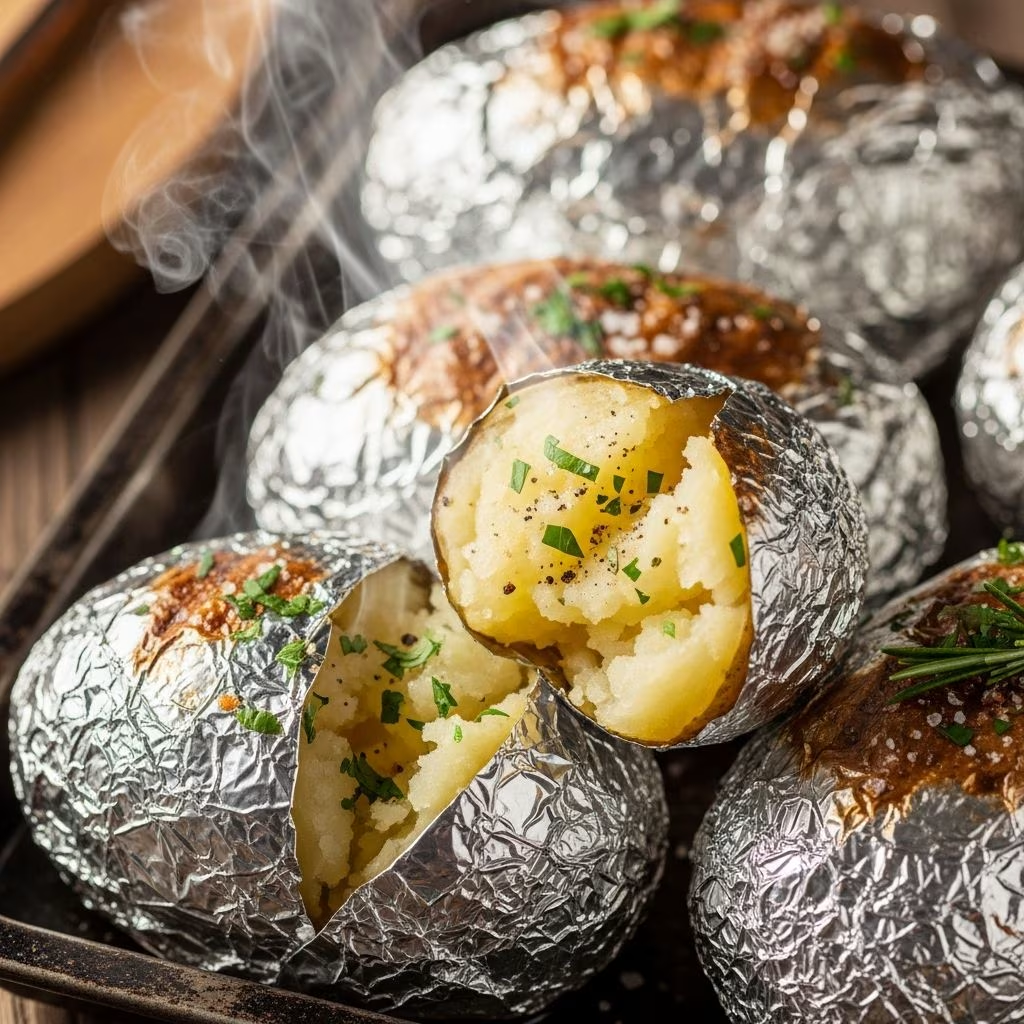
Potatoes wrapped in foil represent a timeless cooking technique that delivers tender, flavorful results with effortless preparation. Whether you’re firing up the grill for a backyard gathering, setting up camp under the stars, or simply seeking a hands-off oven side, this method seals in moisture and infuses every bite with rich, savory goodness. In this comprehensive guide, we’ll explore everything from basic recipes to advanced variations, ensuring you can elevate your potato game no matter the occasion.
Why Choose Foil-Wrapped Potatoes?
The beauty of foil-wrapped potatoes lies in their simplicity and adaptability. The aluminum foil creates a steamy environment that cooks the potatoes evenly, resulting in a soft interior while allowing the skin to crisp up slightly upon unwrapping. This approach minimizes cleanup—no sticky pans or greasy sheets to scrub—and maximizes flavor retention. According to the United States Department of Agriculture (USDA), potatoes are an excellent source of potassium and vitamin C, making them a nutritious base for any meal.1
Perfect for beginners and seasoned cooks alike, these potatoes require minimal ingredients: just spuds, butter or oil, salt, pepper, and your choice of seasonings. They’re budget-friendly, using pantry staples, and can feed a crowd without breaking the bank. Plus, they’re naturally gluten-free and can be adapted for vegan, low-carb, or keto diets with simple swaps.
Essential Ingredients and Equipment
To get started, gather these core components:
- Potatoes: Select medium-sized russets or Yukon Golds for best texture—about 6-8 ounces each.
- Fats: Butter, olive oil, or margarine for richness and non-stick properties.
- Seasonings: Salt, pepper, garlic powder, onion powder, paprika, or fresh herbs like rosemary and thyme.
- Foil: Heavy-duty aluminum foil to withstand high heat without tearing.
Optional add-ins include cheese, bacon bits, sour cream, or vegetables like onions and bell peppers for extra flair. You’ll need tongs for handling hot packets and a baking sheet for oven use.
Step-by-Step Preparation Guide
Follow these straightforward steps for foolproof results:
- Prep the Potatoes: Wash and dry 4-6 medium potatoes thoroughly. Prick each one several times with a fork to allow steam to escape and prevent bursting.
- Season Generously: Slice potatoes in half lengthwise or leave whole. Rub with 1-2 tablespoons of softened butter or oil per potato. Sprinkle with 1/2 teaspoon salt, 1/4 teaspoon pepper, and desired spices.
- Wrap Securely: Place each potato on a 12×12-inch sheet of foil. Fold edges tightly to form a sealed pouch, ensuring no gaps for steam to escape.
- Cook to Perfection: Cooking times vary by method (detailed below). Use oven mitts to handle hot packets.
- Serve Hot: Unwrap carefully to avoid steam burns, then garnish with chives, cheese, or dips.
| Method | Temperature | Time | Yield (per potato) |
|---|---|---|---|
| Oven | 400°F | 45-60 min | Soft & fluffy |
| Grill | Medium-High | 30-45 min | Smoky flavor |
| Campfire | Hot coals | 30-40 min | Rustic char |
Cooking Methods for Every Scenario
Oven-Baked Version
For reliable, indoor results, preheat your oven to 400°F. Place foil packets on a rimmed baking sheet and bake for 45-60 minutes, flipping halfway. Test doneness by squeezing gently—a soft feel indicates they’re ready. This method is ideal for meal prepping or rainy days.
Grilled Delight
Fire up your grill to medium-high (about 375-450°F). Position packets over indirect heat to avoid burning. Turn every 10-15 minutes for even cooking. The grill imparts a subtle smokiness that pairs beautifully with steaks or burgers.
Campfire Classic
Nothing beats potatoes cooked over an open flame. Bury packets in hot coals (not direct flames) for 30-40 minutes, rotating occasionally. This technique evokes nostalgic outdoor adventures and works with any heat source like a fire pit or Dutch oven.
Flavor-Packed Variations to Try
Customize your foil potatoes to suit any palate or pairing:
- Cheesy Garlic: Stuff with minced garlic, cheddar shreds, and a pat of butter before wrapping.
- Herb-Infused: Layer with fresh dill, parsley, and lemon slices for brightness.
- Loaded Baked: Add cooked bacon, green onions, and sour cream post-cooking.
- Spicy Southwest: Mix in chili powder, cumin, corn kernels, and jalapeños.
- Vegan Twist: Use coconut oil and nutritional yeast for a cheesy effect without dairy.
Experiment with sweet potatoes for a nutritious alternative, swapping savory spices for cinnamon and brown sugar.
Pro Tips for Perfect Results
Achieve restaurant-quality foil potatoes with these expert hacks:
- Always use heavy-duty foil or double-layer standard foil to prevent leaks.
- Parboil whole potatoes for 5-10 minutes before wrapping to speed up cooking.
- Avoid overcrowding packets; one or two potatoes per foil sheet ensures even heat distribution.
- For crispier skins, unwrap and broil for 2-3 minutes at the end.
- Store leftovers in the fridge for up to 3 days; reheat in a 350°F oven to restore texture.
Food safety is paramount. The USDA recommends cooking potatoes to an internal temperature of 210°F for safety and optimal tenderness.2
Nutritional Profile and Health Benefits
A single medium foil-wrapped potato (with butter) clocks in at about 200 calories, providing 4g protein, 45g carbs, and 7g fat. They’re rich in fiber (skin-on), supporting digestion, and loaded with antioxidants. Per Harvard T.H. Chan School of Public Health data, potatoes contribute significantly to daily potassium intake, aiding blood pressure regulation.3
Customize for diets: Skip butter for oil to reduce saturated fat, or air-fry unwrapped for fewer calories.
Pairing Suggestions for Meals
Foil-wrapped potatoes complement a wide array of mains:
- Proteins: Grilled chicken, ribs, salmon, or veggie burgers.
- Salads: Fresh greens or coleslaw for balance.
- Sauces: Ranch, aioli, or ketchup elevate the experience.
For holidays, scale up for potlucks; they travel well and stay warm in foil.
Frequently Asked Questions (FAQs)
Can I make foil potatoes in an air fryer?
Yes! Preheat to 400°F, cook packets for 20-30 minutes, shaking halfway. Puncture foil for better air circulation.
Are foil potatoes safe on a gas grill?
Absolutely, but use indirect heat to prevent charring. Monitor closely as gas grills heat unevenly.
How do I know when they’re done?
Pierce with a fork; it should slide in easily. Internal temp should reach 210°F.
Can I prepare them ahead of time?
Yes, assemble up to 24 hours in advance and refrigerate. Add 5-10 minutes to cooking time.
What if I don’t have heavy-duty foil?
Double-wrap with regular foil for durability.
Common Mistakes to Avoid
Steer clear of these pitfalls for success:
- Not pricking potatoes, leading to explosions.
- Loose wrapping, causing dry or uneven cooking.
- Over-seasoning, which can overpower natural potato flavor.
- Ignoring heat source variations—adjust times accordingly.
With practice, you’ll master this dish, impressing guests with minimal effort.
References
- Potatoes 101 — United States Department of Agriculture. 2023-05-15. https://www.usda.gov/topics/food-and-nutrition/potatoes
- Food Safety for Potatoes — United States Department of Agriculture Food Safety and Inspection Service. 2024-02-10. https://www.fsis.usda.gov/food-safety/safe-food-handling-and-preparation/food-safety-basics/potatoes
- Vegetables and Fruits — Harvard T.H. Chan School of Public Health. 2025-01-20. https://www.hsph.harvard.edu/nutritionsource/what-should-you-eat/vegetables-and-fruits/