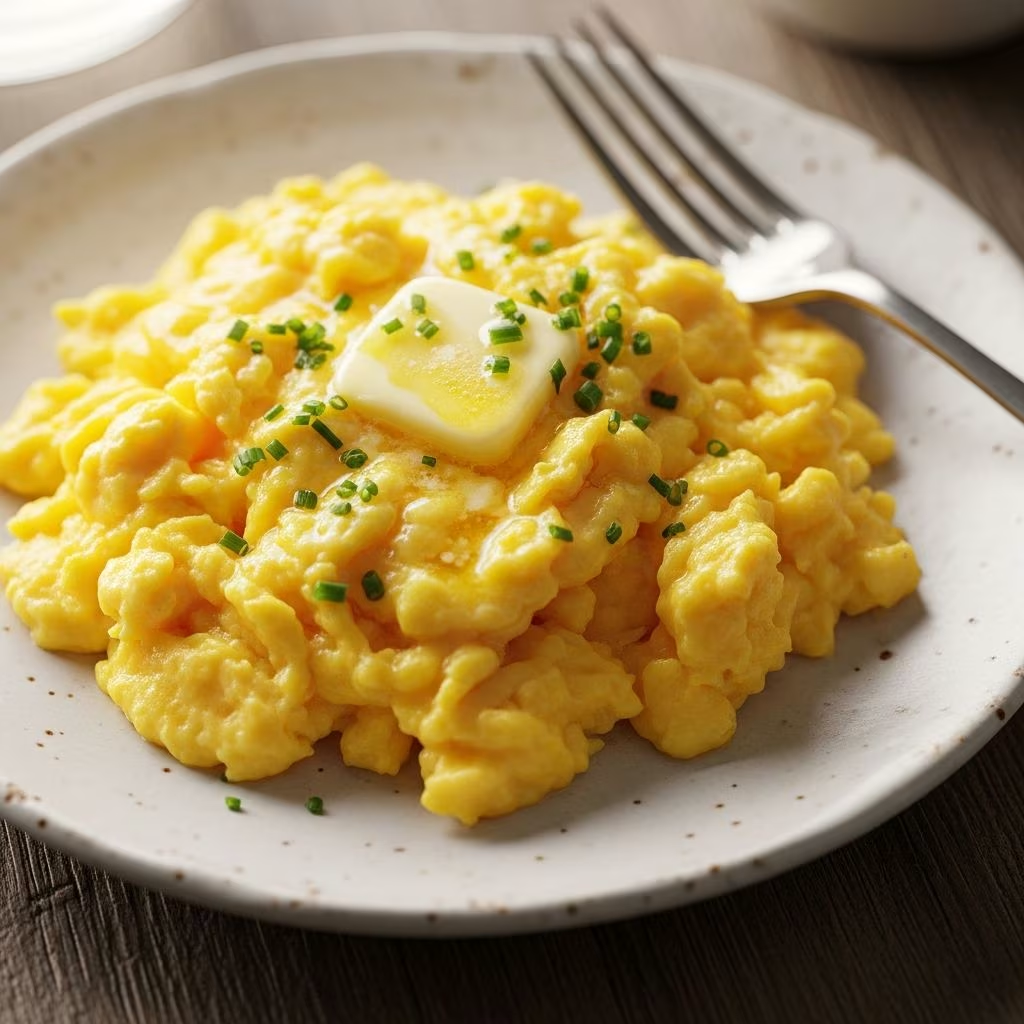
Scrambled eggs seem simple, but achieving that ideal fluffy, creamy texture requires precise techniques. This guide explores the science and methods behind light, tender eggs that rival professional kitchens, drawing from tested approaches like vigorous whisking and controlled cooking.
Understanding What Makes Eggs Fluffy
Fluffiness in scrambled eggs comes from incorporating air and managing moisture during cooking. Vigorous whisking introduces air pockets into the mixture, which expand when heated, creating a light structure. Low heat prevents rapid protein coagulation that leads to tough curds, while gentle folding preserves those air bubbles.
Proteins in eggs denature and bond as they cook, forming a network that traps steam and air. Adding elements like a splash of water or dairy enhances this by generating steam or providing fat for creaminess. High-quality eggs with vibrant yolks contribute natural richness, ensuring moist results without dryness.
Essential Ingredients for Success
Start with fresh, high-quality eggs for the best flavor and texture. For two servings, use 4 large eggs. Complement with 2 tablespoons of butter for richness, and optional shredded cheese like cheddar for melt-in flavor. Fresh chives or herbs add a bright finish.
- Eggs: Large, room-temperature for even whisking.
- Butter: Salted or unsalted; foams to signal readiness.
- Dairy Add-Ins: Milk, cream, or crème fraîche (1-2 tablespoons per 4 eggs) for moisture.
- Seasonings: Salt added early to tenderize proteins; pepper post-cooking.
Step-by-Step Recipe for Fluffy Scrambled Eggs
Follow these instructions for foolproof results. Prep time: 2 minutes. Cook time: 5 minutes. Serves 2.
- Prepare the Eggs: Crack 4 eggs into a bowl. Add 1 tablespoon milk or cream and a pinch of salt. Whisk vigorously for 1 full minute until frothy and pale—foam indicates air incorporation.
- Heat the Pan: Use a nonstick skillet (8-inch for 4 eggs). Melt 2 tablespoons butter over low heat until foaming but not browning.
- Add Eggs Off-Heat: Remove pan from heat, pour in eggs, and whisk surface vigorously without scraping bottom. Return to low heat.
- Cook Gently: Let bottom set for 5-7 seconds. Use a silicone spatula to push from edges to center. Tilt pan to let runny eggs flow underneath. Repeat until mostly set (about 30-60 seconds).
- Finish and Rest: Remove from heat while slightly wet. Residual heat finishes cooking. Fold in cheese if using, and garnish.
| Portion Size | Eggs | Butter | Dairy |
|---|---|---|---|
| 1 serving | 2 | 1 tbsp | ½ tbsp |
| 2 servings | 4 | 2 tbsp | 1 tbsp |
| 4 servings | 8 | 4 tbsp | 2 tbsp |
Advanced Techniques for Extra Fluff
Elevate your eggs with these pro tips. For diner-style volume, whisk in 1 teaspoon water per 2 eggs; pan heat turns it to steam, puffing curds. Alternatively, add an extra yolk for richness without milk.
A cold dairy dollop (like sour cream) at the end halts cooking, keeping eggs creamy. Salt early—ideally 10 minutes before—to break down proteins for tenderness, debunking myths about graying.
Common Mistakes and Fixes
- High Heat: Causes rubbery texture. Fix: Low heat only; remove pan briefly if needed.
- Over-Stirring: Deflates air pockets. Fix: Gentle pushes with spatula.
- No Whisking: Dense eggs. Fix: 1-minute vigorous mix.
- Wrong Pan: Sticking or uneven cook. Fix: Nonstick, properly sized.
Flavor Variations to Try
Customize for variety:
- Cheesy Bliss: Stir in ½ cup cheddar mid-cook.
- Herb Garden: Chives, dill, or parsley post-cook.
- Spicy Kick: Diced jalapeños or hot sauce.
- Smoky Bacon: Crumble cooked bacon in at end.
- Veggie Boost: Sauté spinach or tomatoes first.
The Science of Perfect Scrambled Eggs
Egg proteins like ovalbumin unfold at 144-149°F, forming a gel-like structure. Air from whisking and steam from moisture create loft. Low heat (around 175°F pan temp) allows gradual setting, preserving tenderness. Fats coat proteins, preventing toughness.
Studies on protein denaturation confirm salting pre-cook hydrolyzes proteins for softer curds. Dairy emulsifies, adding creaminess via casein interactions.
Equipment Essentials
- Nonstick Skillet: 8-10 inch for even heat.
- Silicone Spatula: Flexible for curds without scratching.
- Whisk or Fork: For air incorporation.
- Bowl: Medium for mixing.
Pairing Ideas for Breakfast
Serve fluffy eggs with toast, avocado, or fruit. For a full plate: bacon, hash browns, or English muffins with butter.
Frequently Asked Questions
Can I make fluffy eggs without milk?
Yes, vigorous whisking and water create steam for fluff. Extra yolk adds creaminess.
Why are my eggs watery?
Too much dairy or high heat. Use less liquid and low heat.
How do I avoid overcooking?
Remove from heat when 80% set; carryover cooking finishes them.
Best pan size for 3 eggs?
8-inch nonstick for even layer.
Vegetarian variations?
Add cheese, veggies, or herbs—no meat needed.
Nutritional Breakdown
Per serving (2 eggs): 200 calories, 15g fat, 12g protein, 1g carbs. Boost with veggies for fiber.
Master these methods, and breakfast becomes effortless luxury. Practice refines technique for consistent perfection.
References
- Fluffy Scrambled Eggs (Step by Step!) — The Cozy Cook. 2023-05-15. https://thecozycook.com/fluffy-scrambled-eggs/
- The Best Fluffy Scrambled Eggs Recipe — Happy Egg. 2024-02-10. https://happyegg.com/breakfast/fluffy-scrambled-eggs
- I Cracked Dozens Of Eggs & Found The Secret To A Perfect Fluffy Scrambled Eggs — Delish. 2024-08-20. https://www.delish.com/kitchen-tools/a64243372/secret-to-fluffy-scrambled-eggs/
- The Secret to Beautiful, Fluffy Scrambled Eggs — YouTube (In The Kitchen With Gina Young). 2022-11-12. https://www.youtube.com/watch?v=PLLzRDCgypQ