Creating delicious cookies doesn’t always require extensive ingredient lists or complicated techniques. Peanut butter cookies made without flour demonstrate that sometimes the simplest recipes yield the most satisfying results. This approach to cookie baking offers a solution for those seeking gluten-free options or simply wanting to streamline their baking process.
Understanding the Science Behind Flour-Free Cookies
When bakers remove flour from traditional cookie recipes, they fundamentally change how the treat develops texture and structure. Peanut butter serves as the primary foundation, providing both fat content and protein that contribute to binding ingredients together. The natural oils present in peanut butter create a moist, chewy interior while allowing the edges to crisp slightly during baking.
The egg acts as a crucial binding agent, replacing the gluten network that flour would typically provide. This single ingredient helps hold the mixture together while contributing to the cookies’ characteristic texture. Baking soda or baking powder introduces leavening, creating a light crumb structure rather than dense, heavy cookies. Understanding these components helps bakers recognize why each ingredient plays an irreplaceable role in the final product.
Essential Ingredients for Success
The beauty of flourless peanut butter cookies lies in their minimal ingredient requirements. Most recipes rely on five to six pantry staples that work synergistically to create delightful treats:
- Creamy peanut butter: The star ingredient that provides flavor, texture, and structural support for the entire cookie
- Granulated and brown sugars: Granulated sugar adds sweetness and crispness, while brown sugar contributes moisture and subtle caramel notes
- Eggs: Bind ingredients and create structure that replaces gluten’s traditional role
- Vanilla extract: Enhances the overall flavor profile without overpowering the peanut butter taste
- Baking soda or baking powder: Provides leavening for a light, airy texture
- Salt: Balances sweetness and amplifies peanut butter flavor
Some variations include optional additions like chocolate chips or adjusted ratios for different textures. The absence of butter distinguishes these cookies from traditional recipes, making them suitable for various dietary preferences.
Step-by-Step Preparation Instructions
Preparing Your Workspace
Begin by preheating your oven to 350°F and lining a baking sheet with parchment paper. This preparation ensures even heat distribution and prevents sticking. Having all ingredients measured and ready before mixing streamlines the process and reduces errors.
Combining Ingredients
In a large mixing bowl, combine the peanut butter with both types of sugar. Using an electric mixer on medium speed helps achieve a well-blended mixture, though hand-mixing works equally well. Beat until the ingredients are thoroughly combined, typically requiring one to two minutes of mixing.
Next, add the beaten egg and vanilla extract to the mixture. Continue mixing on low to medium speed until these ingredients fully incorporate. Some recipes suggest adding baking soda and salt at this stage, while others prefer mixing these dry ingredients separately before combining. Either approach yields successful results.
Portioning and Shaping
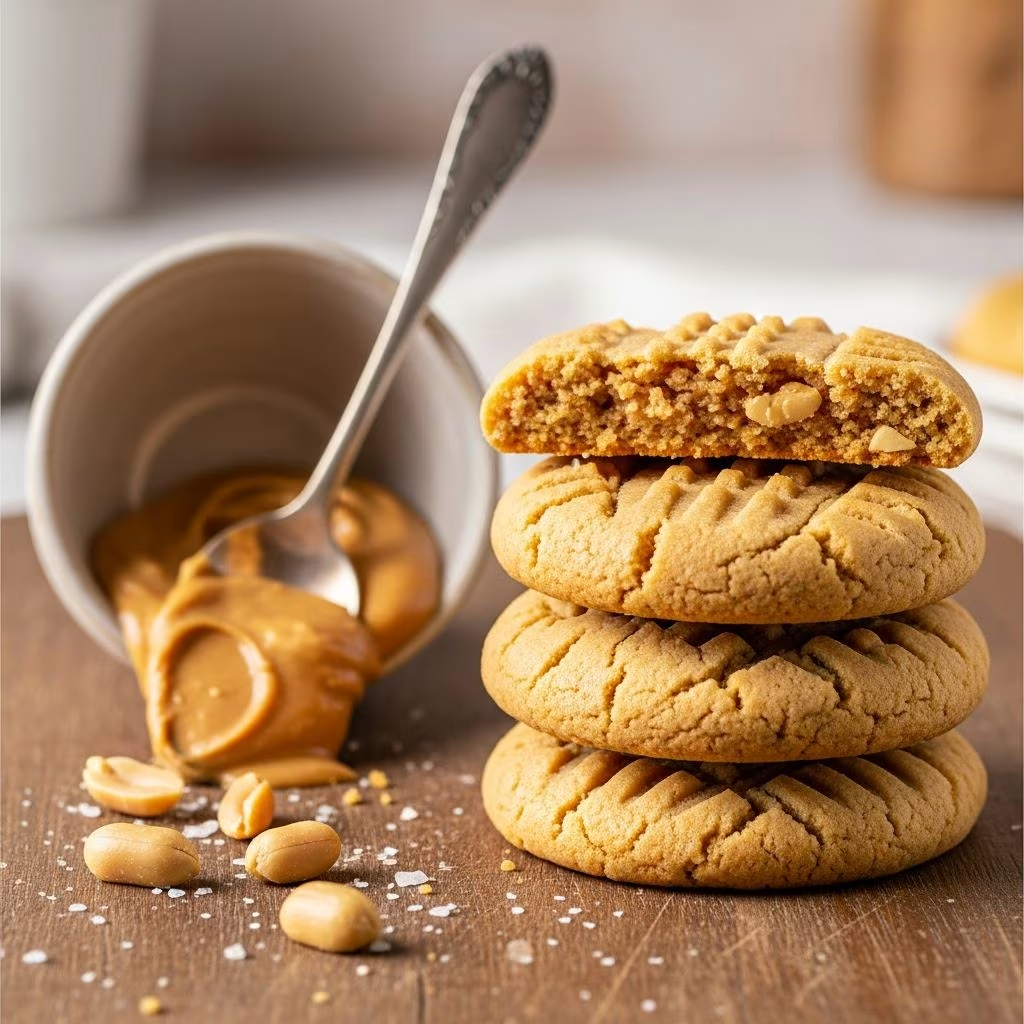
Using a tablespoon-sized cookie scoop or measuring spoon, portion the dough onto the prepared baking sheet. Space portions approximately two inches apart to allow for slight spreading during baking. Many bakers prefer using a fork to create a traditional crosshatch pattern on top of each dough portion. To prevent sticking, wet the fork tines between each cookie.
Baking Techniques for Optimal Results
Place the prepared baking sheet in the preheated 350°F oven. Bake for eight to ten minutes, monitoring carefully to avoid overbaking. The cookies should develop slightly golden edges while maintaining a soft interior. Remove them from the oven when the edges just begin to turn golden brown but the centers remain soft to the touch.
A critical distinction in baking flourless peanut butter cookies involves cooling. Unlike many cookie recipes, these treats must cool completely on the baking sheet before attempting to remove them. The absence of flour means the cookies lack the structural integrity to transfer while warm. Attempting to move them prematurely results in crumbling or breaking.
Allow the cookies to rest on the hot baking sheet for at least five minutes before transferring them to a cooling rack. This resting period allows the cookies to set sufficiently while still retaining their chewy texture.
Common Baking Challenges and Solutions
| Challenge | Cause | Solution |
|---|---|---|
| Dry, crumbly cookies | Overbaking or too much baking soda | Reduce baking time by one to two minutes; check edges carefully |
| Spread too much during baking | Dough too warm or too much oil | Chill dough for ten minutes; use less oily peanut butter varieties |
| Cookies too dense | Overmixing or insufficient leavening | Mix ingredients until just combined; verify baking soda measurement |
| Uneven browning | Uneven oven temperature or cookie sizes | Rotate sheet halfway through baking; use consistent scooping |
| Cookies won’t hold together | Missing or insufficient egg | Use room-temperature eggs; verify egg size matches recipe |
Storage and Preservation Methods
Properly stored flourless peanut butter cookies maintain their quality for several days at room temperature. Place cooled cookies in an airtight container with a layer of parchment paper between stacks. This prevents sticking and preserves texture.
For extended storage, freezing works exceptionally well. Place cookies in freezer-safe containers with parchment separators, storing for up to two months. When ready to enjoy, simply remove cookies from the freezer and allow them to reach room temperature naturally.
Cookie dough can also be frozen unbaked. Scoop portions onto a baking sheet, freeze until solid, then transfer to freezer bags. Bake frozen portions for an additional two to three minutes beyond the standard baking time.
Creative Variations and Flavor Enhancements
While the basic recipe stands perfectly on its own, numerous variations allow for personalization. Adding chocolate chips creates a peanut butter-chocolate combination that appeals to many palates. Mini chocolate chips, chopped dark chocolate, or white chocolate chips each offer distinct flavor profiles.
Incorporating vanilla extract can be adjusted or replaced entirely depending on preference. Some bakers prefer emphasizing pure peanut butter flavor, while others appreciate additional vanilla’s subtle sweetness. Experimental additions might include cinnamon, nutmeg, or cocoa powder for different taste dimensions.
Sweetener substitutions provide options for those monitoring sugar intake. Some recipes incorporate alternative sweeteners, though this may affect texture and browning slightly. Testing these modifications with small batches ensures satisfactory results before preparing larger quantities.
Nutritional Considerations and Dietary Suitability
Flourless peanut butter cookies offer natural advantages for those avoiding gluten, whether due to celiac disease, gluten sensitivity, or personal preference. The recipe’s simplicity makes it suitable for various dietary approaches, from paleo to whole-food diets.
Each cookie typically contains approximately 60-80 calories, with protein from peanut butter and eggs providing nutritional value. The absence of refined flour reduces overall carbohydrate content compared to traditional cookies. However, sugar content remains relatively high, as is typical for dessert items.
Individuals with peanut allergies obviously cannot enjoy this recipe as written. Alternative nut butters like almond or sunflower seed butter can sometimes substitute for peanut butter, though results may vary slightly in flavor and texture.
Equipment Recommendations for Best Results
While not essential, certain tools enhance the cookie-making process. A cookie scoop ensures consistent portion sizes, leading to even baking and professional-looking results. Electric mixers, either handheld or stand models, simplify combining ingredients, though vigorous hand-mixing achieves similar outcomes.
Parchment paper or silicone baking mats prevent sticking and simplify cleanup. A reliable oven thermometer helps ensure accurate baking temperatures, as many home ovens vary significantly from their displayed settings. This tool proves invaluable for consistent results across baking sessions.
Frequently Asked Questions
Can I use natural or chunky peanut butter instead of creamy?
Natural peanut butter with separated oil can affect cookie texture and consistency. If using natural varieties, stir thoroughly before measuring. Chunky peanut butter works but produces cookies with visible peanut pieces rather than a smooth texture. Creamy peanut butter yields the most consistent results.
What happens if I don’t have vanilla extract?
Vanilla extract enhances flavor but isn’t strictly essential. Cookies made without it still taste delicious, simply emphasizing pure peanut butter flavor. Alternatively, a pinch of almond extract provides a different but pleasant flavor dimension.
Can I make these cookies without eggs?
Eggs provide crucial binding and structure. While some egg substitutes exist, they may not perform identically. Applesauce or mashed banana can replace eggs partially, though these additions alter texture and flavor. Commercial egg replacers may also work, though results vary.
How can I prevent cookies from spreading too much?
Chilling dough for ten to fifteen minutes before baking significantly reduces spreading. Additionally, ensuring your oven temperature is accurate prevents excessive heat from softening the dough too quickly. Using less oily peanut butter varieties also helps.
Are these cookies truly gluten-free?
Yes, the basic recipe contains no gluten-containing ingredients. However, cross-contamination can occur during preparation. Ensure all equipment and work surfaces are clean, and verify that peanut butter and other ingredients lack gluten contamination from manufacturing facilities.
Conclusion: Embracing Simplicity in Baking
Flourless peanut butter cookies demonstrate that exceptional baked goods don’t require extensive ingredient lists or complicated procedures. With basic pantry items and straightforward mixing methods, anyone can create soft, chewy, flavorful cookies suitable for various occasions. Whether pursuing gluten-free baking, simplifying your cooking routine, or simply craving a satisfying treat, this recipe delivers consistent, delicious results that warrant regular rotation in your baking repertoire.
References
- The Science of Baking: How Ingredients Function in Recipes — America’s Test Kitchen. 2024. https://www.americastestkitchen.com/
- Flourless Peanut Butter Cookies Recipe — King Arthur Baking Company. 2024. https://www.kingarthurbaking.com/recipes/flourless-peanut-butter-cookies-recipe
- Gluten-Free Baking Fundamentals — University of Minnesota Extension. 2023. https://extension.umn.edu/
- Flourless Peanut Butter Cookies (Gluten-Free) — Joy Food Sunshine. 2024. https://joyfoodsunshine.com/flourless-peanut-butter-cookies/
- Understanding Gluten-Free Baking — Celiac Disease Foundation. 2024. https://celiac.org/