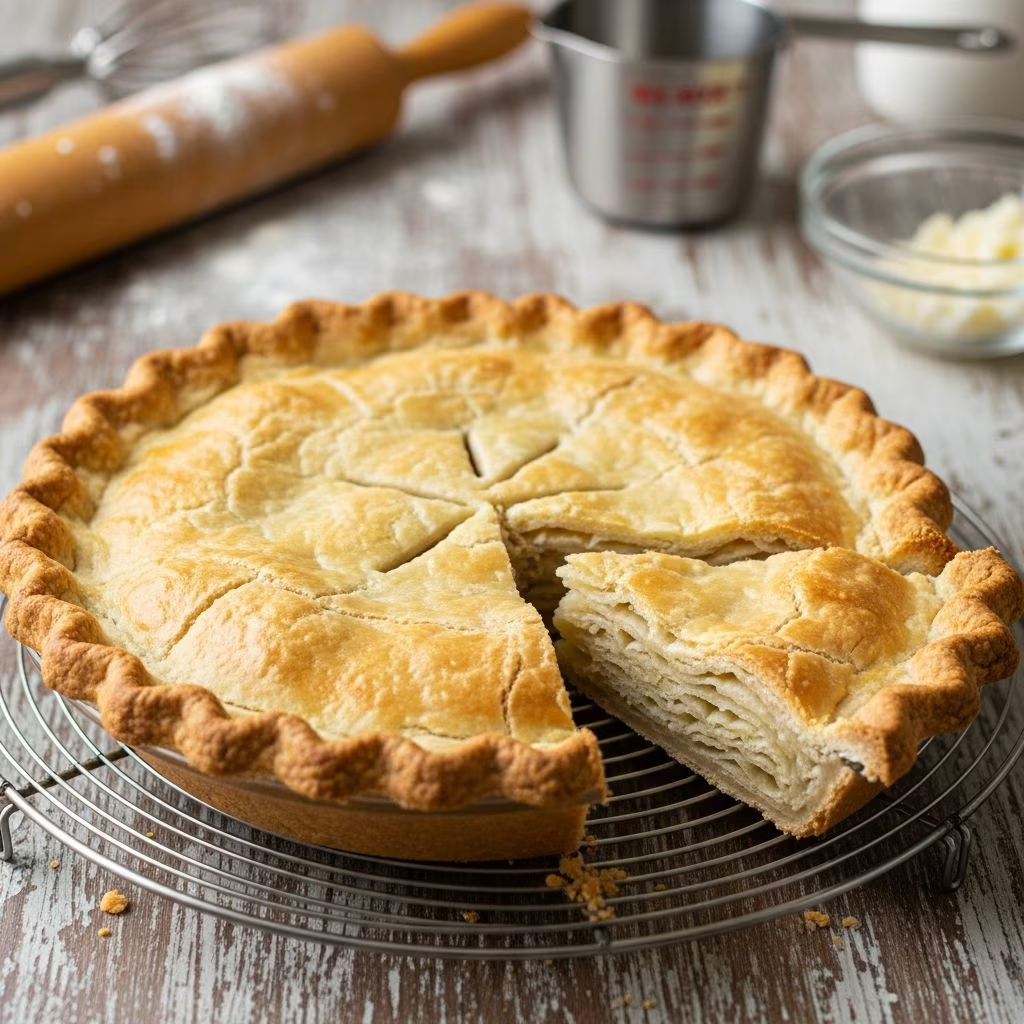
Mastering the art of pie crust using shortening creates a foundation for some of the flakiest, most tender pastries you’ll ever bake. This traditional approach relies on the unique properties of vegetable shortening combined with precise techniques to achieve that sought-after shatter-in-your-mouth texture without compromising flavor.
Why Shortening Excels in Pie Dough
Shortening’s solid structure at room temperature allows it to coat flour particles effectively, inhibiting gluten development for tenderness. Unlike all-butter doughs, which can become greasy when warm, shortening maintains stability during rolling and shaping.
Combining shortening with butter balances flakiness from shortening and rich taste from butter. This hybrid method, popular among bakers, yields dough that handles well and bakes into golden, layered crusts ideal for both sweet and savory fillings.
Essential Ingredients for Success
Gather these core components for a reliable single-crust dough:
- 8 tablespoons (1 stick) cold unsalted butter, cubed
- 2 tablespoons cold vegetable shortening, cubed
- 1.5 cups all-purpose flour
- 1.5 teaspoons cornstarch (for extra tenderness)
- 0.5 teaspoon salt
- 2 teaspoons white vinegar
- Scant 1/3 cup ice-cold water
For double-crust pies, double the quantities accordingly. Cornstarch acts as a tenderizer by weakening gluten bonds, while vinegar subtly relaxes the dough without altering taste.
Prepping Ingredients: The Chilling Ritual
Begin by cutting fats into 1/2-inch cubes and arranging them on a lightly floured plate, keeping shortening separate. Chill for at least 30 minutes until firm but squeezable. Meanwhile, mix dry ingredients—flour, cornstarch, salt—and refrigerate. Prepare liquid by combining vinegar with cold water to reach 1/3 cup, then chill.
This step ensures fats remain cold, creating steam pockets during baking for flakiness. Room-temperature fats lead to tough, dense crusts.
Food Processor Method for Effortless Results
For speed and consistency, use a food processor:
- Pulse dry ingredients 5-6 times to blend.
- Add butter cubes; pulse 5-6 times until pea-sized pieces form.
- Incorporate shortening; pulse similarly, fluffing with a fork between additions.
- Drizzle half the liquid around bowl edges; pulse until clumpy but not balled.
- Add remaining liquid sparingly; transfer to bowl and smear crumbs with fingertips until cohesive.
- Pack into disk, wrap, and chill 1 hour.
Split dough unevenly for double-crust pies, making the bottom slightly larger to account for pan fit.
Hand-Mixing Technique for Artisanal Control
Without a processor, increase flour slightly to 1.5 cups plus 1.5 tablespoons. Let fats soften 5-8 minutes:
- Toss butter with dry mix, cut with pastry blender to irregular pieces.
- Add shortening, blend to mealy texture with split-pea fat bits.
- Pour liquid gradually around edges, mixing with fork from sides and bottom.
- Smear crumbs until dough forms; knead gently 2-3 times.
This method allows bakers to feel texture progression, preventing overworking.
Double-Crust Scaling and Adjustments
For deep-dish double-crust:
| Ingredient | Amount |
|---|---|
| Unsalted butter | 14 tablespoons (1 3/4 sticks) |
| Vegetable shortening | 4 tablespoons |
| All-purpose flour | 2 cups |
| Cornstarch | 1 tablespoon |
| Salt | 1 teaspoon |
| White vinegar | 1 tablespoon |
| Cold water | Scant 1/2 cup |
Follow same chilling and mixing steps. Divide dough with one disk 10% larger for bottom crust overhang.
Variations for Flavor and Texture
Whole Wheat Option: Swap half all-purpose flour for whole wheat pastry flour. Increase water slightly if dough feels dry. This adds nutty depth while retaining flakiness.
All-Butter Substitute: Use 10 tablespoons butter total, omitting shortening. Expect more flavor but slightly less stability; chill longer.
Sugar Boost: Add 1 teaspoon confectioners’ sugar for sweet pies, enhancing browning without excess sweetness.
Resting and Rolling Dough Perfectly
After forming disks, refrigerate 45-60 minutes (or overnight) to relax gluten and firm fats. Soften at room temperature 20-30 minutes before rolling on lightly floured surface.
Roll from center outward, rotating quarter-turns for even 1/8-inch thickness. Use rolling pin gently to avoid toughening. For lattice tops, roll slightly thinner.
Baking Tips for Golden Perfection
- Blind Bake: Line with foil and weights; bake 425°F 15 minutes, remove foil, bake 10 more until pale gold.
- Filled Pies: Preheat oven to 425°F; shield edges with foil if browning too fast.
- Venting: Steam slits or lattice prevent sogginess.
- Brush with egg wash for shine.
Troubleshooting Common Issues
| Problem | Cause | Solution |
|---|---|---|
| Tough crust | Overworked dough | Handle minimally; chill thoroughly |
| Soggy bottom | Insufficient heat | Bake on lowest rack; use hot fillings |
| Shrinking | Gluten contraction | Rest dough; avoid stretching |
| Cracks on rolling | Too cold/dry | Soften slightly; add water sparingly |
Store wrapped dough up to 2 days in fridge or 2 months frozen.
Pairing with Iconic Pie Fillings
This crust shines with apple, cherry, pumpkin, or quiche fillings. For fruit pies, toss fruit with thickeners like cornstarch. Savory options like chicken pot pie benefit from blind-baked bottoms.
Advanced Techniques from Pie Experts
Chilling pastry post-shaping stabilizes edges during baking. Experiment with vodka instead of water for even tenderer results, as it evaporates fully without activating gluten.
Frequently Asked Questions
Can I freeze pie dough?
Yes, wrap tightly and freeze up to 3 months. Thaw overnight in fridge before using.
Shortening vs. Lard?
Both yield flakiness; shortening is neutral-flavored and vegetarian.
Why vinegar in dough?
It tenderizes by breaking gluten strands mildly.
Best flour type?
All-purpose for balance; avoid bread flour’s high protein.
How to avoid overmixing?
Stop when clumps form; dough shouldn’t fully ball up.
Practice these methods to elevate your baking. This shortening-based crust delivers consistent, professional results for any occasion.
References
- Go-To Pie Dough from Ken Haedrich — Bakepedia. 2015. https://www.bakepedia.com/go-to-pie-dough-from-ken-haedrich/
- Dinner Pies – Ken Haedrich — Scribd. N/A. https://www.scribd.com/document/352720388/Dinner-Pies-Ken-Haedrich
- Basic Flaky Pie Pastry from Pie by Ken Haedrich — Cooking by the Book. N/A. https://cookingbythebook.com/recipes/basic-flaky-pie-pastry-from-pie-by-ken-haedrich/
- Good Basic Pie Dough — The Pie Academy. N/A. https://thepieacademy.com/good-basic-pie-dough/
- Ken Haedrich on Pie for Oldways — YouTube. N/A. https://www.youtube.com/watch?v=4dRym_pM_cE