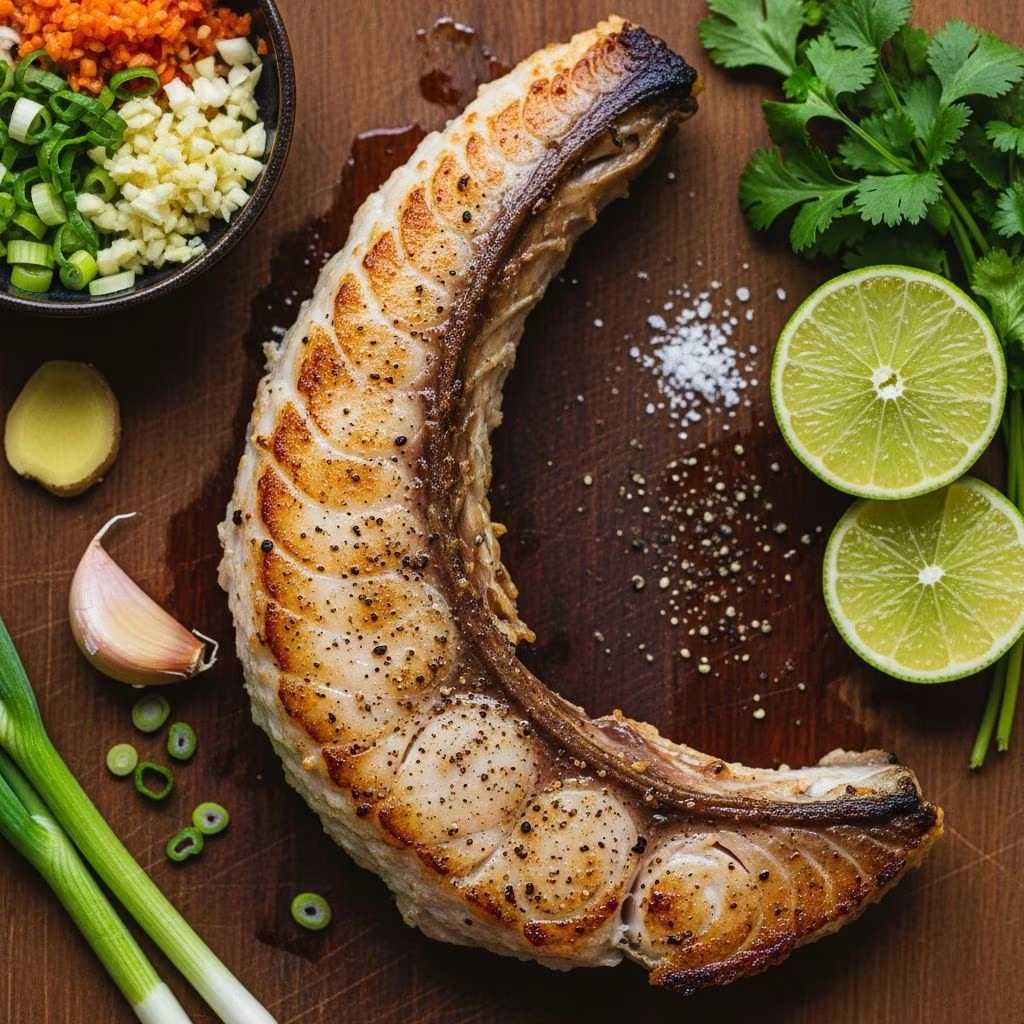
Fish collars represent one of the most flavorful and underutilized parts of any large fish, offering tender meat, rich fats, and bones that enhance taste during cooking. This cut, located just behind the gills and around the pectoral fins, delivers intense umami when prepared correctly through methods like grilling or broiling.
What Makes Fish Collar Special?
The collar’s appeal lies in its composition: a mix of firm flesh, gelatinous connective tissue, and skin that crisps beautifully under heat. High fat content in species like yellowtail or salmon ensures moist results, while the bones add depth without overpowering the dish. Chefs prize it for its meaty texture that flakes easily when done right.
- Nutritional perks: Packed with omega-3s, collagen for joint health, and proteins.
- Versatility: Suits high-heat cooking to render fats and crisp edges.
- Availability: Found in Asian markets or from whole fish filleting.
Sourcing and Harvesting Fish Collars at Home
Obtain collars from sizable fish weighing 10 pounds or more, such as yellowtail, striped bass, salmon, or snapper. In stores, look for pre-cut “hamachi kama” in Japanese sections; otherwise, harvest from whole fish.
To harvest: Gut and gill the fish first. Fillet perpendicular to the spine, starting ½ to 1 inch behind the pectoral fin for a clean triangular shape. Slice over the backbone toward the head, then cut down behind the head where bone meets meat. Use shears for stubborn pin bones. The result resembles a meaty, bone-in wing ready for cooking.
| Fish Type | Ideal Size | Fat Content | Best Cooking Method |
|---|---|---|---|
| Yellowtail (Hamachi) | 10+ lbs | High | Grill/Broil |
| Striped Bass | 10+ lbs | Medium | Grill |
| Salmon | 10+ lbs | High | Smoke/Grill |
| Snapper | 10+ lbs | Low-Medium | Broil |
Essential Preparation Steps
Start with fresh collars; rinse under cold water and pat dry thoroughly to promote crisping. Salt lightly 15-30 minutes ahead to draw out moisture—use kosher salt sparingly, about ⅛ tsp per piece. For marinades, combine olive oil, herbs, garlic, pepper, and salt; let sit 1 hour to overnight in the fridge. Fattier collars like salmon need shorter times to avoid overpowering.
- Optional brine: Salt-sugar mix for 30 minutes enhances smokiness.
- Dry pat: Crucial for skin blistering.
- Season skin-side lightly or not at all to prevent burning.
Grilling Fish Collars to Perfection
Grilling highlights the collar’s char and fat render. Heat grill to high with clean grates. Place skin-side up first, uncovered, for 5 minutes until charred. Flip and grill 5 more minutes until flaking. No need to flip multiple times; aim for crispy edges.
For Japanese-style hamachi kama: Broil instead on medium (500°F) skin-down on crinkled foil for 8-10 minutes. Foil prevents sticking and allows fat drainage.
Broiling and Oven Techniques
Broil at 8-10 inches from heat: Skin-up 10 minutes for char, flip, then 10 more until fork-tender. Position rack properly to avoid over-charring.
Oven baking: 425°F, middle rack, 10-12 minutes or 5 minutes per ½-inch thickness. Skin-down on foil; no flip needed. Test by flaking with a fork.
Air fryer option: 400°F, skin-down 8-10 minutes; flip last 2-3 minutes for crisp skin.
Smoking and Slow-Cook Methods
Fattier collars excel smoked. Brine briefly, then smoke low-and-slow until firm yet pull-apart tender. Ideal for salmon collars as snacks. In soups, simmer in Southeast Asian broths where collagen melts into umami-rich stock.
Flavor Boosters and Serving Ideas
Pair with yuzu-soy dip: 1 Tbsp soy sauce + ½ tsp yuzu juice. Lemon wedges cut richness. Daikon oroshi (grated radish) adds freshness.
- Simple salt grill: Just salt and lemon.
- Herb marinade: Oil, basil, thyme, garlic.
- Japanese twist: Mirin, sesame oil, ponzu.
Serve hot with rice, salads, or wraps for interactive eating.
Common Mistakes and Pro Tips
Avoid overcooking—collars dry out fast. Watch thickness; adjust times. Don’t salt skin heavily. Use medium heat for even cooking.
- Crinkle foil for texture.
- Rest 2 minutes post-cook.
- Freshness key: Avoid frozen if possible.
Global Twists on Fish Collar
Japan: Hamachi kama grilled simply. Alaska: Smoked salmon collars. Southeast Asia: Soups. Adapt with local spices.
FAQs
What is a fish collar?
The meaty section behind the head and gills, rich in fat and flavor.
How long to grill fish collar?
5 minutes per side over high heat, until charred and flaking.
Can I use salmon collar?
Yes, excellent for smoking or grilling; shorter marinade due to fat.
Where to buy hamachi kama?
Japanese markets or Asian grocers.
Is fish collar bony?
Yes, but bones are soft and edible post-cooking.
References
- Hamachi Kama (Grilled Yellowtail Collar) — Just One Cookbook. 2023-10-15. https://www.justonecookbook.com/hamachi-kama/
- Grilled Fish Collars — Honest Food. 2022-06-20. https://honest-food.net/grilled-fish-collars-recipe/
- Broiled Yellowtail Collar with Daikon — Andrew Zimmern. 2021-08-12. https://andrewzimmern.com/recipes/broiled-yellowtail-collar-daikon/
- How To Make Restaurant Style Hamachi Kama & Daikon Oroshi — Whiskey and Booch. 2023-05-05. https://www.whiskeyandbooch.com/blog/how-to-make-restaurant-style-hamachi-kama-amp-daikon-oroshi-recipe
- How to Harvest and Cook Fish Collars — MeatEater. 2024-02-28. https://www.themeateater.com/cook/general/how-to-harvest-and-cook-fish-collars