Filipino miki noodles represent a cornerstone of comforting home cooking, blending simple ingredients into dishes that evoke family gatherings and street food nostalgia. These versatile wheat-based noodles, often enriched with eggs for a golden hue, shine in stir-fries and soups alike. This guide delves into their origins, preparation methods, and creative adaptations, empowering you to recreate these staples with confidence.
Understanding Miki Noodles and Their Cultural Roots
Miki noodles trace their lineage to Chinese influences in the Philippines, evolving into a distinctly local delight. Typically flat and chewy, they mimic Hokkien-style wheat noodles but incorporate eggs or natural colorants like annatto for visual appeal and texture. In Filipino cuisine, miki appears in pancit-style stir-fries or soupy bowls, paired with proteins like shrimp, chicken, and ham for depth of flavor.
Historically, miki noodles symbolize resourcefulness, made from pantry staples during festivals or everyday meals. Their adaptability allows cooks to highlight seasonal proteins and vegetables, making them a canvas for savory sauces and broths. Whether boiled fresh or stir-fried crisp, miki’s springy bite defines many regional specialties.
Essential Ingredients for Authentic Miki Noodles
Creating miki noodles starts with high-quality basics. For the dough:
- All-purpose flour: Forms the base, providing structure (about 400g for a standard batch).
- Eggs: One whole egg plus a yolk adds richness, color, and elasticity.
- Lye water substitute: Baking soda mixed with water mimics traditional kansui for chewiness.
- Oil and salt: Enhance tenderness and flavor; miso can sub for salt in umami boosts.
For accompaniments in stir-fries or soups, gather soy sauce, vinegar, sesame oil, garlic, proteins like shrimp or chicken, and aromatics such as onions and peppercorns. Annatto seeds lend a signature reddish tint to broths, while shiitake mushrooms deepen savoriness.
| Ingredient | Quantity (Stir-Fry) | Quantity (Soup) | Purpose |
|---|---|---|---|
| Flour | 400g | 454g chow fun sub | Dough base |
| Eggs | 1 + 1 yolk | 2 soft-boiled | Richness/color |
| Soy sauce | 2 tbsp | 2 tbsp fish sauce | Seasoning |
| Annatto | Optional | 1 tbsp seeds | Color/broth |
Step-by-Step: Making Homemade Miki Noodle Dough
Homemade miki noodles elevate any dish with their fresh chew. Begin by dissolving 1/2 teaspoon baking soda in 2/3 cup water as a lye substitute. In a bowl, whisk flour, salt (or miso), oil, egg, and yolk. Pour in the water mixture, stirring with chopsticks until shaggy.
Transfer to a floured surface and knead 10-15 minutes until smooth and elastic. If sticky, sprinkle more flour. Wrap and rest 30-60 minutes, allowing gluten to relax for easy rolling.
- Roll out: Divide dough into portions. Roll thin (1-2mm) using a pasta machine or rolling pin.
- Cut strips: Slice into 1/4-inch wide noodles. Dust with flour to prevent sticking.
- Dry briefly: Air-dry 15-30 minutes on a rack for better texture when cooked.
Fresh noodles cook in 2-4 minutes in boiling water. Freeze extras flat on trays for later use.
Stir-Fried Miki Noodles: Pancit Canton Inspiration
For a quick, vibrant stir-fry reminiscent of pancit canton, parboil noodles briefly to soften. Heat oil in a wok, sauté sliced chicken and shrimp until golden. Add garlic, mushrooms, and vegetables like carrots or cabbage.
Mix sauce: light soy, Chinkiang vinegar (or rice vinegar), sesame oil, brown sugar, chicken bouillon, white pepper, and a splash of Shaoxing wine. Thicken with cornstarch slurry if desired. Toss in noodles, coating evenly over high heat for wok hei (smoky essence).
Serve garnished with scallions and fried garlic. This version balances sweet, tangy, and savory notes, yielding 4 servings in under 30 minutes post-dough prep.
Rich Ham Broth Miki Noodle Soup
Soupy miki noodles offer soul-warming comfort. Start a ham broth: simmer ham hocks, chicken stock, smashed garlic, onion halves, bay leaves, and peppercorns. Pressure cook 25 minutes or stovetop 4 hours, yielding concentrated flavor.
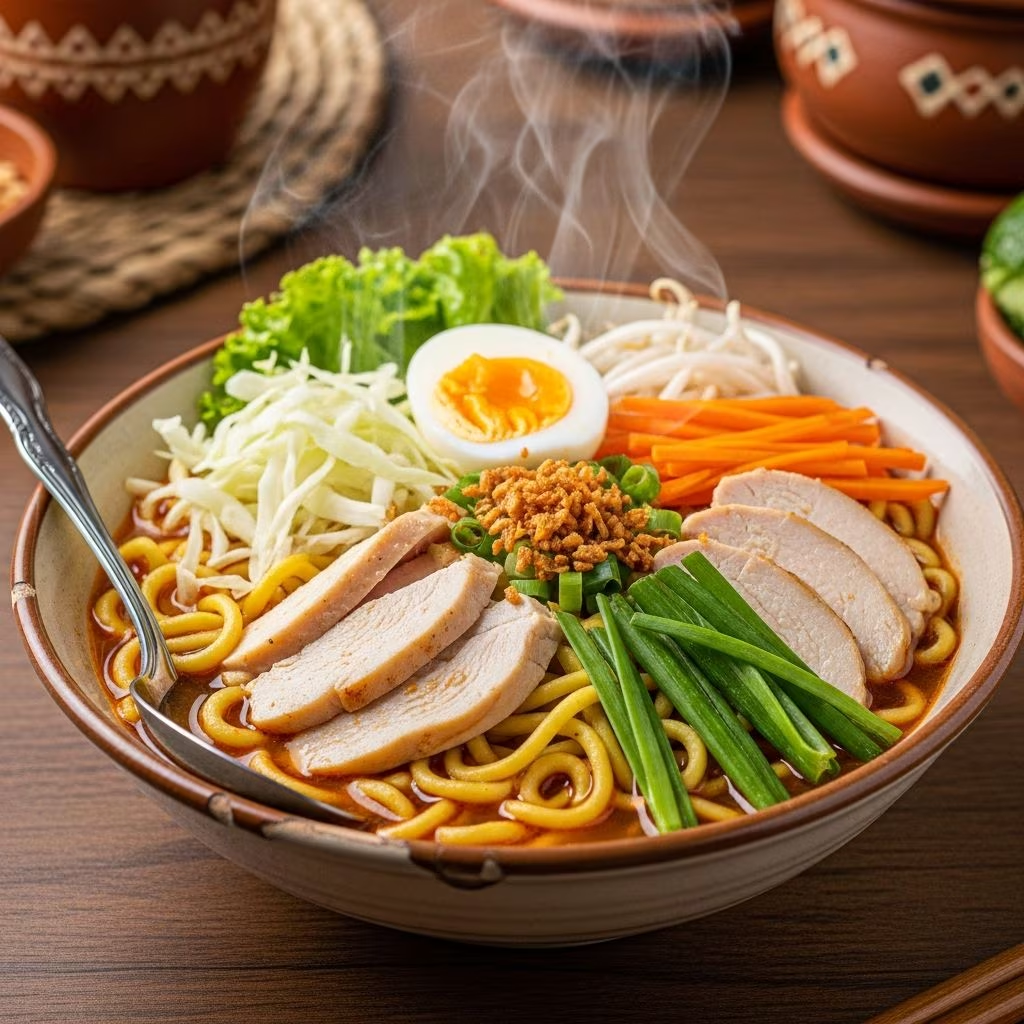
Strain, shred ham meat. Infuse broth with annatto water (soak seeds 1 hour, strain). Sauté shrimp, chicken, garlic, and rehydrated shiitakes. Add fish sauce, broth, and noodles; simmer until noodles absorb starch, thickening the soup naturally.
Portion into bowls with halved soft-boiled eggs, scallions, fried garlic, and lemon oil drizzle. The result is a harmonious blend of smoky ham, briny seafood, and silky noodles.
Variations and Customizations for Every Palate
Adapt miki noodles endlessly:
- Vegetarian: Swap proteins for tofu, mushrooms, and bok choy; use veggie broth.
- Spicy: Add chili flakes or sriracha to stir-fry sauce.
- Seafood-heavy: Incorporate squid or fish balls in soup.
- Gluten-free: Experiment with rice flour blends, though texture differs.
Scale for crowds by doubling broth. For kids, mellow sauces with extra sugar.
Cooking Tips for Perfect Miki Every Time
- Rest dough adequately to avoid tough noodles.
- High-heat stir-frying prevents sogginess.
- Undercook fresh noodles slightly; they’ll finish in the dish.
- Annatto adds authenticity; turmeric works as a pinch alternative for color.
- MSG or bouillon amplifies umami without overpowering.
Nutritional Profile and Dietary Notes
A serving of stir-fried miki (about 1 cup cooked noodles + toppings) provides roughly 500 calories, 20g protein from eggs and meats, and carbs for energy. Rich in B vitamins from eggs and iron from proteins. Opt for whole wheat flour for fiber boost. Soup versions are lower-carb if noodle-light.
Pairing Suggestions and Serving Ideas
Complement miki with vinegar-dipped sides like lumpia or ensaladang mangga. Beverages: calamansi soda or iced tea cuts richness. Serve family-style for sharing, evoking Filipino fiestas.
Frequently Asked Questions (FAQs)
What makes miki noodles chewy?
The egg and lye substitute develop gluten for signature bounce.
Can I use store-bought noodles?
Yes, chow mein or lo mein substitutes work, but homemade tastes fresher.
How long does dough last?
Rest 1 hour max; refrigerate up to 24 hours or freeze shaped noodles.
Is annatto necessary?
It provides color and subtle earthiness; omit for clear broths.
Gluten-free options?
Rice noodles approximate, but lack wheat chew.
Storage and Make-Ahead Strategies
Uncooked noodles freeze well (up to 1 month). Cooked stir-fry reheats in a skillet; soups store 3 days refrigerated. Revive with broth splashes.
References
- Homemade miki noodles, stir-fried pancit canton style — Kat Lieu, Substack. 2023. https://katlieu.substack.com/p/homemade-miki-noodles-stir-fried
- Easy Miki Noodles Recipe — VICE. 2023. https://www.vice.com/en/article/easy-miki-noodles-recipe/
- How To Make Miki Noodles with Sheldon Simeon — YouTube (Munchies). 2023. https://www.youtube.com/watch?v=jOFIiLMhfys