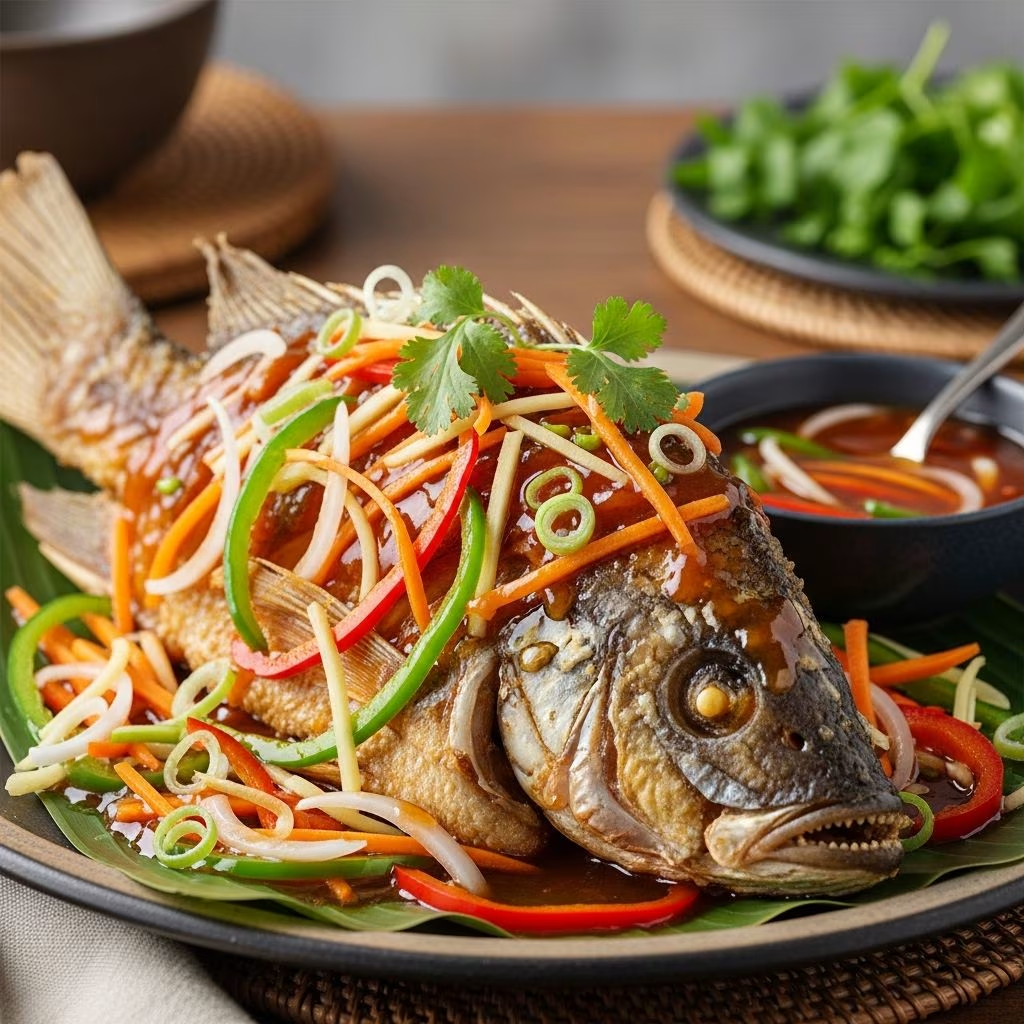
Filipino fish escabeche stands as a beloved dish that marries the crunch of perfectly fried fish with a glossy, flavorful sauce bursting with sweet, sour, and savory notes. This culinary gem traces its roots to Spanish influences blended seamlessly into Philippine cooking traditions, resulting in a vibrant meal that’s both comforting and celebratory. Whether you’re hosting a family gathering or craving a weeknight treat, mastering this recipe elevates simple ingredients into something extraordinary.
Understanding the Essence of Escabeche
At its core, escabeche involves frying fish to golden perfection before drenching it in a sauce made from vinegar, sugar, soy sauce, and an array of vegetables. The contrast of textures—the crisp exterior of the fish against the tender-crisp veggies and silky sauce—creates an unforgettable eating experience. Common in Filipino households, it’s often served with steamed rice to soak up every drop of that irresistible glaze.
This dish shines in its versatility; it’s not just food but a canvas for personal touches. The frying step locks in moisture while building flavor, and the sauce’s balance of acidity from vinegar cuts through the richness, making it refreshing even in hot weather.
Choosing the Perfect Fish for Your Escabeche
Selecting the right fish is crucial for success. Opt for firm-fleshed varieties that hold up to frying without falling apart. Popular choices include whole tilapia, lapu-lapu (grouper), snapper, or even fillets like salmon or barramundi. Whole fish offer dramatic presentation, while fillets cook faster and are easier for beginners.
- Tilapia: Affordable, mild flavor, widely available; scales well for larger groups.
- Lapu-Lapu (Grouper): Meaty texture, premium taste; ideal for special occasions.
- Salmon Fillet: Rich and buttery; adds a modern twist.
- Mackerel or Galunggong: Budget-friendly, bold flavor; perfect for everyday meals.
Look for fresh fish with clear eyes, firm flesh, and a mild sea scent. Pat dry thoroughly before seasoning to ensure crispiness.
Essential Ingredients Breakdown
Gathering quality ingredients sets the foundation. The sauce is the star, relying on pantry staples transformed through careful cooking.
| Component | Key Ingredients | Role |
|---|---|---|
| Fish | 1-2 lbs whole or filleted fish, salt, pepper | Base protein, provides structure and crunch |
| Sauce Base | Vinegar (1/3-1/2 cup), sugar (2-3 tbsp), soy sauce (2-3 tbsp), water (1-2 cups) | Creates tangy-sweet balance |
| Aromatics | Garlic (3-4 cloves), ginger (thumb-sized, strips), onion (1 medium, sliced) | Builds depth and fragrance |
| Vegetables | Carrots, bell peppers (red/green), optional bok choy | Adds color, crunch, nutrition |
| Thickener | Cornstarch slurry (1 tbsp cornstarch + 2 tbsp water) | Glossy texture for sauce |
Variations include ketchup or banana ketchup for color and subtle fruitiness, or date syrup for a healthier sweetener. Fresh produce ensures vibrant flavors.
Step-by-Step Cooking Guide
Preparation takes about 15-20 minutes, with cooking around 30 minutes total. Follow these steps for foolproof results.
- Prep the Fish: Clean, scale, and score the fish if whole. Rub with 1-2 tsp salt and pepper. Let sit 5 minutes.
- Fry to Perfection: Heat 1/2-3/4 cup oil in a wide pan over medium-high. Fry fish 4-6 minutes per side until golden and crispy. Drain on paper towels; reserve 2 tbsp frying oil.
- Sauté Aromatics: In the same pan with reserved oil, cook garlic, ginger, and onion until fragrant and softened, about 2 minutes.
- Build the Sauce: Add carrots and bell peppers; stir 1 minute. Pour in water, vinegar, soy sauce, sugar, and peppercorns. Simmer 3-5 minutes.
- Thicken and Finish: Stir in cornstarch slurry. Cook until sauce reduces and thickens, 1-2 minutes. Taste and adjust sweetness or tang.
- Assemble: Plate fried fish, ladle sauce and veggies over top. Garnish with green onions if desired. Serve hot.
For baked version: Season fillets, bake at 450°F for 12 minutes, then top with sauce.
Pro Tips for Restaurant-Quality Results
- Oil Temperature: Maintain 350-375°F for even crisping without sogginess.
- Score Deeply: For whole fish, make diagonal cuts to allow heat penetration and sauce absorption.
- Balance Flavors: Taste sauce before thickening; add more sugar for sweetness or vinegar for bite.
- Make-Ahead: Fry fish and prep veggies in advance; combine just before serving to preserve crunch.
- Healthier Swap: Air-fry fish at 400°F for 10-12 minutes, brushing with oil.
Creative Variations to Try
Escabeche adapts beautifully to twists. Experiment with these ideas drawn from traditional and modern takes.
- Baked Fish Escabeche: Use olive oil, garlic powder; pair with bok choy and date syrup for lighter fare.
- Spicy Kick: Add chili flakes or bird’s eye peppers to the sauce.
- Seafood Medley: Mix shrimp or squid with fish for surf-and-turf vibes.
- Vegetarian Version: Fry tofu or eggplant; same sauce works wonders.
- Galunggong Style: Small mackerels fried whole, sauce-heavy for bold taste.
These changes keep the dish exciting while honoring its roots.
Pairing Suggestions and Serving Ideas
Serve escabeche family-style with fluffy steamed rice or garlic fried rice. Complement with atchara (pickled papaya) for extra tang, or a simple cucumber salad. For drinks, try iced calamansi juice or beer to cut the richness.
Portion for 4: One whole medium fish or 1 lb fillets. Leftovers reheat well in a skillet to restore crispness.
Nutritional Profile and Health Benefits
A 4-oz serving offers about 300-400 calories, high in protein (25-30g), omega-3s from fish, and vitamins A/C from veggies. The vinegar aids digestion, while moderate sugar keeps it balanced. Customize with lean fish for lower fat.
| Nutrient | Per Serving | % Daily Value |
|---|---|---|
| Protein | 28g | 56% |
| Vitamin C | 45mg | 50% |
| Healthy Fats | 15g | 19% |
Frequently Asked Questions (FAQs)
Can I use frozen fish?
Yes, thaw completely, pat dry, and proceed. Avoid refreezing post-thaw.
What’s the best vinegar type?
White or cane vinegar for authenticity; apple cider for milder tang.
How do I prevent soggy fish?
Fry hot and fast; serve sauce at the table if not eating immediately.
Is escabeche gluten-free?
Mostly; use tamari instead of soy sauce and confirm cornstarch.
Can I make the sauce ahead?
Yes, refrigerate up to 2 days; reheat gently before using.
Conclusion: Elevate Your Table with Escabeche
Filipino fish escabeche isn’t just a recipe—it’s a celebration of bold flavors and simple techniques. With practice, you’ll create dishes that rival any eatery. Gather your ingredients and fry up some magic today.
References
- Mom’s Filipino Escabeche Recipe — Food.com. 2009-05-12. https://www.food.com/recipe/moms-filipino-escabeche-419367
- Filipino Style Escabeche with Baked Fish — Rezel Kealoha. N/A. https://rezelkealoha.com/filipino-style-escabeche-baked-fish/
- Escabeche- Filipino Sweet & Sour Fish — Foxy Folksy. N/A. https://www.foxyfolksy.com/escabeche-sweet-sour-fish/
- Filipino Style Escabeche — Panlasang Pinoy. N/A. https://panlasangpinoy.com/filipino-style-escabeche/
- Escabeche Lapu-Lapu — Kawaling Pinoy. N/A. https://www.kawalingpinoy.com/escabeche-lapu-lapu/