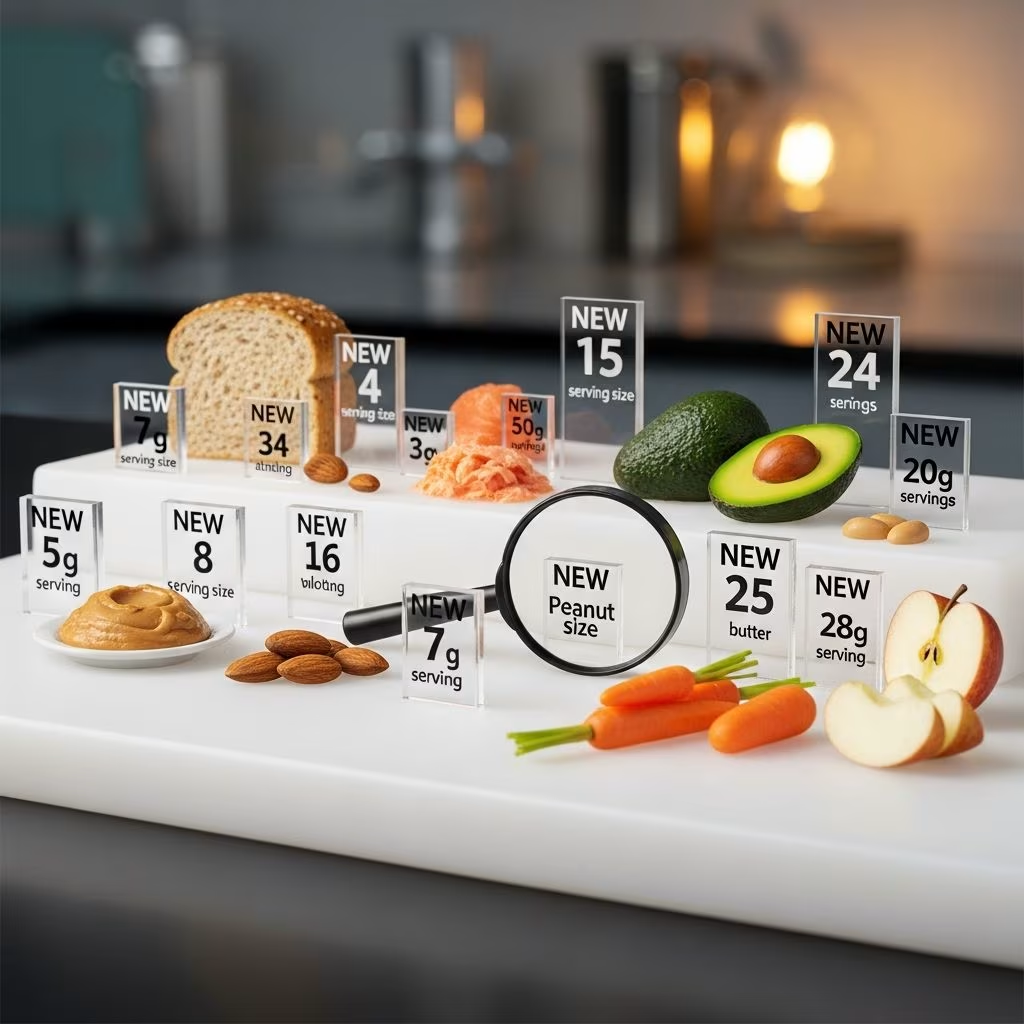
The U.S. Food and Drug Administration (FDA) has transformed the Nutrition Facts label to better align with modern eating patterns. These updates ensure that serving sizes represent what consumers typically consume rather than outdated ideals, making it easier to grasp calorie and nutrient intake accurately.
Why Serving Sizes Needed a Revamp
Serving sizes on food packages were last comprehensively updated in 1993, long before today’s larger portions became commonplace. Federal law mandates that these sizes reflect actual consumption data, not recommendations for ideal intake. Recent surveys from 2003-2008, like the National Health and Nutrition Examination Surveys, revealed shifts in habits—for instance, people now drink more soda per sitting and scoop larger ice cream servings.
This reality check addresses a key issue: many ignored tiny listed servings, leading to underestimation of calories. By basing Reference Amounts Customarily Consumed (RACCs) on real data, the FDA aims to empower shoppers with truthful information.
Key Changes to Common Foods
Several everyday items saw serving size adjustments. Here’s a breakdown:
- Ice Cream: Increased from 1/2 cup to 2/3 cup, matching typical single sittings.
- Soda: Rose from 8 ounces to 12 ounces, reflecting bottle sizes people finish quickly.
- Yogurt: Decreased from 8 ounces to 6 ounces, as smaller individual containers dominate markets.
These tweaks vary—some grow, others shrink—always prioritizing consumption patterns over health goals.
Impact of Package Dimensions on Labeling
Package size now dictates labeling more strictly. Items between one and two servings, like a 20-ounce soda or 15-ounce soup can, must list nutrition as a single serving since consumers often polish them off in one go.
Larger packs get a dual-column format: one for per-serving and one for the whole package. This applies to containers up to three times the RACC, such as 24-ounce sodas or pint-sized ice creams, helping users see total intake if devouring everything.
| Package Example | Old Labeling | New Requirement |
|---|---|---|
| 20-oz Soda | Multiple servings | Single serving |
| 15-oz Soup Can | Multiple servings | Single serving |
| 24-oz Soda | Single column | Dual column (per serving & per package) |
| Pint Ice Cream | Single column | Dual column |
This table illustrates how rules adapt to habits, preventing portion distortion.
How Dual-Column Labels Work
Dual columns shine for ambiguous packages. Picture a 19-ounce soup can or 3-ounce chip bag: the left shows per-serving stats (e.g., based on 15 ounces for soup), the right totals the package. This clarity reveals if a ‘shareable’ item is a calorie bomb when solo-eaten.
Manufacturers must implement this for packs 2-3 times the RACC, bridging the gap between serving ideals and full consumption realities.
Design Enhancements for Quick Reads
Beyond sizes, the label’s layout got a facelift. Calories, servings per container, and serving size now boast larger, bolded fonts for instant visibility. This ‘refreshed design’ keeps the classic look while prioritizing critical info.
Updated Daily Values for sodium, fiber, and vitamin D align with latest guidelines, refining % Daily Value calculations.
Practical Tips for Using New Labels
To leverage these changes:
- Check servings per container first—multiply if eating more.
- Use dual columns for whole-package truths.
- Compare similar foods via standardized sizes in cups, ounces, or pieces, plus grams.
- Remember: serving size describes typical eats, not prescriptions.
For lasagna labeled as 1 cup per serving, two cups mean double the nutrients listed.
Timeline and Compliance Rollout
Announced in 2016, full compliance hit by 2021 for most manufacturers, with small businesses getting extra time. Imported foods follow suit. These rules stem from the Nutrition Labeling and Education Act, ensuring labels mirror data-driven realities.
Potential Drawbacks and Consumer Reactions
Not all changes thrill everyone. Larger servings like ice cream’s 2/3 cup might normalize overeating, per some studies. Yet, experts argue realism trumps idealism—unrealistic small sizes misled before.
Overall, the shift fosters accountability, letting buyers decide based on facts.
Broader Implications for Health and Industry
These updates combat obesity by exposing true intakes, aiding portion control. Food companies reformulated products, emphasizing transparency.
For diets, shoppers can better track against Daily Values, supporting balanced nutrition.
Frequently Asked Questions (FAQs)
What triggered these serving size updates?
Consumption data from 2003-2008 showed portions grew since 1993, requiring alignment with actual habits.
Do all packages need dual columns?
No, only those 2-3 times the RACC, like certain soups or chips.
Are serving sizes health recommendations?
No—they reflect typical consumption, not ideal amounts.
When did these changes take effect?
Major compliance by 2021.
How do imports comply?
Yes, same rules apply.
Comparing Old vs. New Serving Sizes
| Food Item | Previous RACC | Updated RACC | Reason |
|---|---|---|---|
| Ice Cream | 1/2 cup | 2/3 cup | Larger typical scoops |
| Soda | 8 oz | 12 oz | Common bottle consumption |
| Yogurt | 8 oz | 6 oz | Standard single-serve size |
| Muffins (large) | 2-3 servings | 1 serving | Eaten in one sitting |
This comparison highlights data-driven precision.
In summary, the FDA’s serving size overhaul demystifies labels, promoting informed choices amid evolving diets. By grounding info in real-world data, it equips everyone—from casual eaters to health enthusiasts—with tools for better decisions.
References
- Changes to the Nutrition Facts Label — FDA. 2023-01-05. https://www.fda.gov/food/nutrition-food-labeling-and-critical-foods/changes-nutrition-facts-label
- Food Serving Sizes Have a Reality Check — FDA. 2018-05-24. https://www.fda.gov/consumers/consumer-updates/food-serving-sizes-have-reality-check
- FDA modernizes Nutrition Facts label for packaged foods — PR Newswire/FDA. 2016-05-20. https://www.prnewswire.com/news-releases/fda-modernizes-nutrition-facts-label-for-packaged-foods-300272369.html
- Serving Size on the Nutrition Facts Label — FDA. 2022-11-28. https://www.fda.gov/food/nutrition-facts-label/serving-size-nutrition-facts-label
- How to Understand and Use the Nutrition Facts Label — FDA. 2024-09-25. https://www.fda.gov/food/nutrition-facts-label/how-understand-and-use-nutrition-facts-label