Understanding This Iconic Italian Dish
The kitchens of Northern Italy have long preserved recipes that reflect the ingenuity and resourcefulness of generations past. Among these treasured culinary traditions stands erbazzone, a double-crusted savory pie that embodies the essence of cucina povera—the humble, peasant cooking style that transforms simple, available ingredients into memorable meals. This distinctive creation originates from the Reggio Emilia region within Emilia-Romagna, where it remains a cornerstone of local gastronomy and family dining practices.
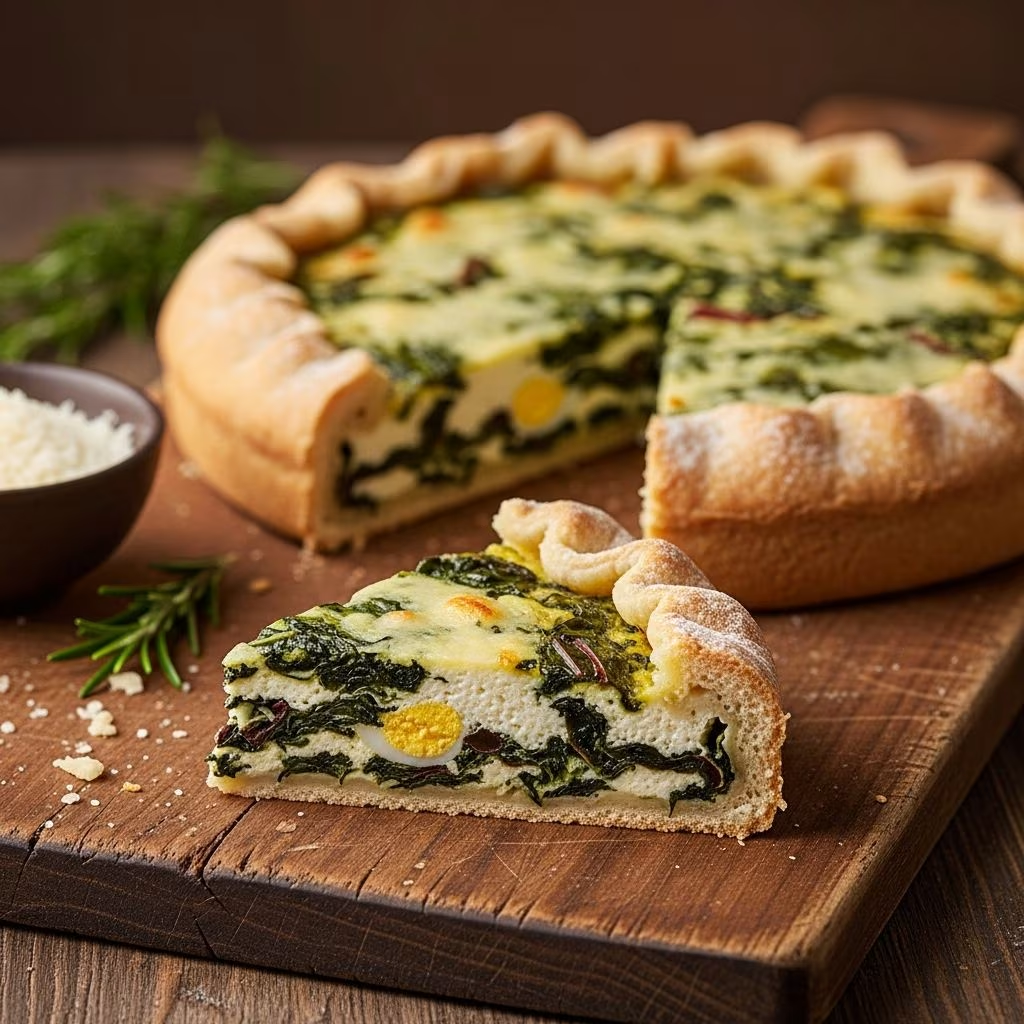
The name “erbazzone” itself derives from the Italian word “erba,” meaning herbs or greens, which form the heart of this rustic preparation. The pie consists of a tender, unleavened pastry crust encasing a filling made primarily from locally available leafy greens, combined with aromatics, cheese, and cured meats. What distinguishes erbazzone from other regional Italian pies is its commitment to simplicity—achieved through minimal ingredients yet maximum flavor—and its deep connection to the agricultural cycles and seasonal availability that defined rural life in Emilia-Romagna.
Historical Roots and Cultural Significance
The documented history of erbazzone traces back to the nineteenth century, though culinary historians suggest its origins may extend even further into the rural traditions of the Emilian countryside. The dish emerged not from nobility or urban centers, but from the kitchens of rezdora—the term used in Reggio Emilia for the women who managed households, supervised domestic operations, and maintained the vegetable gardens that sustained their families.
These women possessed an extraordinary knowledge of seasonal cooking and possessed the creative ability to utilize every resource their surroundings provided. They understood which greens thrived during different months, how to preserve ingredients through various preservation methods, and how to create satisfying meals from what others might consider scraps or waste. The rezdora’s role extended beyond simple meal preparation; they were culinary innovators who adapted recipes based on availability and necessity, passing their knowledge down through generations within their families.
Seasonal Variations and Ingredient Flexibility
One of the most fascinating aspects of erbazzone is its inherent flexibility regarding fillings and ingredients. Historically, the specific greens used in the filling were not predetermined but rather depended entirely on what grew naturally in the surrounding landscape during particular seasons. This seasonal adaptability reflects the practical wisdom of peasant cooking—using what nature offered rather than adhering to rigid formulas.
The most common contemporary version features Swiss chard, which flourishes from June through November, with a traditional saying indicating it should be prepared “from June to All Saints’ Day.” However, historical variations included spinach, radicchio, wild beet greens (Beta vulgaris maritima), and other foraged leafy plants that grew abundantly in the region. Spring onions or regular onions provided aromatic foundations, while garlic was sometimes incorporated and sometimes omitted based on preference and availability.
A particularly interesting mountain variation combines radicchio with rice, a creation born from necessity among seasonal workers known as mondine. These women worked as rice field weeders from March through October, receiving modest wages supplemented by landowners who provided them with bags of rice. Upon returning home, they would prepare erbazzone using this rice combined with whatever greens and vegetables they had on hand, creating a nutritious and resourceful dish.
The Rezdora: Keepers of Culinary Tradition
Understanding erbazzone requires understanding the women who created and refined it. The rezdora represented far more than household managers; they were culinary scholars and guardians of food tradition. These women supervised household operations, managed limited resources with remarkable efficiency, organized daily activities, and maintained intimate knowledge of the kitchen and vegetable garden.
From recipe to recipe and family to family, the rezdora developed variations that reflected their individual preferences, available ingredients, and family tastes. This created what modern food historians recognize as an evolving tradition rather than a fixed formula—each generation adding their own adaptations while maintaining the fundamental character of the dish. The transmission of erbazzone knowledge from mothers to daughters to granddaughters ensured that the recipe remained living and dynamic rather than becoming a museum piece.
Terminology and Regional Distinctions
Beyond “erbazzone,” another term exists for essentially the same dish: scarpazzone. This alternative name references “scarpa,” the Italian word for the white stem of Swiss chard. Peasant families demonstrated remarkable ingenuity by utilizing these often-discarded stems after removing the tougher outer fibers, incorporating them into the filling where they added texture and substance. While both terms describe the same basic preparation, regional preferences and specific ingredient choices sometimes determined which name locals used.
The flexibility in naming reflects the broader truth about peasant cooking: formal recipes and standardized terminology mattered less than the ability to create nourishing, delicious food from available resources. What mattered was understanding fundamental techniques—how to build flavor, create proper texture, and balance ingredients—rather than following precise measurements.
Preparation Methods and Essential Techniques
The Pasta Matta Foundation
The crust for erbazzone uses a distinctive preparation called pasta matta, or “crazy dough,” an unleavened pastry made from only flour, water, salt, and either lard or olive oil. This simplicity belies the sophistication required to execute it properly. The absence of yeast or leavening agents means the dough’s texture depends entirely on proper hydration and gentle handling.
To prepare pasta matta, flour and salt combine first, then fat gets incorporated through either pulsing in a food processor or gentle rubbing by hand until the mixture resembles breadcrumbs. Water then gets added gradually while mixing steadily until the ingredients form a cohesive ball. The resulting dough should feel soft and pliable rather than stiff, requiring a brief period of kneading to develop proper structure. Most traditional preparations rest the dough for at least thirty minutes, allowing the flour to fully hydrate and the gluten network to relax, which produces a more tender final crust.
Building the Filling
The filling begins with preparing the greens—washing them thoroughly and removing any tough stems or outer leaves depending on which vegetables are being used. Traditional methods involve sautéing finely chopped aromatics like spring onions, regular onions, and sometimes garlic in a combination of olive oil and diced pancetta or lardo (cured pork fat). This creates a flavorful base that seasons the entire filling.
The prepared greens then get added to this aromatic base and cooked over moderate heat until they release their moisture and become tender. Some recipes call for draining excess liquid and incorporating breadcrumbs to absorb remaining moisture, ensuring the finished pie has proper structure rather than becoming soggy. Once the vegetables cool completely, finely grated Parmigiano-Reggiano cheese gets stirred through the filling, adding sharp, umami-forward flavor that elevates the simple greens into something memorable.
Assembly and Baking
The prepared dough gets divided into two portions and rolled into thin sheets. One sheet lines a well-oiled baking pan approximately 27 centimeters (11 inches) in diameter, while the other will form the top crust. The cooled filling spreads evenly across the bottom crust, and the top crust gets carefully arranged over it, with excess dough trimmed away and edges crimped for sealing.
Before baking, traditional technique dictates pricking the top layer all over with a fork or skewer, preventing the top crust from puffing excessively during baking. A brush of olive oil across the surface promotes golden browning, and some recipes call for scattering small pieces of lardo or pancetta atop the crust for additional flavor and richness. The pie bakes in a hot oven at approximately 200°C (400°F) for about thirty minutes until the crust develops a light brown color.
Nutritional and Cultural Impact
Erbazzone represents more than a recipe; it embodies a complete philosophy regarding food and its role within community and family life. The dish provided substantial nutrition from humble ingredients, offering protein through cheese and cured meats, carbohydrates from the pastry crust, and essential vitamins and minerals from the fresh greens. For families with limited financial resources, erbazzone offered a complete, satisfying meal that could be prepared in advance and served at various temperatures.
Historically, erbazzone served as both a breakfast and dinner dish, often accompanied by radicchio, other wild herbs, and hard-boiled eggs that provided additional protein. The ability to prepare it ahead and serve it hot, warm, or at room temperature made it perfectly suited to the demands of agricultural life, where meal timing often depended on field work schedules rather than conventional dining hours.
Modern Interpretations and Evolution
Contemporary cooks and food enthusiasts continue to honor erbazzone’s traditional character while occasionally introducing modern interpretations. Some preparations maintain strict adherence to historical methods and ingredient lists, while others experiment with different greens, additional vegetables, or alternative cheeses. What remains constant across all versions is the fundamental principle: combining available greens with aromatics, cheese, and a simple pastry crust to create a satisfying, flavorful pie.
The dish has gained increased recognition beyond its regional borders as food culture increasingly celebrates peasant cooking traditions and sustainable, resourceful cuisine. Cooking demonstrations, published recipes, and food writing have brought erbazzone to audiences who might never visit Emilia-Romagna, yet can still experience this authentic taste of Italian culinary heritage through their own kitchens.
Frequently Asked Questions
Can I prepare erbazzone ahead of time?
Yes, erbazzone actually benefits from being made in advance. The dough can be prepared several hours beforehand, and the entire pie can be assembled and refrigerated before baking. Some cooks even bake it completely and reheat it gently before serving, as the pie tastes excellent at various temperatures.
What greens work best if Swiss chard isn’t available?
Spinach, radicchio, beet greens, or any tender leafy greens available seasonally work well. The beauty of erbazzone lies in its flexibility—use what grows well in your region or what your market offers. The fundamental technique remains the same regardless of which specific greens you select.
Is lard essential, or can I use only olive oil?
While traditional recipes often call for lard, which adds a distinctive flavor, olive oil creates a perfectly acceptable version. The pastry crust will be slightly different in texture and flavor, but will still be delicious. Choose based on your preferences and dietary considerations.
How should erbazzone be served?
Erbazzone can be served hot from the oven, at room temperature, or even slightly warm. It pairs beautifully with simple salads, roasted vegetables, or simply on its own. Many families serve it as a main course, though it also works as a substantial side dish or appetizer.
Conclusion
Erbazzone stands as a testament to the creativity, resourcefulness, and wisdom embedded within peasant cooking traditions. More than merely a recipe, it represents generations of knowledge about seasonal ingredients, proper techniques, and the profound satisfaction that comes from transforming simple components into memorable meals. Whether prepared in the kitchens of Reggio Emilia or recreated by enthusiasts worldwide, erbazzone continues to nourish and delight, carrying forward centuries of culinary tradition and family heritage with each baking.
References
- Erbazzone pie (swiss chard pie) — Tortellini and Co. 2024. https://www.tortelliniandco.com/en/erbazzone-pie/
- Erbazzone, a rustic pie from the Emilian Apennines — Food Notes from Bologna. 2024. https://foodnotesfrombologna.substack.com/p/erbazzone-a-rustic-pie-from-the-emilian
- Erbazzone (Savory Greens Pie) — Memorie di Angelina. 2018. https://memoriediangelina.com/2018/04/14/erbazzone/
- Erbazzone (Italian Wild Greens Pie) — Forager Chef. 2024. https://foragerchef.com/erbazzone-italian-wild-greens-pie/