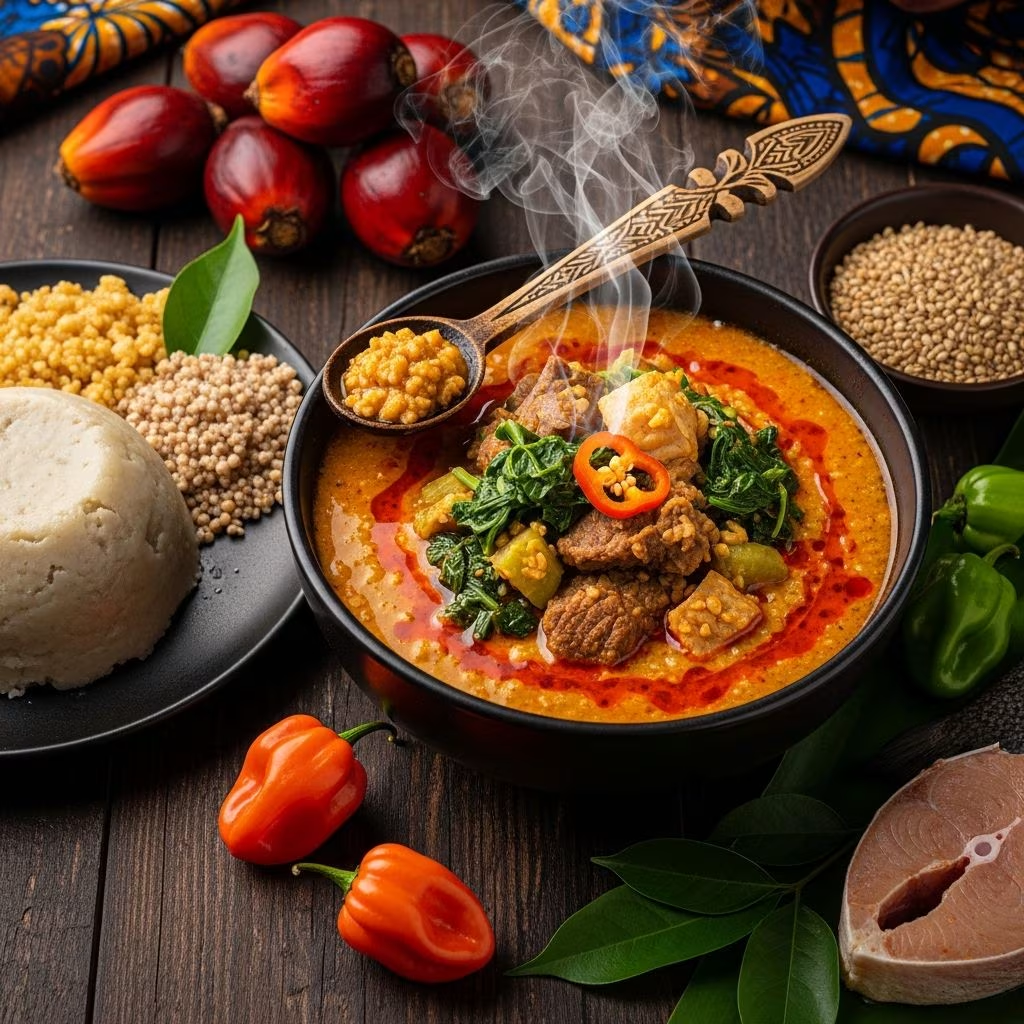
Egusi soup stands as a cornerstone of Nigerian culinary tradition, celebrated for its thick, nutty texture and bold flavors derived from ground melon seeds. This hearty stew combines proteins like beef, fish, and stockfish with aromatic spices, palm oil, and leafy greens, creating a dish that’s both nourishing and indulgent. Originating from West Africa, particularly among the Yoruba, Igbo, and Hausa ethnic groups, egusi soup exemplifies the region’s love for soups served with starchy swallows such as pounded yam, eba, or semovita.
The Essence of Egusi: What Makes This Soup Special
At its core, egusi soup derives its unique character from egusi seeds, which are the kernels of the melon plant (Citrullus colocynthis), often compared to pumpkin seeds for their mild, nutty taste. When ground and cooked, they absorb surrounding flavors, forming characteristic clumps that give the soup its signature draw. The dish’s richness comes from palm oil, which imparts a vibrant red hue and earthy depth, while proteins and peppers add savoriness and heat.
Nutritionally, egusi seeds pack protein, healthy fats, and essential vitamins like A and E, making the soup a balanced meal. A typical serving provides sustained energy, supporting everything from muscle repair to immune health, especially when paired with iron-rich greens. Its versatility allows adaptations for vegetarian diets or lumpy textures, ensuring broad appeal.
Essential Ingredients for Authentic Flavor
Gathering the right components is key to success. Here’s a breakdown of staples and their roles:
- Ground Egusi Seeds (3-4 cups): The star ingredient; grind fresh for best results to achieve a fine powder that forms paste easily.
- Palm Oil (1-2 cups): Provides color, aroma, and authenticity; heat without bleaching to preserve nutrients.
- Proteins (1-2 kg assorted meats, stockfish, smoked fish): Beef, goat, chicken, or tripe build a flavorful broth; parboil first for tenderness.
- Crayfish and Locust Beans (1/2-4 tbsp each): Ground crayfish adds umami; locust beans (iru or dawadawa) ferment for tangy depth.
- Leafy Greens (2-3 bunches spinach, ugu, or bitterleaf): Added last for freshness and bite; wash thoroughly.
- Peppers and Seasonings (scotch bonnet, onions, stock cubes): Blend for heat and base flavor; adjust to taste.
Proportions serve 6-8; scale as needed. Source egusi from African markets for purity.
Step-by-Step: Cooking Egusi Soup from Scratch
Preparation takes 60-90 minutes. Follow these phases for foolproof results.
Phase 1: Prepare the Protein Broth
- Season meats (beef, tripe, chicken) with salt, onions, peppers, and cubes. Simmer without water to infuse flavors, then add enough for tenderness (3-4 cups stock).
- Cook until soft (30-45 mins); remove proteins, reserve stock. Soak stockfish in hot water to debone.
Phase 2: Build the Base
- Heat palm oil (don’t bleach). Sauté onions until translucent (5 mins).
- Blend peppers; add and reduce liquids (10-15 mins).
Phase 3: Incorporate Egusi
- Mix ground egusi with minimal water into thick paste. Add dollops to oil; cook low-heat without stirring much to form clumps (20-30 mins).
- Stir in proteins, crayfish, locust beans, and stock for desired thickness.
Phase 4: Finish with Greens
- Simmer smoked fish briefly. Add washed greens; cook 4-5 mins to wilt without sogginess. Taste and adjust.
Serve hot. Total yield: large pot for 8-12 servings.
Mastering Texture: Lumpy vs. Smooth Egusi
Texture defines regional styles. For lumpy egusi, add paste in chunks and minimize stirring—egusi balls form naturally, popular in Delta and Lagos. For smooth egusi, stir vigorously after adding paste for even dispersion, favored in Eastern Nigeria. A hybrid: fry egusi first into crumbs, then blend. Test by cooking small batches.
| Style | Technique | Best For |
|---|---|---|
| Lumpy | Paste chunks, low stir | Chunky bite lovers |
| Smooth | Constant stirring | Even thickness |
| Hybrid | Fry then simmer | Balanced appeal |
Regional Twists and Modern Adaptations
Nigeria’s diversity shines in variations. Yoruba style emphasizes stockfish and bitterleaf for bitterness balance. Igbo versions use ugu leaves and copious crayfish. Hausa adaptations incorporate dawadawa for funk.
Vegetarian swap: Use mushroom or tofu for proteins, veggie stock, and sweet potato puree instead of crayfish. Oil-free: Sauté in broth. Gluten-free naturally; vegan by omitting meats.
- Spicy Kick: Extra habanero or ata rodo.
- Mild Family Version: Bell peppers only.
- Quick Microwave Hack: Pre-cook proteins, microwave egusi paste 5 mins.
Nutrition Profile and Health Perks
Per serving (1 cup): ~400 calories, 30g fat (mostly healthy from egusi/palm), 20g protein, vitamins A/C/K from greens. Egusi aids heart health via oleic acid; fibers support digestion. Moderation key for oil content. Pairs with low-carb swallows for keto.
Perfect Pairings: Swallows and Sides
Egusi shines with:
- Pounded Yam: Smooth, absorbent classic.
- Eba (Gari): Crunchy, quick.
- Semovita or Fufu: Neutral starch.
- Rice (Bold Choice): For fusion meals.
Storage: Refrigerate 3-5 days; freeze 1 month. Reheat with stock to revive.
Frequently Asked Questions
Why does my egusi soup turn watery?
Too much stock or over-stirring dissolves clumps. Use less liquid, cook covered on low.
Can I substitute palm oil?
Vegetable oil works but lacks authenticity/color. Olive oil alters flavor.
How to prevent burning?
Low heat post-egusi; stir minimally. Use heavy pot.
Is egusi soup freezer-friendly?
Yes; portion and thaw overnight. Greens may soften.
Vegetarian egusi possible?
Absolutely—veggie stock, mushrooms, no crayfish.
Troubleshooting Common Pitfalls
- No Clumps: Egusi too watery; thicken paste.
- Bitter Taste: Overheated oil or unwashed bitterleaf.
- Too Oily: Skim excess or reduce palm oil.
- Flat Flavor: Boost locust beans/stock cubes.
Practice yields perfection. Experiment confidently.
References
- Egusi Soup with Chicken – We Eat At Last — We Eat At Last. 2023. https://weeatatlast.com/egusi-soup/
- Egusi Soup Recipe | How To Make Nigerian Soups — All Nigerian Foods. 2022. https://www.allnigerianfoods.com/nigerian-egusi-soup/
- Egusi Soup – Immaculate Bites — African Bites. 2024. https://www.africanbites.com/egusi-soup/
- Best Egusi Soup | Chef Lola’s Kitchen — Chef Lola’s Kitchen. 2023. https://cheflolaskitchen.com/egusi-soup-recipe/
- Egusi Soup | Precious Core — Precious Core. 2022. https://www.preciouscore.com/egusi-soup/