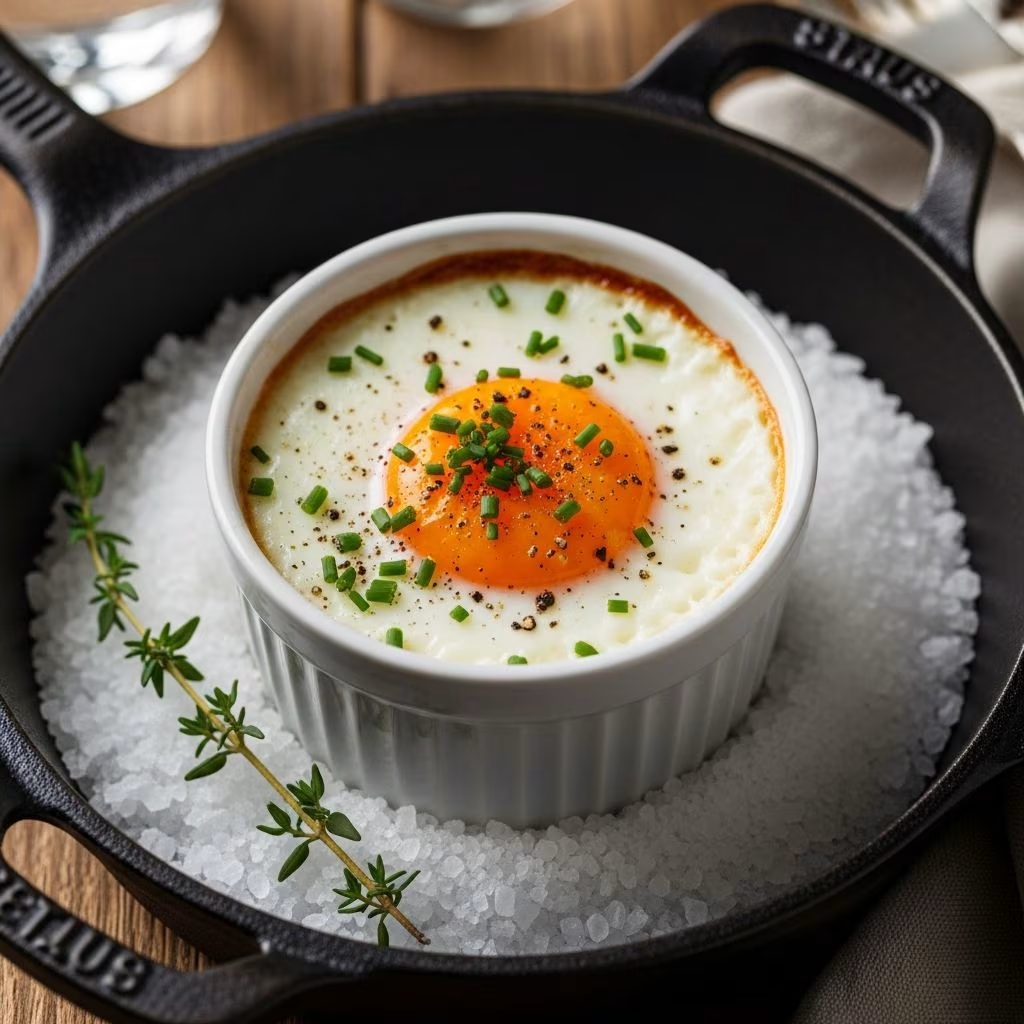
Eggs en cocotte, a timeless French technique for baking eggs, delivers creamy, custardy textures that elevate any meal. This method uses small ramekins and a gentle water bath to achieve perfectly set whites with runny or jammy yolks, making it ideal for brunch or a cozy breakfast.
Understanding the Appeal of Eggs en Cocotte
This dish, also known as oeufs en cocotte or shirred eggs, originated in French cuisine as a sophisticated way to prepare eggs without boiling or frying. The ramekin bakes the eggs slowly in a bain-marie—a water bath that ensures even, gentle heat—resulting in a luxurious consistency unlike stovetop methods. It’s versatile for solo diners or crowds, customizable with add-ins like cheese, herbs, or meats, and pairs beautifully with crusty bread for dipping.
The magic lies in the simplicity: high-quality eggs shine when cradled in cream and seasonings. Runny yolks mingle with savory toppings, creating a dip-friendly treat that’s both comforting and refined. Whether you’re hosting a weekend gathering or treating yourself, this recipe promises elegance with minimal effort.
Essential Ingredients for Success
Start with fresh, room-temperature eggs for the best shape and texture. Heavy cream adds richness, preventing dryness, while butter coats ramekins to avoid sticking. Cheeses like Parmesan, Gruyère, or Boursin bring depth, and fresh herbs provide brightness.
- Eggs: 1-2 per ramekin, preferably large and fresh for vibrant yolks.
- Heavy cream: 1-2 tablespoons per serving for creaminess.
- Butter: Softened, for greasing ramekins.
- Cheese: Grated or crumbled varieties like Gruyère, Parmesan, or herbed Boursin.
- Seasonings: Salt, pepper, chives, parsley, or dill.
- Optional add-ins: Prosciutto, bacon, spinach, mushrooms, or tomatoes.
- For serving: Crusty bread, toast, or seedy grain bread.
These basics allow endless tweaks—keep portions small for appetizers or generous for mains.
Step-by-Step Preparation Guide
Follow these steps for foolproof results. Preheat your oven to 350-375°F (175-190°C) and boil water for the bain-marie.
- Prep ramekins: Butter the insides of 4-6 ounce ramekins generously. This enhances flavor and ensures easy release.
- Add base layers: Spoon in 1 tablespoon cream, sprinkle cheese (1-2 tablespoons), and any meats or veggies like chopped prosciutto or sautéed mushrooms.
- Crack eggs: Gently break 1-2 eggs per ramekin, keeping yolks intact. Avoid piercing them for optimal texture.
- Top generously: Drizzle another tablespoon of cream over eggs, add more cheese, salt, pepper, and herbs.
- Set up water bath: Place ramekins in a high-sided baking dish. Pour boiling water halfway up the sides. Cover with lids or foil to trap steam.
- Bake: Cook 12-25 minutes based on yolk preference—12-15 for runny, 20-25 for firmer. Whites should set while yolks remain soft.
- Rest and finish: Remove from oven, let sit 2-3 minutes if needed. Garnish with fresh herbs, a drizzle of oil, and flaky salt.
Serve immediately with warm bread for sopping up creamy goodness. Total time: about 30 minutes for 4 servings.
Perfecting Doneness and Texture
Achieving ideal doneness is key. Factors like ramekin size, oven hot spots, and egg count affect timing. For runny yolks, check at 12 minutes; jammy at 18-20; fully set at 25. If whites aren’t firm, cover and rest in the warm water bath 3-4 minutes post-bake.
Use room-temperature ingredients to prevent cracking. Boiling water in the bain-marie jumpstarts cooking gently. Test by gently jiggling a ramekin—yolks should quiver slightly for softness.
| Yolk Style | Bake Time (350°F) | Description |
|---|---|---|
| Runny | 12-15 min | Liquid center, ideal for dipping. |
| Jammy | 18-20 min | Soft, spreadable yolk. |
| Firm | 22-25 min | Fully set, sliceable texture. |
Adjust for altitude or oven variations by checking early.
Creative Variations to Try
Eggs en cocotte shine with personalization. Experiment with seasonal ingredients for variety.
- Meaty delight: Layer prosciutto, bacon, or salami with sharp cheddar.
- Vegetarian greens: Sauté spinach or kale, top with goat cheese.
- Mushroom medley: Sauté wild mushrooms, finish with Gruyère and thyme.
- Mediterranean twist: Sundried tomatoes, feta, and oregano.
- Herbaceous: Garlic, Parmesan, and parsley for a classic Italian flair.
- Spicy kick: Chorizo, pepper jack, and cilantro.
For larger crowds, scale up using a muffin tin in a water bath. Vegan adaptations: use plant-based cream and tofu scramble.
Essential Tools and Equipment
Invest in quality ramekins (4-8 oz, oven-safe with lids ideal). A kettle for boiling water, high-sided baking dish, and rimmed sheet for stability complete the setup. Silicone grips prevent burns when handling hot ramekins.
- 4-6 ounce ramekins (ceramic or glass).
- High-sided roasting pan or skillet.
- Instant-read thermometer (optional for yolk check).
- Offset spatula for easy transfer.
No fancy gadgets needed—this is accessible home cooking.
Make-Ahead and Storage Tips
Prep ramekins up to 4 hours ahead, cover, and refrigerate. Add eggs just before baking. Leftovers store in ramekins up to 2 days; reheat gently in a low oven with steam.
Freeze unbaked (without eggs) for 1 month; thaw overnight before assembly. Avoid microwaving to preserve texture.
Pairing and Serving Suggestions
Buttery toast or crusty baguette is non-negotiable for dipping. Complement with fresh fruit salad, smoked salmon, or a green salad. For drinks, opt for sparkling wine, coffee, or herbal tea. Brunch vibes? Add pastries and yogurt parfaits.
Common Mistakes and Troubleshooting
- Cracked eggs: Use room-temp eggs; crack into a bowl first.
- Watery results: Ensure boiling water and tight foil seal.
- Sticking: Butter thoroughly; run a knife around edges.
- Overcooked yolks: Start checking early; remove while slightly underdone—they carryover cook.
Troubleshoot by noting your oven’s quirks for consistency.
Frequently Asked Questions (FAQs)
Can I make eggs en cocotte without a water bath?
No, the bain-marie is crucial for even, gentle cooking and creamy texture. Direct baking dries out eggs.
Are ramekins necessary, or can I use mugs?
Oven-safe ramekins are best for heat distribution, but mugs work if wide-mouthed and sturdy.
How many eggs per person?
1-2 per ramekin suits most; serve two ramekins for heartier appetites.
Gluten-free friendly?
Yes, skip bread or use GF alternatives; the eggs are naturally gluten-free.
Can I double the recipe?
Easily—use multiple pans if needed, rotating midway for even baking.
Nutritional Insights
Per serving (2 eggs): ~330 calories, high in protein (25g+), with fats from cream and cheese providing satiety. Rich in vitamins A, D, B12 from eggs. Customize with veggies for added fiber.
References
- Easy Baked Eggs En Cocotte Recipe — This Is How I Cook. 2023-05-15. https://thisishowicook.com/easy-baked-eggs-en-cocotte-recipe/
- Eggs en Cocotte (Baked Eggs) — Craving California. 2024-02-10. https://cravingcalifornia.com/eggs-en-cocotte-baked-eggs/
- Eggs En Cocotte (Baked Eggs) — Lindsey Eats LA. 2023-11-20. https://lindseyeatsla.com/eggs-en-cocotte/
- French Baked Eggs (Oeufs en Cocotte) — Umami Girl. 2024-01-05. https://umamigirl.com/flying-solo-baked-eggs-one/