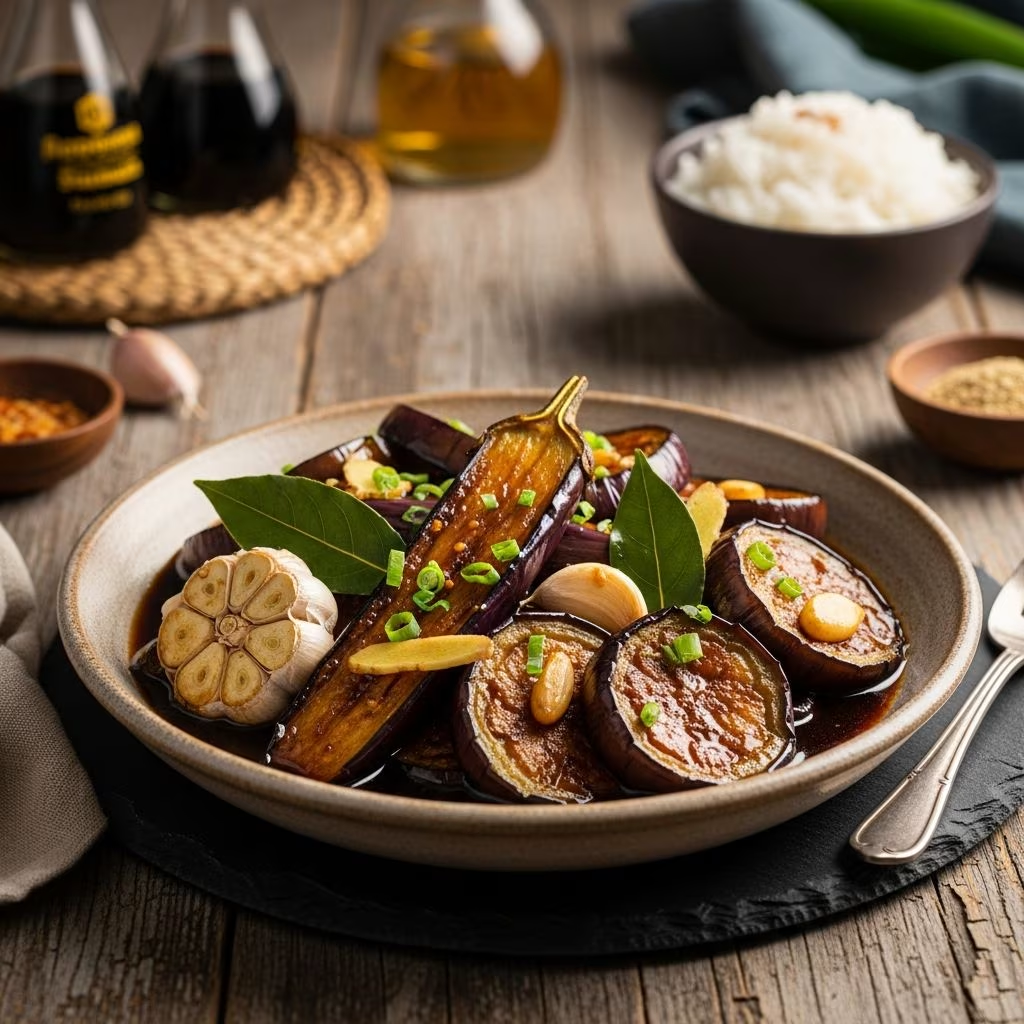
Filipino adobo stands as one of the nation’s most cherished dishes, renowned for its harmonious blend of savory, tangy, and slightly sweet notes. Traditionally featuring proteins like pork or chicken simmered in a soy sauce and vinegar brine, this versatile cooking method lends itself beautifully to vegetables. Enter eggplant adobo, or adobong talong, a lighter, vegan-friendly adaptation that highlights the eggplant’s natural ability to soak up bold flavors while delivering a comforting, meat-free meal.
Why Eggplant Adobo Captures Hearts Worldwide
This dish exemplifies Filipino cuisine’s ingenuity, turning everyday ingredients into something extraordinary. Eggplant, with its spongy texture, becomes velvety and flavorful after browning and stewing in the classic adobo sauce. The result is a vegan entree or side that’s economical, nutritious, and endlessly adaptable. Rich in fiber and antioxidants, eggplant provides a healthy base that pairs perfectly with the umami-packed sauce.
Adobo’s appeal lies in its simplicity—five core elements (soy sauce, vinegar, garlic, bay leaves, pepper) form the backbone, as noted by culinary experts. This eggplant version keeps things plant-forward, making it ideal for vegetarians, flexitarians, or anyone seeking a quick weeknight dinner.
Choosing the Perfect Eggplant for Adobo
Selecting the right eggplant is key to achieving the ideal texture. Opt for slender Asian varieties like Japanese or Filipino eggplants, which are less bitter and cook evenly without excessive wateriness. These types, about 1 pound total for four servings, slice into 1-2 inch pieces that brown beautifully.
- Filipino eggplant: Long, thin, purple-skinned—traditional choice for adobong talong.
- Japanese eggplant: Similar shape, mild flavor, widely available.
- Globe eggplant substitute: Cut into smaller chunks to reduce cooking time and bitterness; salt and rinse slices first to draw out moisture.
Avoid overripe eggplants, which can turn mushy. Fresh ones feel firm and heavy for their size.
Essential Ingredients for Authentic Flavor
The magic of adobo sauce comes from balancing salty, acidic, and aromatic components. Here’s a breakdown of a standard recipe serving 4:
| Ingredient | Quantity | Purpose |
|---|---|---|
| Filipino or Japanese eggplants | 4 medium (about 1 lb), cut into 2-inch chunks | Main vegetable base |
| Neutral oil (canola, grapeseed) | 4 tbsp | For browning |
| Garlic, minced | 5 cloves | Aromatic foundation |
| Soy sauce (low-sodium preferred) | 1/3 – 1/2 cup | Savory umami |
| Vinegar (cane, rice, or white) | 1/3 – 1/2 cup | Tangy brightness |
| Water | 1/4 – 1/2 cup | To adjust consistency |
| Brown sugar | 2 tsp | Balances acidity |
| Black peppercorns or ground | 2 tsp | Earthy heat |
| Bay leaves | 2 | Subtle herbal depth |
| Thai chilies (optional) | 2 | Spicy kick |
These proportions draw from traditional recipes, ensuring the sauce clings to the eggplant without overpowering it.
Step-by-Step Cooking Guide
Preparation takes under 30 minutes, with most time spent on browning and simmering. Follow these steps for foolproof results:
- Prep eggplant: Trim stems and cut into uniform 1-2 inch slices or chunks. Pat dry to promote browning.
- Brown the eggplant: Heat 3-4 tbsp oil in a wide skillet over medium-high. Sear pieces in batches, 2-3 minutes per side, until golden. Eggplant absorbs oil, so add more as needed. Drain on paper towels.
- Sauté aromatics: Lower heat to medium. Add garlic (and optional pork for non-vegan) and cook 30-45 seconds until fragrant.
- Build the sauce: Pour in vinegar, soy sauce, water, sugar, pepper, and bay leaves. Bring to a boil without stirring for 2-3 minutes to mellow the vinegar’s sharpness.
- Simmer: Return eggplant to the pan. Cover and cook 3-5 minutes until tender but not mushy. Adjust with salt or more water for saucier texture.
- Rest and serve: Let sit off-heat for flavors to meld. Garnish with green onions.
Serve hot over steamed rice to soak up the glossy sauce.
Pro Tips for Restaurant-Quality Results
- Don’t skip browning: This step caramelizes the eggplant, adding depth beyond the sauce.
- Vinegar choice matters: Cane vinegar is authentic; rice or apple cider works for milder tang.
- Prevent mushiness: Cook just until fork-tender—eggplant continues softening off-heat.
- Oil management: Use neutral oils; eggplant soaks it up, enhancing richness.
- Flavor tweaks: Add coconut milk for creaminess or chilies for heat.
Customizing Your Eggplant Adobo
Adobo’s beauty is its flexibility. Vegan base allows endless tweaks:
- Protein boost: Stir in ground pork, tofu, or tempeh after browning eggplant.
- Spice it up: Thai chilies, chili flakes, or sriracha for heat.
- Creamy variation: Finish with 1-2 tbsp coconut milk.
- Low-oil method: Roast eggplant at 425°F for 10 minutes instead of frying.
- Gluten-free: Use tamari instead of soy sauce.
For saucier adobo, reduce boiling time or add broth.
Nutrition and Health Benefits
A 1-cup serving offers about 150 calories, 8g fat, 15g carbs, 4g protein, and 5g fiber. Eggplant provides nasunin, an antioxidant aiding digestion, while vinegar may support blood sugar control. The dish is naturally vegan, low-carb adaptable, and heart-healthy with minimal processing.
Pairing and Serving Ideas
Eggplant adobo shines as a side to grilled meats or a main with rice and veggies. Try:
- Steamed jasmine rice or garlic fried rice.
- Fresh cucumber salad for crunch.
- Atchara (pickled papaya) for acidity contrast.
- As a filling for rice bowls or lettuce wraps.
Stores in fridge 3-4 days; reheat gently to avoid sogginess. Freezes well up to 2 months.
Common Mistakes to Avoid
- Stirring too soon after adding vinegar—let it boil undisturbed.
- Overcrowding the pan, leading to steaming instead of searing.
- Using too much water, diluting flavors.
Frequently Asked Questions (FAQs)
What’s the difference between eggplant adobo and meat adobo?
Eggplant adobo uses veggies for a lighter, quicker-cooking version, but shares the same soy-vinegar base.
Can I make it ahead?
Yes, flavors deepen overnight. Reheat on stovetop with a splash of water.
Is cane vinegar necessary?
No—rice or white vinegar substitutes well, though cane adds authentic tang.
How spicy is it?
Mild by default; add chilies to taste.
Vegetarian or vegan?
Fully vegan as is.
Exploring Adobo’s Cultural Roots
Adobo evolved from Spanish influences during colonial times, blending with pre-Hispanic vinegar preservation. Today, it’s the unofficial national dish, with regional twists like this vegetable-forward talong version popular in homes for its affordability and appeal.
References
- Eggplant Adobo (Adobong Talong) — Iankewks. N/A. https://www.iankewks.com/eggplant-adobo-adobong-talong/
- Don’t like eggplant? Love it? Eggplant Adobo is for you — Blue Kitchen. 2021-05-05. https://blue-kitchen.com/2021/05/05/eggplant-adobo/
- Adobong Talong (Eggplant Adobo) — Kawaling Pinoy. N/A. https://www.kawalingpinoy.com/adobong-talong/