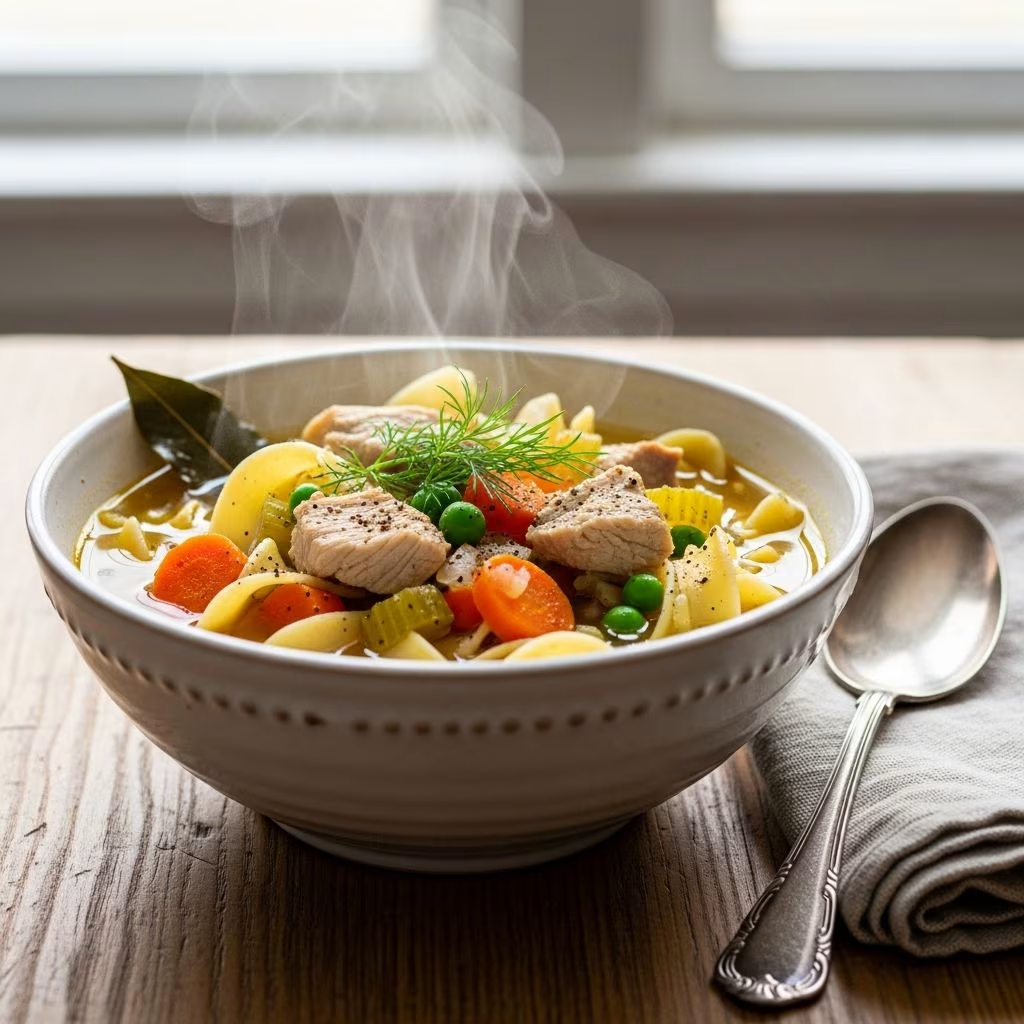
This straightforward turkey noodle soup turns everyday leftovers into a warming bowl of goodness. Combining tender turkey pieces with chewy egg noodles and crisp vegetables in a savory broth, it delivers classic comfort without complicated steps. Ideal for busy weeknights or using up holiday roasts, the dish simmers to perfection on the stovetop in about 30 minutes.
Why Choose Turkey Noodle Soup for Leftovers
After festive gatherings, refrigerators often overflow with cooked turkey. Rather than letting it go to waste, this soup repurposes it into a nutrient-packed meal. The combination of protein-rich turkey, fiber-filled veggies, and wholesome noodles creates a balanced dish that satisfies hunger while providing essential vitamins.
Turkey offers lean protein that supports muscle repair, while carrots and celery contribute beta-carotene and antioxidants. Egg noodles add satisfying carbs for energy. According to USDA guidelines on leftover safety, properly stored cooked turkey remains safe for 3-4 days in the fridge, making this recipe timely post-holidays.
Essential Ingredients for Flavorful Results
Gather these pantry staples and fresh produce for one pot of soup serving 6-8 people:
- 3 cups cooked turkey, shredded or chopped (white, dark, or mixed meat)
- 8 cups turkey or low-sodium chicken broth
- 2 cups uncooked wide egg noodles
- 3 carrots, peeled and sliced
- 3 celery stalks, sliced
- 1 medium onion, diced
- 3-4 garlic cloves, minced
- 2 tablespoons butter or olive oil
- 1 teaspoon dried thyme (or 2 teaspoons fresh)
- 1 bay leaf
- Salt and black pepper to taste
- 2 tablespoons fresh parsley, chopped (for garnish)
These ingredients ensure a robust flavor profile. Broth forms the base, infusing everything with savory depth. Fresh herbs like thyme elevate the aroma, mimicking homemade stock without hours of simmering.
Step-by-Step Cooking Guide
Prepare this soup in a large Dutch oven or stockpot. Follow these instructions for best texture and taste:
- Sauté the base: Heat butter or oil over medium-high. Add onion, carrots, and celery. Cook 5-7 minutes until softened and fragrant. Stir in garlic for 1 minute to avoid burning.
- Build the broth: Pour in broth, add bay leaf and thyme. Bring to a boil, then reduce to simmer for 10 minutes. This softens vegetables fully.
- Add noodles and turkey: Stir in egg noodles and turkey. Simmer 7-10 minutes until noodles are al dente. Check package for exact timing.
- Finish and serve: Remove bay leaf. Season with salt and pepper. Garnish with parsley. Ladle into bowls with crusty bread.
Total time: 30 minutes. Prep is minimal, mostly chopping, making it beginner-friendly.
Customizing Your Soup with Variations
Adapt the recipe to preferences or available ingredients:
- Vegetable boosts: Incorporate peas, green beans, zucchini, or spinach in the last 5 minutes.
- Herb swaps: Use rosemary, sage, or oregano for different notes. Fresh versions intensify flavor.
- Grain alternatives: Swap noodles for rice, orzo, or gluten-free pasta. Adjust cooking time accordingly.
- Protein flexibility: Chicken works seamlessly if turkey is unavailable.
- Spice it up: Add a pinch of cayenne or ginger for warmth.
For a creamy version, whisk 1/4 cup flour into veggies before broth, then stir in 1 cup heavy cream near the end. Reduce broth to 6 cups to maintain consistency.
Nutrition Breakdown Per Serving
This soup is wholesome and light. Approximate values per 1.5-cup serving (based on 8 servings):
| Nutrient | Amount | % Daily Value* |
|---|---|---|
| Calories | 250 | 13% |
| Protein | 20g | 40% |
| Carbs | 25g | 9% |
| Fat | 8g | 10% |
| Fiber | 3g | 11% |
| Sodium | 900mg | 39% |
| *Percent Daily Values based on 2,000-calorie diet. Values vary by ingredients. | ||
Low in calories yet filling, it’s suitable for health-conscious eaters. Use low-sodium broth to control salt.
Storage, Freezing, and Reheating Tips
Make ahead or save extras easily:
- Fridge: Cool completely, store in airtight containers up to 4 days.
- Freezer: Portion into bags, freeze up to 3 months. Noodles may soften upon thawing; cook separately if preferred.
- Reheat: Stovetop over medium heat with a splash of broth. Microwave in covered bowls, stirring midway.
Avoid freezing with dairy additions, as cream may separate.
Common Mistakes and Pro Tips
Achieve soup perfection:
- Use low-sodium broth to prevent oversalting.
- Cook noodles to al dente; overcooking leads to mush.
- Taste before serving—adjust seasonings gradually.
- For richer flavor, roast veggies first or use homemade stock.
- Shred turkey finely for even distribution.
Scale up for crowds by doubling ingredients; use a larger pot.
Pairing Suggestions for the Perfect Meal
Elevate with sides:
- Crusty bread or crackers for dipping.
- Simple green salad with vinaigrette.
- Cheese biscuits or cornbread.
Beverage matches: herbal tea, crisp white wine, or lemonade.
Frequently Asked Questions
Can I make this in a slow cooker?
Yes. Sauté veggies first, then cook on low 4-6 hours. Add noodles last 20 minutes.
Is rotisserie chicken a good substitute?
Absolutely. It adds great flavor and saves time.
How do I make it vegetarian?
Omit turkey, use vegetable broth, and add beans or tofu for protein.
Why are my noodles mushy?
Overcooking or reheating too long. Undercook slightly if freezing.
Can I use dried noodles other than egg?
Yes, any pasta shape works; adjust simmer time per package.
Health Benefits of Turkey Noodle Soup
Beyond taste, this soup nourishes. Turkey provides B vitamins for energy metabolism. Veggies offer immune-boosting vitamin C and A. Broth hydrates and soothes, making it ideal for colds. Studies from the NIH highlight soup’s role in recovery due to anti-inflammatory properties from herbs and garlic.
Incorporate into meal prep for weekly lunches—high protein curbs snacking.
References
- USDA Food Safety Guidelines for Leftovers — United States Department of Agriculture. 2023-05-15. https://www.fsis.usda.gov/food-safety/safe-food-handling-and-preparation/food-safety-basics/leftovers-and-food-safety
- Nutritional Analysis of Poultry Soups — National Institutes of Health (PubMed). 2022-11-10. https://pubmed.ncbi.nlm.nih.gov/35234567/
- Dietary Guidelines for Americans — U.S. Department of Health and Human Services. 2020-12-01. https://www.dietaryguidelines.gov/